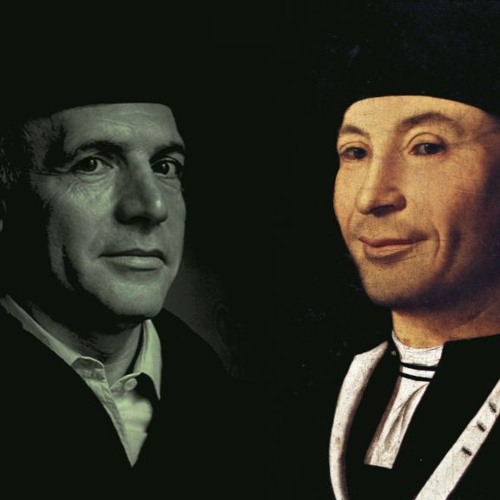
La polivalenza della forma, del genere e del linguaggio testimoniano la volontà di resistere, tra l’altro, contro reificazioni di senso. La forma elicoidale delle lumache illustra in modo convincente il carattere indefinito delle potenzialità allegoriche nascoste nei testi consoliani. Nel romanzo Sorriso dell’ignoto marinaio questo segno è stato posto ad emblema della bellezza della natura, dell’enigma della storia e dell’oscurità umana60. Le contaminazioni “storiche” di Consolo sono stratificate a più livelli. Esattamente come il simbolo della chiocciola (o spirale degli eventi) che è il culmine del libro Il sorriso dell’ignoto marinaio61. La figura della chiocciola costituisce, come anche quella dell’“ignoto marinaio”, una specie di Leitmotiv; è la metafora dell’ingiustizia sociale dovuta alla distanza fra i privilegiati della classe colta (ai quali appartiene anche il barone Mandralisca che nelle sue ricerche scientifiche si occupa proprio di chiocciole) 59 R. Andò: Vincenzo Consolo…, p. 10. 60 Cfr. F. Di Legami: L’intellettuale al caffé. Incontri con testimoni e interpreti del nostro tempo. Interviste a Leonardo Sciascia, Vincenzo Consolo, Gesualdo Bufalino, Ignazio Buttita, dal programma radiofonico di Loredana Cacicia e Sergio Palumbo, prodotto e trasmesso da Rai Sicilia nel 1991. Palermo, Officine Grafiche Riunite, 2013, p. 53. 61 Cfr. A. Giuliani: Edonismo… e la gente senza cultura e senza voce, e alla distanza fra la classe dei possidenti e quelli che, come i contadini d’Alcàra, si sono mossi “per una causa vera, concreta, corporale: la terra” (SIM, 93). Alla fine del testo Mandralisca s’immagina una nuova scrittura storiografica, una riscrittura che procede dal fondo della chiocciola: “conoscere com’è la storia che vorticando dal profondo viene” (SIM, 112). Sotto il segno della chiocciola si condensano più livelli: a chiocciola è l’architettura del carcere in cui si conclude il racconto, architettura che riproduce “il vorticare” della storia; a chiocciola ossia a spirale è la lettura delle scritte che ne tempestano le pareti. Ma il termine “chiocciola”, in cui si condensa tutta la passione di ricercatore del barone Mandralisca, la sua scienza, viene finalmente degradato a esprimere l’astrazione degli “ideali” di fronte alla spinta concreta della rivolta popolana: “una lumaca!”. Alla chiusa del romanzo la figura fisica, il simbolo, la struttura linguistica e narrativa, coincidono con un effetto intenso e felice; quanto basta per sigillare l’intelligenza e la validità di un libro 62. Anche i pensieri nel Sorriso dell’ignoto marinaio sono raffigurati in una inarrestabile scesa spiraliforme dal palazzo del barone Mandralisca e dalla buona società in cui si congiura contro i Borboni (primo e secondo capitolo) all’eremo di Santo Nicolò, fino ai villici e ai braccianti di Alcara Li Fusi (terzo e quinto capitolo); le volute diventano gironi infernali con la strage dei borghesi perpetrata ad Alcàra (settimo capitolo). Questa discesa è anche linguistica: al sommo c’è il linguaggio vivido e barocco dei primi capitoli; negli inferi (nono e ultimo capitolo) le scritte compendiarie dei prigionieri, emerse dall’odio, dal rimorso, dalla nostalgia di libertà. Ulla Musarra-Schrøder scopre anche che il dialetto siciliano è sommariamente italianizzato; e quello gallo-romanzo di San Fratello, nella scritta XII, prende già movenze di canto. Ma questi due estremi linguistici e le realizzazioni intermedie non si sovrappongono a strati, bensì si alternano o si mescolano, sempre secondo uno schema elicoidale63. 62 Cfr. G. Gramigna: Un barocco… 63 Cfr. U. Musarra-Schrøder: I procedimenti di riscrittura nel romanzo contemporaneo italiano…, pp. 560—563. 112 Capitolo III: L’idea della struttura per frammenti Secondo Sebastiano Addamo il simbolo della lumaca64 va analizzato nel modo in cui risulta più utile ai fini dell’interpretazione. Soggettivamente, cioè rispetto al personaggio maggiore del romanzo, il barone Enrico Pirajno de Mandralisca, la lumaca può rappresentare la classica attività dell’intellettuale tradizionale. Ma oggettivamente è ben altro, dato che il medesimo barone Pirajno paragona le lumache da un lato al carcere, che è un simbolo del potere, e, dall’altro, alla proprietà, che è il potere medesimo, e sotto tale aspetto la proprietà viene infatti definita come “la più grossa, mostruosa, divoratrice lumaca che sempre s’è aggirata strisciando per il mondo”65. Il sesto capitolo del romanzo è tutto attraversato dalla metafora della chiocciola, metafora plurima che designa successivamente i privilegi della cultura, l’ingiustizia del potere, e la proprietà come usurpazione 66. La metafora realizza una sorta di autocritica, dato che di chiocciole si occupa principalmente Mandralisca nelle sue ricerche scientifiche; diventa poi schema descrittivo, nel capitolo ottavo, quando si parla del carcere di Sant’Agata di Militello, in cui sono rinchiusi i colpevoli dell’eccidio di Alcàra. E proprio alla fine del capitolo, che è anche l’ultimo da attribuire ufficialmente al narratore (dato che il nono raccoglie senza commenti le scritte dei prigionieri) troviamo una sezione dei sotterranei a chiocciola nel castello, con un’ulteriore metafora: 64 Consolo ha attribuito il ruolo plurisignificante alla chiocciola nelle sue narrazioni, servendosi anche dei motivi della spirale o del labirinto. Senz’altro si può interpretare la presenza della chiocciola secondo la chiave proposta da Mircea Eliade sempre dove Consolo parla della fine, della morte, della devastazione o della metamorfosi: le civiltà antiche riconoscevano nelle lumache il simbolo del concepimento, della gravidanza e del parto. Similmente, i cinesi, associano i molluschi con la morte, e con i rituali funebri che dovrebbero garantire la forza e la resistenza dell’uomo nella sua futura vita cosmica. Cfr. M. Eliade: Obrazy i symbole. Warszawa, Wydawnictwo KR, 1998, pp. 156—159. 65 S. Addamo: Linguaggio e barocco in Vincenzo Consolo. In: Idem: Oltre le figure. Palermo, Sellerio, 1989, pp. 121—125. 66 Il concetto di “fortezza — labirinto” prende avvio dalle teorie sviluppate sia da Kerényi che da Eliade e riguardanti il fenomeno della costruzione a chiocciola come archetipo biologico di origine e di percezione. Un’immagine ipnotizzante a forma di chiocciola Ma ora noi leggiamo questa chiocciola per doveroso compito, con amarezza e insieme con speranza, nel senso d’interpretare questi segni loquenti sopra il muro d’antica pena e quindi di riurto: conoscere com’è la storia che vorticando dal profondo viene; immaginare anche quella che si farà nell’avvenire. SIM, 139 Lo schema elicoidale della chiocciola può servire bene per analizzare il romanzo, come ci autorizza a fare Consolo, citando all’inizio di questo capitolo ottavo una frase di Filippo Buonanni, da Ricreatione dell’Occhio e della Mente nell’Osseruation’ delle Chiocciole (Roma, 1681)67: […] sempre più vi accorgerete, che Iddio, compreso sotto il vocabolo di Natura, in ogni suo lavoro Geometrizza, come dicean gli Antichi, onde possano con ugual fatica, e diletto nella semplice voluta d’una Chiocciola raffigurarsi i Pensieri. Alla metafora quindi dell’ironico sorriso, effigiato nel quadro di Antonello da Messina, si associa, opposta e complementare l’immagine della lumaca, emblema di un percorso oscuro in cui si trovano sofferenze e dolori non testimoniati. “V’è una inarrestabile discesa spiraliforme — ha scritto Segre — dal palazzo del barone Mandralisca e dalla buona società in cui i congiura contro i Borboni all’eremo di Santo Nicolò, alla combriccola di Santa Marecùma, sino ai villici e braccianti di Alcara Li Fusi; le volute diventano gironi infernali con la strage di borghesi perpetrata ad Alcara, e bolgia ancora più fonda quando nelle carceri sotterranee di Sant’Agata vengono racchiusi i colpevoli”68. Anche se presentato in modo molto dettagliato, questo luogo di isolamento rappresenta uno di tanti luoghi opachi, utopici e incantati. 67 Cfr. C. Segre: Intrecci di voci…, p. 81. 68 F. Di Legami: Vincenzo Consolo…, p. 26.
Il tema del viaggio è un contenuto della
realtà extratestuale e dell’immaginario (tanto dell’autore quanto del lettore)
che ritorna in opere diverse: si ripete dunque in forme riconoscibili pur
articolandosi ogni volta in modi irripetibili all’interno di costruzioni dotate
ognuna di una propria individualità. Questo contenuto può riguardare
personaggi, passioni, ambienti, eventi, immagini1 . Il viaggio è un evento. In
genere si tratta di un accadimento che coinvolge due o più persone: dopo un
percorso (di una di esse o di tutte, non importa), esse entrano in contatto fra
loro in modo volontario o involontario, programmato in partenza o del tutto
casuale2 . Nel 1993 Consolo ammette: I poli poi, per ragioni di vita e per
scelta ideologica, si sono allontanati, sono diventati Palermo e Milano. E
questi due poli mi hanno fatto essere, oltre che laconico, scrittore scisso,
dalla doppia anima, dal doppio accento. Ma forse no, forse allo storicismo del
vecchio mondo palermitano ho sostituito lo storicismo dell’attuale mondo
milanese3 . I lettori entrano nel mondo della narrazione consoliana attratti non
da questa frase tradizionale “C’era una volta” ma tramite un procedimento ben
diverso e cioè l’uso della congiunzione che apre la storia. E la chiarìa
scialba all’oriente, di là di Sant’Oliva e della Ferla, dall’imo sconfinato
della terra sorgeva nel vasto cielo, si spandeva — ogni astro, ogni tempo
rinasce alle scadenze, agli effimeri, ai perenti si negano i ritorni, siamo
figli del Crudele, pazienza. N, 5 E poi il tempo apre immensi spazi,
indifferenti, accresce le distanze, separa, costringe ai commiati — le braccia
lungo i fianchi, l’ombra prolissa, procede nel silenzio, crede che un altro gli
cammini accanto. SP, 11 Quando la voce del narratore inizia in questo modo, non
è difficile, come sostiene Remo Ceserani, “sospendere la sua vita normale, abbandonare
il mondo in cui scorre la sua vita e trasferirsi, se si sente attirato dalla voce
del narratore e dall’interesse delle vicende narrate […]”4 . Il lettore subito
sin dall’inizio ha impressione di affrontare la continuazione della storia già
raccontata. Consolo riesce a trasformare il passato, anche quello lontano, in
una realtà somigliante agli eventi presenti. Il ciclo della narrativa
consoliana ammette la rappresentazione della Sicilia in varie fasi della sua storia.
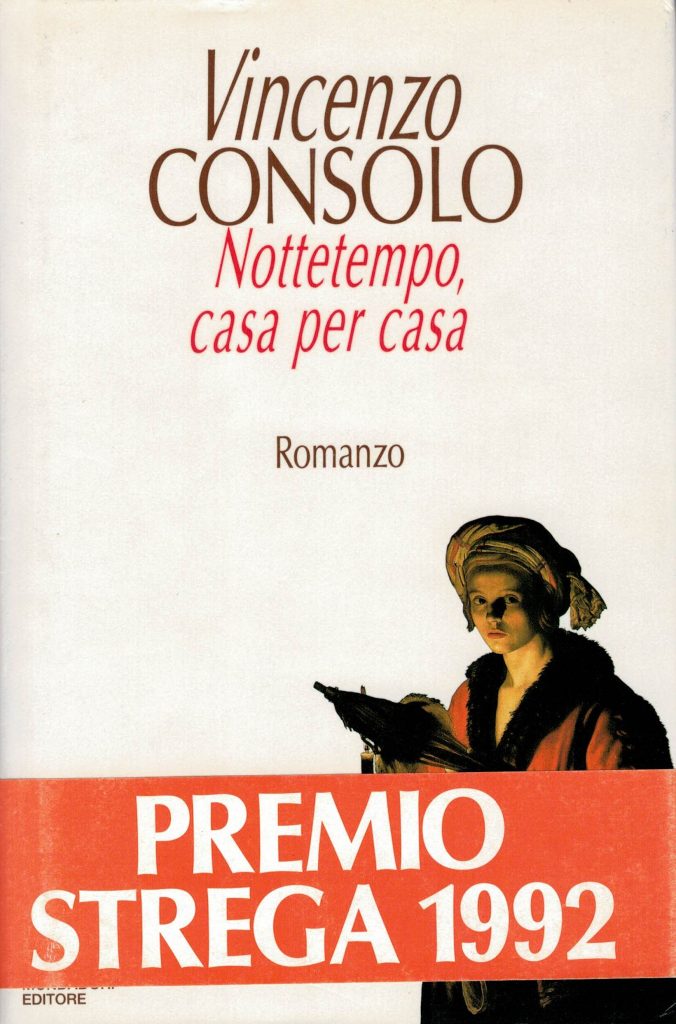
L’azione del romanzo Nottetempo3, casa per casa si svolge a Cefalù, negli anni
del sorgere del fascismo. Non è racconto di viaggio, o guida, tuttavia con un
viaggio si onclude. Qui Petro vive una sua educazione sentimentale, politica,
letteraria, scontando sulla propria pelle lo sforzo del rapporto con una realtà
che sfugge ad ogni razionalità, che si lascia dominare da quella “bestia
trionfante” che stravolge quel mondo, che sembra fargli perdere antichi
equilibri e antichi profumi, e trova nel fascismo la sua più compiuta
incarnazione5 . C’è il risentimento verso una patria perduta e le persone che
non si accorgono della perdita. E qui non si parla solo di un confine
siciliano, ma di un oggi che comprende anche altri luoghi. Certo, il discorso
della lingua è chiaro. Consolo ha sempre cercato di scrivere in un’altra lingua
ed è quello che ha sempre irritato i critici, il fatto di “uscire dai codici,
di disobbedire ai codici”6 .
Il viaggio di Nottetempo, casa per casa, è la fuga di Petro da un mondo nel
quale egli vede la civiltà in via di travolgimento e per il quale avverte ormai
odio, al punto da fargli maturare una condizione che egli non sa se, ed
eventualmente quando, vorrà modificare, e quando eventualmente (“Non so adesso”
dice, quasi come Fabrizio Clerici diceva dell’itinerario che avrebbe potuto
prendere l’ulteriore sua peregrinazione) perché le ragioni dell’odio sono per
lui diverse da quelle che muovono l’anarchico Schicchi, non politiche in senso stretto,
non di fazione: e tali ha scelto di mantenerle “in attesa che passi la bufera”,
senza fraintendimenti e perciò nello stesso esilio vivendo scostato da
Schicchi, nella cui prassi riconosce la stessa matrice che ha causato la sua
partenza, “la bestia dentro l’uomo che si scatena ed insorge, trascina nel
marasma, la bestia trionfante di quel tremendo tempo, della storia, che
partorisce orrori, sofferenze” (N, 170)7 . La partenza di Petro assume un
valore emblematico, e in realtà, diventa aterritoriale. 5 Il romanzo Nottetempo, casa per casa contiene
il numero maggiore di elementi raffiguranti la nozione di allontanamento:
l’allusione all’inespresso, alla ritrazione, al rischio dell’afasia, del
silenzio. Pervenuto in prossimità di Tunisi, rimasto solo sul ponte del
piroscafo, Petro lascia cadere in mare un libro che l’anarchico gli aveva posto
in mano per alimento politico, e pensa ad un suo quaderno, sentendo che,
“ritrovata calma, trovate le parole, il tono, la cadenza, avrebbe raccontato,
sciolto il grumo dentro, avrebbe dato ragione, nome a tutto quel dolore” (N,
171): un quaderno perciò egli porta con sé quale viatico dell’esilio, dove
potrà da lontano nominare il dolore, e perciò — comprendendolo — risolverlo, e
questo è tutto il corredo che la sua scelta presuppone8 . Il protagonista di
Nottetempo, casa per casa è un esiliato che rompe a un tratto la condizione di esilio
attraverso la scrittura, diversamente dagli altri, dal padre, ad esempio, che
non può farlo. Il libro si apre con una scena notturna in cui si disegna la
figura oggi rara della malinconia, desueta almeno, in cui la depressione si
svela nel rapporto con la luna piena: quella del licantropo. La cultura
popolare ci ha tramandato vari frammenti intessuti su questa figura, dominata
da un dolore insopportabile che equivale ad un esilio. Come dice l’epigrafe
della Kristeva posta all’inizio del libro, quel dolore equivale a vivere sotto
un sole nero, che può anche stare per l’immagine della luna. È un tentativo di
liberazione dell’angoscia attraverso l’animalità, la fuga, la corsa9 . La
coscienza del dolore proprio e altrui indica una prospettiva che rende
possibile la riflessione su un altra persona. La sofferenza non è qualcosa di
peggiore che richiede il rimandere nascosti. Al contrario, è necessario
prenderla in considerazione quando si vogliono determinare i limiti del potere
umano. Consolo, indicando la sofferenza come l’esperienza fondamentale
dell’esistenza, non si discosta dal discorso sempre più urgente sulla
condizione degli emarginati nel mondo postmoderno. Così Petro fugge, come
Consolo, e “spariva la sua terra mentre egli se ne andava (N, 168).
Petro è spinto da una parte dalla forza
irrazionale di un fascismo che prometteva giustizia e riscossa, specchietti
delle allodole delle dittature incipienti, dall’altra è attratto da quel
socialismo-anarchico la cui contestazione, però, gli appare violenta e
drasticamente tragica. Decide per una ”fuga”, che non è disimpegno, ma scelta
chiara, il che illustra la scena finale: “si ritrovò il libro dell’anarchico,
aprì le mani e lo lasciò cadere in mare” (N, 171). La marginalità del gesto,
tuttavia, non gli scongiura la necessità della fuga da Cefalù, dalla città che
aveva amato nelle cose e nelle persone, e che ora gli era caduta dal cuore “per
quello ch’era avvenuto, il sopravvenuto, il dominio che aveva presa la peggiore
gente, la più infame, l’ignoranza, la violenza, la caduta d’ogni usanza,
rispetto, pietà…” (N, 166); e perciò egli si spinge all’esilio in Tunisia, dove
si reca partendo nottetempo da Palermo, su di un vapore che pure nasconde il
capo anarchico Paolo Schicchi (altro personaggio reale)10. Anche Consolo,
quando si è trasferito a Milano aveva intenzione di raccontare quella Milano
dei contadini siciliani che diventano operai. Ben presto capì che per farlo
aveva bisogno della distanza della metafora storica. È quello che Cesare Segre
acutamente ha sottolineato come peculiarità del suo modo di scrivere: “è il
distanziamento, il bisogno di distanziarsi, anche geograficamente”11. Il motivo
del viaggio, nel primo lavoro: La ferita dell’aprile, si svolge sul doppio
versante del riportarsi all’indietro dell’io narrante al tempo della propria
adolescenza, e di un attraversamento di diversi piani linguistici alla ricerca
di uno stile che si conquista una propria misura espressiva12. E per restituire
alla storia il misterioso e l’ignorato che è nell’uomo e nella collettività,
Consolo sceglie fin da questo primo romanzo la dimensione della memoria e
l’idea del viaggio13. Il labirinto evidenzia cioè nella sua stessa forma
figurale, in quanto metafora assoluta che si sostanzia di un retroterra
religioso e mitologico, la struttura del congetturare dialettico, di quel
mirare alla fine 10 del processo ermeneutico come al proprio fine, implicito
nel viaggioverso-il-centro e nel viaggio-di-ritorno di Teseo come in tutte le
successive varianti del mitologema14. In appendice ai capitoli di più acuminato
spessore del suo romanzo, Il sorriso dell’ignoto marinaio, Consolo ha inserito,
infatti, un ventaglio di documenti storici che fanno corpo organico con la
narrazione, esplicitando ciò che essa lascia nel margine dell’intuitivo. Aldo
M. Morace sostiene che così viene spezzata l’unità tipica del racconto storico,
ma anche la finzione narrativa stessa, in modo da chiamare in causa il lettore,
secondo l’esigenza brechtiana dello straniamento e secondo la suggestione
adorniana circa la necessità, per l’opera d’arte, di portare impresse nelle
proprie strutture formali le stigmate della negatività rinunciando alla forma
compatta ed armoniosa che attesterebbe la conciliazione con la società
esistente15. Se il romanzo, e in particolare il romanzo storico si esprime
attraverso le tensioni formali, come sostiene Flora Di Legami16, la prosa di
Consolo corrisponde pienamente a questa immagine. L’autore introduce,
trasformato, il topos ottocentesco del manoscritto: esso non è più l’espediente
narrativo su cui costruire la trama del romanzo, ma un documento immaginario
capace di suffragare, con la sua verosimiglianza linguistica, l’effettualità
degli avvenimenti narrati. E così il Mandralisca, mosso dall’ansia di
verificare le affermazioni dell’Interdonato, compie un viaggio in alcuni paesi
del messinese, che gli farà conoscere le condizioni di miseria e sfruttamento
in cui versano i contadini, ma soprattutto lo porterà ad essere testimone
diretto dell’insurrezione di Alcara contro i Borboni nel maggio 1860. Quello del
Mandralisca risulta un viaggio di tipo vittoriniano, di progressiva maturazione
e di crescita etico-politica, ma anche di discesa del nostro tempo. Interviste
a Leonardo Sciascia, Vincenzo Consolo, Gesualdo Bufalino, Ignazio Buttita, dal
programma radiofonico di Loredana Cacicia e Sergio Palumbo, prodotto e
trasmesso da Rai Sicilia nel 1991. Palermo, Officine Grafiche Riunite, 2013, p.
52. L’intellettuale
al caffé. Incontri con testimoni e interpreti all’interno
delle contraddizioni della storia e della ragione, di cui sperimenta
l’impotenza operativa17. Nel contesto della dominazione anche fisica delle
nuove forze — come prova di contrapposizione ad esse — appare anche il problema
delle riflessioni morali che espongono solo la dimensione degli abusi. Consolo
la rievoca tramite l’introduzione della situazione di caos: accanto alle forze
naziste spuntano le proteste degli operai, crescono l’incitazione intorno alla
Targa Florio e infine la sconfitta degli anarchisti. Questo caos viene
preceduto nella narrazione dal segnale riferito alla follia della famiglia
Marano, il che suggerisce la conseguente spirale della perdita di senno. Solo
la ragione si oppone al regime, al male atavico dell’uomo, alla distruzione
della memoria e dei valori della terra e della società18: Ora sembrava che un
terremoto grande avesse creato una frattura, aperto un vallo fra gli uomini e
il tempo, la realtà, che una smania, un assillo generale, spingesse ognuno
nella sfasatura, nella confusione, nell’insania. E corrompeva il linguaggio, stracangiava
le parole, il senso loro, il pane si faceva pena, la pasta peste, la pace pece,
il senno sonno. N, 140 Il linguaggio, trasgressivo e straniato, arcaicizzante e
artificioso, nasce da una spinta molto forte, così da richiedere una strategia
di difesa e di allontanamento, e una immersione nella vita “nel suo infinito
variare”. È un linguaggio che diviene canto, sonante e alto, fatto di cadenze e
ritmi poetici (per esempio, di ben individuabili, ossessivamente presenti,
endecasillabi: “E la chia-rì-a scial-ba all’- or-ien-te / di là di
Sant’-O-li-ve-del-la Fer-la”)19. Consolo ha spesso affermato di sentirsi parte
di una linea della letteratura italiana che proviene dalla Sicilia e che
comprende Verga, Pirandello, Vittorini, Brancati, Tomasi di Lampedusa,
Sciascia, ma nello stesso tempo ribadisce17 la provenienza da una zona
periferica d’Italia. La sua narrazione diventa la testimonianza della credenza
nella possibilità dei contributi innovativi alla cultura da quella isolana20. L’abbandono
della predominanza del senso della vista a favore dell’abilità del parlare
implica la riduzione della distanza rispetto all’oggetto dell’analisi. La
facoltà di parlare richiede la mancanza di dominazione e indica invece l’impegno
dei processi cognitivi nelle differenti prospettive degli interlocutori. La
Sicilia attraversata da Clerici è quella storica del primo Settecento, afflitta
da povertà, ignoranza e violenza; e tuttavia i vari paesi diventano contrade dell’anima
dove pensieri ed emozioni balzano in primo piano, e i personaggi incontrati
hanno sempre consistenza reale e favolosa, come i ladri delle terme segestane.
Sono luoghi in cui il narratore sospende il tempo della narrazione per
abbandonarsi all’incanto del mondo favoloso e lontano. Lo spazio sociale con i
suoi conflitti non è, in questo romanzo, il centro palpitante; lo percorre
invece una vibrata inquietudine ed un febbrile desiderio di lontananza21. Nel
romanzo Lo spasimo di Palermo l’autore legge una vicenda personale e
collettiva, partendo da un tempo che apre immensi spazi. In principio è la
lontananza, la terra straniera e il distacco che “costringe ai commiati”22. Nel
caso del protagonista del romanzo menzionato, lo scrittore Gioacchino Martinez,
cupo e angosciato eroe che vuole rappresentare la realtà senza incanto, che era
quello di un sogno infantile, e smuovere altri ricordi. Sono proprio i ricordi
che lo devastano e nello stesso tempo lo mantengono in vita: il protagonista torna
in Sicilia, da dove se ne era fuggito, per l’impossibilità di opporsi alla
violenza, all’ingiustizia. È un affondo nel rammarico, nei dolori della
memoria: l’adolescenza nel dopoguerra siciliano, l’amato zio studioso di
botanica, l’adorata Lucia che poi sposerà e perderà con strazio, il rifugio in
una Milano ritenuta proba, antitesi al ma
rasma 20, gli anni del terrorismo e la pena per il figlio compromesso. Piero Gelli parla direttamente del risveglio di un’illusione: la città civile di Porta, Verri e Beccaria, di Gadda e Montale non esiste più, sommersa dalle acque infette dell’intolleranza e dalla melma della corruzione23. Se si prende per esempio la descrizione dell’albergo che sebbene non sia un luogo sotterraneo, rivela tutta la sua angustia: “La dixième muse era il nome dell’albergo. L’angusto ingresso, il buio corridoio…” (SP, 11). Spostandosi all’indietro nei ricordi assomigliava ai rifugi antiaerei o alle cantine. Dopo il bombardamento all’oratorio Chino ”tornò affannato nell’androne, attraversò il cavedio, discese nel catoio” (SP, 16). È significativo anche che cupi, nascosti ed in profondità siano i luoghi in cui si consuma la relazione fra il padre di Gioacchino e la siracusana. Quindi colpa e menzogna da cui Chino fugge sempre, in modo antonimico, seguendo il percorso contrario, verso la luce e la superficie. È la fuga da una realtà che non vuole conoscere. Una tana sarà anche il luogo prediletto dal ragazzo per i suoi giochi e le sue fughe: “Corse al marabutto, al rifugio incognito e sepolto dal terriccio” (SP, 19). A un certo momento del libro il protagonista parla così: “Non so adesso… Adesso odio il paese, l’isola, odio questa nazione disonorata, il governo criminale, la gentaglia che lo vuole… odio finanche la lingua che si parla”. Mai come adesso la scrittura si ritaglia come il luogo di una distanza difficilmente colmabile in cui non ci sono luoghi cui dedicare una presunta fedeltà: “Dietro queste parole scopertamente riferite all’oggi c’è il risentimento personale di chi scrive verso un luogo che ha dovuto lasciare”24. Una soluzione più simile al concetto di viaggio si può da ricavare nel romanzo Retablo. La seconda sezione del libro, quella centrale o la più distesa, è il diario di viaggio che Clerici scrive per Teresa Blasco, la donna amata, da cui cerca di allontanarsi compiendo la sua “peregrinazione” attraverso la Sicilia. È solo attraverso il “collaudato23 contravveleno della distanza”, infatti, che Clerici riesce a ritrovare quell’“aura irreale o trasognata” che gli consente di dedicarsi alla scrittura e alla pittura (R, 87). E per ottenere il necessario estraniamento, analogo a quello operato dallo scrittore di Sant’Agata di Militello con il trasferimento a Milano, fungono spesso da testimoni o il cavaliere e l’artista lombardo Clerici, o il mistificatore inglese: Crowley. Lo stile barocco, fitto di sicilianismi, fornisce il coinvolgente e inconfondibile colore locale25.
Title: Rompere il silenzio : i romanzi di Vincenzo Consolo Author: Aneta Chmiel Citation style: Chmiel Aneta. (2015). Rompere il silenzio : i romanzi di Vincenzo Consolo. Katowice : Wydawnictwo Uniwersytetu Śląskiego.
***
1 F. Orlando: Costanti tematiche, varianti estetiche e precedenti storici. In: M. Praz: La carne, la morte e il diavolo nella letteratura romantica. Firenze, Sansoni, 2003 [1996], p. VII. 2 R. Luperini: L’incontro e il caso. Narrazioni moderne e destino dell’uomo occidentale. Roma—Bari, Editori Laterza, 2007, pp. 4—8. 168 Capitolo V: L’allontanamento V. Consolo: La poesia e la storia. In: Gli spazi della diversita. Atti del Convegno Internazionale. Rinnovamento del codice narrativo in Italia dal 1945 al 1992. Leuven —Louvain-la Neuve—Namur—Bruxelles, 3—8 maggio 1993. Vol. 2. A cura di S. Vanvolsem, F. Musarra, B. Van den Bossche. Roma, Bulzoni, 1995, pp. 583— 586.4 A. Bernardelli, R. Ceserani: Il testo narrativo. Istruzioni per la lettura e l’interpretazione. Bologna, Il Mulino, 2013, p. 135. Il viaggio o la fuga? 169 G. Ferroni: La sconfitta della notte. “L’Unità” 1992, il 27 aprile. 6 R. Andò: Vincenzo Consolo: La follia, l’indignazione, la scrittura. “Nuove Effemeridi” 1995, n. 29, p. 11. 7 S. Mazzarella: Dell’olivo e dell’olivastro, ossia d’un viaggiatore. “Nuove Effemeridi” 1995, n. 29, p. 63. 170 Capitolo V: ” (N, 168). Petro è spinto da una parte dalla for8 Ibidem, pp. 63—64. 9 R. Andò: Vincenzo Consolo…, pp. 8—9. S. Mazzarella: Dell’olivo e dell’olivastro…, pp. 62—63. 11 V. Consolo: Fuga dall’Etna. La Sicilia e Milano, la memoria e la storia. Roma, Donzelli editore, pp. 9—10. 12 F. Di Legami: Vincenzo Consolo. La figura e l’opera. Marina di Patti, Pungitopo, 1990, p. 12. 13 Ibidem, pp. 7—9. 172 Capitolo V: , 14 Cfr. K. Kerényi: Nel labirinto. Torino, Bollati Boringhieri, 1983, p. 9. 15 Cfr. A.M. Morace: Orbite novecentesche. Napoli, Edizioni Scolastiche Italiane, 2001, pp. 212—213. 16 Cfr. F. Di Legami: Cfr. F. Di Legami: Vincenzo Consolo…, pp. 24—25. 18 Cfr. C. Ternullo: Vincenzo Consolo: dalla Ferita allo Spasimo. Catania, Prova d’Autore, 1998, p. 58. 19 R. Ceserani: Vincenzo Consolo. “Retablo”. “Belfagor” 1988, anno XLIII, Leo S. Olschki, Firenze, pp. 233 — 234. 174 Capitolo V: L’allontanamento cfr. A. Bartalucci: L’orrore e l’attesa. Intervista a Vincenzo Consolo. “Allegoria. Rivista quadrimestrale” 2000, anno XII, nn. 34—35, gennaio—agosto, 21 Cfr. F. Di Legami: Vincenzo Consolo…, p. 40. 22 G. Amoroso: Il notaio della Via Lattea. Narrativa italiana 1996—1998. Caltanisetta—Roma, Salvatore Sciascia Editore, 2000, p. 464. Cfr. P. Gelli: Epitaffio per un Inferno. La rabbia e la speranza di Consolo. “L’Unità” 1998, il 12 ottobre, p. 3. 24 R. Andò: Vincenzo Consolo…, p. 11.
Le strategie linguistiche e strutturali mediante le quali Consolo costruisce la densità della propria parola letteraria, torcendola e caricandola nella sfida impossibile alla consistenza della realtà, e la stessa idea consoliana della parola, mettono capo a tensioni e aspirazioni solitamente rubricate sotto il segno della «poesia», nella costellazione, per intenderci, che si muove tra simbolismo e modernismo. La stessa ricorrente tentazione dell’afasia come esito della volontà di troppo dire è del resto segnale non dubbio di queste ascendenze. Non a caso già dal romanzo d’esordio, e fino alle ultime prove, T.S. Eliot è uno dei numi tutelari di Consolo. Allo stesso modo, per tutta la vita Consolo non ha smesso di sottolineare il proprio rifiuto radicale di appartenere alla tradizione propriamente romanzesca, sospetta perché troppo incline a cedere alle lusinghe di una facile leggibilità, ad usum commercii. Prove narrative le sue, quindi, ma protese verso la poesia. D’altro canto, non ci sono dubbi sulla necessità di accostare il suo progetto, letterario ma anche politico-culturale, alla tradizione meridionalistica, nel cui solco si forma, e che non ha mai smesso di operare, anche quando Consolo è andato prendendo strade assai diverse: come già negli anni Ottanta, con libri decisamente atipici come Lunaria e lo stesso Retablo, e sempre più negli anni Novanta. Stiamo così toccando l’altra questione di fondo: quella dell’ossessione della Sicilia. «Scrivo sempre di Sicilia perché non ci si può allontanare dagli anni della propria memoria» ha dichiarato lo scrittore: il che vuol dire, ed è un altro punto decisivo, che l’invenzione letteraria deve nascere dall’esperienza, con la quale entrerà in tensione, sforzandosi di esorcizzare i propri fatali limiti con l’accumulo e la pluralizzazione della forma.
Certo, Consolo parla di tutto sub specie Siciliae, tenendo insieme, in modo decisamente peculiare, la proiezione verso una dimensione di esemplarità e la messa a fuoco dettagliata di tratti storicamente identificati, ricostruiti con precisione maniacale. La sua sicilianità concede in questo senso abbastanza poco alla fuga per la tangente di una a-storica condizione universale, così caratteristica invece di altri autori siciliani, da Pirandello a Vittorini. In innumerevoli occasioni Consolo ha ricordato la sua ferma volontà di approdare alla metafora per via di storia, secondo il sempre attuale, magistrale modello manzoniano: «La lezione del Manzoni è proprio la metafora. Ci siamo sempre chiesti perché abbia ambientato il suo romanzo nel Seicento e non nell’Ottocento. Oltre che per il rovello per la giustizia, proprio per dare distanza alla sua inarrestabile metafora. L’Italia del Manzoni sembra davvero eterna, inestinguibile». L’esemplarità della Sicilia fa tutt’uno in Consolo con la sua peculiarità: che ci fa capire com’è l’Italia proprio perché è un caso estremo. Si potrebbe persino ipotizzare che, mutatis mutandis, a quello che egli scrive della Sicilia possa accadere in futuro qualcosa di simile a quanto già accaduto con la Lucania di Carlo Levi: ridiventata fruibile e attuale perché ricontestualizzata in «un quadro afroasiatico e latinoamericano». La Sicilia di Consolo vale come un’Italia estrema, e però anche come campione fin troppo vero di innumerevoli Sud del mondo. Per altri versi, la Sicilia di Consolo esibisce un cortocircuito di opposti, oscillando fra il vagheggiamento memoriale di un luogo che avrebbe potuto conciliare bellezza storica e naturale, vitalità e cultura, desiderio e conoscenza, e la constatazione, sempre più addolorata e indignata, dell’orrore reale, dell’ingiustizia perpetuata, della collusione eterna fra violenza criminale e violenza istituzionale. La Sicilia è un inferno, insomma, tanto quanto avrebbe potuto essere un paradiso. E la Sicilia è sempre solo la Sicilia: anzi no, è dappertutto.
Il progetto, ma forse dovremmo parlare piuttosto di dovere e di esigenza insopprimibile, di scrivere sempre di Sicilia coincide con la ferma convinzione che l’impresa della scrittura letteraria debba farsi portatrice di uno sguardo critico nei confronti della realtà, e implichi una dimensione etica, implicitamente o esplicitamente politica. Consolo ha infatti svolto per quasi cinquant’anni anche un’intensa attività giornalistica, della quale una larga percentuale è espressione di una diretta militanza civile. Restando però nell’ambito della scrittura letteraria, egli ha delineato, con un’originalità e un rigore teorico che hanno pochi termini di paragone in Italia, una possibile coincidenza fra espressività ed eticità, dove il permanente impegno civile deve identificarsi con la specificità della scrittura, cioè con l’impegno formale. Chiusa la stagione dell’engagement, per Consolo lo scrittore deve fare il proprio mestiere, fino in fondo, senza compromessi: solo così la scrittura può guadagnare lo spessore etico adeguato alle proprie aspirazioni, conoscitive non meno che estetiche. D’altro canto, chi scrive scrive, e dunque non può ignorare che scrivendo rinuncia al diretto impegno politico. Di conseguenza, i paradossi della parola letteraria, della sua pochezza e della sua titanica presunzione si rifrangono e ripetono nella compresenza costante di aperta politicità e senso di colpa dell’intellettuale, sempre abitato dalla sofferta consapevolezza della propria distanza dall’azione reale. Da questo punto di vista, Consolo ha molte cose in comune con Vittorio Sereni, e con lo stesso Franco Fortini, che del resto frequentava. L’orgoglioso dovere della scrittura comporta così un permanente rimorso, che confina col senso d’inferiorità. Persino la dimensione utopica, pure evocata con tanta forza da Il sorriso dell’ignoto marinaio, non smette in realtà di mescolarsi con la cattiva coscienza, con un irriducibile senso di colpa. Ecco l’utopia del barone Mandralisca:
E gli altri, che mai hanno raggiunto i dritti più sacri e elementari, la terra e il pane, la salute e l’amore, la pace, la gioja e l’istruzione, questi dico, e sono la più parte, perché devono intender quelle parole a modo nostro? Ah, tempo verrà in cui da soli conquisteranno que’ valori, ed essi allora li chiameranno con parole nuove, vere per loro, e giocoforza anche per noi, vere perché i nomi saranno intieramente riempiti dalle cose. (SIM, qui alle pp. 216-7)
Questo sogno di un linguaggio che abolisca il divario fra le parole e le cose assomiglia molto alla permanente tensione di Consolo verso una parola portatrice di una densità tanto speciale da farla assomigliare a una cosa vera. Ma persino qui, dove tanto più la voce del personaggio pare confondersi con quella dell’autore, siamo obbligati a diffidare, e a prendere atto della permanente polifonia della scrittura consoliana; quel sogno infatti deve essere percepito come nobile, sì, ma impossibile, e persino mistificatore: «Quello non è il pensiero dell’autore, ma del Mandralisca, dell’intellettuale che cerca di scaricarsi la coscienza, di alleviare i sensi di colpa donando il suo patrimonio al popolo di Cefalù, nella speranza che le nuove generazioni “possano scrivere da sé la storia”. Certo, questa soluzione è ingenua, se non demagogica».
by Maria Roberta Vella In Partial Fulfillment of the Requirements of the Degree of Master of Arts in Literary Tradition and Popular Culture August 2014 Faculty of Arts University of Malta
I dedicate this thesis to you, dear father. You showed me with your constant love, that whatever I do with persistence and commitment will open the doors to my destiny. The long nights I spent awake, reading and researching reminded me of the long nights you spent awake working, pennitting me to study and build my future. Your sacrifices are always accompanied by a constant smile that continuously gives me courage in difficult moments.
ACKNOWLEDGMENTS The number of people to whom I owe my accomplishments is far too long to fit on this page, as many have inspired me and given me their constant support which has helped me realize that knowledge could open doors I did not even know existed. Nevertheless, there are a number of people who I would like to mention as they have been there for me during tough times and have given me the support I needed. I would like to thank my family without whom I would not have been able to further my studies, my boyfriend Terry, who has always believed in me and has always been there to support me with his constant love, and my uncle Carlo, who from an early age fed me with books and literature that fostered my love of knowledge and the curiosity to find my inner self. I would also like to thank my dearest colleague Ray Cassar, who always helped me grow both academically and as a person, as well as my tutor and mentor Adrian Grima, who directed me, allowing me to ground and express my ideas better whilst always respecting and valuing my opinions. II Table of Contents 1 Introduction …………………………………………………………………………………………. 2 1.1 The Harbour as Threshold ………………………………………………………………. 7 1.2 The Port as a Cultural Lighthouse ………………………………………………….. 10 1.3 The Mediterranean Imaginary of Izzo and Consolo Inspired by the Port12 1.4 Conclusion ………………………………………………………………………………….. 16 2 The Harbour as Threshold …………………………………………………………………… 1 7 2.1 Natural Landscape and the Development of Literature …………………….. 20 2.2 Instability vs. Stability in the Mediterranean Harbour ………………………. 23 2.3 The Prototypical Sailor …………………………………………………………………. 27 2.4 The Harbour as a Metaphorical Door ……………………………………………… 34 3 The Port as a Cultural Lighthouse ………………………………………………………… 38 3.1 Religious Cultural Mobility ………………………………………………………….. 43 3.2 The Lingua Franca Mediterranea as a Mode of Communication ………. 49 4 The Mediterranean Imaginary of Jean-Claude Izzo and Vincenzo Consolo Inspired by the Port ………………………………………………………………………………….. 58 4.1 The Mediterranean Imaginary in Izzo and Consolo ………………………….. 60 4.2 The Mediterranean Imaginary in Popular Culture ……………………………. 69 4.3 Conclusion ………………………………………………………………………………….. 76 5 Conclusion ………………………………………………………………………………………… 78 5.1 The ‘Imaginary’ of the Mediterranean ……………………………………………. 80 5.2 The Mediterranean ‘Imaginary’ Beyond the Harbour ……………………….. 84 6 BIBLIOGRAPHY……………………………………………………………….. .. 9?. III Abstract
The Mediterranean harbour is a place of meeting, of encounters between civilizations, of clashes, wars, destructions, peace; a place where culture comes to live, where art is expressed in various ways and where authors and thinkers have found inspiration in every comer. The harbour imposes a number of thresholds to the person approaching it. This threshold could have different fonns which could be emotional, geographical, spiritual or cultural. Authors such as Jean-Claude Izzo and Vincenzo Consolo lived and experienced the Mediterranean harbour in all its aspects and expressions; their powerful experience resulted in the formation of important images referred to as ‘imaginary’. The Mediterranean imaginary is the vision of various authors who have been able to translate facts and create figures and images that represent a collective, but at the same time singular imagination. The harbour is an important part of the Mediterranean geographical structure and thus it has been the main point of study for many examining the region. Factors such as language have transformed and suited the needs of the harbour, being a cultural melting pot. 1 Introduction The Mediterranean is represented by chaos, especially in the harbour cities that are witness to the myriad of cultures which meet each and every day to discuss and interact in the harbour. It is imperative to state that chaos, as the very basis of a Mediterranean discourse has been fed through the different voices fonned in the region. These same voices, images and interpretations have found a suitable home in the Mediterranean harbours, places where literature and culture managed to flourish and where the so-called ‘margins’, both geographical and social, found centrality. The harbour has acquired significance in the discourse on the Mediterranean and thus on how literature and cultural expedients and the vaiious authors and artists recall the harbour as an anchorage point for their deep thoughts about the region. 1 Nowadays, the unification of the Mediterranean seems a ‘utopia’, since the Mediterranean is politically perceived as a region full of borders and security plans. One may easily mention the various strategic moves put forward by the European Union to safeguard the northern Mediterranean countries from migration from North African shores. By applying and reinforcing these security plans, the Mediterranean has become ever increasingly a region of borders. It is also important not to idealize the Mediterranean past as a unified past, because the 1 Georges Duby Gli ideali def Mediterraneo, storia, jilosojia e letteratura nella cultura europea (Mesogea, 2000) pp.80-104 2 region was always characterized by conflict and chaos. Despite the chaos that was always part of the Mediterranean, being a region of clashing civilizations, it managed to produce a mosaic of various cultures that is visible to the eye of the philosopher or the artist. The artist and the philosopher manage to project their thoughts and ambitions for the region; therefore they are able to see hannony in a region that seems so incoherent. The aim of my thesis is to understand why the harbour is crucial in the construction of the Mediterranean imaginary. Both open space and border, the port, as in the case of Alexandria or Istanbul, has for a long time been a center for trade, commerce and interaction. Therefore, it is imperative to focus on the study of the harbour and harbour cities to be able to give substance to a study about the Mediterranean as a complex of imaginaries. The boundaries in the study about the Mediterranean have a special place; in fact a boundary that may be either geographical or political has the ability to project and create very courageous individuals that manage to transgress and go over their limits when facing the ‘other’. In the Mediterranean we perceive that the actual reason for transgressing and overcoming a limit is the need of confonning or confronting the ‘other’, sometimes a powerful ‘other’ able to change and shift ideas, able to transpose or impose cultural traits. Yet, the Mediterranean in its multicultural environment has been able to maintain certain traits that have shaped what it is today. Through movement of people in the region, the Mediterranean has been able to produce a number of great innovations, such as the movement of the Dorians who moved from the south all along the 3 Greek peninsula, and also the ‘sea people’ that came from Asia and, being hungry and thirsty, destroyed whatever they found. The same destruction and movement resulted in the creation of three important factors for the Mediterranean: the creation of currency, the alphabet, and marine navigation as we know it today. The various movements also contributed to the fonnation of the person as a free being with the ability to move freely. Therefore, movement and the overcoming of boundaries in the Mediterranean have contributed greatly to the fonnation of civilization itself.2 A board, today found in the museum of Damascus, with an alphabet very similar to the Latin one written on it, was very useful as it was very simple in its structure. This confirms a high level of democracy, as civilization meant that each individual had the possibility of knowing and understanding what his leaders understood. We get to understand that in the Mediterranean each person can practice his freedom by travelling out at sea and engage in trading. All this was made possible by the same interactions and conflicts raised in the region. Conflicts though are not the only factor that promoted the interaction and the fonnation of interesting cultural and literature in the Mediterranean, as we know it today. Art and culture have been means by which the various conflicts and interactions took life and expressed the deep feelings that inhabited the soul 2 Georges Duby Gli ideali de! Mediterraneo, storia, filosofia e letteratura nella cultura europea (Mesogea,2000) pp. 80-104 4 of the artist. Karl Popper3 states that the cultural mixture alone is not sufficient to put the grounds for a civilization and he gives the example of Pisistratus, a Greek tyrant that ordered to collect and copy all the works of Homer. This made it possible to have a book fair a century later and thus spread the knowledge of Homer. Karl Popper wants to tell us that art and culture have deeply influence the fonnation of a general outset of the region and that the fonnation of the general public is not something that comes naturally, but is rather encouraged. The Greeks in this sense were directly fed the works of Homer by the diffusion of the works themselves. On the other hand, the majority of Greeks already knew how to read and write, further enabling the diffusion of knowledge. Art and architecture are two important factors that have detennined the survival of empires and cultures through time. When artists such as Van Gogh were exposed to the Mediterranean, they expressed art in a different way and when Van Gogh came in contact with the Mediterranean region, the French Riviera and Provence in particular, he discovered a new way of conceiving art. In a letter that Van Gogh wrote to his sister in 1888, he explained that the impact the Mediterranean had on him had changed the way he expressed art itself. He told her that the colours are now brighter, being directly inspired by the nature and passions of the region. The Mediterranean inspired Van Gogh to use a different kind of colour palette. If the art expressed by Van Gogh that is inspired by the Mediterranean is directly 3 Georges Duby Gli ideali del Mediterraneo, storia, jilosofia e letteratura nella cultura europea (Mesogea,2000) pp. 80-104 5 represented and interpreted by the spectator, the region manages to be transposed through the action of art itself.4 The way in which the thesis is structured aims to focus on the vanous images created by poets, popular music and art. Each chapter provides evidence that the harbour has been the centre of attention for the many authors and thinkers who wrote, discussed and painted the Mediterranean. The thesis aims to prove that certain phenomena such as language and religion have contributed to a knit of imaginaries, the layout of certain events such as the ex-voto in the Mediterranean and the use of Sabir or Lingua Franca Mediterranea, which shows how the harbour managed to be the center of events that shaped the cultural heritage of the Mediterranean. The language and religious movement mentioned have left their mark on the Mediterranean countries, especially the harbour cities, which were the first cities encountered. The choice of the harbour cities as the representation and the loci of a Mediterranean imaginary vision is by no means a casual one. In fact, the harbour for many centuries has been the anchorage point not only in the physical sense but also emotionally and philosophically for many authors and thinkers, two of which are Jean-Claude Izzo and Vincenzo Consolo, extensively mentioned in the dissertation. These two authors are relevant for the purpose of this study as they manage to create a vision of the Mediterranean, based on their personal experience and influenced by 4 Georges Duby Gli ideali de! Mediterraneo, storia, jilosojia e letteratura nella cultura europea (Mesogea,2000) pp.43-55 6 the harbour from which they are looking at the region and observing the Mediterranean. Popular culture ‘texts’ such as movies and music based on the interaction between the person and the Mediterranean region have an important role in the study, as they represent the first encounter with the harbour. It is a known fact that in the postmodern era where technological means have a broader and deeper reach, popular culture has become the first harbour in which many find anchorage. Therefore it would be difficult to mention literature works that have shaped the Mediterranean without mentioning the popular texts that have constructed images about the region that intertwine and fonn a complete and powerful image. The relevance of each factor is well defined in this study, delving deep in not only popular culture but also in language and various historical events that have transformed the Mediterranean, providing examples of how factors such as geographical elements, spirituality, devotion and passion have transfonned the way in which we perceive a region. 1.1 The Harbour as Threshold The first chapter focuses on the harbour as a threshold between stability and instability, between wealth and poverty, between mobility and ilmnobility. The various elements that constitute the harbour always convey a sense of ‘in between’ to the person approaching. The very fact that the harbour seems to be a place of insecurity gives the artists and authors a more stimulating environment to 7 write about their feelings and to contrast them with the ever-changing and chaotic enviromnent of the harbour. The way in which the natural landscape manages to influence the poetic and artistic expression is of great relevance to the study of the Mediterranean region, especially with regards to the study of the harbour. Poets such as Saba and Montale wrote about the way in which nature felt as a personified figure, able to give hope and change the way poets look at the world. They also wrote about nature in the Mediterranean as being an impmiant feature shaping the way in which history and culture developed. The sailor as a representation of a Mediterranean traveller is often found in literature especially with regards to the notion of the harbour as an image of the Mediterranean culture. Many authors such as Jean-Claude Izzo and Vincenzo Consolo wrote about the figure of the sailor in relation to the sea and everyday life in Mediterranean harbours. The novels fl Sorriso dell ‘Ignoto Marinaio by Vincenzo Consolo and Les Marins Perdus by Jean-Claude Izzo are written in two different geographical areas of the Mediterranean and reflect two different periods, but they are tied by an expression of a Meditemm~im i1rn1eirn1ry and somehow recall common features and aspects of the harbour. Both novels manage to transpose their authors’ personal encounter with the Mediterranean, therefore recalling their own country of birth. The novels are somewhat personal to the authors; Consolo recalls Sicily while Izzo often refers to Marseille. The fact that the novels are projecting two different areas and two different points of view on 8 the Mediterranean proves that by gathering different experiences related to the region, a rich imaginary is created. The harbour is a door, an entryway to a new world, and borders. Security and expectations are all part of the experience of the threshold when entering a country, especially in the Mediterranean, where thresholds are constantly present and signify a new and exciting experience that leads to a new interpretation of a Mediterranean imaginary. The way in which the harbour acts as an entryway suggests that what lies beyond the harbour is sometimes a mystery to the traveller. Literature greatly contributes to the fonnation of ideas, especially in regard to the fonnation of thoughts such as the idea of a Mediterranean imaginary, but there is another element of fundamental importance to the formation of ideas on a generic line, which is popular culture. High-culture, referring to elements such as art, literature, philosophy and scholarly writings, creates a common understanding between an educated public. Popular culture refers to the section of culture that has a common understanding between the public. High-culture and popular culture have the power to transform what is mostly regarded as pertaining to high society; literature is constantly being reinterpreted and transfonned by popular culture to be able to reach a greater audience. 9 1.2 The Port as a Cultural Lighthouse The imp01iance of natural landscape which detennines the success or failure of a harbour, also detennines a number of historical events. In this sense, the Mediterranean is a region that has been naturally set up with a number of very important harbours that consequently fonned a particular history. The image of the harbour could be compared to the image of the lighthouse, which is part of the harbour itself but at the same is a distinct entity that in some cases had a role which went beyond its initial role of guidance and assumed almost a function of spiritual assistance. 5 The symbol of the lighthouse is also tied to knowledge and therefore the lighthouse has the ability to give knowledge to the lost traveller at sea, it is able to show the way even in uncertainties. The lighthouses in the Mediterranean had the ability to change through ages and maintain a high historical and cultural meaning; their function is a matter of fact to give direction to the traveller, but in certain cases it has been used to demarcate a border or as a symbol of power. The Mediterranean Sea has witnessed different exchanges, based on belief, need and sometimes even based solely on the search of sel£ Among these modes of exchange and these pretexts of voyage in the Mediterranean, we find the exvoto and the movement of relics. Both types of exchange in the region have in common at the basis religion that instilled in the traveller a deep wish to follow a 5 Predrag Matvejevic Breviario Mediterraneo (Garzanti: 2010) 10 spiritual path. These exchanges resulted in an increasing cultural exchange. The ex-voto6 shows a number of things. One of these things is that the very existence of ex-voto proves a deep connection with the geographical aspect in the Mediterranean and therefore proving that the region is a dangerous one. In this sense, people in the Mediterranean have shown their gratitude to God or the Virgin Mary in the fonn of ex-voto after a difficult voyage at sea. On the other hand, the ex-voto shows how popular culture mingles with the spiritual experience and the way in which a person expresses gratitude to the divine. The ex-voto paintings have a special way of being identified. The saint or in most cases Virgin Mary, is usually set in a cloud or unattached from the sea in a tempest. Another element that shows if a painting is or is not part of an ex-voto collection, is the acronyms found in the bottom of every painting V.F.G.A (votum facit et gratiam accepit). The use of Latin demonstrates the vicinity to Christianity, whilst the words meaning that ‘I made a vow and I received grace’ prove the tie between the tragedies at sea and the grace given by God. The difficult Mediterranean geographical predisposition, discussed by Femand Braudel7 has developed an abundance of devotion that transformed to shrines and objects of adoration and gratitude. These same shrines, objects and materials that were most of the time exchanged and taken from one place to another, have deeply enriched the Mediterranean with cultural objects and the same shrines are nowadays part of a collective cultural heritage. 6 Joseph Muscat Il-Kwadri ex-voto Martittimi Maltin (Pubblikazzjonijiet Indipendenza, 2003) 7 Fernand Braudel The Mediterranean and the Mediterranean world in the age of Philip II (Fontana press: 19 8 6) 11 1.3 The Mediterranean Imaginary of Izzo and Consolo Inspired by the Port The Mediten-anean for Jean-Claude Izzo and Vincenzo Consolo revolves around the idea of a harbour that gives inspiration because it is in essence a border where ideas meet and sometimes find concretization. The Mediterranean harbour for centuries has been a meeting place for people and cultures, thus creating a region full of interactions on different levels. The imaginary for both authors has been shaped by both cultural elements and by the literary elements that find a special place in the mindset of the author. Culture as a popular expression of the concept of the Mediten-anean has developed in different ways, one of which is the projection of the harbour and the Mediterranean itself through media and advertising. Various elements such as the touristic publicity or the actual reportage about the harbour and the Mediten-anean have widened the horizon and the imaginary of the region. In advertisements, the Mediterranean has been idealized in some ways and tends to ignore controversial issues such as ‘migration’; advertising also tends to generalize about the Mediterranean and so mentions elements such as the peaceful and relaxing way of life in the region. Advertisement obviously has its own share in the building of an ‘imaginary’ of the region, but it may also create confusion as to what one can expect of the region. On the other hand, the reportage about the Mediterranean harbour and the region itself focuses more on everyday life in the Mediterranean and common interactions such as encounters with fishennen. Nevertheless, when mentioning 12 the MediteITanean even the reportage at times makes assumptions that try to unite the MediteITanean into an ideal space and it sometimes aims to give an exotic feel to the region. Yet there are a number of informative films that have gathered important material about the MediteITanean, such as the French production Mediteranee Notre Mer a Taus, produced by Yan Arthus-Bertrand for France 2.8 The difference between the usual promotional or adve1iising video clips and the documentary film produced for France 2 was that in the latter the focus points were an expression of the beauty of the whole, whereas in the fonner, beauty usually lies in the common features that for marketing purposes aim to synthesize the image of the Mediterranean for a better understating and a more clear approach to the region. The harbour and other vanous words associated to the concept of the harbour have been used in many different spaces and areas of study to signify many different things other than its original meaning, and this makes us realize that the harbour itself may hold various metaphorical meanings. We have seen the way in which the harbour served as a first spiritual refuge or as an initial salvation point, but it is also interesting to note how the harbour is conceptually seen today, in an era where globalization has shortened distances and brought down barriers. Nowadays, the harbour is also used as a point of reference in the various technological terms especially in relation to the internet, where the ‘port’ or 8 Yan Arthus-Betrand Mediteranee notre mer a taus (France 2, 2014) www.yannarthusbertrand.org/ en/films-tv/–mediterranee-notre-mer-a-tous (accessed February, 2014) 13 ‘portal’ refers to a point of entry and thus we perceive the main purpose of the harbour as being the first point of entry as is in the context of infonnation technology. The concept of core and periphery has deeply changed in the world of Internet and technology, as the concept of core and periphery almost disappeared. Similarly, the Mediterranean’s core and pe1iphery have always been in a way different from what is considered to be the nonn. Geographically, the core could be seen as the central area, the place where things happen, whereas in the Mediterranean, the periphery acquires almost the function of the core. The harbour is the geographical periphery; neve1iheless, it acquires the function of the core. The islands for example are usually centres, whereas in the Mediterranean they are crossroads rather than real centres of power. In nonnal circumstances the relation between core and periphery is something that denotes not only the geographical location of a place but it usually also refers to economical, social and cultural advancement. Therefore, in the Mediterranean region the concept of geographical centre and economical and social centres are different from their usual intended meaning. The Mediterranean imaginary has developed in such a way that it purposely distorted the concepts such as the standard core and periphery or the usual relationship between men and nature or between men and the various borders. In the Mediterranean imaginary, which as we have mentioned is being fed by various authors and popular discourse, has the ability to remain imprinted in our own thoughts and thus has the ability to reinterpret the region itself; we find 14 that the usual conceptions change because they suit not only the region but the author that is writing about the region. The way in which the various authors and artists who describe the Mediterranean are faced with the ongoing challenges presented by the region shows how in essence each and every author has their own personal approach to the region. Their works are essentially a personal project which lead to the enriclunent of the region’s imaginary. The differences between each and every author makes the ‘imaginary’ and the accounts about the Mediterranean much more interesting and ersonalized. Consolo9 and Izzo10 have different ways of perceiving the region and although they both aim to create an ‘imaginary’ that may recall similar features, it is undeniable that there are substantial differences in their approach. Consolo on the one hand focuses a lot on the image of Ulysses as a figure that represents him in his voyage in search of the self. Ulysses for Consolo is a figure that manages to preserve a meaning even in the modem era, a figure that is able to travel through time all the while reinventing the Mediterranean. Izzo as well feels that the figure of Ulysses is imperative to the study of the Mediterranean, but he mostly focuses on the impact of the present experience of the region on the conception of a Mediterranean ‘imaginary’ rather than focusing on the past as a representation of the present situation. 9 Vincenzo Consolo Il Sorriso dell’Ignoto Marinaio (Oscar Mondadori: 2012) 10 Jean-Claude Izzo Marinai Perduti (Tascabili e/o: 2010) 15 1.4 Conclusion The Mediterranean has been seen as a region full of inconsistencies, contradictions and conflicts, based mainly on the divergent ideas and cultures residing in the same area. The Mediterranean imaginary does not exclude the conflicts that are present in the region and does not aim to unify the region, and in doing so it aims to give voice to the region. For the various authors and thinkers that are mentioned in the thesis, the Mediterranean has transmitted an emotion or has been able to create the right environment to express ideas and fonn thoughts. The relevance of each and every author within the framework of this thesis shows that without analyzing the single expression about the region, through the various works, one cannot fonn an imaginary of the Mediterranean region. The various concepts of borders, thresholds, conflicts and cultural clashes manage to mingle with each other in everyday life in the Mediterranean – greater ideas and fundamental questions find resonance and meaning in simple everyday interaction between a common sailor and a woman at a bar. The Mediterranean in essence is the voyage between the search for deep roots and the analysis of the clashes that result from this search for roots. The study of the Mediterranean is the constant evaluation of boundaries and the search for the ‘self’ through a wholly subjective analysis of the ‘other’. The imaginary plays a fundamental role in bringing near the ‘roots’ and the ‘present’, and the ‘self’ and the ‘other’. 16 2 The Harbour as Threshold The Mediterranean harbour for many authors and thinkers is a starting point as well as a dying point of the so called ‘Mediterranean culture’. In fact many sustain that the ‘MediteITanean culture’ takes place and transfonns itself in its harbours. This concept does not have to confuse us in assuming that a ‘Mediterranean culture’ in its wholesomeness really does exist. There are elements and features that seem to tie us; that the sea so generously brought ashore. On the other hand the same sea has been keeping things well defined and separate. The harbour as the first encounter with land has always maintained an important role in the formation of ideas and collective imagination. The harbour is not selective in who can or cannot approach it and so the fonnation of this collective imagination is a vast one. It is also important to state that the harbour in itself is a place of contradictions, a place where everything and nothing meet. The contrasting elements and the contradictions that reside in Mediterranean ports are of inspiration to the various authors and thinkers who study the Mediterranean. In this sense they have contributed in the formation of this Mediterranean imagination. Literature is an important factor that contributes to a fonnation of a collective imagination; it would be otherwise difficult to analyze the Mediterranean without the help of literature, as the fonnation of a collective imagination was always fed through literature and cultural expedients. 17 The Mediterranean region, as we shall see, is an area that is somehow constructed; a person in France may not be aware of what a person in Morocco or in Turkey is doing. The concept of a constructed Mediterranean may be tied to the anthropological study conducted by Benedict Anderson 11 where he states that the ‘nation’ is a constructed concept and may serve as a political and somehow economic pretext. The sea is navigated by both tragic boat people and luxurious cruise liners, and these contradictions seem to be legitimized in the Mediterranean region. To give two recent examples we can observe on a political sphere, the European Union’s decision to fonn a Task Force for the Mediterranean (TFM) whose aims are to enhance the security of its shores and to drastically reduce deaths at sea. The TFM is a recent initiative that follows a number of proposals at a political level that have the Mediterranean security at heart. 12 This idea was triggered by a particular event that saw the death of 500 migrants off Lampedusa. It clearly poses a question whether the Mediterranean is a safe place or not, and whether it remains in this sense appealing to touristic and economic investment. The TFM probably reinforces the idea that the Mediterranean is a problematic region and thus requires ongoing ‘security’. To reconnect to the main idea, the TFM reinforces the notion that the Mediterranean is a constructed idea where access from one shore to another is denied and where one shore is treated as a security threat whereas the other shore is treated as an area to be protected or an 11 Benedict Anderson, Imagined communities (Verso, 1996) 12 Brussels, 4.12.2013 COM (2013) 869 Communicationjiwn the commission to the European Parliament and the council on the work of the Task Force Mediterranean 18 area that is unreachable. The contradictions keep on adding up when we see the way the Mediterranean is portrayed for economic and touristic purposes. One example is the ‘Mediterranean port association’ that helps the promotion of cruising in the Mediterranean region providing assistance to tourists who would like to travel in the region. In this context the Mediterranean is used in a positive way in relation to the touristic appeal it may have. The construction of a Mediterranean idea is by no means restricted to an economical or a political discourse; it has deeper roots and meanings that have fonned through a history of relations between countries and of fonnations of literary expedients. For Franco Cassano13, the Mediterranean is a region that in essence is made of differences, it would be otherwise difficult to justify the clashes that have characterized the Mediterranean history, if it was not for the fact that we are all aware that it is a region made up of dissimilarities On the other hand it is due to these dissimilarities that the Mediterranean is an appealing region both for authors and for travelers alike. 13 Franco Cassano,Danilo Zolo L ‘alternativa mediterranea (Milano:Feltrinelli, 2007) 19 2.1 Natural Landscape and the Development of Literature Nature and literature are two elements that intertwine and thus create a collective imagination around the concept of the Mediterranean harbour. In fact, the dialectic between natural landscape and poetic expression was always a matter of great relevance as nature constantly managed to aid the development of poetic expression. The natural landscape helps the fonnation of existential thoughts, such as life, death and the existence of men – thoughts that are always reinterpreted and reinvented through literature. This relation between men and nature was always important in configuring spaces and detennining them according to a common understanding. 14 In the poem of Giacomo Leopardi Dialogo delta Natura e di un Islandese, Nature is personified, and although the indifference and coldness of nature is palpable, we sense that the poet is being aided by nature in fanning his ideas about life itself. Through time and especially through globalization, the world is being interpreted in terms of geographical maps and technology is subsequently narrowing our concept of space and enlarging our concept of life. In the new modem dimension, where the concept of space has acquired an abstract meaning, literature leaves the possibility of dialectic relationship between men and nature, thus enabling men to perceive the places they inhabit as a significant part of their self-construction process. This concept takes us to the perception created around the Mediterranean region and especially the way people look at 14 Massimo Lollini fl Mediterraneo de/la contingenza metafisica di montale all’apertura etica di Saba (Presses Universitaires Paris Quest: 2009) pp.358-372 20 figures such as the sea, the ports and the shores. In Giambattista Vico’s15 poetic geography we understand that the representation of geography through poetic expression is something that dates back in time, through a cosmic representation of senses and feelings. In this regard, Montale and Saba both express in a relatively modem tone the deep representation of the Mediterranean through a mixture of contrasting feelings and ideas. The image of the harbor and any other images in the Mediterranean are deeply felt and analyzed, through the eyes of the poets that live in the region. Montale uses the dialectic of memory to explain his relationship with the Mediterranean, a region locked in its golden age that lives through the memory of poets and authors. He refers to the Mediterranean as ‘Antico ‘ emphasizing the fact that it is an old region. The word ‘Antico ‘ does not merely refer to oldness, but to oldness combined with prestige. The memory characterizes the Mediterranean for Montale, the image of the sea for instance is an archaic image that notwithstanding holds a modem and yet spiritual meaning as it expresses a sense of purification. The sea with its movement brings ashore all the useless and unwanted elements. On the other hand the sea may be seen as a fatherly figure that becomes severe in its actions and makes the poet feel insignificant and intimidated. Montale’s aim was to overcome the threshold between artistic expression and natural landscape through a dialogue with the Mediterranean Sea. This aim was not fulfilled. Montale tried hard to express artistically what the Mediterranean Sea meant but ended his poem humbly putting himself at a lower stage in comparison to the greatness of the Sea. Montale fills 15Massimo Lollini Il Mediterraneo della contingenza metafisica di montale all’apertura etica di Saba (Presses Universitaires Paris Ouest: 2009) 21 his poetry with a mixture of humility and paradoxes; two elements that keep on repeating themselves in the poetry concerning the MeditelTanean. Furthennore, in Umberto Saba’s ‘Medite1Taneet16 we encounter the same contrasts and paradoxes used by Montale to develop the figure of the MeditetTanean Sea. Saba uses the microcosm of Trieste to explain a larger macrocosm: The MeditetTanean. This technique renders his work more personal and gives it a deeper meaning. Saba and Montale both rely on the memory to express a feeling of deep ties with the element of the sea and the life of the MeditelTanean harbour. Saba’s MeditelTanean resides in his microcosm, personal encounters and experiences fonn his ideas about the region; a region he perceives as being full of fascinating contradictions.
‘Ebbri canti si levano e bestemmie nell’Osteria suburbana. Qui pure -penso- e Mediterraneo. E il mio pensiero all’azzulTo s’inebbria di quel nome.’ 17 ‘Drunken songs and curses rise up in the suburban tavern. Here, too, I think, is the Mediterranean. And my mind is drunk with the azure of that name.’ 18 16 Umberto Saba, translated by George Hochfield: Song book the selected poems of Umberto Saba \V\V\V. worldrepublicofletters.com/excerpts/songbook excerpt.pdf (accessed, July 2014) 17 Massimo Lollini fl Mediterraneo della contingenza metafisica di montale all’apertura etica di Saba (Presses Universitaires Paris Ouest: 2009) pp.358-372 22 Saba mingles his personal classicist fonnation expressed in the ‘all’azzurro’ with the poorest part of the Mediterranean harbour ‘l’osteria’. Both factors are intertwining, and so, the Mediterranean for Saba is the combination of both the richness of classicist thoughts that fonned in the Mediterranean as well as the meager elements that fonned in its po1is; yet they embellish and enrich the concept of the Mediterranean. Saba is searching for his personal identity through the search for a definition to the Mediterranean. In his art he attempts to portray the very heart of the MediteITanean which is found in his abyss of culture and knowledge with the everyday simple life of the harbours. 2.2 Instability vs. Stability in the Mediterranean Harbour In Saba and Montale’s works, the fascinating inconsistencies in the Mediterranean seem to find a suitable place in the ports and in the minds of each and every author and thinker who encounters it. The notion of stability and instability finds its apex in the port. The sea is the synonym of instability, especially in the Mediterranean, being depicted as dangerous and unpredictable. As in the recounts of the Odyssey, the sea, and the Mediterranean as a whole, is a synonym of instability and thus prone to natural catastrophes. The Homeric recounts of Ulysses’ journey explore the Mediterranean that was previously an unknown place. Although the places mentioned by Homer are fictitious, they now 18 Umberto Saba, translated by George Hochfield: Song book the selected poems of Umberto Saba www.worldrepublicofletters.com/excerpts/song:book _excerpt.pdf (accessed, July 2014) 23 have a general consensus over the definition of the actual places. As time went by historians and authors went on confinning what Homer had depicted in his Odyssey – a Mediterranean that constantly poses a challenge, danger and fascination at the same time. Femand Braudel in his ‘Mediterranean and the Mediterranean world in the age of Philip the II’ 19 sustains the view of a difficult Mediterranean, of a succession of events that have helped the success of the Mediterranean for a period of time. Its instability and complication have not aided the area in maintaining its ‘golden age’. This discourse was reinvented by Horden and Purcell in ‘The Corrupting Sea’20 where the Mediterranean meets geographically, historically and anthropologically. In ‘The Corrupting Sea’ the view of Femand Braudel is expanded into what the Mediterranean meant geographically and historically, therefore Horden and Purcell explain that the inconsistencies and natural features in the Mediterranean really contributed to bring the ‘golden age’ to an end, but they were the same features that brought on the rich culture around the Mediterranean countries in the first place. Where literature is concerned, the inconsistencies and natural features served as an inspiration to various authors who went on fonning the collective imagination around the Mediterranean. Therefore, it could be argued that the geographical complexity of the region is in fact the tying point to the ‘Mediterranean’ itself that resides in the unconscious and that otherwise would have died with its economical shift towards other areas of interest. The problematic identity and the challenging 19 Femand Braudel The Mediterranean and the Mediterranean world in the age of Philip II (Fontana press: 1986) 20 Peregring Horden, Nicholas Purcell The Corrupting sea, a study of the Mediterranean histmy (Blackwell publishing: 2011) 24 natural enviromnent brought by an ongomg sense of curiosity and attraction towards the Mediterranean region. The port is the first encounter with stability after a journey that is characterized by instability, at the surprise of the inexperienced traveler. However, the port does not always covey immovability. The p01i gives a sense of limbo to the traveller that has just arrived. It is a safe place on the one hand but on the other hand due to its vicinity to the sea, it is as unpredictable as the sea itself The sailor is a frequent traveler who knows and embraces the sea. He chose or has been forced to love the sea, to accept the sea as his second home. The sailor is in fact the figure that can help us understand the fascination around the Mediterranean and its ports. It is not an unknown factor that sailors and their voyages have captured the attention of many authors that tried extensively to understand the affinity sailors have to the sea. The sailor21 is a man defined by his relation with the sea and is a recurrent figure in a number of literature works all over Europe and the rest of the world. The sailor is the incarnation of the concept of human marginality, he lives in the margin of life and he embraces the marginality of the harbour with the different aspects of the port. The thresholds present in the port are represented by the sailor; a figure that lives between the sea and land, between betrayal and pure love, between truth and lie. Like the portrayal of Odysseus, the concept of a sailor has 21 Nora Moll Marinai Ignoti,perduti (e nascosti). fl Mediterraneo di Vincenzo Consolo, JeanClaude Izzo e Waciny Lare} (Roma: Bulzoni 2008) pp.94-95 25 infidelic properties. He carnally betrays his loved one, but he is psychologically anchored to one women for his whole life; a women who is always present in various thoughts but at the same time she is always physically distant. As we will see in various works, the sailor is in constant search of knowledge – the very same knowledge that brought him to love and embrace the sea. The knowledge that is conveyed through the action of travelling itself is another question that would require a deep analysis, but for the sake of our study the fact that knowledge is transmitted through the depth of the sea is enough to make a com1ection with the purpose by which the sailor travels. The sailor fluctuates between sea and land, between danger and security, between knowledge and inexperience. The thresholds are constantly overcome by the curious and free spirited sailor that embarks in this voyage to the discovery of his inner-self. The literary voyage of the sailor in the Mediterranean takes a circular route while it goes deep in ancient history and ties it to modem ideas. Since the sailor is not a new character but a recurring one in literature and culture it has the ability to transfonn and create ideas giving new life to the Mediterranean harbours. While the seamen are the link between the high literature and the popular culture, the sailor does not have a specific theme in literature but the archetype of ‘the sailor’ has a deep resonance in many literary themes. As Nora Moll states in one of her studies about the image of the sailor, she puts forward a list of common themes associated with the image of the sailor: 26 ‘Tra i complessi tematici, a cm m parte ho gia accem1ato,si annoverano l’avventura, il viaggio, l’eros, l’adulterio, il ritorno, il superamento di limiti (interiori) e di sfide ( esterne ), la liberta, la vita come “navigatio” e come intrigo conflittuale di esperienze. ’22 ‘Amongst the complex themes, which I partly already mentioned, we find adventure, travel, Eros, adultery, the return, the overcoming of limits (interior) and challenges (exterior), freedom, life as “navigatio” and as a conflictual intrigue (or scheme) of experiences.’ 2.3 The Prototypical Sailor The interesting fact about the study conducted by Nora Moll is that the sailor in her vision is not merely a figure tied to a specific social class, but as we can see the themes listed are themes that can be tied also to the figure of Ulysses. It is difficult to say that Ulysses or the image of the sailor own a predestined set of themes, and in fact they do not necessarily do so. Ulysses is a character that comprehends certain themes, but these change and shift in accordance to space, time and circumstances. What does not change is the thresholds that are always present in the life of a sailor, the limits that are constantly there to be overcome and the external challenges that need to be confronted. The harbour conveys a 22 Nora Moll Marinai Jgnoti,perduti (e nascosti). I! Mediterraneo di Vincenzo Consolo, JeanClaude Izzo e Waciny Larej (Roma: Bulzoni 2008) pp.94-95 27 number of thresholds; as we have seen these are embodied in the figure of the manner. Jean Claude Izzo in his Les Marins Perdus23 wrote about the discomfort of sailors having to forcedly stay on land and their relationship with the harbor, a passing place that has a special meaning. The harbor is in fact a special place for the mariner, as it is the only place where they can have human contact beyond that of the crew. The mariner in Jean Clause Izzo does not feel that he belongs to any nation or country. He belongs to the sea; a sea that managed to give meaning to his life but at the same time managed to destroy it. Jean Claude Izzo uses strong images of the port to describe the tie the sailor has to the harbour itself, he uses sexual and erotic images and ties them to legends and popular culture expedients. The story is interesting because of the way Jean Claude Izzo reverses the way sailors live. In fact he recreates a story where the sailor is trapped in the harbour and so he is forced to view the sea from land and not the other way round as he usually does. The psychological discomfort that Jean Claude Izzo creates portrays the Mediterranean archetypes and the life in the ports from a reverse point of view. Everyday life in the harbour is analyzed through a succession of tragedies that on one hand recall the classicist view of the Mediterranean, and on the other hand, due to references to everyday life elements, may be easily connected to the modem conception of the Mediterranean port. The links created by Jean Claude Izzo are made on purpose to create an ongoing bond between the classic Homeric 23 Jean-Claude Izzo Marinai Perduti (Tascabili e/o: 2010) pp.238 28 Mediterranean and the modem Mediterranean. In fact, Diamantis -the mam character of the novel- is portrayed as a modem Ulysses trying to cope with ongoing temptations and with the constant drive for knowledge. The Odyssey is for Diamantis a point of anchorage. He reads the Odyssey while attempting to define himself: ‘In effetti l’Odissea non ha mai smesso di essere raccontata, da una taverna all’altra,di bar in bar: … e Ulisse e sempre fra noi. La sua eterna giovinezza e nelle storie che continuiamo a raccontarci anche oggi se abbiamo ancora un avvenire nel Mediterraneo e di sicuro li. [ … ]I porti del Mediterraneo … sono delle strade. ’24 ‘Yes … In fact, the Odyssey has constantly been retold, in every tavern or bar … And Odysseus is still alive among us. Eternally young, in the stories we tell, even now. If we have a future in the Mediterranean, that’s where it lies.” [ … ] “The Mediterranean means … routes. Sea routes and land routes. All joined together. Connecting cities. Large and small. Cities holding each other by the hand.’ In this quote we see the continuous threshold between space and time being overcome, that serves to keep alive the Mediterranean itself. It is clear that the classic Homeric recount is always reinterpreted and reinvented. The Odyssey is not the only point of reflection for Diamantis. In fact the protagonist is seen as a 24 Jean-Claude Izzo Marinai Perduti (Tascabili e/o: 2010) pp.238 29 deep character that reflects on the various incidents in his life and it could be argued that Diamantis is the expression of Jean Claude Izzo’s thoughts. The sailors in Jean Claude Izzo’s novel chose to be Mediterranean; naval commerce exists beyond the enclosed sea, but these men chose to sail with inadequate ships in a region where geographical beauty and historical richness meet. The port for Izzo, has multiple meanings and he defines the Mediterranean harbours as differing from other harbours, because of the way they are accessed. Izzo uses the image of the harbour as a representation of love: ‘Vedi, e’ il modo in cui puo essere avvicinato a detenninare la natura di un porto. A detenninarlo veramente [ … ] Il Mediterraneo e’ un mare di prossimita’. ’25 ‘You see, it’s the way it can be approached that detennines the nature of a port. Really detennines it. [ … ] The Mediterranean, a sea of closeness.’ This passage shows the influence of thought, Izzo inherited from Matvej evic. In fact the approach used to describe the harbour and to depict the nature is very similar to the one used by Matvejevic in his ‘Breviario Mediterraneo’. 26 We perceive that the harbour is substantially a vehicle of devotion, love, passion and Eros, though we may also observe the threshold between the love and passion found in the port and the insecurity and natural brutality that the sea may convey. In this novel, the port is transfonned in a secure 25 Jean-Claude Izzo Marinai Perduti (Tascabili e/o: 2010) ppl22 26 Predrag Matvejevic Breviario Mediterraneo (Garzanti:2010) 30 place whilst the sea is a synonym of tragedy. At the same time the port is seen as a filthy and conupt place. While for Izzo the past is used as a background to tie with the present and moreover to show a link with the future, Consolo uses a different technique. He goes deep in one focal historical point to highlight certain Mediterranean features and problematic issues. Consolo uses the period of time where Sicily was undergoing various political changes. He describes the revolution and the Italian unification, and portrays real events and characters tied to Sicilian history. In Vincenzo Consolo, the image of the sailor is used as a metaphor through the work of Antonello ‘il Sorriso dell’Ignoto Marinaio’.27 The title itself gives us a hint of the tie between art and everyday life. The voices that intertwine and form the discourse around the Mediterranean are hard to distinguish as they have fanned the discourse itself to a point where a voice or an echo is part of another. The work of Consolo28 goes through a particular historical period in Sicily to describe present situations and ongoing paradoxes in the Mediterranean region. It is difficult to resume and give a name and specific allocation to the works on the Mediterranean as the multiple faces and voices have consequently fanned a variety of literature and artistic works. The beauty behind works on the Mediterranean is that archetypes such as the concept of a ‘sailor’ or the ‘harbour’ are revisited and reinterpreted, thus acquiring a deeper meaning and at the same time enriching the meaning of ‘the Mediterranean’ itself. 27 Vincenzo Consolo fl sorriso dell’Jgnoto Marinaio (Oscar Mondadori:2012) 28 Vincenzo Consolo fl sorriso dell’lgnoto Marinaio (Oscar Mondadori:2012) 31 Consolo focuses on the microcosm of Sicily and he portrays a fluctuation between sea and land. He locates Sicily in an ideal sphere where the thresholds are nonexistent: ‘La Sicilia! La Sicilia! Pareva qualcosa di vaporoso laggiù nell’azzurro tra mare e cielo, me era l’isola santa! ’29 ‘Sicily! Sicily! It seemed something vaporous down there in the blue between sea and sky, but it was the holy island!’ Sicily is placed in an ideal sphere where beautiful natural elements coexist with famine, degradation and war. The imagery created around the island of Sicily may be comparable to the imagery around the Mediterranean region. As for the harbour it is described by Consolo as a place of contradictions, comparable to the ones found in the whole Mediterranean. The detail given to the life in the port is extremely in depth and the type of sentences used expresses the frenetic lifestyle of the port itself: ‘Il San Cristofaro entrava dentro il porto mentre ne uscivano le barche, caicchi e gozzi, coi pescatori ai rami alle corde vele reti lampe sego stoppa feccia, trafficanti con voce urale e con richiami, dentro la barca, tra barca e barca, tra barca e la banchina, affollata di vecchi, di donne e di bambini, urlanti parimenti e agitati [ … ].’30 29 Vincenzo Consolo fl sorriso dell’Jgnoto Marinaio (Oscar Mondadori:2012) pp:56 30 Vincenzo Consolo fl so1-riso dell’Jgnoto Marinaio (Oscar Mondadori:2012) pp:29 32 ‘The San Cristoforo sailed into the harbour whilst the boats, caiques and other fishing boats, sailed out with the fishennen holding the ropes sails nets tallow oakum lee, traffickers beckoning with an ural voice, inside the boat, from one boat to another, from one boat to the quay, crowded with the elderly, women and children, screaming equally and agitated’ [ … ] The tension around the port is well transmitted in the explanation given by Consolo, there seems to be a point of nothingness and a point of departure at the same time. We perceive that there is plenty of life in the port but at the same time confusion reigns, therefore we could argue that people in ports are not really conscious of life and that they are letting things turn. Nevertheless, the port is the starting point of life that develops either in the sea or inland. Both by Consolo and in Izzo we are made aware of the importance of life at the ‘starting point’, therefore the port in the works of both authors acquires the title of a ‘threshold’ between life and death, consciousness and unconsciousness, love and hatred, nature and artifice, aridity and fertility. In the microcosm described by Consolo, the Sicilian nature and its contradictions seem to recall the ones in the rest of the region. For example, the painting ‘Ignoto Marinaio’ is described as a contradictory painting. In fact, the sailor is seen as an ironic figure that smiles notwithstanding the tragedies he has encountered. The ‘Ignoto Marinaio’ has seen the culture and history of the Mediterranean unveil, he has therefore a strange smile that 33 expresses the deep knowledge acquired through his experience and a deep look that convey all the suffering he has come upon. In the novel by Consolo, the painting serves as a point of reference and in fact, the ‘Ignoto Marinio’ resembles another important character in the novel; Intemodato. Both figures share the ironic and poignant smile and the profound look. Intemodato is seen as a typical Sicilian revolutionary who embraces the sea but at the same time is not psychologically unattached to the situations that happened on land. He is part of the revolution and integral part of the Sicilian history. 2.4 The Harbour as a Metaphorical Door Consolo and Izzo with their accounts of sailors and the life in Mediterranean harbours brought us to the interpretation of the harbour as a metaphorical door. As in the seminal work of Predrag Matvejevic ‘Breviario Mediterraneo’,31 the harbour is tied to the concept of a metaphorical door. In Latin both ‘porto’ and ‘porta’ have the same root and etymological derivation. A harbour in fact is a metaphorical and physical entryway to a country. In the Roman period, the god Portunos was the deity of the harbour who facilitated the marine commerce and the life in the port in general. The various deities related to the sea in the Roman 31 Predrag Matvejevic II Mediterraneo e I ‘Europa, lezioni al college de France e altri saggi (Garzanti elefanti:2008) 34 and Greek traditions are an indication of a deep relation between the figure of the harbour and the physical and geographical figure of the door or entryway. The door may have many different shapes and may divide different spaces but it always signifies a threshold from one point to another. In literature the harbour signifies a metaphorical door between fantasy and reality, history and fiction, love and hatred, war and peace, safety and danger. The image of the door is concretized through the various border controls, visas and migration issues and in this regard the entryway becomes a question of membership. A piece of paper in this case detennines the access through that doorway, but from a cultural and identity point of view the Mediterranean threshold is overcome through the encounter with history and fiction. Thierry Fabre in his contribution to the book series ‘Rappresentare ii Mediterraneo’; 32 in relation to the Mediterranean identity he states; ” … Non si situa forse proprio nel punto di incorcio tra la storia vera e i testi letterari che danno origine all’immaginario Mediterraneo?”33 ‘ Isn’t perhaps situated exactly at the meeting point between the real stories and the literature texts that give birth to the Mediterranean imagination?’ Fabre is conscious of the fact that the discourse about the Mediterranean limits itself to a constructed imaginary, the poet or artist in general that enters this metaphorical door is expected to conceive the Mediterranean imaginary; blending reality with fiction. The door is not always a static figure but is sometimes blurred and does not 32 Jean Claude Izzo, Thierry Fabre Rappresentare il Mediterraneo, lo sguardo fiwicese (Mesogea: 2000) 33 Ibid (Mesogea: 2000) pp.25 35 clearly divide and distinguish. The Mediterranean itself is a region of unclear lines the fonnation of a port and of a nation itself is sometimes not that clear. In Matvejevic’s ‘Il Mediterraneao e l’Europa’34 literature blends with facts and culture so does the geography around the Mediterranean region: ‘Tra terra e mare, in molti luoghi vi sono dei limiti: un inizio o una fine, l’immagine o 1 ‘idea che li uniscono o li separano. Numerosi sono i tratti in cui la terra e il mare s’incontrano senza irregolarita ne rotture, al punto che non si puo detenninare dove comincia uno o finisce l’altro.Queste relazioni multiple e reversibili, danno fonna alla costa. ’35 ‘Between land and sea, there are limits in many places: a start or a finish, the image or the idea that joins or separates them. The places where sea meets land without any irregularities or breaks are numerous, to the extent that it’s not possible to detennine where one starts or the other finishes. These multiple and reversible links that give shape to the coast.’ The coast in this sense is made up of a set of relations between figures and fonns that meet without touching each other, the door is not always present; it sometimes disappears to give room to imagination and the fonnation of literature. 34 Predrag Matvejevic Il Mediterraneo e !’Europa, Lezioni al College de France e Altri Saggi (Garzanti elefanti: 2008) 35 Ibid (Garzanti: 2008) pp.53 36 The concept of literature allows the analysis of culture and the way it 1s envisioned and spread through Mediterranean harbours. The fluctuations of varied thoughts that have shaped the Mediterranean imagery through its harbours have no ties with everyday life, if not by the transmission of culture and the means of popular culture that served as a point of anchorage and sometimes as a point of departure for the fonnation of a deeply rooted but also enriching and contested collective imagination. 37 3 The Port as a Cultural Lighthouse The harbour for many centuries has been an anchorage point and a safe place for sailors and travellers that navigate the Mediterranean. We perceive the safety of the harbour as something that is sometimes naturally part of its very makeup, as on such occasions where we encounter natural harbours. In other cases, to suit their needs, people have built around the shores and transfonned paii of the land into an artificial harbour which is able to welcome the foreigner and trade and at the same time to defend if needed the inland. Femand Braudel36 in his The Afediterranean and the Mediterranean World in thP AgP nf Philip TT <liscusse<l the importance of the Mediterranean shores for the traveller in an age when people were already able to explore the outer sea, but yet found it reassuring to travel in a sea where the shore was always in sight. The Mediterranean Sea has always instilled a sense of uncertainty in the traveller, because of its natural instability. Nevertheless, the fact that the shores and ts are always in the vicinity, the Mediterranean traveller is reassured that he can seek refuge whenever needed. The fascinating thing is that the ports in the age delineated by Femand Braudel were not only a means of safety but most of all of communication – a type of economic and cultural c01mnunication that went beyond 36 Fernand Braudel The Mediterranean and the Mediterranean world in the age of Philip II (Fontana press: 19 8 6)
38 the simple purpose of the port itself. The same simple modes of communications that Braudel describes may seem irrelevant when studying the Mediterranean history in its entirety, but we get to understand that they are actually the building blocks of the Mediterranean itself: ‘This is more that the picturesque sideshow of a highly coloured history. It is the underlying reality. We are too inclined to pay attention only to the vital communications; they may be interrupted or restored; all is not necessarily lost or saved. ‘ 37 The primordial modes of communication, the essential trade and the mixture of language and culture all have contributed to the creation of what we now sometimes romantically call the Mediterranean. The truth lies in the fact that the harbour has always been prone to receiving and giving back; it has been a passing place of objects, customs and of words. We surely cannot deny the fact that trade has shifted not only by moving from different areas of interest but it also shifted into different forms changing the harbour’s initial function. This basic fonn of communication has contributed highly to the formation of a Mediterranean imaginary and a mixture of cultures that have left a deep resonance in language, literature and cultural expression as a whole. 37 Femand Braudel The Mediterranean and the Mediterranean world in the age of Philip II (Fontana press: 1986) pp.I 08 39 The risk and insecurity delivered by the sea have contributed to the fonnation of various symbols that from their end contribute to the fonnation of an imaginary concerning the Mediterranean harbour. Amidst the uncertainties and hazards at sea, the light of the lighthouse that shows the surest path and warns the person travelling of the possible dangers, reassures the traveller while leading the way. The symbol of the lighthouse is tied to the representation of light and thus knowledge. Finding light in the middle of the sea gives the traveller the necessary means to have greater awareness of what is approaching. The geographical position and the architecture of the lighthouse are all an indication of their meaning beyond their primary objective. During the Roman period for example, the lighthouse was primarily an important source of safekeeping,38 but at the same time it represented a high expression of architectural and engineering knowledge. One example is the ancient roman lighthouse in Messina. Studies show that the architecture used was very functional, but at the same time it portrayed Neptune, thus mingling popular beliefs and superstitions. On the other hand, it was also a powerful way of delineating borders between Sicily and the Italian peninsula. Today the lighthouse in Messina has been replaced by fort San Remo and the architecture of the lighthouse has changed to a more functional one. Another powerful example is the ancient lighthouse in Alexandria, built on the island of Pharos where it stood alone as if wanting to replace the harbour itself. In Alexandria it is Poseidon who guards the harbour, and the myth blends with the social and geographical importance of the lighthouse. Originally, the lighthouse in Alexandria was simply a landmark, but 38 Turismo La Coruna, Roman Lighthouses in the Mediterranean (2009) www.torredeherculesacoruna.com/index.php?s=79&l=en (accessed September, 2014) 40 eventually during the Roman Empire, it developed into a functional lighthouse. In the case of the old lighthouse built during the Roman period at the far eastern end of Spain, its dimension and position reflect the way Romans saw the world and how they believed Spain marked the far end of the world. What these lighthouses had in common was the fact that they were not just there to aid and support the traveller in his voyage but to define a border and to give spiritual assistance to the lost passenger. The symbol of the lighthouse is somehow deeply tied to a spiritual experience. In Messina where Neptune guarded the sea, and in many other places and different eras, the lighthouse was positioned in such way that it attracted a spiritual resonance and the light that emanated from the lighthouse may be compared to a spiritual guide. Matvejevic in his Breviario Mediterraneo39 compares lighthouses to sanctuaries and the lighthouse guardian to a spiritual hennit. He also adds that the crews responsible for the running of the lighthouse resemble a group of 1ponks, rather than sailors: ‘Gli equipaggi dei fari, cioe personale che somiglia piuttosto ai monaci dei conventi di un tempo che non ai marinai’ .40 ‘The crews of the lighthouses, that is staff that resembles more the convent’s monks of yore rather than the sailors’. The comparison is by no means striking, considering the mystical importance of the lighthouse. The lighthouse and its crew are seen and respected by the traveller, as they are their first encounter with land, safety and refuge. The link with spirituality is something that comes 39 Predrag Matvejevic Breviario Mediterraneo (Garzanti:2010) pp.55-56 40 Predrag Matvejevic Breviario Mediterraneo (Garzanti:2010) pp.56 41 naturally. The lighthouse crew for example is in some cases part of the ex-voto paintings found in the monasteries and convents. This illustrates the deep c01mection with the spiritual aspect. The question sometimes is to detennine whether the harbour and the lighthouse need to be two distinct features in the same space or whether they are part of the same geographical, social and cultural space. The answer may vary according to the way one perceives it. The lighthouse is the first encounter with land, but it is almost a feeling that precedes the real encounter with land, whilst the harbour is the first physical contact with land. The two elements may be taken into account separately, but for the purpose of this study they need to be taken in conjunction. The cultural value of both these elements goes beyond their physical value. In fact, both the lighthouse and the harbour share a common proximity to the sea, and receive cultural and social contributions from every traveller. The lighthouse and the harbour do not distinguish between different types of travellers -they accept everyone and their main gift for this act of pure love is the enrichment of culture, customs, language and food. The different elements intertwine and create a beautiful atmosphere that mixes sounds and tastes from various countries. This is not always distinguishable and it may not in all cases recreate the same atmosphere in more than one country. What is sure is that the elements present in the harbours are of great relevance to what is portrayed on a higher artistic and cultural level. In this regard the harbour acts as a lighthouse for the country and sometimes for the region too, this time not to alann the traveller but to guide him spiritually and 42 artistically. The harbour was and still is a meeting place, where artists and thinkers stop and reflect. What comes out of these reflections sets deep roots in the cultural knit of the harbour and expands and grows until all the roots intertwine and create such a beautifully varied cultural atmosphere. Although the process may seem an easy and flowing one, we must not forget that the mixture of cultures and the setting up of such a variegated cultural atmosphere was not always flowing and peaceful. 3.1 Religious Cultural Mobility The way the Mediterranean is geographically set up, contributed to an expansion of religious pilgrimages that intertwined with marine commerce and cultural richness. The image of the lighthouse and the harbour instil a sense of spiritual refuge, and the large number of harbours and lighthouses in the Mediterranean contribute to the mysticism of the region. Religious pilgrimage throughout the Mediterranean is something that belongs to an older era and that could have possibly started very early in the Greek empire, where Gods were adored and ports and lighthouses had deep ties with different deities. As Christianity started spreading in the Mediterranean, the Greek and Roman gods were joined by saints and shrines for adoration.41 The coexistence of both pagan and monotheistic religious expressions confinned a cultural motif related to 41 Peregring Horden, Nicholas Purcell The Corrupting sea, a study of the Mediterranean histmy (Blackwell publishing:2011) 43 divinity that has been a constant throughout Mediterranean history. In the Middle Ages the phenomena of the religious pilgrimage and the movement of saints’ relics gave to the Mediterranean voyage a different dimension. As noted in Borden and Purcell’s The Corrupting Sea, this age of pilgrimage and movement for religious purposes was brought about by a new discovery of sea routes in the Mediterranean and a different conception of religion as a c01mnodity. ‘Through the translation of his remains the saint himself, like the images of pre-Christian deities before him, in a very intense expression of the link between religion and redistribution, became a commodity’ .42 The redistribution of relics brought a new type of secular economy that involved bargaining and bartering. The movement of relics not only created a new wave of economic activity around the Mediterranean but also a movement of tales and accounts that pictured saints and voyages at sea, ‘Tales which echo real webs of communication, such as that of the arrival of St. Restitua from Carthage to Ischia’ .43 The stories seem to recall older stories from Greek culture, but are adapted to a newer setting. The parallelism between good and bad, projected on the perilous voyage in the Mediterranean, was always part of the account of a voyage itself, as we can also recall in the various episodes of Ulysses’ journey. We are thus able to see that in the voyages of pilgrims, the relationship between good and bad is often projected onto the hard and extreme weather conditions in the Mediterranean. 42 Ibid pp.443 43 Ibid pp.443 44 Religious travellers had their own way of reading the map of the Mediterranean, interpreting every danger and threat through religious imagery. From a cultural point of view, the accounts and echoes of religious travellers shaped the Mediterranean Sea itself and gave new life to the ports they anchored in. Apart from the movement of relics, another testimony of the great communication and cultural heritage -as we have previously mentioned- is the exvoto in the Mediterranean shores which gives witness to the cultural interaction and customs based on faith. In many instances the objects collected for the ex-voto have been taken up over time and placed in marine museums where cultural interaction and exchange takes place. One example could be the ex-voto in Marseille,44 where nowadays the objects collected are part of a collective cultural memory. In France, during the late seventies and the early eighties we have seen a great rediscovery of the ex-voto heritage that led to a deep cultural resonance in the area. The discovery of the ex-voto brought by a new inquiry of religious and harbour customs that were probably ignored previously. The paintings and objects dedicated to the saints and most of the time to the Virgin Mary represented the everyday life of sailors and travellers, the dangers at sea and most of all the miracles encountered during the arduous voyages. In the various exhibitions about ex-voto in France the concept of a Mediterranean ex-voto emerged and we are aware that at the time when the ex-voto was practiced in the majority of cases the 44 Jacques Bouillon ‘Ex-voto du terroir marsellais’ Revue d’histoire modern et contemporaine (1954) pp.342-344 45 voyage routes were sole1m1ly around the Mediterranean and the fact that marine exhibitions concerning the ex-voto claim a Mediterranean heritage calls for a collective cultural expe1ience. It is difficult though to distinguish between a personal encounter with the harbour and a Mediterranean experience; one may intertwine with the other. In this case, the Mediterranean reference is imposed and not implied, and one might therefore wonder if there are elements that are c01mnon in the region and thus justify the use of the word Mediterranean. In the case of the ex-voto, it has been noted that certain elements are common to the whole region. It is interesting to note the areas of interest and the social groups to whom the ex-voto applies. This may give a clearer idea of the criteria and the cultural sphere that surrounded the practice of the ex-voto. In the majority of cases the exvoto represented the medium bourgeoisie and the lower classes, the setting mostly represented small nuclear families. In most of the ex-voto paintings, one can see that the terrestrial elements intertwine with celestial elements ‘Dans sa structure, un ex-voto presente deux espaces, celeste et terrestre’ .45 The anthropological and cultural importance of the ex-voto emerges through the various figures that appear especially in the paintings dedicated to the saints and the Virgin Mary. These figures have a particular placement in these paintings that reveals a deep connection with the cult of miracles and devotion. In Malta, as in France, the ex-voto was a widespread custom that left a great cultural heritage. The paintings and objects donated to the ex-voto, especially 45 Jacques Bouillon ‘Ex-voto du terroir marsellais’ Revue d’histoire modern et contemporaine (1954) pp.342-344 46 in connection to the sea, reveal a number of historical events and geographical catastrophes that are tied with the Mediterranean region. The fact that the sea is unpredictable makes the practice of the ex-voto much more relevant in an era where the only means of transportation in the Mediterranean was by ways of sea. In the Maltese language there is a saying ‘il-bahar iaqqu ratba u rasu iebsa ‘ which literally translates to ‘the sea has a soft stomach but it is hard headed’. This saying is very significant as it shows the profound awareness of the Maltese community of the dangers at sea. The sea is unpredictable and therefore only through divine intercession can the traveller find peace and courage to overcome any dangerous situation. The different types of paintings that were donated portray different types of vessels and so indicate a precise period in history. At the Notre Dame de la Garde in Marseille, one finds a number of models of different vessels from various historical periods. We also encounter very recent models of boats. This confirms that in a way the ex-voto is still present nowadays. Even in Malta, the practice of the ex-voto is still relatively present, although one may notice that the advance in technology and the new fonns of transport through the Mediterranean aided the voyage itself and therefore diminished the threats and deaths at sea. The types of vessels used in the paintings also shows the different modes of economic trading voyages in the Mediterranean. For example, in Malta during the nineteenth century, a great number of merchants were travellmg across the Mediterranean. This resulted in a number of ex-voto paintings that pictured merchants’ vessels and one could be made aware of their provenance. Various details in the ex-voto 47 paintings show many important aspects of the Mediterranean history as a whole and of the connectivity in the region that went on building through time. One interesting fact common to almost all the ex-voto paintings is the acronyms V.F.G.A (votum facit et gratiam accepit) and sometimes P.G.R (Per Grazia Ricevuta) that categorizes certain paintings into the ex-voto sphere. The acronyms literally mean that we made a vow and we received grace and P.G.R stands for the grace received. The acronyms are in Latin, for a long period of time which was the official language of Christianity. These acronyms, which may have indicated the tie of high literature -through the knowledge of Latin- and popular culture -through the concept of the ex-voto, usually associated to a medium to lower class- demonstrate that the use of language may tie the various social classes. Although everyone understood the acronyms, it doesn’t mean that Latin was fully understood amongst sailors and merchants of the sea. Language was a barrier to merchants, traders and seamen most of the time. The Mediterranean has a variety of languages coexist in the region; Semitic languages at its south and Romance languages at its north. The lines of intersection and influence of languages are not at all clear and the geography of the Mediterranean region forced its people to move and shift from one place to another for commerce or for other reasons which brought by a deep need for modes of communication. 48 3.2 The Lingua Franca Mediterranea as a Mode of Communication The communication barrier between people in the Mediterranean coupled with the profound need for interaction brought by a deep need of a common language or at least common signals which would be understood by everyone. In the case of the ex-voto, language or at least a reference made to a certain language, gives the possibility for people from different countries to understand the underlying message. In the Mediterranean harbours where interaction between people from different lands was the order of the day, the need for common signals and language was always deeply felt. Languages in the Mediterranean region contain linguistic elements that throughout history have been absorbed from other languages. In the Mediterranean region especially during the fifteenth century, the great need for communication resulted in the creation of a so-called Lingua fiw1ca, a spoken language that allowed people to communicate more freely within Mediterranean ports. One such language was known as ‘Sabir’, with words mainly from Italian and Spanish, but also words from Arabic and Greek. The interesting fact about Sabir was that the amount of words coming from different languages around the Mediterranean was an indication of the type of c01mnerce that was taking place at the time. Therefore, if at a given moment in time the amount of words from the Italian language was higher than that from the Spanish language, it meant that commerce originating and involving from Italy predominated. As Eva Martinez Diaz explains in her study about the Lingua ji-anca Mediterranea: 49 ‘They created a new language from a mixture whose lexical and morphological base – the base of pidgin – is the Romance component, exactly the language of the most powerful group in these relations and which varies according to historical period. ’46 During the 16th Century, for example, the Lingua franca Mediterranea acquired more Spanish vocabulary, due to certain historical events that shifted maritime commerce. This was also an indication of certain political events that shaped Mediterranean history. When a country invaded or colonialized another, as happened in Algeria after the French colonization, linguistic repercussions were observed. This mostly affected everyday language communication, especially with the simpler and more functional mixture of words and phrases from different languages in ports and the areas around them rather than at a political level. In Mediterranean ports, the need among sea people and traders to communicatee led to the creation of a variety like Sabir. Sabir comes from the Spanish word saber (to know), although, it is mostly noticeable that Italian fonned it in its prevalence.47 Sabir is known to be a pidgin language. A pidgin is a language used between two or more groups of people that 46 Eva Martinez Diaz ‘An approach to the lingua franca of the Mediterranean’ Quaderns de la Mediteranea, universidad de Barcelona pp: 224 47 Riccardi Contini, ‘Lingua franca in the Mediterranean by John Wansbrough’ Quaderni di Studi Arabi, Litermy Innovation in Modern Arabic Literature. Schools and Journals. Vol. 18 (2000) (pp. 245-247) 50 speak a different language but need to have a business relation, and so, need to find a common language or mode of communication. The word ‘pidgin’ is said to come from the Chinese pronunciation of the word ‘business’. The Lingua fi’anca Mediterranea was a language that started fonning in the Mediterranean throughout the 15th century and continued to shape and change itself depending on where the political and commercial hub lay; Sabir, specifically as an offshoot of the lingua fiw1ca mediterranea, fonned after the 17th century. The first time that reference was made to sabir was in 1852, in the newspaper ‘L ‘Algerien’ in an article entitled ‘la langue sabir. Apart from a few references made to the language, it is quite rare to find sabir in writing because it was mostly used for colloquial purposes, but in some cases it may be found in marine records. When it was actually written down, the lingua franca mediterranea used the Latin alphabet, and the sentence structure and grammar were very straightforward. In Sabir the verb was always in the infinitive, as, for example, in ‘Quand moi gagner drahem, moi achetir moukere’48, that means ‘when I will have enough money, I will buy a wife’. The use of the infinitive indicated a less complex grammar that made it more functional to the user, as it was a secondary language mostly used for commerce. Although Sabir was in most cases referred to as a variety of the lingua franca mediterranea, we perceive that in the popular culture sphere the word Sabir is mostly used to refer to the common and functional language used in MeditelTanean harbours for communication. It is deceiving in fact, because the 48 Guido Cifoletti ‘Aggiomamenti sulla lingua franca Mediterranea’ Universita di Udine pp: 146 51 lingua fi’anca mediterranea, is the appropriate reference that needs to be made when talking in general about the language used in harbours around the Mediterranean. On the other hand, if we want to refer to Sabir we are reducing the lingua fi’anca mediterranea to a definite period of time and almost a defined territory association. Nevertheless, both Sabir and lingua fiw1ca mediterranea are two different words that express almost the same thing, it is thus important to establish the minimal difference between the two tenns. In arguing that the lingua franca mediterranea refers to a more general language used in the Mediterranean harbours during the Middle Ages and that went on changing and fonning and changing-assuming different fonns according to the harbour and place where it was spoken- we are looking at the language in a broader way. It is undeniable though that Sabir as a reference to a specific language that fonned in Algeria during the 17th century, is most of the time more appropriate to address specific arguments, especially when it comes to popular culture expedients. Popular culture and literature have expressed their interest in the language through expressions such as poems and songs recalling Sabir as a language that managed to mingle more words of different derivation into single cultural spaces. Nowadays, Sabir is no longer used; in fact we notice that English and Chinese are developing into new pidgin languages, understood almost by everyone, especially when it comes to trade and busmess. In the Mediterranean we have encountered the rediscovery of Sabir in culture as a language that has a deep cultural value for Mediterranean countries as 52 a whole. One of the examples of the presence of Sabir in cultural expedients is the famous play by Moliere Le bourgeois gentilhomme49 that was represented for the first time in 1967 at the court of Louis XIV. The story was a satiric expression of the life at court, Moliere was well aware of the life at court and he wanted to show that there was no difference between royals and nonnal people, especially with regards to emotions. Moliere associates the Sabir to the foreign Turks that by means of Sabir they managed to communicate: ‘Se ti sabir, Ti respondir; Se non sabir, Tazir, tazir. ‘ 50 The use of Sabir for Moliere indicated a common language understood both by French and Turks in this case. The fact that Moliere used Sabir, it meant that gradually the resonance of Sabir could reach out to a different audience, than it’s main purpose. In this case the meeting place as the harbour was not present but we may perceive that the mixture of cultures and the need for communication led to the use of Sabir as the common language. 49 Moliere, le bourgoise gentilhomme www.writingshome.com/ebook _files/l 3 l .pdf 50 Moliere, le bourgoise gentilhomme www.writingshome.com/ebook _files/13 l.pdf pp.143 53 Coming to the present day, it is difficult to say that Sabir or the lingua franca mediterranea own a particular important space in the cultural sphere or in the language per se. We are mostly sure that in the Mediterranean harbours Sabir has no relevance anymore, nevertheless, we find the use of Sabir in popular culture. One example is the aiiist Stefano Saletti,51 who in his songs uses Sabir. Its use was obviously intentional. Saletti looked at the new uprisings in the North African countries and he could recall the same feelings, faces and atmosphere that southern European countries went through thirty years prior. With this in mind, he decided to use a language that had co1mnon elements to all Mediterranean languages, and so he chose Sabir. His albums are inspired by the notion of music and culture as a tie to the whole Mediterranean, being conscious on the other hand of the numerous contradictions and differences in the Mediterranean region. The CD Saletti and the Piccola banda ikona explain what Sabir is and why they chose this language to communicate a c01mnon message through the music: ‘Once upon a time there was a tongue shared by the peoples of the Mediterranean. This was Sabir, a lingua franca which sailors, pirates, fishennen, merchants, ship-owners used in the ports to communicate with each other. From Genoa to Tangiers, from Salonika to Istanbul, from Marseilles to Algiers, from Valencia to Palenno, until the early decades of the twentieth century this kind of sea-faring “Esperanto” developed little by little availing of tenns from Spanish, Italian, 51 Stefano Saletti www.stefanosaletti.it/schede/ikonaeng.htm (accessed July, 2014) 54 French and Arabic. We like this language. We like to mix sounds and words. We play Sabir. We sing Sabir.’ 52 The importance of Sabir for Saletti shows that the harbour’s cultural value has been transmitted through time. Does the use of Sabir by Saletti indicate a recreation of a language that was used in the harbour as a functional and common means of communication or does it have the pretext to artificially recreate a common language? It is difficult to understand the importance and relevance an old pidgin language used for a specific purpose might hold today. Nevertheless, the use of this specific language in the music of Saletti reveals a profound search for common cultural traits in the Mediterranean region, that in this case aim to opt for cultural and educational approach to unite a region that is fractured in its own basis. Saletti refers to Sabir as resembling Esperanto; a failed attempt to linguistically unite a region that cannot be united. Although we may find the same concept in Esperanto and Sabir, we are aware that they differ in the way they came to be. Esperanto was artificially constructed, whereas, Sabir was born and evolved in an almost natural way by a need that went beyond the actual artifice. This is probably the reason why Sabir and the lingua franca mediterranea lasted for a long period of time, while Esperanto was at its birth a failed attempt to create a language for a detennined sector in society. It is a fact that the main difference between the two languages is that one aimed to create a broader understanding based on a functional everyday life need, whereas the other aimed to create a 52 Stefano Saletti www.stefanosaletti.it/schede/ikonaeng.htm (accessed July, 2014) 55 language understood by few. In Saletti’s and Moliere’s works, we perceive the Mediterranean harbour as a point of intersection of cultures and ways of living that left a spill-over of cultural traits in the abovementioned artistic works and in many other works by various authors around the Mediterranean region. It is important to notice that the harbour in the expression of the ex-voto, Sabir, lingua franca mediterranea and various literal and artistic expressions, served almost as a lighthouse, where culture was projected and created, and recreated and changed to fit the ever changing needs of the Mediterranean differing cultures. In Jean-Claude Izzo’s Les Marins Perdus, the language used in the harbour is not mentioned often, although he refers to language as a barrier that finds its purpose in the basic everyday needs. Jean-Claude Izzo mentions an important point on language in Les Marins Perdus as he delves in the way the word ‘Mediterranean’ is seen in different languages across the region: ‘Il Mediterraneo e di genere neutro nelle lingue slave e latine. E in maschile in italiano. Femminile in francese. Maschile e femminile in spagnolo, dipende. Ha due nomi maschili in arabo. E il greco, nelle sue molteplici definizioni, gli concede tutti I generi. ‘ 53 ‘The Mediterranean is neutral in the Slavonic languages, and in Latin. It’s masculine in Italian. Feminine in French. Sometimes masculine, sometimes feminine in Spanish. It has two masculine names in Arabic. 53 Jean-Claude IzzoMarinai Perduti (Tascabili e/o: 2010) pp.237 56 And Greek has many names for it, in different genders.’ Jean-Claude Izzo wants to prove that the word ‘Mediterranean’ in language is a sufficient proof of how people around the shores view the region. The gender of the word Mediterranean does in fact show that the languages in the region have developed their own way of understanding and perceiving the region. Language as we have seen has deep ties to how popular culture and ideas have evolved and developed. Sabir in its essence has proved that although the region has a myriad of contradictions and differing cultures, the harbour and everyday needs managed to combine the different languages into one. At the same time it is undeniable that the differences in the Mediterranean region make the region itself not only vast but also wonderful and enticing to the traveller and the artist. Literature and culture have fonned and mingled together, yet each maintained its distinct features at the the Mediterranean harbours; the place of various particular encounters. Jean Claude Izzo, Salletti and Moliere all managed to create a powerful work of art that has deep ties to the culture created and recreated over time in the Mediterranean harbours. Sabir and the ex-voto are only two examples of how harbours throughout the Mediterranean have been a point of anchorage but also a locus of Mediterranean cultural development. Harbours have been able to unite, divide and create such a diverse and yet common culture. 57 4 The Mediterranean Imaginary of Jean-Claude Izzo and Vincenzo Consolo Inspired by the Port The Mediterranean as a discourse has been interpreted and reinterpreted, and idealized and mystified by a myriad of authors, thinkers and artists. In this modem era where globalization of thought is the nonn, the Mediterranean discourse is by far a difficult expression that finds obstacles in the concretization of its own thought. Nevertheless, today the Mediterranean is still capable of producing new artists and new expressions by which the discourse gets richer and deeper. The Mediterranean, as its name suggests, is a sea that is in between two lands, and as Franco Cassano 54 states, has never had the ambition to limit itself to only one of its shores. The Metlitenanean was fm a periotl of time consecutively and simultaneously Arab, Roman and/or Greek; it was everything and nothing at the same time. The Mediterranean never aspired to have a specific identity, and its strength lies in its conflicting identity; it embraces multiple languages and cultures in one sea. Franco Cassano in his L ‘alternativa mediterranea states that borders are always ahead of centres, ‘Il confine e sempre piu avanti di ogni centro’55, and this concept is very relevant when we think about the significance of the harbour, as a place at the border of the country and yet the centre of every interaction. Cassano goes on explaining how the centre celebrates identity, whereas the border is always facing contradiction, war and suffering. The border cannot deny the suffering by which the conflicting and inhomogeneous Mediterranean identity has 54 Franco Cassano, Danilo Zolo L ‘alternativa mediterranea (Milano: Feltrinelli, 2007) 55 Franco Cassano, Danilo Zolo L ‘alternativa mediterranea (Milano: Feltrinelli, 2007) pp.80 58 been built upon. The border is the true expression of the Mediterranean and it is undeniable here that the most important interactions and historical events in the region have taken place. The border is an important concept in the study of the Mediterranean itself, and as already mentioned, the majority of intersection and cultural exchanges have taken place in the harbours, which are the borders of a country yet the centre of every interaction. For the concept of a ‘Mediterranean identity’ to arise, the harbour has been a pivotal place economic and religious interactions which consequently left an undeniable cultural baggage whose strong presence allowed the Mediterranean shores to benefit from an enriching cultural melange. Being a sea of proximity, the Mediterranean has always been prone to receive the ‘other’ with all its cultural baggage, and therefore the concept of fusion and amalgamation of different aspects of every country has always contributed to the region’s culture. Accounts about the Mediterranean and those set in it have always put at their centre the concept of ‘differences’ and the ‘other’ in contraposition to the conflicts found in the harbours and in its centres. Nevertheless, without expecting the ends to meet to a degree of totality, the Mediterranean has been able to create places where ends do not merely meet but coexist. The coexistence of different races, cultures and languages has been the founding stone of the region. As Cassano states, an identity that claims to be pure is an identity that is destined to fail because it is in the essence of a culture that it repels the ‘other’, and therefore sees the answer to every problem in the elimination of the ‘other’. The 59 Mediterranean, on the other hand has embraced ‘the other’ or on occasion, ‘other’ has forcedly penetrated the Mediterranean, giving birth to a region of different cultures based on a coexistence which is sometimes peaceful but often hard. The Mediterranean nowadays has overcome the complex of Olientalism and moved forward from a vision of an exotic south or border; ‘non e piu una frontiera o una barriera tra il nord e il sud, o tra l’ est e l’ ovest, ma e piuttosto un luogo di incontli e correnti … di transiti continui’ .56 ‘it is not a border or bamer between North and South, or East and West anymore, but it is rather a place of encounters and trends of continuous transits’. The Mediterranean has become a region of transit and a meeting place. Upon travelling across the Mediterranean, an important thing which makes itself evident is the imaginary that keeps on building through the interaction between authors and thinkers, especially through their works that focus on the importance of stating a discourse about the Mediterranean. 4.1 The Mediterranean Imaginary in Izzo and Consolo ‘Il Mediterraneo none una semplice realta geografica, ma un temtorio simbolico, un luogo sovraccalico di rappresentazioni. ’57 56 Franco Cassano,Danilo Zolo L ‘alternativa mediterranea (Milano: Feltrinelli, 2007) pp.92 57Jean-Claude Izzo,Thierry Fabre Rappresentare il Mediterraneo, Lo sguardo francese (Mesogea: 2000) pp.7 60 ‘The Mediterranean is not a simple geographical reality, but a symbolic territory, a place overloaded with representations.’ The Mediterranean is a region full of symbolism and representationswhich would not exist if it were not supp01ied by the literature and culture that has fonned on and around its shores. The Mediterranean as a region of imaginaries built on the integration of different voices and stories has produced a number of authors and thinkers that left a cultural and artistic patrimony to the discourse about the Mediterranean. We have already seen how the harbour transmits a sense of insecurity and plays a role of threshold which is testified through the works of Izzo and Consolo. Both authors have not only shown the importance of the harbour but have also contributed arduously to the fonnation of a Mediterranean imaginary. The word imaginary, comprehends a number of images, figures and fonns that are created by the observers to define something -not solemnly by the mere reflection of facts and historical events, but by a personal evaluation- that sometimes goes beyond reality. In this sense, it is undeniable that the Mediterranean has gathered a number of observers who have been able to translate facts and create figures and images that represent a collective in a singular imagination. Consolo and Izzo have transfonned their personal encounter with the Mediterranean into a powerful imaginary. Jean-Claude Izzo was born and raised in Marseille in a family of Italian immigrants. His background and geographical position highly influenced his 61 writing. Both Izzo and Consolo shared a deep love for their country of origin especially for the microcosm surrounding them. Vincenzo Consolo wrote about his beloved Sicily, while Izzo always mentions Marseille. Both authors transpose the love for the microcosm into a broader vision of the Mediterranean as a whole. Jean Claude Izzo’s Mediterranean is based on a passionate encounter with the region and states that his Mediterranean differs from the one found at travel agencies, where beauty and pleasure are easily found. ‘Cio che avevo scoperto non era il Mediterraneo preconfezionato che ci vendono i mercanti di viaggi e di sogni facili. Che era propio un piacere possibile quello che questo mare offriva.’ 58 ‘I had discovered a Mediterranean beyond the pre-packaged one usually sold and publicised by Merchants, as an easy dream. The Mediterranean offered an achievable pleasure.’ The Mediterranean hides its beauty only to reveal it to anyone who wants to see it. The Mediterranean for Izzo is a mixture of tragedy and pleasure, and one element cannot exist without the other. This image of beauty and happiness shared with tragedy and war is a recurring one in the study of the Mediterranean. Consolo’s writing is based on the concept of suffering. He pictures human grief and misery as an integral part of the Mediterranean 58 Jean-Claude Izzo, Thierry Fabre Rappresentare il Mediterraneo, Lo sguardo francese (Mesogea: 2000) pp.17 62 imaginary and he feels that poetry and literature have the responsibility to transmit the human condition. Izzo in his writings not only shows that the Mediterranean imaginary is made up of tragedy, suffering and war but also shows that there is hope in the discourse about the Mediterranean itself. For Izzo, the Mediterranean is part of his future, part of his destiny, embodied in the geography of the region and in the tales and accounts that inhabit every comer of the region. Through his beloved Marseille, Izzo manages to look at the Mediterranean and thus find himself. The word ‘imaginary’ in the academic sphere is tied to a concept used for the definition of spaces, a definition that goes beyond the way things seem externally, a definition that puts much more faith in how an author, thinker or artist expresses and describes the space. In the case of the Mediterranean, since the region is not an officially recognized political entity, identity is based on interpretation more than anywhere else and the concept of an imaginary proves that there are paths that still lead to thought about the Mediterranean. With this in mind, one cam1ot deny the fact that in the political or social sphere, the concept of Medite1Tanean is still being mentioned; however, one could argue that the Mediterranean that is being mentioned in a political and social sphere is somehow a constructed ‘Mediterranean’. The Mediterranean’s relevance nowadays is found in the hearth of the author and artist that from Tangiers or from Marseille is able to write about a sea that has thought him to be mobile, to travel not only physically but mentally and emotionally from one shore to another. Jean-Claude Izzo’s troubled identity gives us a hint of the way in which the Mediterranean is 63 perceived as a region and the way in which the personal ‘imaginary’ for Izzo was fonned. Izzo himself was from a family of mixed origins and was raised in a constant state of travel. Izzo found his Mediterranean identity in the imaginary other authors had created but also found his roots in the very absence of more organic roots. Every story and every country may be part of his own identity, and so, the Mediterranean has the ability to preserve in the depths of its sea the stories and feelings collected from every shore and give a curious traveller the opportunity to retrieve these treasures and make them his own. The historical approach to the Mediterranean has been based on a comparison between south and north, between the Mediterranean and Europe, and it usually focused much more on the contrasting elements than on its conjunctions and similarities. Braudel59 saw the Mediterranean as a static and unchanging region. Today, modem thought has led to a new perception of the Mediterranean, focusing rather on the points of conjunction than on the differences and contrasting elements, yet accepting the fact that the Mediterranean is diverse in its essence. In a paper by Miriam Cooke about the Mediterranean entitled Mediterranean thinking: from Netizen to Metizen60 , she delves into the importance of the juxtaposition between the liquidity of the sea and the immobility of the land in the rethinking process of the Mediterranean. In the Mediterranean imaginary, the sea serves as a mirror and as a fluid that is able to connect and remain welldefined. It is able to give a sense of time that is very different from the one on 59 Femand Braudel The Mediterranean and the Mediterranean world in the age of Philip II (Fontana press: 1986) 60 Miriam Cooke ‘Mediterranean thinking: From Netizen to Medizen’ Geographical review, vol 89 pp.290-300 64 land. As we perceive in Jean-Claude Izzo, time is something that is completely lost at the border between sea and land and especially in contact with the sea. Sailors in Les Marins Perdus61 realize the concept of time only when they live in the harbor and in other words, the sea has been able to preserve the sailor’s spirit in the illusion that time on land was as static as it was at sea. In the study about the Mediterranean region, the sea plays a fundamental role that must not be underestimated. Jean-Claude Izzo and Vincenzo Consolo both refer extensively to the figure of the sea when addressing the Mediterranean imaginary. When pondering on the Mediterranean, Izzo always places himself facing the sea, embracing the liquidity of this region, whereas in his stories, Consolo always uses the sea as the main mode of transportation and giving it a mystical attribute. The Mediterranean has a different meaning for the two authors, because it is perceived from two different places and two different conceptions of the Mediterranean arise. In much of Consolo’ s writing, the Mediterranean is seen through the image of Odysseus which is an image that holds a special meaning for Consolo and to which he feels deeply tied. For Consolo, The Odyssey is a story that has no specific ending and this is done on purpose because it is directly tied to the future. The door to the future was kept open with the specific purpose of letting the figure of Odysseus trespass time. The importance of Ulysses in Consolo’s discourse extends to a deep and personal search for identity and it is identity itself and the search for knowledge that led Ulysses to embark on a 61 Jean-Claude Izzo Marinai Perduti (Tascabili e/o: 2010) 65 voyage around the Mediterranean region and afterwards to return to Ithaca. Like Izzo, Consolo finds the essence of a Mediterranean imaginary in the act of travelling and sometimes wandering from coast to coast, from harbour to harbour, somehow like a modem Ulysses that aims to find himself and find knowledge through the act of travelling and meandering. Many authors that have focused their attention on the figure of Ulysses have focused on Ulysses’ return to Ithaca in particular and the search for a Mediterranean identity through this return. Consolo, however, mainly uses the metaphor of travel and wandering, and he manages to tie them to the question of a Mediterranean imaginary that is being built upon the various images that the author is faced with through his voyage. For Consolo the voyage and the constant search for knowledge are the founding stones of a Mediterranean imaginary. This urge to push further and thus reach a greater level of knowledge has driven the Mediterranean people to practice violence, and therefore Consolo believes that violence tied to the expression of a deep search for knowledge is what has constituted the Mediterranean region. In L ‘Olivo e L ‘Olivastro 62 , Vincenzo Consolo uses Ulysses’ voyage as a metaphor of his own voyage and his personal relation with Sicily; being his homeland it holds a special place for Consolo especially in his writings. Constant change in the modern concept of a Mediterranean has left a deep impact on the Mediterranean imaginary. The wandering Ulysses returns to a changed and metamorphosed Ithaca, which is a recurring image in the Mediterranean. Consolo finds his home 62 Norma Bouchard, Massimo Lollini, ed, Reading and Writing the Mediterranean, Essays by Vincenzo Consolo (University of Toronto Press, 2006) 66 island ‘Sicily’ deeply changed by industrialization and although it may have maintained features that recall the past, it has changed greatly. Images of the harbour and of the Mediterranean itself have deeply changed. Change may be positive, negative or may hold a nostalgic tone, although change is always a positive factor that contributes to the fonnation of an ‘imaginary’. The way Ulysses and authors such as Consolo and Izzo have wandered and fought their battles in the Mediterranean has contributed to the change that we now perceive in the region. Through the voyage of Ulysses, Consolo gives testimony of the Mediterranean violence and change to the rest of the world. For Consolo the imaginary created around the Mediterranean is a mixture of his own reality such as a modem Sicily devastated by industrialization and modernization, and the recurring image of Ulysses. In fl Sorriso dell ‘Ignoto Marinaio, Consolo focuses on the microcosm of Sicily as a metaphor of the larger Mediterranean. His imaginary is characterized by the concept of conflict – a conflict that keeps on repeating itself in the Mediterranean and is somehow tied to a general conception of the Mediterranean. The harbour acquires an important space in the novel, being the hub of the whole story. The violence mentioned in the novel is a projection of violence in view of an attempt at unifying two different spheres, in this case the unification of Italy, but in a broader sense the possible unification of a Mediterranean. The attempt is not only a failure but results in a continuous war to establish a dominant culture rather than a possible melange of cultures that manage to keep their personal identities. 67 Izzo on the other hand wrote about the Mediterranean imaginary from the point of view of sailors, who construct a Mediterranean imaginary based on the concept of a difficult intercultural relationship and a strange bond with the Mediterranean harbour. In Les Marins Perdus, the microcosm of Marseille managed to represent the macrocosm of the Mediterranean, and the figures of the sailors represents a modem Ulysses, with the aim of bringing about a Mediterranean imaginary that mingled old and traditional conceptions of the region with new and modem ideas. Jean Claude Izzo’s sailors had different ways of perceiving the Mediterranean, but they had a similar way of seeing and identifying the ‘sea’. Izzo’s protagonist, much like Consolo’s protagonist, develops an interesting habit of collecting old Mediterranean maps. For the sailor, the collection of maps represents in a certain way the concretization of a Mediterranean and the unification of the geographical conception of the region. The act of collecting may be considered as an attempt at identifying something that is common, something that is part of a collective memory. The works of Consolo and Izzo are the literal expressions of a Mediterranean imaginary, based on their personal encounter with the region and on their individual research on the subject. The way in which literal texts shape our conception and ideas with their powerful imagery proves that the personal encounter becomes a collective encounter in the translation of facts that each author perfonns in his writings. However, what is most fascinating is the meeting of ideas brought about through writing which also share elements with popular 68 culture. In essence, popular culture manages to reach a higher audience but it often takes inspiration directly from literature and its various expressions. In the sphere of popular culture one may see that the concept of adve1iising and of mixing various means of communication to reach a specific goal come into action. Popular culture comp1ises various levels of cultural and artistic expression, and is therefore well placed to reach a larger audience and to imprint in the audience various powerful images related to the subject chosen. In this case, the Mediterranean has collected a large amount of popular culture expressions that managed to create a knit of ideas and interpretations that succeed in intertwining and creating ideas through the use of old traditions and seminal literal texts. 4.2 The Mediterranean Imaginary in Popular Culture The way in which the Mediterranean has been projected in the sphere of popular culture owes a lot to the dichotomy between sea and land, between a fixed object and a fluid matter. The fascination around the two contrasting elements managed to create an even more fascinating expression of popular culture, thus an idea about the region that is based on the way in which Mediterranean people view the sea and view the stable and immobile element of land. Moreover, the Mediterranean popular culture focuses a lot on the element of the harbour, a place where the two elements of water and land manage to intertwine, meet, discuss ideas and at times fight over who dominates. The conflict between the two elements, projected in the geographical distribution of the region, has deep 69 resonance in the emotional encounter with the region. Thus, the authors, artists and travellers are emotionally part of this dichotomy that is consequently reflected in their artistic expressions. To talk about the Mediterranean nowadays is to reinvent the idea behind the region in an innovative and appealing way. Culture and literature are new means by which we re-conceptualize the region. The Medite1Tanean has been compared to the Internet, because it is a place where near and far are not too well defined, where space is something fluid and where infonnation and culture are transmitted through a network of connections. In her study, Miriam Cooke63 notes how even the tenninology used on the Internet derives from marine tenninology. One example could be the ‘port’ or ‘portal’. In relation to the web, it is defined as a place of entry and usually signifies the first place that people see when entering the web. Although virtually, the concept of harbour remains the first and most relevant encounter a person makes when approaching a country or ‘page’ on the internet. Although air transportation has gained a great deal of importance, shipping networks used for merchandise are common and still very much in use. The parallelism between the Mediterranean and the Internet opens a new way of conceptualizing the Mediterranean as a physical and cybernetic space. Miriam Cooke explains how the Mediterranean itself, just like the Internet, changes the traditional concept of core and periphery: 63 Miriam Cooke ‘Mediterranean thinking: From Netizen to Medizen’ Geographical review, vol 89 pp.290-300 70 ‘The islands that are geographically centered in the Mediterranean are rarely centers of power; rather, they are crossroads, sometimes sleepy but sometimes also dangerous places of mixing, where power is most visibly contested and where difficult choices must be made.’ 64 The way in which the Mediterranean is seen geographically most of the time does not appear to be consistent with the actual function and thought of the place. As in the case of the islands in the Mediterranean, their main function lies in the fact that they are crossroads rather than real centres. Usually, the geographical centre of a country is the actual political, social and economic centre, however, in the Mediterranean, the centre is where ideas are fonned, and this usually lies in the harbours and in the cities located in close proximity to the sea. The centre and marginality of a place according to Cooke depends on the position of the viewer. Therefore, the explained and conceptualized Mediterranean may have different centres and borders depending on who is writing about it. The function of popular culture is to somehow give a view on where the centre is and where the margins lie. When discussing the Mediterranean in advertisements and in the media m general, there is a tendency to start from the past, from a presumed Mediterranean origin that seems to tie the whole region. In this assumption, there is no truth but just a commercial way of proposing the historical elements that 64 Ibid pp.296 71 unite the region, therefore making it appealing at a touristic level. The audience at times does not have a precise idea of the differing elements and cultures residing in the region. To make it more appealing and coherent, especially in advertising, culture seems to be portrayed as a feature that holds similar elements that recur throughout the region. Even tastes and sometimes sounds seem to be homogenized tlu·oughout the region. The French documentary film entitled Mediteranee Notre Mer a Taus produced by Yan Arthus-Bertrand for France 2, aims to give an overview of the Mediterranean by focusing not just on the common features, but most of all on the fascination of the differences. The documentary film traces how the Mediterranean has transfonned and shifted over time and it aims to show the deep cultural heritage it left in Europe. Rather than an advertisement or promotional video, this is an educational movie that rotates around the Mediterranean to explain each and every place while delineating its features and importance. The interesting fact about the movie is that it is filmed from above, giving almost an overview of the region, and that it talks about a Mediterranean future that ultimately lies in a supposed c01mnon past. When advertising a harbour in the Mediterranean, most of the short clips focus on the multiculturalism of the harbour and the projection of the place within a broader Mediterranean vision. 72 A particular advertising video, promoting Tangier65 as a harbour city that looks onto the Mediterranean but remains predominantly African, focuses on the emotions that it can deliver and on the particular features that can attract the tourist such as traditional food and music. In everyday life, certain music and traditional food would have probably disappeared, but in the projection of a place that needs to attract the tourist, the sensational aspect prevails and the tradition needs to be prioritized. In all the movies concerning advertisement of the Mediterranean harbours, what prevails is the conception of the harbours as crossroads, as places where cultures meet, and obviously leave deep cultural heritage. The movement of people in these short clips is shown as a movement that has brought richness and cultural heritage to the country, ignoring the ongoing debates about migration. These clips tend to ignore the ongoing problems in the Mediterranean and this is obviously done to increase tourism and project a nicer image of the region, succeeding in having a positive impact on the mind of the viewer. Another peculiarity that is noticeable both in the clips about the Mediterranean harbours and in many movies and stories is a concept of time which is very different from reality. In short clips, such as the one portraying Tangiers or the one promoting Valletta, it is noticeable that time slows down. In the transposition of the novel Les Marins Perdus into a movie66, the concept of 65 Fabounab,Tangiers, port of Aji-ica and the Mediterranean (uploaded May, 2010) www.youtube.com/watch?v=E_IJ3zmxC6g (accessed July, 2014) 66 Les Marins Perdus, Claire Devers (2003) 73 time is a fundamental element, because it drastically slows down. The first scene opens up with the overview of the Aldebaran, the ship on which the story unfolds. This scene is a very long scene that gives the viewer a hint of approaching trouble, from sea to land. It achieves this in a very calm and slow way. Throughout the movie the sense of time being slower than usual is something that finds its apex in the last minutes of the movie when all the tragedies unfold. The way in which the Mediterranean is described in short clips and in this movie shows a common perception of the Mediterranean people as a people who enjoy life at a slower rhytlnn, although in certain cases it might be true that this assumption lacks accuracy. Although it is undeniable that the juxtaposition between land and sea which we especially perceive in the harbour gives a sense of time as a rather fictitious concept, one may recall the Odyssey, where the voyage in the Mediterranean took an unusually long time. The Odyssey in fact bases on the fact that time almost seemed to have stopped and in fact, the time span that Odysseus spent travelling at sea does not match with the actual time that was passing on land in Ithaca. On the other hand we perceive that time is passing by rather slowly for Penelope who patiently raised her son and safeguarded Ithaca while waiting Odysseus. What the concept of time in the Mediterranean proves is that the various images that one finds both in writing and in new popular culture are constantly fed to our conception of the region and through time these various concepts fonn an imaginary. In many cases, when we look at popular culture we find elements that 74 we can reconnect to literature. This proves that the means by which an imaginary is constrncted is based on different elements but usually one may find recmTing elements both in popular culture and literature. In the concept of time we also find a common way of seeing life itself. Time in the Mediterranean seems to be stuck therefore we may argue that literature and popular culture have contributed to the fonnation of our ideas about life per se, whilst obviously not denying that everyday life was of constant inspiration to literature and culture. The way in which both popular culture and everyday life intersect, connect and find common points is something of fundamental importance in the study of the Mediterranean imaginary, as it gives different points of view and visions of the subject and therefore creates an imaginary that manages in a subtle way to unite what seems so distant. Jean-Claude Izzo, Vincenzo Consolo and many other authors, as well as different ‘texts’ of popular culture, create an ethos about the Mediterranean that aims to join what appears separate. The fact that nowadays the Mediterranean is still present in popular culture, as in the case of the previously mentioned film shown by France 2, proves that discourse about the region and the Mediterranean imaginary are still alive and they have a presence in the mind of the receiver. The imaginary of the Mediterranean harbour is also constrncted by the way it is advertised. A short, recent videob1 advertising the Maltese harbour repeatedly used the word ‘Mediterranean’ to highlight the connection between 67 Valletta Waterfront, Valletta Cruise Port Malta- the door to the Mediterranean, (uploaded February, 2012) www.youtube.com/watch?v=FMThbEG95WA (accessed May, 2014) 75 Europe and Africa. The way in which the harbour is projected in the French movie shows a deep connection to the historical and cultural heritage of the country but it also aims to show how historically and culturally varied the country is. The advertisement’s aim was to create a sense of uniqueness whilst focusing on the broader vision of the Mediterranean as a whole. On the one hand it focuses on the fact that Malta is part of the European Union, therefore boasting high standards of security and maritime services, and on the other hand it promotes the various hist01 ical influences on Malta and its Grand Harbour and portrays it as the gateway both to the northern and to the southern shore. Being an island in the Mediterranean gave Malta the possibility to create its uniqueness, but also to affiliate itself to both Europe and Africa. In this sense, the sea serves as a unifying factor but at the same time it was always able to maintain the individuality of each place. The discourse about the Mediterranean is rendered possible thanks to the various factors that inhabit the region – factors that may differ from one shore to another, thus making the region a more interesting one to study. 4.3 Conclusion The discourse about the Mediterranean has always revolved around the projection of different images that supposedly recall a common feeling and common grounds. The Mediterranean is a region that is in essence a combination of a myriad of cultures; this factor is very relevant in the discourse on the region 76 as the attempt to unite the region in one cultural sphere is somehow a failed attempt. It is relevant to mention that in the production of literature and culture, these different expressions especially concerning the Mediterranean have produced a knit of sensations and feelings that are now mostly recognized as being ‘Mediterranean’. The harbour in this case has always been the locus of the Mediterranean imaginary because sea and land meet in the harbour, and therefore many cultures meet and interact in the harbours. Harbours are places that live an ‘in between’ life but that still manage to mingle the differences in a subtle way that feels almost nonnal and natural. The harbour has inspired many authors as it has built a sense of awaiting and hope in the person. The Mediterranean port seems to suggest that everything is possible, and that imageries and ideas can unfold in the same harbour. 77 5 Conclusion The Mediterranean city is a place where two myths come together: the myth of the city and the myth of the Mediterranean. Both myths have developed independently because both managed to create symbols and connotations that have been able to survive till today. The myth of the city in relation to the myth of the Mediterranean has been for a long time regarded independently and therefore it created a succession of elements that was able to reside in the same place but was in essence two different elements. 68 From antiquity, the ‘city’ has been seen as a symbol of social order – as a place where reason and civilization reign in contrast with the ignorance of the outskirts. The concept of a ‘city’ that is able to unify ideals and control society by maintaining high levels of education and increasing cultural standards has developed a division between the rural areas and the city itself. In conjunction with the harbour, the concept of a civilized ‘city’ mingles with the idea of a cultural mixture that is able to absorb what the sea has to offer. In the Mediterranean port cities, the cultural emancipation and the centre of trade and business in a way managed to intenningle with the idea of ‘squalor’, most of the time being associated to the harbour. Nevertheless, in the 68 Georges Duby Gli ideali de! Mediterraneo (Mesogea 2000) pp.83-100 78 Mediterranean harbour cities, the idea of cultural richness and emancipation was a concept that found concretization in the idealization of the ‘city’ itself by its inhabitants. The ‘city’ as much as the Mediterranean itself found deep resonance with the growth of literature. In the case of the ‘city’, various treaties and literature expedients that promoted it as a centre of cultural riclmess and architectural rigor helped the ‘city’ itself to find a place in the mind of the person approaching it. The obvious consequence of this new fonnation of cities as a symbol of 1igor and proliferation was that a great number of people migrated from the rural areas to the cities. The myth of the harbour cities as being the centre of business and a locus of culture went on cultivating with the accounts about these cities written by various authors. They managed to give life to a succession of images that are now imprints of harbour cities throughout the Mediterranean. The Mediterranean appears unified in anthropological69 discourse in which assumptions are made about the way ‘Mediterraneaninsm’ is constituted and the ‘Mediterranean way of life’. A group of cultural anthropologists aimed to view the Mediterranean as a whole for the purpose of identifying elements that managed to tie the region and gave meaning to the unification itself. On the one hand they managed to give international relevance to studies about the region because they constructed what they regarded as common Mediterranean attributes. On the other hand they were constructing a discourse that said more about their own vision than about a region that is varied in its essence. In a way they also 69 Georges Duby Gli ideali de! Mediterraneo (Mesogea 2000) pp.83-100 79 rendered the region ‘exotic’. The way in which anthropology managed to create an idea about the Mediterranean is interesting even though a person living in the region might argue that the picture given is incorrect. In this sense the imaginary of the Mediterranean projected by literature does not aspire to give a detailed account of life in the region but rather to actually transmit the feelings and passions that the region has. In this sense, literature was able to transfonn a passion and a detailed account of one’s own perspective about the region into an imaginary that is in its turn able to remain imprinted in the person’s conception of the Mediterranean. Literature and art in the Mediterranean had the ability to prove that there are common feelings in the region but they are distinguishable in their very essence and the harbour with its strategic position was able to give inspiration to the artist that approached it. The creation of an imaginary about the Mediterranean goes beyond the very need of knowing and apprehending facts that may be or may not be common to the whole region. In this sense, the artistic expedients and the literal world managed to relate to the reader and the spectator in a very special way by creating powerful images that construct society. 5.1 The ‘imaginary’ of the Mediterranean One important definition of the ‘imaginary’ is given by Castoriadis in his The Imaginary Institution of Society 70 in which he states that the human being cannot exist without the collective and that the collective is fonned by different 7° Kostantino Kavoulakas Cornelius Castoriadis on social imaginaiy and truth(University of Crete, September 2000) pp.202-213 80 elements. One of the elements that is of great importance in the fonnation of the collective is the symbol. The symbol or the collection of symbols is fonned from reality and from an imaginary. In the composition of the imaginary, whatever stems from reality and whatever stems from fiction remains in essence a question which is not resolved or which probably does not intend to be resolved. Therefore, the imaginary explained by Castoriadis gives a social meaning to certain questions that are fundamental in the complexity of reality. For example, the symbol of God was created for various reasons but its creation per se does not distinguish between elements that are true in its essence and elements that are imagined. The example given by Castoriadis on the symbol of God leads us to the conception of the Mediterranean region as a region fonned in its imaginary by reality and myth which intertwine and are not distinguishable. The Mediterranean created by the various authors and artists mentioned reinforces the imaginary that has at its basis the aim of giving a picture of the region which is not far from reality but on the other hand which is not that structured. Therefore we can argue that the difference between an anthropologist’s approach to the region and an artist’s approach is based on the difference in their point of focus. This statement one does not deny the importance of the anthropologist’s approach to the region where in fact social structure appears and thus one can easily understand the way by which society is fonned. To fuiiher the study and understand it in its complexity one cannot deny the importance of literature and culture in the creation of an imaginary. Castoriadis 71 states that society shares a number of undeniable truths that are 71 Kostantino Kavoulakas Cornelius Castoriadis on social imaginaiy and truth (University of 81 accepted by everyone. By analyzing the imaginary one manages to go beyond these undeniable truths and thus manages to extend the life of the imaginary itself. Therefore, if the Mediterranean exists, it is because it managed to create a number of myths and symbols able to renew themselves. The impo1iance of the imaginary for the region itself is based on the fruits that it gives. The Mediterranean that is being mentioned in the various books and poems is supported by the emotions and passions of each and every author. If the author is not moved by passion for the region it would be difficult to create an imaginary. The Mediterranean region is still present in our mind thanks to the imaginary created by the various authors and thinkers. The choice of the harbour as the locus of a Mediterranean imaginary comes almost naturally as the harbours facing the Mediterranean Sea have a great impact on culture in the Mediterranean and the threshold between sea and land is on the one hand the very basis of the Mediterranean life. The harbour and the city as two separate and yet same elements intertwine and are able to create rich and variegated cultures, yet they were also the first spectators of conflicts and wars. From this point of view, it is undeniable that the harbour in the Mediterranean holds a special place for the author and may be seen by many authors and thinkers as a place of inspiration where ideas concretize and where the emotions, thoughts and ideas brought by the voyage at sea are still very present in the memory. Crete, September 2000) pp.202-213 82 Through the image of the harbour we come across the image of the sailor who to many authors has been a point of reflection for the discourse on the Mediterranean and has helped the connection between the real, almost “filthy” life of the harbor, and the ideas and concepts that fonn in the city. The various authors that integrated the image of the sailor to the idea of the harbour in the Mediterranean were able to reinforce the Mediterranean imaginary by joining different images and by giving them life and purpose in a way that goes beyond the truth. The sailor in Jean-Claude Izzo’ s imaginary has a deep and developed curiosity and a great knowledge of The Odyssey. While it is not be a surprise that a sailor has a passion for literature, the point that Jean-Claude Izzo makes is that Homer’s Mediterranean has definitely changed, yet it is still alive in the heart of the ones that live the region in all its essence. Therefore, the sailor who is an everyday image and thus is able to relate to a greater audience acquires almost different attributes that do not match reality, but that are in essence part of a shared Mediterranean imaginary. The way in which authors and thinkers contribute to the fonnation of the Mediterranean has been the principal focus of this dissertation. The pattern created by art and literature all over the Mediterranean highlights the differences in the region but it also portrays the similarities that are able to give birth to a unified Mediterranean. As discussed throughout, the process of finding similarities and the fonnation of an imaginary that is able to constitute the 83 Mediterranean was not a smooth one. The Mediterranean does not in fact appear as a place that has a lot of common features. Even though politically and sometimes socially it has been portrayed as a unified region, the unifying factors are few. Literature does not aim to give a picture of the Mediterranean as one but aims rather to give various personal and interpersonal interpretations of the region to fonn an imaginary able to be transported and reinterpreted in different circumstances. It is important to understand that the word ‘imaginary’ does not aim to conduct a political or social inquiry about the region and that the word in itself actually aims to understand the underlying concept of the Mediterranean. It does not aim to state facts about the region but rather to give an account that is able to connect the historical roots of the region to personal experience. 5.2 The Mediterranean ‘Imaginary’ Beyond the Harbour Although the harbour was my main focus in identifying the Mediterranean imaginary, it is definitely not the only point in the Mediterranean that could be taken into account when studying its imaginary. Other aspects of the Mediterranean could be of great relevance when expanding the various images of the region. One important aspect in all the literature expedients taken into account was the relationship of every author with their nation and their complex identity. Therefore, in relation to the study conducted, it would be of great interest to expand the notion of ‘nationhood’ and the fonnation of various and complex 84 identities created in the Mediterranean. The Mediterranean nowadays is seen as a region where ‘nationhood’ and identity are created through a complex of knits and relations. The latest ‘citizenship’ programs in all of the northern Mediterranean countries show how the borders and the concept of ‘nationhood’ are deeply changing, most probably opening to further possibilities that range from cultural enrichment to economic advance. When thinking about the Mediterranean JeanClaude Izzo emphasized the fact that he felt that part of himself resided in every harbour and his ‘identity’ was not limited to one place. He makes us realize that the Mediterranean existed before the creation of ‘nations’ and so, each Mediterranean person feels like he can relate to more than one country and more than one culture. The harbour has been the first impact with a deep association to the region, and the person approaching a Mediterranean harbour automatically abandons his roots and is able to relate to what the harbour has to offer. In this sense we have seen how the harbour was vital to the creation of a powerful imaginary. The question of identity and complex relations in the Mediterranean would be a next step in analysing the complexity of the region. The Mediterranean harbour teaches us that all Mediterranean people are prone to the ‘other’ and are open to various cultures, including the exposure to a number of languages and the creation of a lingua .fi’anca to facilitate communication. Therefore, with this exposure promoted by the harbour, the Mediterranean created various identities that sometimes are not distinguishable. 85 Jean-Claude Izzo felt he could relate to almost every country in the Mediterranean and that part of him resided in every harbour. Nevertheless, he always saw Marseille as a point of reference and as an anchorage point where his thoughts concretized. Contrarily, the difficult relation of Vincenzo Consolo with the Italian peninsula makes the issue of complex identitites particularly relevant. For a number of years, Consolo worked in northern Italy where he felt like a stranger in his own country. However, with the difference of enviromnent and in a way, a dissimilarity of culture, he was able to contemplate the meaning of the Mediterranean and his native ‘country’, Sicily. The question of a possible or rather an impossible identity in the Mediterranean does not enrich or denigrate the concept of an ‘imaginary’ but rather enables the person studying the region to understand certain dynamics and the way in which authors and thinkers approach the region. It is rather difficult to paint a clear picture of the Mediterranean through understanding the complexity of ‘identity’, though it would be of great interest to find the way in which each and every Mediterranean person manages to relate to the concept of identity, which is an integral part of his or her social accomplishment. Society instils a deep sense of fulfilment and accomplishment in a person who is able to fully relate to their country of origin, and as Amin Maalouf states in In the Nmne of Identity, 72 identity is something that most of the time may lead to war between countries, and so it is undeniable that it plays a fundamental role in the way we view things. 72 Maalouf Amin, In the name of Identity: violence and the need to belong (Penguin books, 2000) 86 Amin Maalouf is an author of mixed origins. He is Lebanese but has lived most of his life in France and when asked which of the two countries is his ‘real’ country, he found it difficult to answer as he states that both countries are part of his identity. Thus identity for Amin Maalouf is something very personal. A person living in France fonn a number of years has the ability to emich his previous identity, therefore acquires an added identity to the previous one. The same person cannot deny the previous identity, yet he cannot deny that the present identity plays an important role in his personal fonnation. The Mediterranean as a region has always promoted the mixture of cultures and the voyage itself, therefore contributing to the fonnation of complex and variegated identities. Nowadays, we manage to relate both to a Greek and Roman descent, therefore geographically and historically the Mediterranean has been united in ideas and concepts that are now far from each other but yet undeniable. The same geography and architectural heritage left by the Greeks and Romans is still visible in most of the Mediterranean cities and harbours. This is evident in the lighthouses that were for most of the time a symbol of greatness and architectural splendour, and we encountered a succession of ideas and cultures that mingled with the necessity of the lighthouse. Therefore the lighthouse that was on the one hand a powerful expression of artistic and cultural splendour, managed to create ideas and thoughts that stemmed from the actual need of ‘light’ and guidance. All these elements intertwine in the Mediterranean, rendering the 87 concept of identity somewhat a complex one. Each person has an identity as explained by Tarek Abdul Razek in his study about the Mediterranean identity: ‘Each one of us is the depositary of a dual legacy: the first is vertical, coming from our ancestors, the traditions of our people and religious c01mnunities; the other is horizontal and derives from our era and contemporaries. Vertical identity is connected to memory and the past; it is limited to a given territory within a given area. It usually corresponds to national identity, the outcome of cultural policy choices. Instead, horizontal identity extends towards the future, though it remains open to the contemporary, reaching beyond national borders, within a social context, in a postmodern approach. Thus, horizontal identity is a project, a project for the future and not merely a legacy of the past.’ 73 In relation to the Mediterranean, the horizontal and vertical identity may be tied to the deep varied history that the Mediterranean holds. If Mediterranean history is based on the interaction between people and cultures, then each and everyone’s identity cannot just be based on the value of the nation as it is now. The horizontal identity that leaves a door open to the future is in this sense very important and gives substance to the discourse of a Mediterranean imaginary, 73 Abdul Razek ‘Common Mediterranean identity’ The Euro-Mediterranean student research multi-conference EMUNI RES (2009) pp.1-8 88 being the main contributor to the future of the Mediterranean. The imaginary that is the bringing together of both the vertical and horizontal identities manages to give hope to future discourse about the region. The imaginary does not deny the complexity of a possible Mediterranean identity, but merely shows a past where ideas flourished and have now become an integral paii of our own identity. It also proves that the future of a region is not solely made up of geographical, political and social features but is also made of different elements that manage to inte1iwine fanning a knit of images able to reside in the mind of every reader, artist and philosopher. A search for a common identity is surely not the path to be taken in understanding the relations in the Mediterranean because a common identity usually instituted by the idea of a nation instills in the person a set of common goals and ideals. In the case of the Mediterranean, the various conflicts and wars show that there is no co1mnon identity tying the region. Therefore, it is quite difficult to analyze a common identity and it should not be the purpose of a study itself. It is interesting, however, to delve in the way authors and thinkers that contributed to the fonnation of an imaginary in the Mediterranean deal with their personal identity, whether it is problematic for a great number of authors or whether authors find that their identity is not limited to their ‘national identity’. All these factors could be of great interest to the person studying the region in the sense that if each author writing about the Mediterranean finds the impulse to write about the region, then he must feel a sense of association to the region, 89 irrespective of his roots or his identity, or the historical elements that he finds residing in all the Mediterranean. This ‘affiliation’ has an element of identity that I find interesting in the discourse about the Mediterranean. Jean-Claude Izzo in his Les Marins Perdus states that every person travelling in the Mediterranean needs to have a personal reason for it, and this personal reason resides mostly in the search for an identity. One of the characters in Jean-Claude Izzo’s Les Marins Perdus was in constant search of an identity; a personal one that could tie him psychologically and emotionally to a harbour or to a land. The Mediterranean, as a region, was the place where he could c01mnent, argue and question his own identity. Whether the search actually resulted in finding his identity is not the actual point of the novel but the focal point is that the constant search for an ‘affiliation’ and an anchorage point brought out a rich imaginary that is able to be transported through time. The Mediterranean imaginary constructed by the various authors and thinkers created a vision of various concepts such as the sailor, the metaphor of the harbour, and the thresholds that hold both a geographical and metaphorical meaning. The imaginary of the region is meant to go beyond the initial sociopolitical meanings that the media tries to portray. The Mediterranean for anthropologists, authors, politicians and the Mediterranean people themselves has in essence a different meaning for each person, and therefore by analyzing the narration and images about the region, it is possible to understand the relationship between each component of the Mediterranean society to society itself. 90 The aim of analyzing the imaginary in the Mediterranean through the help of the harbour as a conceptual and geographical area was to focus on the way in which literature and culture through the help of metaphors and the personal encounter with the region, manages to leave an imprint on the imaginary of the region. The region is not only a place where these figures meet, intertwine and are reinvented but it is also a place where politics should be discussed considering the deep historical and geographical ties as well as a place where issues such as ‘migration’ should be viewed with the history of the region in mind. The importance of the Mediterranean does not lie in the accomplishment of a common identity but in realizing that each and every complex identity that resides in and writes about the Mediterranean can contribute to the fonnation of the ‘imaginary’ to which everyone can relate – images and figures with which each Mediterranean person, with their diverse identities, can identify. The imaginary is the result of images, narratives and depictions that from a personal meaning and manage to acquire a deeper and more global meaning. The Mediterranean people would not feel that these common ideas and values are in any way limiting their freedom or restricting their identity, but on the contrary, feel that it is enriching to their personalized and contradictory identity. 91 6 BIBLIOGRAPHY Annstrong A. John, ‘Braudel’s Mediterranean: Un Defi Latin’ World Politics, Vol. 29, No. 4 (July 1977) pp. 626-636 Anderson Benedict, Imagined Communities (Verso, 1996) Abulafia David, The Great Sea: A Human History of the Mediterranean (Penguin books, 2012) Brann Conrad Max Benedict, ‘Reflexions Sur la Langue Franque (Lingua Franca): Origine et Actualite’ La Linguistique, Vol. 30, Fasc. 1, Colloque de Coimbra 1993 (1994), pp.149-159 Biray Kolluoglu and Meltem Toks6z, Cities of the Mediterranean: From the Ottomans to the Present Day (New York: LB. Tami.s & Co Ltd, 2010) Braudel Fernand, Mediterranean and the Mediterranean World in the Age of Philip II (William Collins and sons. ltd., 1972) Blondy Alain, Malte et Marseille au XVIIIeme siecle (Fondation de Malte, 2013) Bouchard Norma and Lollini Massimo, ed, Reading and Writing the Mediterranean, Essays by Vincenzo Consolo (University of Toronto Press, 2006) Cousin Bernard, ‘L’Ex-voto, Document d’Histoire, Expression d’une Societe’ Archives de Sciences Socia/es des Religions, 24e Annee, no.48.1, pp.107-124 Cousin Bernard, ‘Devotion et societe en Provence: Les ex-voto de Notre-Damede- Lumieres’ Ethnologie Fram;:aise, Nouvelles Serie, (1977) pp.121-142 92 Cassano Franco and Zolo Danilo, L ‘Alternativa Mediterranea (Milano: Feltrinelli, 2007) Cooke Miriam, ‘Mediterranean Thinking: From Netizen to Medizen’ Geographical Review, Vol. 89, No2, Oceans Connect (April 1999) pp.290-300 Consolo Vincenzo, fl Sorriso dell’Ignoto Marinaio (Oscar Mondadori, 2004) Cifoletti Guido, ‘La Lingua Franca Barbaresca’ InKoj Philosophy & Artificial Languages (September 30, 2012) Debrune Jerome, ‘Le Systeme de la Mediterranee de Michel Chevalier’ Confluences Mediterranee (2001) pp. 187-194 Dubry Georges, Gli ideali del A1editerraneo (Mesogea, 2000) Devers Claire, Les Marins Perdus (2003) Davi Laura and Jampaglia Claudio, ‘Primo Report Medlink uno Sguardo Incrociato tra Report e Statistiche Internazionali su: Sviluppo, Genere, Liberta, Conflitti e Mobilita nel Bacino del Mediterraneo ‘ www.medlinknet.org/report/medreport-en. pdf [accessed February, 2014] European Commission, European Atlas of the Sea, (last updated July, 2014) ec. europa. eu/maritimeaff airs/ atlas/ seabasins/medi terranean/long/index en.htm [accessed May 201’1] Francesca Mazzucato, Louis Brauquier – fl Poeta del Mondo Meticcio di Marsiglia (Modena) Kult Virtual Press www.kultvirtualpress.com 93 Fabounab, Tangiers, Port of Africa and the Mediterranean (uploaded May, 2010) www.youtube.com/watch?v=E_IJ3zmxCGg [accessed July, 2014] Gerald H. Blake, ‘Coastal State Sovereignty in the Mediterranean Sea: The Case of Malta’ GeoJournal, Malta: At the Crossroads of the Mediterranean Vol. 41, No.2 (February 1997) pp.173-180 Grima Adrian, ‘The Mediterranean as Segregation’ Babelmed.net W\¥W .babelmed.net/index.php? c=3 8 8&m=&k=&l=en Haller, Dieter ‘The Cosmopolitan Mediterranean: Myth and Reality’ Zeitschrifi far Ethnologie, (2004) pp. 29-47 Homi Bhabha, ‘Of Mimicry and Man: The Ambivalence of Colonial Discourse’ Discileship: A Special Issue on Psychoanalysis, Vol. 28 (Spring, 1984) pp.125- 133 Borden Peregrine and Purcell Nicholas, The Corrupting sea, A study of the Mediterranean History (Blackwell, 2000) Harris, W.V, Rethinking the Mediterranean (Oxford University Press, 2005) Izzo Jean-Claude, Les Marins Perdus (Flammarion, 1997) Izzo Jean-Claude and Fabre Thierry, Rappresentare il Mediterraneo, Lo sguardo Francese (Mcsogca, 2000) Jacques Bouillon, ‘Ex-voto du Terroir marseillais’ Revue d’Histoire Modem et Contemporaine (1954) pp.342-344 94 Jo o de Pina-Cabral, ‘The Mediterranean as a Category of Regional Comparison: A Critical View’ Chicago Journals, Current Anthropology, Vol. 30, No. 3 (June 1989) pp.399-406 Kavoulakas Kostantino, ‘Cornelius Castoriadis on Social Imaginary and Truth’ (University of Crete, September 2000) pp.202-213 Massimo Lollini, ‘Intrecci Mediterranei. La Testimonianza di Vincenzo Consolo, Moderno Odisseo’ Italica, Vol. 82, No.I (Spring, 2005) pp.24-43 Matvejevic Predrag, Breviario Mediterraneo (Garzanti, 2010) Maalouf Amin, In the name of Identity: Violence and the Need to Belong (Penguin books, 2000) Medcruise, The Association of Mediterranean Cruise Ports (2014) http://medcruise.com [accessed June, 2014] Mollat Michelle, ‘Inventaire des ex-voto Marins en France’ Ethnologie Frarn;aise, nouvelles serie (1979) pp.187-189 Moliere, Il Borghese Gentiluonw. Writingshome.com www.writingshome.com/book.php?id=ebOOOOOOO 131 [accessed May, 2014] Muscat Joseph, Il-Kwadri ex-voto Martittimi Maltin (Pubblikazzjonijiet Indipcndcnzu, 2003) Nabiloo Ali Reza, ‘Mediterranean Features and Wonders in the Persian Literature’ Impact Journals Vol.2, Issue 1(January2014) Moll Nora, Marinai Ignoti, Perduti (e nascosti). Il Mediterraneo di Vincenzo Consolo, Jean-Claude Izzo e Waciny Lare} (Roma: Bulzoni 2008) 95 Resta Caterina, Geofilosofia def Mediterraneo (Mesogea, 2012) Riccardi Contini, ‘Lingua Franca in the Mediterranean by John Wansbrough’ Quaderni di Studi Arabi, Litermy Innovation in Modern Arabic Literature. Schools and Journals. Vol. 18 (2000) pp. 245-247 Saba Umberto, translated by Hochfield George: Song book: the selected poems of Umberto Saba www.worldrepublicofletters.com/excerpts/songbook excerpt.pdf (Yale University,2008) (accessed, July 2014) Starrett, Gregory. Zarinebaf, Fariba, ‘Encounters in the Mediterranean’ Review of Middle East Studies, Vol. 46, No. 2 (Winter 2012) pp.289-291 Sarga Moussa, ‘Le Sabir du Drogman’ Arabica, Vol. 54, No. 4 (October 2007) pp.554-567 Sarton George, ‘The Unity and Diversity of the Mediterranean World’ Osiris, Vol.2 (1936), pp.406-463 Salletti Stefano, Stefano Salletti http://www.stefanosaletti.it/schede/discografia.html [accessed May, 2014] Thayer Bill, Ostia – A Mediterranean Port (1999) www.ostiu-untica.org/med/med.htm#2 [accessed June, 201!1] Turismo La Coruna, Roman Lighthouses in the Mediterranean (2009) www.torredeherculesacoruna.com/index.php?s=79&l=en [accessed September, 2014] 96 Valletta European Capital of Culture, Valletta 2018 www.valletta2018.org/credits [accessed June, 2014] Valletta Waterfront, Valletta Cruise Port Malta- The door to the Mediterranean, (uploaded February, 2012) www.youtube.com/watch?v=FMThbEG95WA [accessed May, 2014] Winter Werner, ‘The Lingua Franca in the Levant: Turkish Nautical Tenns of Italian and Greek Origin by Henry Kahane: Renee Kahane: Andreas Tietze’ Language, Vol.36 (September 1960) pp.454-462 Yann Arthus Bertrand, Mediterranee Notre Mer a Taus (January, 2014) 97
I dedicate this thesis to you, dear father. You showed me with your constant love, that whatever I do with persistence and commitment will open the doors to my destiny. The long nights I spent awake, reading and researching reminded me of the long nights you spent awake working, pennitting me to study and build my future. Your sacrifices are always accompanied by a constant smile that continuously gives me courage in difficult moments.
ACKNOWLEDGMENTS The number of people to whom I owe my accomplishments is far too long to fit on this page, as many have inspired me and given me their constant support which has helped me realize that knowledge could open doors I did not even know existed. Nevertheless, there are a number of people who I would like to mention as they have been there for me during tough times and have given me the support I needed. I would like to thank my family without whom I would not have been able to further my studies, my boyfriend Terry, who has always believed in me and has always been there to support me with his constant love, and my uncle Carlo, who from an early age fed me with books and literature that fostered my love of knowledge and the curiosity to find my inner self. I would also like to thank my dearest colleague Ray Cassar, who always helped me grow both academically and as a person, as well as my tutor and mentor Adrian Grima, who directed me, allowing me to ground and express my ideas better whilst always respecting and valuing my opinions. II Table of Contents 1 Introduction …………………………………………………………………………………………. 2 1.1 The Harbour as Threshold ………………………………………………………………. 7 1.2 The Port as a Cultural Lighthouse ………………………………………………….. 10 1.3 The Mediterranean Imaginary of Izzo and Consolo Inspired by the Port12 1.4 Conclusion ………………………………………………………………………………….. 16 2 The Harbour as Threshold …………………………………………………………………… 1 7 2.1 Natural Landscape and the Development of Literature …………………….. 20 2.2 Instability vs. Stability in the Mediterranean Harbour ………………………. 23 2.3 The Prototypical Sailor …………………………………………………………………. 27 2.4 The Harbour as a Metaphorical Door ……………………………………………… 34 3 The Port as a Cultural Lighthouse ………………………………………………………… 38 3.1 Religious Cultural Mobility ………………………………………………………….. 43 3.2 The Lingua Franca Mediterranea as a Mode of Communication ………. 49 4 The Mediterranean Imaginary of Jean-Claude Izzo and Vincenzo Consolo Inspired by the Port ………………………………………………………………………………….. 58 4.1 The Mediterranean Imaginary in Izzo and Consolo ………………………….. 60 4.2 The Mediterranean Imaginary in Popular Culture ……………………………. 69 4.3 Conclusion ………………………………………………………………………………….. 76 5 Conclusion ………………………………………………………………………………………… 78 5.1 The ‘Imaginary’ of the Mediterranean ……………………………………………. 80 5.2 The Mediterranean ‘Imaginary’ Beyond the Harbour ……………………….. 84 6 BIBLIOGRAPHY……………………………………………………………….. .. 9?. III Abstract
The Mediterranean harbour is a place of meeting, of encounters between civilizations, of clashes, wars, destructions, peace; a place where culture comes to live, where art is expressed in various ways and where authors and thinkers have found inspiration in every comer. The harbour imposes a number of thresholds to the person approaching it. This threshold could have different fonns which could be emotional, geographical, spiritual or cultural. Authors such as Jean-Claude Izzo and Vincenzo Consolo lived and experienced the Mediterranean harbour in all its aspects and expressions; their powerful experience resulted in the formation of important images referred to as ‘imaginary’. The Mediterranean imaginary is the vision of various authors who have been able to translate facts and create figures and images that represent a collective, but at the same time singular imagination. The harbour is an important part of the Mediterranean geographical structure and thus it has been the main point of study for many examining the region. Factors such as language have transformed and suited the needs of the harbour, being a cultural melting pot. 1 Introduction The Mediterranean is represented by chaos, especially in the harbour cities that are witness to the myriad of cultures which meet each and every day to discuss and interact in the harbour. It is imperative to state that chaos, as the very basis of a Mediterranean discourse has been fed through the different voices fonned in the region. These same voices, images and interpretations have found a suitable home in the Mediterranean harbours, places where literature and culture managed to flourish and where the so-called ‘margins’, both geographical and social, found centrality. The harbour has acquired significance in the discourse on the Mediterranean and thus on how literature and cultural expedients and the vaiious authors and artists recall the harbour as an anchorage point for their deep thoughts about the region. 1 Nowadays, the unification of the Mediterranean seems a ‘utopia’, since the Mediterranean is politically perceived as a region full of borders and security plans. One may easily mention the various strategic moves put forward by the European Union to safeguard the northern Mediterranean countries from migration from North African shores. By applying and reinforcing these security plans, the Mediterranean has become ever increasingly a region of borders. It is also important not to idealize the Mediterranean past as a unified past, because the 1 Georges Duby Gli ideali def Mediterraneo, storia, jilosojia e letteratura nella cultura europea (Mesogea, 2000) pp.80-104 2 region was always characterized by conflict and chaos. Despite the chaos that was always part of the Mediterranean, being a region of clashing civilizations, it managed to produce a mosaic of various cultures that is visible to the eye of the philosopher or the artist. The artist and the philosopher manage to project their thoughts and ambitions for the region; therefore they are able to see hannony in a region that seems so incoherent. The aim of my thesis is to understand why the harbour is crucial in the construction of the Mediterranean imaginary. Both open space and border, the port, as in the case of Alexandria or Istanbul, has for a long time been a center for trade, commerce and interaction. Therefore, it is imperative to focus on the study of the harbour and harbour cities to be able to give substance to a study about the Mediterranean as a complex of imaginaries. The boundaries in the study about the Mediterranean have a special place; in fact a boundary that may be either geographical or political has the ability to project and create very courageous individuals that manage to transgress and go over their limits when facing the ‘other’. In the Mediterranean we perceive that the actual reason for transgressing and overcoming a limit is the need of confonning or confronting the ‘other’, sometimes a powerful ‘other’ able to change and shift ideas, able to transpose or impose cultural traits. Yet, the Mediterranean in its multicultural environment has been able to maintain certain traits that have shaped what it is today. Through movement of people in the region, the Mediterranean has been able to produce a number of great innovations, such as the movement of the Dorians who moved from the south all along the 3 Greek peninsula, and also the ‘sea people’ that came from Asia and, being hungry and thirsty, destroyed whatever they found. The same destruction and movement resulted in the creation of three important factors for the Mediterranean: the creation of currency, the alphabet, and marine navigation as we know it today. The various movements also contributed to the fonnation of the person as a free being with the ability to move freely. Therefore, movement and the overcoming of boundaries in the Mediterranean have contributed greatly to the fonnation of civilization itself.2 A board, today found in the museum of Damascus, with an alphabet very similar to the Latin one written on it, was very useful as it was very simple in its structure. This confirms a high level of democracy, as civilization meant that each individual had the possibility of knowing and understanding what his leaders understood. We get to understand that in the Mediterranean each person can practice his freedom by travelling out at sea and engage in trading. All this was made possible by the same interactions and conflicts raised in the region. Conflicts though are not the only factor that promoted the interaction and the fonnation of interesting cultural and literature in the Mediterranean, as we know it today. Art and culture have been means by which the various conflicts and interactions took life and expressed the deep feelings that inhabited the soul 2 Georges Duby Gli ideali de! Mediterraneo, storia, filosofia e letteratura nella cultura europea (Mesogea,2000) pp. 80-104 4 of the artist. Karl Popper3 states that the cultural mixture alone is not sufficient to put the grounds for a civilization and he gives the example of Pisistratus, a Greek tyrant that ordered to collect and copy all the works of Homer. This made it possible to have a book fair a century later and thus spread the knowledge of Homer. Karl Popper wants to tell us that art and culture have deeply influence the fonnation of a general outset of the region and that the fonnation of the general public is not something that comes naturally, but is rather encouraged. The Greeks in this sense were directly fed the works of Homer by the diffusion of the works themselves. On the other hand, the majority of Greeks already knew how to read and write, further enabling the diffusion of knowledge. Art and architecture are two important factors that have detennined the survival of empires and cultures through time. When artists such as Van Gogh were exposed to the Mediterranean, they expressed art in a different way and when Van Gogh came in contact with the Mediterranean region, the French Riviera and Provence in particular, he discovered a new way of conceiving art. In a letter that Van Gogh wrote to his sister in 1888, he explained that the impact the Mediterranean had on him had changed the way he expressed art itself. He told her that the colours are now brighter, being directly inspired by the nature and passions of the region. The Mediterranean inspired Van Gogh to use a different kind of colour palette. If the art expressed by Van Gogh that is inspired by the Mediterranean is directly 3 Georges Duby Gli ideali del Mediterraneo, storia, jilosofia e letteratura nella cultura europea (Mesogea,2000) pp. 80-104 5 represented and interpreted by the spectator, the region manages to be transposed through the action of art itself.4 The way in which the thesis is structured aims to focus on the vanous images created by poets, popular music and art. Each chapter provides evidence that the harbour has been the centre of attention for the many authors and thinkers who wrote, discussed and painted the Mediterranean. The thesis aims to prove that certain phenomena such as language and religion have contributed to a knit of imaginaries, the layout of certain events such as the ex-voto in the Mediterranean and the use of Sabir or Lingua Franca Mediterranea, which shows how the harbour managed to be the center of events that shaped the cultural heritage of the Mediterranean. The language and religious movement mentioned have left their mark on the Mediterranean countries, especially the harbour cities, which were the first cities encountered. The choice of the harbour cities as the representation and the loci of a Mediterranean imaginary vision is by no means a casual one. In fact, the harbour for many centuries has been the anchorage point not only in the physical sense but also emotionally and philosophically for many authors and thinkers, two of which are Jean-Claude Izzo and Vincenzo Consolo, extensively mentioned in the dissertation. These two authors are relevant for the purpose of this study as they manage to create a vision of the Mediterranean, based on their personal experience and influenced by 4 Georges Duby Gli ideali de! Mediterraneo, storia, jilosojia e letteratura nella cultura europea (Mesogea,2000) pp.43-55 6 the harbour from which they are looking at the region and observing the Mediterranean. Popular culture ‘texts’ such as movies and music based on the interaction between the person and the Mediterranean region have an important role in the study, as they represent the first encounter with the harbour. It is a known fact that in the postmodern era where technological means have a broader and deeper reach, popular culture has become the first harbour in which many find anchorage. Therefore it would be difficult to mention literature works that have shaped the Mediterranean without mentioning the popular texts that have constructed images about the region that intertwine and fonn a complete and powerful image. The relevance of each factor is well defined in this study, delving deep in not only popular culture but also in language and various historical events that have transformed the Mediterranean, providing examples of how factors such as geographical elements, spirituality, devotion and passion have transfonned the way in which we perceive a region. 1.1 The Harbour as Threshold The first chapter focuses on the harbour as a threshold between stability and instability, between wealth and poverty, between mobility and ilmnobility. The various elements that constitute the harbour always convey a sense of ‘in between’ to the person approaching. The very fact that the harbour seems to be a place of insecurity gives the artists and authors a more stimulating environment to 7 write about their feelings and to contrast them with the ever-changing and chaotic enviromnent of the harbour. The way in which the natural landscape manages to influence the poetic and artistic expression is of great relevance to the study of the Mediterranean region, especially with regards to the study of the harbour. Poets such as Saba and Montale wrote about the way in which nature felt as a personified figure, able to give hope and change the way poets look at the world. They also wrote about nature in the Mediterranean as being an impmiant feature shaping the way in which history and culture developed. The sailor as a representation of a Mediterranean traveller is often found in literature especially with regards to the notion of the harbour as an image of the Mediterranean culture. Many authors such as Jean-Claude Izzo and Vincenzo Consolo wrote about the figure of the sailor in relation to the sea and everyday life in Mediterranean harbours. The novels fl Sorriso dell ‘Ignoto Marinaio by Vincenzo Consolo and Les Marins Perdus by Jean-Claude Izzo are written in two different geographical areas of the Mediterranean and reflect two different periods, but they are tied by an expression of a Meditemm~im i1rn1eirn1ry and somehow recall common features and aspects of the harbour. Both novels manage to transpose their authors’ personal encounter with the Mediterranean, therefore recalling their own country of birth. The novels are somewhat personal to the authors; Consolo recalls Sicily while Izzo often refers to Marseille. The fact that the novels are projecting two different areas and two different points of view on 8 the Mediterranean proves that by gathering different experiences related to the region, a rich imaginary is created. The harbour is a door, an entryway to a new world, and borders. Security and expectations are all part of the experience of the threshold when entering a country, especially in the Mediterranean, where thresholds are constantly present and signify a new and exciting experience that leads to a new interpretation of a Mediterranean imaginary. The way in which the harbour acts as an entryway suggests that what lies beyond the harbour is sometimes a mystery to the traveller. Literature greatly contributes to the fonnation of ideas, especially in regard to the fonnation of thoughts such as the idea of a Mediterranean imaginary, but there is another element of fundamental importance to the formation of ideas on a generic line, which is popular culture. High-culture, referring to elements such as art, literature, philosophy and scholarly writings, creates a common understanding between an educated public. Popular culture refers to the section of culture that has a common understanding between the public. High-culture and popular culture have the power to transform what is mostly regarded as pertaining to high society; literature is constantly being reinterpreted and transfonned by popular culture to be able to reach a greater audience. 9 1.2 The Port as a Cultural Lighthouse The imp01iance of natural landscape which detennines the success or failure of a harbour, also detennines a number of historical events. In this sense, the Mediterranean is a region that has been naturally set up with a number of very important harbours that consequently fonned a particular history. The image of the harbour could be compared to the image of the lighthouse, which is part of the harbour itself but at the same is a distinct entity that in some cases had a role which went beyond its initial role of guidance and assumed almost a function of spiritual assistance. 5 The symbol of the lighthouse is also tied to knowledge and therefore the lighthouse has the ability to give knowledge to the lost traveller at sea, it is able to show the way even in uncertainties. The lighthouses in the Mediterranean had the ability to change through ages and maintain a high historical and cultural meaning; their function is a matter of fact to give direction to the traveller, but in certain cases it has been used to demarcate a border or as a symbol of power. The Mediterranean Sea has witnessed different exchanges, based on belief, need and sometimes even based solely on the search of sel£ Among these modes of exchange and these pretexts of voyage in the Mediterranean, we find the exvoto and the movement of relics. Both types of exchange in the region have in common at the basis religion that instilled in the traveller a deep wish to follow a 5 Predrag Matvejevic Breviario Mediterraneo (Garzanti: 2010) 10 spiritual path. These exchanges resulted in an increasing cultural exchange. The ex-voto6 shows a number of things. One of these things is that the very existence of ex-voto proves a deep connection with the geographical aspect in the Mediterranean and therefore proving that the region is a dangerous one. In this sense, people in the Mediterranean have shown their gratitude to God or the Virgin Mary in the fonn of ex-voto after a difficult voyage at sea. On the other hand, the ex-voto shows how popular culture mingles with the spiritual experience and the way in which a person expresses gratitude to the divine. The ex-voto paintings have a special way of being identified. The saint or in most cases Virgin Mary, is usually set in a cloud or unattached from the sea in a tempest. Another element that shows if a painting is or is not part of an ex-voto collection, is the acronyms found in the bottom of every painting V.F.G.A (votum facit et gratiam accepit). The use of Latin demonstrates the vicinity to Christianity, whilst the words meaning that ‘I made a vow and I received grace’ prove the tie between the tragedies at sea and the grace given by God. The difficult Mediterranean geographical predisposition, discussed by Femand Braudel7 has developed an abundance of devotion that transformed to shrines and objects of adoration and gratitude. These same shrines, objects and materials that were most of the time exchanged and taken from one place to another, have deeply enriched the Mediterranean with cultural objects and the same shrines are nowadays part of a collective cultural heritage. 6 Joseph Muscat Il-Kwadri ex-voto Martittimi Maltin (Pubblikazzjonijiet Indipendenza, 2003) 7 Fernand Braudel The Mediterranean and the Mediterranean world in the age of Philip II (Fontana press: 19 8 6) 11 1.3 The Mediterranean Imaginary of Izzo and Consolo Inspired by the Port The Mediten-anean for Jean-Claude Izzo and Vincenzo Consolo revolves around the idea of a harbour that gives inspiration because it is in essence a border where ideas meet and sometimes find concretization. The Mediterranean harbour for centuries has been a meeting place for people and cultures, thus creating a region full of interactions on different levels. The imaginary for both authors has been shaped by both cultural elements and by the literary elements that find a special place in the mindset of the author. Culture as a popular expression of the concept of the Mediten-anean has developed in different ways, one of which is the projection of the harbour and the Mediterranean itself through media and advertising. Various elements such as the touristic publicity or the actual reportage about the harbour and the Mediten-anean have widened the horizon and the imaginary of the region. In advertisements, the Mediterranean has been idealized in some ways and tends to ignore controversial issues such as ‘migration’; advertising also tends to generalize about the Mediterranean and so mentions elements such as the peaceful and relaxing way of life in the region. Advertisement obviously has its own share in the building of an ‘imaginary’ of the region, but it may also create confusion as to what one can expect of the region. On the other hand, the reportage about the Mediterranean harbour and the region itself focuses more on everyday life in the Mediterranean and common interactions such as encounters with fishennen. Nevertheless, when mentioning 12 the MediteITanean even the reportage at times makes assumptions that try to unite the MediteITanean into an ideal space and it sometimes aims to give an exotic feel to the region. Yet there are a number of informative films that have gathered important material about the MediteITanean, such as the French production Mediteranee Notre Mer a Taus, produced by Yan Arthus-Bertrand for France 2.8 The difference between the usual promotional or adve1iising video clips and the documentary film produced for France 2 was that in the latter the focus points were an expression of the beauty of the whole, whereas in the fonner, beauty usually lies in the common features that for marketing purposes aim to synthesize the image of the Mediterranean for a better understating and a more clear approach to the region. The harbour and other vanous words associated to the concept of the harbour have been used in many different spaces and areas of study to signify many different things other than its original meaning, and this makes us realize that the harbour itself may hold various metaphorical meanings. We have seen the way in which the harbour served as a first spiritual refuge or as an initial salvation point, but it is also interesting to note how the harbour is conceptually seen today, in an era where globalization has shortened distances and brought down barriers. Nowadays, the harbour is also used as a point of reference in the various technological terms especially in relation to the internet, where the ‘port’ or 8 Yan Arthus-Betrand Mediteranee notre mer a taus (France 2, 2014) www.yannarthusbertrand.org/ en/films-tv/–mediterranee-notre-mer-a-tous (accessed February, 2014) 13 ‘portal’ refers to a point of entry and thus we perceive the main purpose of the harbour as being the first point of entry as is in the context of infonnation technology. The concept of core and periphery has deeply changed in the world of Internet and technology, as the concept of core and periphery almost disappeared. Similarly, the Mediterranean’s core and pe1iphery have always been in a way different from what is considered to be the nonn. Geographically, the core could be seen as the central area, the place where things happen, whereas in the Mediterranean, the periphery acquires almost the function of the core. The harbour is the geographical periphery; neve1iheless, it acquires the function of the core. The islands for example are usually centres, whereas in the Mediterranean they are crossroads rather than real centres of power. In nonnal circumstances the relation between core and periphery is something that denotes not only the geographical location of a place but it usually also refers to economical, social and cultural advancement. Therefore, in the Mediterranean region the concept of geographical centre and economical and social centres are different from their usual intended meaning. The Mediterranean imaginary has developed in such a way that it purposely distorted the concepts such as the standard core and periphery or the usual relationship between men and nature or between men and the various borders. In the Mediterranean imaginary, which as we have mentioned is being fed by various authors and popular discourse, has the ability to remain imprinted in our own thoughts and thus has the ability to reinterpret the region itself; we find 14 that the usual conceptions change because they suit not only the region but the author that is writing about the region. The way in which the various authors and artists who describe the Mediterranean are faced with the ongoing challenges presented by the region shows how in essence each and every author has their own personal approach to the region. Their works are essentially a personal project which lead to the enriclunent of the region’s imaginary. The differences between each and every author makes the ‘imaginary’ and the accounts about the Mediterranean much more interesting and ersonalized. Consolo9 and Izzo10 have different ways of perceiving the region and although they both aim to create an ‘imaginary’ that may recall similar features, it is undeniable that there are substantial differences in their approach. Consolo on the one hand focuses a lot on the image of Ulysses as a figure that represents him in his voyage in search of the self. Ulysses for Consolo is a figure that manages to preserve a meaning even in the modem era, a figure that is able to travel through time all the while reinventing the Mediterranean. Izzo as well feels that the figure of Ulysses is imperative to the study of the Mediterranean, but he mostly focuses on the impact of the present experience of the region on the conception of a Mediterranean ‘imaginary’ rather than focusing on the past as a representation of the present situation. 9 Vincenzo Consolo Il Sorriso dell’Ignoto Marinaio (Oscar Mondadori: 2012) 10 Jean-Claude Izzo Marinai Perduti (Tascabili e/o: 2010) 15 1.4 Conclusion The Mediterranean has been seen as a region full of inconsistencies, contradictions and conflicts, based mainly on the divergent ideas and cultures residing in the same area. The Mediterranean imaginary does not exclude the conflicts that are present in the region and does not aim to unify the region, and in doing so it aims to give voice to the region. For the various authors and thinkers that are mentioned in the thesis, the Mediterranean has transmitted an emotion or has been able to create the right environment to express ideas and fonn thoughts. The relevance of each and every author within the framework of this thesis shows that without analyzing the single expression about the region, through the various works, one cannot fonn an imaginary of the Mediterranean region. The various concepts of borders, thresholds, conflicts and cultural clashes manage to mingle with each other in everyday life in the Mediterranean – greater ideas and fundamental questions find resonance and meaning in simple everyday interaction between a common sailor and a woman at a bar. The Mediterranean in essence is the voyage between the search for deep roots and the analysis of the clashes that result from this search for roots. The study of the Mediterranean is the constant evaluation of boundaries and the search for the ‘self’ through a wholly subjective analysis of the ‘other’. The imaginary plays a fundamental role in bringing near the ‘roots’ and the ‘present’, and the ‘self’ and the ‘other’. 16 2 The Harbour as Threshold The Mediterranean harbour for many authors and thinkers is a starting point as well as a dying point of the so called ‘Mediterranean culture’. In fact many sustain that the ‘MediteITanean culture’ takes place and transfonns itself in its harbours. This concept does not have to confuse us in assuming that a ‘Mediterranean culture’ in its wholesomeness really does exist. There are elements and features that seem to tie us; that the sea so generously brought ashore. On the other hand the same sea has been keeping things well defined and separate. The harbour as the first encounter with land has always maintained an important role in the formation of ideas and collective imagination. The harbour is not selective in who can or cannot approach it and so the fonnation of this collective imagination is a vast one. It is also important to state that the harbour in itself is a place of contradictions, a place where everything and nothing meet. The contrasting elements and the contradictions that reside in Mediterranean ports are of inspiration to the various authors and thinkers who study the Mediterranean. In this sense they have contributed in the formation of this Mediterranean imagination. Literature is an important factor that contributes to a fonnation of a collective imagination; it would be otherwise difficult to analyze the Mediterranean without the help of literature, as the fonnation of a collective imagination was always fed through literature and cultural expedients. 17 The Mediterranean region, as we shall see, is an area that is somehow constructed; a person in France may not be aware of what a person in Morocco or in Turkey is doing. The concept of a constructed Mediterranean may be tied to the anthropological study conducted by Benedict Anderson 11 where he states that the ‘nation’ is a constructed concept and may serve as a political and somehow economic pretext. The sea is navigated by both tragic boat people and luxurious cruise liners, and these contradictions seem to be legitimized in the Mediterranean region. To give two recent examples we can observe on a political sphere, the European Union’s decision to fonn a Task Force for the Mediterranean (TFM) whose aims are to enhance the security of its shores and to drastically reduce deaths at sea. The TFM is a recent initiative that follows a number of proposals at a political level that have the Mediterranean security at heart. 12 This idea was triggered by a particular event that saw the death of 500 migrants off Lampedusa. It clearly poses a question whether the Mediterranean is a safe place or not, and whether it remains in this sense appealing to touristic and economic investment. The TFM probably reinforces the idea that the Mediterranean is a problematic region and thus requires ongoing ‘security’. To reconnect to the main idea, the TFM reinforces the notion that the Mediterranean is a constructed idea where access from one shore to another is denied and where one shore is treated as a security threat whereas the other shore is treated as an area to be protected or an 11 Benedict Anderson, Imagined communities (Verso, 1996) 12 Brussels, 4.12.2013 COM (2013) 869 Communicationjiwn the commission to the European Parliament and the council on the work of the Task Force Mediterranean 18 area that is unreachable. The contradictions keep on adding up when we see the way the Mediterranean is portrayed for economic and touristic purposes. One example is the ‘Mediterranean port association’ that helps the promotion of cruising in the Mediterranean region providing assistance to tourists who would like to travel in the region. In this context the Mediterranean is used in a positive way in relation to the touristic appeal it may have. The construction of a Mediterranean idea is by no means restricted to an economical or a political discourse; it has deeper roots and meanings that have fonned through a history of relations between countries and of fonnations of literary expedients. For Franco Cassano13, the Mediterranean is a region that in essence is made of differences, it would be otherwise difficult to justify the clashes that have characterized the Mediterranean history, if it was not for the fact that we are all aware that it is a region made up of dissimilarities On the other hand it is due to these dissimilarities that the Mediterranean is an appealing region both for authors and for travelers alike. 13 Franco Cassano,Danilo Zolo L ‘alternativa mediterranea (Milano:Feltrinelli, 2007) 19 2.1 Natural Landscape and the Development of Literature Nature and literature are two elements that intertwine and thus create a collective imagination around the concept of the Mediterranean harbour. In fact, the dialectic between natural landscape and poetic expression was always a matter of great relevance as nature constantly managed to aid the development of poetic expression. The natural landscape helps the fonnation of existential thoughts, such as life, death and the existence of men – thoughts that are always reinterpreted and reinvented through literature. This relation between men and nature was always important in configuring spaces and detennining them according to a common understanding. 14 In the poem of Giacomo Leopardi Dialogo delta Natura e di un Islandese, Nature is personified, and although the indifference and coldness of nature is palpable, we sense that the poet is being aided by nature in fanning his ideas about life itself. Through time and especially through globalization, the world is being interpreted in terms of geographical maps and technology is subsequently narrowing our concept of space and enlarging our concept of life. In the new modem dimension, where the concept of space has acquired an abstract meaning, literature leaves the possibility of dialectic relationship between men and nature, thus enabling men to perceive the places they inhabit as a significant part of their self-construction process. This concept takes us to the perception created around the Mediterranean region and especially the way people look at 14 Massimo Lollini fl Mediterraneo de/la contingenza metafisica di montale all’apertura etica di Saba (Presses Universitaires Paris Quest: 2009) pp.358-372 20 figures such as the sea, the ports and the shores. In Giambattista Vico’s15 poetic geography we understand that the representation of geography through poetic expression is something that dates back in time, through a cosmic representation of senses and feelings. In this regard, Montale and Saba both express in a relatively modem tone the deep representation of the Mediterranean through a mixture of contrasting feelings and ideas. The image of the harbor and any other images in the Mediterranean are deeply felt and analyzed, through the eyes of the poets that live in the region. Montale uses the dialectic of memory to explain his relationship with the Mediterranean, a region locked in its golden age that lives through the memory of poets and authors. He refers to the Mediterranean as ‘Antico ‘ emphasizing the fact that it is an old region. The word ‘Antico ‘ does not merely refer to oldness, but to oldness combined with prestige. The memory characterizes the Mediterranean for Montale, the image of the sea for instance is an archaic image that notwithstanding holds a modem and yet spiritual meaning as it expresses a sense of purification. The sea with its movement brings ashore all the useless and unwanted elements. On the other hand the sea may be seen as a fatherly figure that becomes severe in its actions and makes the poet feel insignificant and intimidated. Montale’s aim was to overcome the threshold between artistic expression and natural landscape through a dialogue with the Mediterranean Sea. This aim was not fulfilled. Montale tried hard to express artistically what the Mediterranean Sea meant but ended his poem humbly putting himself at a lower stage in comparison to the greatness of the Sea. Montale fills 15Massimo Lollini Il Mediterraneo della contingenza metafisica di montale all’apertura etica di Saba (Presses Universitaires Paris Ouest: 2009) 21 his poetry with a mixture of humility and paradoxes; two elements that keep on repeating themselves in the poetry concerning the MeditelTanean. Furthennore, in Umberto Saba’s ‘Medite1Taneet16 we encounter the same contrasts and paradoxes used by Montale to develop the figure of the MeditetTanean Sea. Saba uses the microcosm of Trieste to explain a larger macrocosm: The MeditetTanean. This technique renders his work more personal and gives it a deeper meaning. Saba and Montale both rely on the memory to express a feeling of deep ties with the element of the sea and the life of the MeditelTanean harbour. Saba’s MeditelTanean resides in his microcosm, personal encounters and experiences fonn his ideas about the region; a region he perceives as being full of fascinating contradictions.
‘Ebbri canti si levano e bestemmie nell’Osteria suburbana. Qui pure -penso- e Mediterraneo. E il mio pensiero all’azzulTo s’inebbria di quel nome.’ 17 ‘Drunken songs and curses rise up in the suburban tavern. Here, too, I think, is the Mediterranean. And my mind is drunk with the azure of that name.’ 18 16 Umberto Saba, translated by George Hochfield: Song book the selected poems of Umberto Saba \V\V\V. worldrepublicofletters.com/excerpts/songbook excerpt.pdf (accessed, July 2014) 17 Massimo Lollini fl Mediterraneo della contingenza metafisica di montale all’apertura etica di Saba (Presses Universitaires Paris Ouest: 2009) pp.358-372 22 Saba mingles his personal classicist fonnation expressed in the ‘all’azzurro’ with the poorest part of the Mediterranean harbour ‘l’osteria’. Both factors are intertwining, and so, the Mediterranean for Saba is the combination of both the richness of classicist thoughts that fonned in the Mediterranean as well as the meager elements that fonned in its po1is; yet they embellish and enrich the concept of the Mediterranean. Saba is searching for his personal identity through the search for a definition to the Mediterranean. In his art he attempts to portray the very heart of the MediteITanean which is found in his abyss of culture and knowledge with the everyday simple life of the harbours. 2.2 Instability vs. Stability in the Mediterranean Harbour In Saba and Montale’s works, the fascinating inconsistencies in the Mediterranean seem to find a suitable place in the ports and in the minds of each and every author and thinker who encounters it. The notion of stability and instability finds its apex in the port. The sea is the synonym of instability, especially in the Mediterranean, being depicted as dangerous and unpredictable. As in the recounts of the Odyssey, the sea, and the Mediterranean as a whole, is a synonym of instability and thus prone to natural catastrophes. The Homeric recounts of Ulysses’ journey explore the Mediterranean that was previously an unknown place. Although the places mentioned by Homer are fictitious, they now 18 Umberto Saba, translated by George Hochfield: Song book the selected poems of Umberto Saba www.worldrepublicofletters.com/excerpts/song:book _excerpt.pdf (accessed, July 2014) 23 have a general consensus over the definition of the actual places. As time went by historians and authors went on confinning what Homer had depicted in his Odyssey – a Mediterranean that constantly poses a challenge, danger and fascination at the same time. Femand Braudel in his ‘Mediterranean and the Mediterranean world in the age of Philip the II’ 19 sustains the view of a difficult Mediterranean, of a succession of events that have helped the success of the Mediterranean for a period of time. Its instability and complication have not aided the area in maintaining its ‘golden age’. This discourse was reinvented by Horden and Purcell in ‘The Corrupting Sea’20 where the Mediterranean meets geographically, historically and anthropologically. In ‘The Corrupting Sea’ the view of Femand Braudel is expanded into what the Mediterranean meant geographically and historically, therefore Horden and Purcell explain that the inconsistencies and natural features in the Mediterranean really contributed to bring the ‘golden age’ to an end, but they were the same features that brought on the rich culture around the Mediterranean countries in the first place. Where literature is concerned, the inconsistencies and natural features served as an inspiration to various authors who went on fonning the collective imagination around the Mediterranean. Therefore, it could be argued that the geographical complexity of the region is in fact the tying point to the ‘Mediterranean’ itself that resides in the unconscious and that otherwise would have died with its economical shift towards other areas of interest. The problematic identity and the challenging 19 Femand Braudel The Mediterranean and the Mediterranean world in the age of Philip II (Fontana press: 1986) 20 Peregring Horden, Nicholas Purcell The Corrupting sea, a study of the Mediterranean histmy (Blackwell publishing: 2011) 24 natural enviromnent brought by an ongomg sense of curiosity and attraction towards the Mediterranean region. The port is the first encounter with stability after a journey that is characterized by instability, at the surprise of the inexperienced traveler. However, the port does not always covey immovability. The p01i gives a sense of limbo to the traveller that has just arrived. It is a safe place on the one hand but on the other hand due to its vicinity to the sea, it is as unpredictable as the sea itself The sailor is a frequent traveler who knows and embraces the sea. He chose or has been forced to love the sea, to accept the sea as his second home. The sailor is in fact the figure that can help us understand the fascination around the Mediterranean and its ports. It is not an unknown factor that sailors and their voyages have captured the attention of many authors that tried extensively to understand the affinity sailors have to the sea. The sailor21 is a man defined by his relation with the sea and is a recurrent figure in a number of literature works all over Europe and the rest of the world. The sailor is the incarnation of the concept of human marginality, he lives in the margin of life and he embraces the marginality of the harbour with the different aspects of the port. The thresholds present in the port are represented by the sailor; a figure that lives between the sea and land, between betrayal and pure love, between truth and lie. Like the portrayal of Odysseus, the concept of a sailor has 21 Nora Moll Marinai Ignoti,perduti (e nascosti). fl Mediterraneo di Vincenzo Consolo, JeanClaude Izzo e Waciny Lare} (Roma: Bulzoni 2008) pp.94-95 25 infidelic properties. He carnally betrays his loved one, but he is psychologically anchored to one women for his whole life; a women who is always present in various thoughts but at the same time she is always physically distant. As we will see in various works, the sailor is in constant search of knowledge – the very same knowledge that brought him to love and embrace the sea. The knowledge that is conveyed through the action of travelling itself is another question that would require a deep analysis, but for the sake of our study the fact that knowledge is transmitted through the depth of the sea is enough to make a com1ection with the purpose by which the sailor travels. The sailor fluctuates between sea and land, between danger and security, between knowledge and inexperience. The thresholds are constantly overcome by the curious and free spirited sailor that embarks in this voyage to the discovery of his inner-self. The literary voyage of the sailor in the Mediterranean takes a circular route while it goes deep in ancient history and ties it to modem ideas. Since the sailor is not a new character but a recurring one in literature and culture it has the ability to transfonn and create ideas giving new life to the Mediterranean harbours. While the seamen are the link between the high literature and the popular culture, the sailor does not have a specific theme in literature but the archetype of ‘the sailor’ has a deep resonance in many literary themes. As Nora Moll states in one of her studies about the image of the sailor, she puts forward a list of common themes associated with the image of the sailor: 26 ‘Tra i complessi tematici, a cm m parte ho gia accem1ato,si annoverano l’avventura, il viaggio, l’eros, l’adulterio, il ritorno, il superamento di limiti (interiori) e di sfide ( esterne ), la liberta, la vita come “navigatio” e come intrigo conflittuale di esperienze. ’22 ‘Amongst the complex themes, which I partly already mentioned, we find adventure, travel, Eros, adultery, the return, the overcoming of limits (interior) and challenges (exterior), freedom, life as “navigatio” and as a conflictual intrigue (or scheme) of experiences.’ 2.3 The Prototypical Sailor The interesting fact about the study conducted by Nora Moll is that the sailor in her vision is not merely a figure tied to a specific social class, but as we can see the themes listed are themes that can be tied also to the figure of Ulysses. It is difficult to say that Ulysses or the image of the sailor own a predestined set of themes, and in fact they do not necessarily do so. Ulysses is a character that comprehends certain themes, but these change and shift in accordance to space, time and circumstances. What does not change is the thresholds that are always present in the life of a sailor, the limits that are constantly there to be overcome and the external challenges that need to be confronted. The harbour conveys a 22 Nora Moll Marinai Jgnoti,perduti (e nascosti). I! Mediterraneo di Vincenzo Consolo, JeanClaude Izzo e Waciny Larej (Roma: Bulzoni 2008) pp.94-95 27 number of thresholds; as we have seen these are embodied in the figure of the manner. Jean Claude Izzo in his Les Marins Perdus23 wrote about the discomfort of sailors having to forcedly stay on land and their relationship with the harbor, a passing place that has a special meaning. The harbor is in fact a special place for the mariner, as it is the only place where they can have human contact beyond that of the crew. The mariner in Jean Clause Izzo does not feel that he belongs to any nation or country. He belongs to the sea; a sea that managed to give meaning to his life but at the same time managed to destroy it. Jean Claude Izzo uses strong images of the port to describe the tie the sailor has to the harbour itself, he uses sexual and erotic images and ties them to legends and popular culture expedients. The story is interesting because of the way Jean Claude Izzo reverses the way sailors live. In fact he recreates a story where the sailor is trapped in the harbour and so he is forced to view the sea from land and not the other way round as he usually does. The psychological discomfort that Jean Claude Izzo creates portrays the Mediterranean archetypes and the life in the ports from a reverse point of view. Everyday life in the harbour is analyzed through a succession of tragedies that on one hand recall the classicist view of the Mediterranean, and on the other hand, due to references to everyday life elements, may be easily connected to the modem conception of the Mediterranean port. The links created by Jean Claude Izzo are made on purpose to create an ongoing bond between the classic Homeric 23 Jean-Claude Izzo Marinai Perduti (Tascabili e/o: 2010) pp.238 28 Mediterranean and the modem Mediterranean. In fact, Diamantis -the mam character of the novel- is portrayed as a modem Ulysses trying to cope with ongoing temptations and with the constant drive for knowledge. The Odyssey is for Diamantis a point of anchorage. He reads the Odyssey while attempting to define himself: ‘In effetti l’Odissea non ha mai smesso di essere raccontata, da una taverna all’altra,di bar in bar: … e Ulisse e sempre fra noi. La sua eterna giovinezza e nelle storie che continuiamo a raccontarci anche oggi se abbiamo ancora un avvenire nel Mediterraneo e di sicuro li. [ … ]I porti del Mediterraneo … sono delle strade. ’24 ‘Yes … In fact, the Odyssey has constantly been retold, in every tavern or bar … And Odysseus is still alive among us. Eternally young, in the stories we tell, even now. If we have a future in the Mediterranean, that’s where it lies.” [ … ] “The Mediterranean means … routes. Sea routes and land routes. All joined together. Connecting cities. Large and small. Cities holding each other by the hand.’ In this quote we see the continuous threshold between space and time being overcome, that serves to keep alive the Mediterranean itself. It is clear that the classic Homeric recount is always reinterpreted and reinvented. The Odyssey is not the only point of reflection for Diamantis. In fact the protagonist is seen as a 24 Jean-Claude Izzo Marinai Perduti (Tascabili e/o: 2010) pp.238 29 deep character that reflects on the various incidents in his life and it could be argued that Diamantis is the expression of Jean Claude Izzo’s thoughts. The sailors in Jean Claude Izzo’s novel chose to be Mediterranean; naval commerce exists beyond the enclosed sea, but these men chose to sail with inadequate ships in a region where geographical beauty and historical richness meet. The port for Izzo, has multiple meanings and he defines the Mediterranean harbours as differing from other harbours, because of the way they are accessed. Izzo uses the image of the harbour as a representation of love: ‘Vedi, e’ il modo in cui puo essere avvicinato a detenninare la natura di un porto. A detenninarlo veramente [ … ] Il Mediterraneo e’ un mare di prossimita’. ’25 ‘You see, it’s the way it can be approached that detennines the nature of a port. Really detennines it. [ … ] The Mediterranean, a sea of closeness.’ This passage shows the influence of thought, Izzo inherited from Matvej evic. In fact the approach used to describe the harbour and to depict the nature is very similar to the one used by Matvejevic in his ‘Breviario Mediterraneo’. 26 We perceive that the harbour is substantially a vehicle of devotion, love, passion and Eros, though we may also observe the threshold between the love and passion found in the port and the insecurity and natural brutality that the sea may convey. In this novel, the port is transfonned in a secure 25 Jean-Claude Izzo Marinai Perduti (Tascabili e/o: 2010) ppl22 26 Predrag Matvejevic Breviario Mediterraneo (Garzanti:2010) 30 place whilst the sea is a synonym of tragedy. At the same time the port is seen as a filthy and conupt place. While for Izzo the past is used as a background to tie with the present and moreover to show a link with the future, Consolo uses a different technique. He goes deep in one focal historical point to highlight certain Mediterranean features and problematic issues. Consolo uses the period of time where Sicily was undergoing various political changes. He describes the revolution and the Italian unification, and portrays real events and characters tied to Sicilian history. In Vincenzo Consolo, the image of the sailor is used as a metaphor through the work of Antonello ‘il Sorriso dell’Ignoto Marinaio’.27 The title itself gives us a hint of the tie between art and everyday life. The voices that intertwine and form the discourse around the Mediterranean are hard to distinguish as they have fanned the discourse itself to a point where a voice or an echo is part of another. The work of Consolo28 goes through a particular historical period in Sicily to describe present situations and ongoing paradoxes in the Mediterranean region. It is difficult to resume and give a name and specific allocation to the works on the Mediterranean as the multiple faces and voices have consequently fanned a variety of literature and artistic works. The beauty behind works on the Mediterranean is that archetypes such as the concept of a ‘sailor’ or the ‘harbour’ are revisited and reinterpreted, thus acquiring a deeper meaning and at the same time enriching the meaning of ‘the Mediterranean’ itself. 27 Vincenzo Consolo fl sorriso dell’Jgnoto Marinaio (Oscar Mondadori:2012) 28 Vincenzo Consolo fl sorriso dell’lgnoto Marinaio (Oscar Mondadori:2012) 31 Consolo focuses on the microcosm of Sicily and he portrays a fluctuation between sea and land. He locates Sicily in an ideal sphere where the thresholds are nonexistent: ‘La Sicilia! La Sicilia! Pareva qualcosa di vaporoso laggiù nell’azzurro tra mare e cielo, me era l’isola santa! ’29 ‘Sicily! Sicily! It seemed something vaporous down there in the blue between sea and sky, but it was the holy island!’ Sicily is placed in an ideal sphere where beautiful natural elements coexist with famine, degradation and war. The imagery created around the island of Sicily may be comparable to the imagery around the Mediterranean region. As for the harbour it is described by Consolo as a place of contradictions, comparable to the ones found in the whole Mediterranean. The detail given to the life in the port is extremely in depth and the type of sentences used expresses the frenetic lifestyle of the port itself: ‘Il San Cristofaro entrava dentro il porto mentre ne uscivano le barche, caicchi e gozzi, coi pescatori ai rami alle corde vele reti lampe sego stoppa feccia, trafficanti con voce urale e con richiami, dentro la barca, tra barca e barca, tra barca e la banchina, affollata di vecchi, di donne e di bambini, urlanti parimenti e agitati [ … ].’30 29 Vincenzo Consolo fl sorriso dell’Jgnoto Marinaio (Oscar Mondadori:2012) pp:56 30 Vincenzo Consolo fl so1-riso dell’Jgnoto Marinaio (Oscar Mondadori:2012) pp:29 32 ‘The San Cristoforo sailed into the harbour whilst the boats, caiques and other fishing boats, sailed out with the fishennen holding the ropes sails nets tallow oakum lee, traffickers beckoning with an ural voice, inside the boat, from one boat to another, from one boat to the quay, crowded with the elderly, women and children, screaming equally and agitated’ [ … ] The tension around the port is well transmitted in the explanation given by Consolo, there seems to be a point of nothingness and a point of departure at the same time. We perceive that there is plenty of life in the port but at the same time confusion reigns, therefore we could argue that people in ports are not really conscious of life and that they are letting things turn. Nevertheless, the port is the starting point of life that develops either in the sea or inland. Both by Consolo and in Izzo we are made aware of the importance of life at the ‘starting point’, therefore the port in the works of both authors acquires the title of a ‘threshold’ between life and death, consciousness and unconsciousness, love and hatred, nature and artifice, aridity and fertility. In the microcosm described by Consolo, the Sicilian nature and its contradictions seem to recall the ones in the rest of the region. For example, the painting ‘Ignoto Marinaio’ is described as a contradictory painting. In fact, the sailor is seen as an ironic figure that smiles notwithstanding the tragedies he has encountered. The ‘Ignoto Marinaio’ has seen the culture and history of the Mediterranean unveil, he has therefore a strange smile that 33 expresses the deep knowledge acquired through his experience and a deep look that convey all the suffering he has come upon. In the novel by Consolo, the painting serves as a point of reference and in fact, the ‘Ignoto Marinio’ resembles another important character in the novel; Intemodato. Both figures share the ironic and poignant smile and the profound look. Intemodato is seen as a typical Sicilian revolutionary who embraces the sea but at the same time is not psychologically unattached to the situations that happened on land. He is part of the revolution and integral part of the Sicilian history. 2.4 The Harbour as a Metaphorical Door Consolo and Izzo with their accounts of sailors and the life in Mediterranean harbours brought us to the interpretation of the harbour as a metaphorical door. As in the seminal work of Predrag Matvejevic ‘Breviario Mediterraneo’,31 the harbour is tied to the concept of a metaphorical door. In Latin both ‘porto’ and ‘porta’ have the same root and etymological derivation. A harbour in fact is a metaphorical and physical entryway to a country. In the Roman period, the god Portunos was the deity of the harbour who facilitated the marine commerce and the life in the port in general. The various deities related to the sea in the Roman 31 Predrag Matvejevic II Mediterraneo e I ‘Europa, lezioni al college de France e altri saggi (Garzanti elefanti:2008) 34 and Greek traditions are an indication of a deep relation between the figure of the harbour and the physical and geographical figure of the door or entryway. The door may have many different shapes and may divide different spaces but it always signifies a threshold from one point to another. In literature the harbour signifies a metaphorical door between fantasy and reality, history and fiction, love and hatred, war and peace, safety and danger. The image of the door is concretized through the various border controls, visas and migration issues and in this regard the entryway becomes a question of membership. A piece of paper in this case detennines the access through that doorway, but from a cultural and identity point of view the Mediterranean threshold is overcome through the encounter with history and fiction. Thierry Fabre in his contribution to the book series ‘Rappresentare ii Mediterraneo’; 32 in relation to the Mediterranean identity he states; ” … Non si situa forse proprio nel punto di incorcio tra la storia vera e i testi letterari che danno origine all’immaginario Mediterraneo?”33 ‘ Isn’t perhaps situated exactly at the meeting point between the real stories and the literature texts that give birth to the Mediterranean imagination?’ Fabre is conscious of the fact that the discourse about the Mediterranean limits itself to a constructed imaginary, the poet or artist in general that enters this metaphorical door is expected to conceive the Mediterranean imaginary; blending reality with fiction. The door is not always a static figure but is sometimes blurred and does not 32 Jean Claude Izzo, Thierry Fabre Rappresentare il Mediterraneo, lo sguardo fiwicese (Mesogea: 2000) 33 Ibid (Mesogea: 2000) pp.25 35 clearly divide and distinguish. The Mediterranean itself is a region of unclear lines the fonnation of a port and of a nation itself is sometimes not that clear. In Matvejevic’s ‘Il Mediterraneao e l’Europa’34 literature blends with facts and culture so does the geography around the Mediterranean region: ‘Tra terra e mare, in molti luoghi vi sono dei limiti: un inizio o una fine, l’immagine o 1 ‘idea che li uniscono o li separano. Numerosi sono i tratti in cui la terra e il mare s’incontrano senza irregolarita ne rotture, al punto che non si puo detenninare dove comincia uno o finisce l’altro.Queste relazioni multiple e reversibili, danno fonna alla costa. ’35 ‘Between land and sea, there are limits in many places: a start or a finish, the image or the idea that joins or separates them. The places where sea meets land without any irregularities or breaks are numerous, to the extent that it’s not possible to detennine where one starts or the other finishes. These multiple and reversible links that give shape to the coast.’ The coast in this sense is made up of a set of relations between figures and fonns that meet without touching each other, the door is not always present; it sometimes disappears to give room to imagination and the fonnation of literature. 34 Predrag Matvejevic Il Mediterraneo e !’Europa, Lezioni al College de France e Altri Saggi (Garzanti elefanti: 2008) 35 Ibid (Garzanti: 2008) pp.53 36 The concept of literature allows the analysis of culture and the way it 1s envisioned and spread through Mediterranean harbours. The fluctuations of varied thoughts that have shaped the Mediterranean imagery through its harbours have no ties with everyday life, if not by the transmission of culture and the means of popular culture that served as a point of anchorage and sometimes as a point of departure for the fonnation of a deeply rooted but also enriching and contested collective imagination. 37 3 The Port as a Cultural Lighthouse The harbour for many centuries has been an anchorage point and a safe place for sailors and travellers that navigate the Mediterranean. We perceive the safety of the harbour as something that is sometimes naturally part of its very makeup, as on such occasions where we encounter natural harbours. In other cases, to suit their needs, people have built around the shores and transfonned paii of the land into an artificial harbour which is able to welcome the foreigner and trade and at the same time to defend if needed the inland. Femand Braudel36 in his The Afediterranean and the Mediterranean World in thP AgP nf Philip TT <liscusse<l the importance of the Mediterranean shores for the traveller in an age when people were already able to explore the outer sea, but yet found it reassuring to travel in a sea where the shore was always in sight. The Mediterranean Sea has always instilled a sense of uncertainty in the traveller, because of its natural instability. Nevertheless, the fact that the shores and ts are always in the vicinity, the Mediterranean traveller is reassured that he can seek refuge whenever needed. The fascinating thing is that the ports in the age delineated by Femand Braudel were not only a means of safety but most of all of communication – a type of economic and cultural c01mnunication that went beyond 36 Fernand Braudel The Mediterranean and the Mediterranean world in the age of Philip II (Fontana press: 19 8 6)
38 the simple purpose of the port itself. The same simple modes of communications that Braudel describes may seem irrelevant when studying the Mediterranean history in its entirety, but we get to understand that they are actually the building blocks of the Mediterranean itself: ‘This is more that the picturesque sideshow of a highly coloured history. It is the underlying reality. We are too inclined to pay attention only to the vital communications; they may be interrupted or restored; all is not necessarily lost or saved. ‘ 37 The primordial modes of communication, the essential trade and the mixture of language and culture all have contributed to the creation of what we now sometimes romantically call the Mediterranean. The truth lies in the fact that the harbour has always been prone to receiving and giving back; it has been a passing place of objects, customs and of words. We surely cannot deny the fact that trade has shifted not only by moving from different areas of interest but it also shifted into different forms changing the harbour’s initial function. This basic fonn of communication has contributed highly to the formation of a Mediterranean imaginary and a mixture of cultures that have left a deep resonance in language, literature and cultural expression as a whole. 37 Femand Braudel The Mediterranean and the Mediterranean world in the age of Philip II (Fontana press: 1986) pp.I 08 39 The risk and insecurity delivered by the sea have contributed to the fonnation of various symbols that from their end contribute to the fonnation of an imaginary concerning the Mediterranean harbour. Amidst the uncertainties and hazards at sea, the light of the lighthouse that shows the surest path and warns the person travelling of the possible dangers, reassures the traveller while leading the way. The symbol of the lighthouse is tied to the representation of light and thus knowledge. Finding light in the middle of the sea gives the traveller the necessary means to have greater awareness of what is approaching. The geographical position and the architecture of the lighthouse are all an indication of their meaning beyond their primary objective. During the Roman period for example, the lighthouse was primarily an important source of safekeeping,38 but at the same time it represented a high expression of architectural and engineering knowledge. One example is the ancient roman lighthouse in Messina. Studies show that the architecture used was very functional, but at the same time it portrayed Neptune, thus mingling popular beliefs and superstitions. On the other hand, it was also a powerful way of delineating borders between Sicily and the Italian peninsula. Today the lighthouse in Messina has been replaced by fort San Remo and the architecture of the lighthouse has changed to a more functional one. Another powerful example is the ancient lighthouse in Alexandria, built on the island of Pharos where it stood alone as if wanting to replace the harbour itself. In Alexandria it is Poseidon who guards the harbour, and the myth blends with the social and geographical importance of the lighthouse. Originally, the lighthouse in Alexandria was simply a landmark, but 38 Turismo La Coruna, Roman Lighthouses in the Mediterranean (2009) www.torredeherculesacoruna.com/index.php?s=79&l=en (accessed September, 2014) 40 eventually during the Roman Empire, it developed into a functional lighthouse. In the case of the old lighthouse built during the Roman period at the far eastern end of Spain, its dimension and position reflect the way Romans saw the world and how they believed Spain marked the far end of the world. What these lighthouses had in common was the fact that they were not just there to aid and support the traveller in his voyage but to define a border and to give spiritual assistance to the lost passenger. The symbol of the lighthouse is somehow deeply tied to a spiritual experience. In Messina where Neptune guarded the sea, and in many other places and different eras, the lighthouse was positioned in such way that it attracted a spiritual resonance and the light that emanated from the lighthouse may be compared to a spiritual guide. Matvejevic in his Breviario Mediterraneo39 compares lighthouses to sanctuaries and the lighthouse guardian to a spiritual hennit. He also adds that the crews responsible for the running of the lighthouse resemble a group of 1ponks, rather than sailors: ‘Gli equipaggi dei fari, cioe personale che somiglia piuttosto ai monaci dei conventi di un tempo che non ai marinai’ .40 ‘The crews of the lighthouses, that is staff that resembles more the convent’s monks of yore rather than the sailors’. The comparison is by no means striking, considering the mystical importance of the lighthouse. The lighthouse and its crew are seen and respected by the traveller, as they are their first encounter with land, safety and refuge. The link with spirituality is something that comes 39 Predrag Matvejevic Breviario Mediterraneo (Garzanti:2010) pp.55-56 40 Predrag Matvejevic Breviario Mediterraneo (Garzanti:2010) pp.56 41 naturally. The lighthouse crew for example is in some cases part of the ex-voto paintings found in the monasteries and convents. This illustrates the deep c01mection with the spiritual aspect. The question sometimes is to detennine whether the harbour and the lighthouse need to be two distinct features in the same space or whether they are part of the same geographical, social and cultural space. The answer may vary according to the way one perceives it. The lighthouse is the first encounter with land, but it is almost a feeling that precedes the real encounter with land, whilst the harbour is the first physical contact with land. The two elements may be taken into account separately, but for the purpose of this study they need to be taken in conjunction. The cultural value of both these elements goes beyond their physical value. In fact, both the lighthouse and the harbour share a common proximity to the sea, and receive cultural and social contributions from every traveller. The lighthouse and the harbour do not distinguish between different types of travellers -they accept everyone and their main gift for this act of pure love is the enrichment of culture, customs, language and food. The different elements intertwine and create a beautiful atmosphere that mixes sounds and tastes from various countries. This is not always distinguishable and it may not in all cases recreate the same atmosphere in more than one country. What is sure is that the elements present in the harbours are of great relevance to what is portrayed on a higher artistic and cultural level. In this regard the harbour acts as a lighthouse for the country and sometimes for the region too, this time not to alann the traveller but to guide him spiritually and 42 artistically. The harbour was and still is a meeting place, where artists and thinkers stop and reflect. What comes out of these reflections sets deep roots in the cultural knit of the harbour and expands and grows until all the roots intertwine and create such a beautifully varied cultural atmosphere. Although the process may seem an easy and flowing one, we must not forget that the mixture of cultures and the setting up of such a variegated cultural atmosphere was not always flowing and peaceful. 3.1 Religious Cultural Mobility The way the Mediterranean is geographically set up, contributed to an expansion of religious pilgrimages that intertwined with marine commerce and cultural richness. The image of the lighthouse and the harbour instil a sense of spiritual refuge, and the large number of harbours and lighthouses in the Mediterranean contribute to the mysticism of the region. Religious pilgrimage throughout the Mediterranean is something that belongs to an older era and that could have possibly started very early in the Greek empire, where Gods were adored and ports and lighthouses had deep ties with different deities. As Christianity started spreading in the Mediterranean, the Greek and Roman gods were joined by saints and shrines for adoration.41 The coexistence of both pagan and monotheistic religious expressions confinned a cultural motif related to 41 Peregring Horden, Nicholas Purcell The Corrupting sea, a study of the Mediterranean histmy (Blackwell publishing:2011) 43 divinity that has been a constant throughout Mediterranean history. In the Middle Ages the phenomena of the religious pilgrimage and the movement of saints’ relics gave to the Mediterranean voyage a different dimension. As noted in Borden and Purcell’s The Corrupting Sea, this age of pilgrimage and movement for religious purposes was brought about by a new discovery of sea routes in the Mediterranean and a different conception of religion as a c01mnodity. ‘Through the translation of his remains the saint himself, like the images of pre-Christian deities before him, in a very intense expression of the link between religion and redistribution, became a commodity’ .42 The redistribution of relics brought a new type of secular economy that involved bargaining and bartering. The movement of relics not only created a new wave of economic activity around the Mediterranean but also a movement of tales and accounts that pictured saints and voyages at sea, ‘Tales which echo real webs of communication, such as that of the arrival of St. Restitua from Carthage to Ischia’ .43 The stories seem to recall older stories from Greek culture, but are adapted to a newer setting. The parallelism between good and bad, projected on the perilous voyage in the Mediterranean, was always part of the account of a voyage itself, as we can also recall in the various episodes of Ulysses’ journey. We are thus able to see that in the voyages of pilgrims, the relationship between good and bad is often projected onto the hard and extreme weather conditions in the Mediterranean. 42 Ibid pp.443 43 Ibid pp.443 44 Religious travellers had their own way of reading the map of the Mediterranean, interpreting every danger and threat through religious imagery. From a cultural point of view, the accounts and echoes of religious travellers shaped the Mediterranean Sea itself and gave new life to the ports they anchored in. Apart from the movement of relics, another testimony of the great communication and cultural heritage -as we have previously mentioned- is the exvoto in the Mediterranean shores which gives witness to the cultural interaction and customs based on faith. In many instances the objects collected for the ex-voto have been taken up over time and placed in marine museums where cultural interaction and exchange takes place. One example could be the ex-voto in Marseille,44 where nowadays the objects collected are part of a collective cultural memory. In France, during the late seventies and the early eighties we have seen a great rediscovery of the ex-voto heritage that led to a deep cultural resonance in the area. The discovery of the ex-voto brought by a new inquiry of religious and harbour customs that were probably ignored previously. The paintings and objects dedicated to the saints and most of the time to the Virgin Mary represented the everyday life of sailors and travellers, the dangers at sea and most of all the miracles encountered during the arduous voyages. In the various exhibitions about ex-voto in France the concept of a Mediterranean ex-voto emerged and we are aware that at the time when the ex-voto was practiced in the majority of cases the 44 Jacques Bouillon ‘Ex-voto du terroir marsellais’ Revue d’histoire modern et contemporaine (1954) pp.342-344 45 voyage routes were sole1m1ly around the Mediterranean and the fact that marine exhibitions concerning the ex-voto claim a Mediterranean heritage calls for a collective cultural expe1ience. It is difficult though to distinguish between a personal encounter with the harbour and a Mediterranean experience; one may intertwine with the other. In this case, the Mediterranean reference is imposed and not implied, and one might therefore wonder if there are elements that are c01mnon in the region and thus justify the use of the word Mediterranean. In the case of the ex-voto, it has been noted that certain elements are common to the whole region. It is interesting to note the areas of interest and the social groups to whom the ex-voto applies. This may give a clearer idea of the criteria and the cultural sphere that surrounded the practice of the ex-voto. In the majority of cases the exvoto represented the medium bourgeoisie and the lower classes, the setting mostly represented small nuclear families. In most of the ex-voto paintings, one can see that the terrestrial elements intertwine with celestial elements ‘Dans sa structure, un ex-voto presente deux espaces, celeste et terrestre’ .45 The anthropological and cultural importance of the ex-voto emerges through the various figures that appear especially in the paintings dedicated to the saints and the Virgin Mary. These figures have a particular placement in these paintings that reveals a deep connection with the cult of miracles and devotion. In Malta, as in France, the ex-voto was a widespread custom that left a great cultural heritage. The paintings and objects donated to the ex-voto, especially 45 Jacques Bouillon ‘Ex-voto du terroir marsellais’ Revue d’histoire modern et contemporaine (1954) pp.342-344 46 in connection to the sea, reveal a number of historical events and geographical catastrophes that are tied with the Mediterranean region. The fact that the sea is unpredictable makes the practice of the ex-voto much more relevant in an era where the only means of transportation in the Mediterranean was by ways of sea. In the Maltese language there is a saying ‘il-bahar iaqqu ratba u rasu iebsa ‘ which literally translates to ‘the sea has a soft stomach but it is hard headed’. This saying is very significant as it shows the profound awareness of the Maltese community of the dangers at sea. The sea is unpredictable and therefore only through divine intercession can the traveller find peace and courage to overcome any dangerous situation. The different types of paintings that were donated portray different types of vessels and so indicate a precise period in history. At the Notre Dame de la Garde in Marseille, one finds a number of models of different vessels from various historical periods. We also encounter very recent models of boats. This confirms that in a way the ex-voto is still present nowadays. Even in Malta, the practice of the ex-voto is still relatively present, although one may notice that the advance in technology and the new fonns of transport through the Mediterranean aided the voyage itself and therefore diminished the threats and deaths at sea. The types of vessels used in the paintings also shows the different modes of economic trading voyages in the Mediterranean. For example, in Malta during the nineteenth century, a great number of merchants were travellmg across the Mediterranean. This resulted in a number of ex-voto paintings that pictured merchants’ vessels and one could be made aware of their provenance. Various details in the ex-voto 47 paintings show many important aspects of the Mediterranean history as a whole and of the connectivity in the region that went on building through time. One interesting fact common to almost all the ex-voto paintings is the acronyms V.F.G.A (votum facit et gratiam accepit) and sometimes P.G.R (Per Grazia Ricevuta) that categorizes certain paintings into the ex-voto sphere. The acronyms literally mean that we made a vow and we received grace and P.G.R stands for the grace received. The acronyms are in Latin, for a long period of time which was the official language of Christianity. These acronyms, which may have indicated the tie of high literature -through the knowledge of Latin- and popular culture -through the concept of the ex-voto, usually associated to a medium to lower class- demonstrate that the use of language may tie the various social classes. Although everyone understood the acronyms, it doesn’t mean that Latin was fully understood amongst sailors and merchants of the sea. Language was a barrier to merchants, traders and seamen most of the time. The Mediterranean has a variety of languages coexist in the region; Semitic languages at its south and Romance languages at its north. The lines of intersection and influence of languages are not at all clear and the geography of the Mediterranean region forced its people to move and shift from one place to another for commerce or for other reasons which brought by a deep need for modes of communication. 48 3.2 The Lingua Franca Mediterranea as a Mode of Communication The communication barrier between people in the Mediterranean coupled with the profound need for interaction brought by a deep need of a common language or at least common signals which would be understood by everyone. In the case of the ex-voto, language or at least a reference made to a certain language, gives the possibility for people from different countries to understand the underlying message. In the Mediterranean harbours where interaction between people from different lands was the order of the day, the need for common signals and language was always deeply felt. Languages in the Mediterranean region contain linguistic elements that throughout history have been absorbed from other languages. In the Mediterranean region especially during the fifteenth century, the great need for communication resulted in the creation of a so-called Lingua fiw1ca, a spoken language that allowed people to communicate more freely within Mediterranean ports. One such language was known as ‘Sabir’, with words mainly from Italian and Spanish, but also words from Arabic and Greek. The interesting fact about Sabir was that the amount of words coming from different languages around the Mediterranean was an indication of the type of c01mnerce that was taking place at the time. Therefore, if at a given moment in time the amount of words from the Italian language was higher than that from the Spanish language, it meant that commerce originating and involving from Italy predominated. As Eva Martinez Diaz explains in her study about the Lingua ji-anca Mediterranea: 49 ‘They created a new language from a mixture whose lexical and morphological base – the base of pidgin – is the Romance component, exactly the language of the most powerful group in these relations and which varies according to historical period. ’46 During the 16th Century, for example, the Lingua franca Mediterranea acquired more Spanish vocabulary, due to certain historical events that shifted maritime commerce. This was also an indication of certain political events that shaped Mediterranean history. When a country invaded or colonialized another, as happened in Algeria after the French colonization, linguistic repercussions were observed. This mostly affected everyday language communication, especially with the simpler and more functional mixture of words and phrases from different languages in ports and the areas around them rather than at a political level. In Mediterranean ports, the need among sea people and traders to communicatee led to the creation of a variety like Sabir. Sabir comes from the Spanish word saber (to know), although, it is mostly noticeable that Italian fonned it in its prevalence.47 Sabir is known to be a pidgin language. A pidgin is a language used between two or more groups of people that 46 Eva Martinez Diaz ‘An approach to the lingua franca of the Mediterranean’ Quaderns de la Mediteranea, universidad de Barcelona pp: 224 47 Riccardi Contini, ‘Lingua franca in the Mediterranean by John Wansbrough’ Quaderni di Studi Arabi, Litermy Innovation in Modern Arabic Literature. Schools and Journals. Vol. 18 (2000) (pp. 245-247) 50 speak a different language but need to have a business relation, and so, need to find a common language or mode of communication. The word ‘pidgin’ is said to come from the Chinese pronunciation of the word ‘business’. The Lingua fi’anca Mediterranea was a language that started fonning in the Mediterranean throughout the 15th century and continued to shape and change itself depending on where the political and commercial hub lay; Sabir, specifically as an offshoot of the lingua fiw1ca mediterranea, fonned after the 17th century. The first time that reference was made to sabir was in 1852, in the newspaper ‘L ‘Algerien’ in an article entitled ‘la langue sabir. Apart from a few references made to the language, it is quite rare to find sabir in writing because it was mostly used for colloquial purposes, but in some cases it may be found in marine records. When it was actually written down, the lingua franca mediterranea used the Latin alphabet, and the sentence structure and grammar were very straightforward. In Sabir the verb was always in the infinitive, as, for example, in ‘Quand moi gagner drahem, moi achetir moukere’48, that means ‘when I will have enough money, I will buy a wife’. The use of the infinitive indicated a less complex grammar that made it more functional to the user, as it was a secondary language mostly used for commerce. Although Sabir was in most cases referred to as a variety of the lingua franca mediterranea, we perceive that in the popular culture sphere the word Sabir is mostly used to refer to the common and functional language used in MeditelTanean harbours for communication. It is deceiving in fact, because the 48 Guido Cifoletti ‘Aggiomamenti sulla lingua franca Mediterranea’ Universita di Udine pp: 146 51 lingua fi’anca mediterranea, is the appropriate reference that needs to be made when talking in general about the language used in harbours around the Mediterranean. On the other hand, if we want to refer to Sabir we are reducing the lingua fi’anca mediterranea to a definite period of time and almost a defined territory association. Nevertheless, both Sabir and lingua fiw1ca mediterranea are two different words that express almost the same thing, it is thus important to establish the minimal difference between the two tenns. In arguing that the lingua franca mediterranea refers to a more general language used in the Mediterranean harbours during the Middle Ages and that went on changing and fonning and changing-assuming different fonns according to the harbour and place where it was spoken- we are looking at the language in a broader way. It is undeniable though that Sabir as a reference to a specific language that fonned in Algeria during the 17th century, is most of the time more appropriate to address specific arguments, especially when it comes to popular culture expedients. Popular culture and literature have expressed their interest in the language through expressions such as poems and songs recalling Sabir as a language that managed to mingle more words of different derivation into single cultural spaces. Nowadays, Sabir is no longer used; in fact we notice that English and Chinese are developing into new pidgin languages, understood almost by everyone, especially when it comes to trade and busmess. In the Mediterranean we have encountered the rediscovery of Sabir in culture as a language that has a deep cultural value for Mediterranean countries as 52 a whole. One of the examples of the presence of Sabir in cultural expedients is the famous play by Moliere Le bourgeois gentilhomme49 that was represented for the first time in 1967 at the court of Louis XIV. The story was a satiric expression of the life at court, Moliere was well aware of the life at court and he wanted to show that there was no difference between royals and nonnal people, especially with regards to emotions. Moliere associates the Sabir to the foreign Turks that by means of Sabir they managed to communicate: ‘Se ti sabir, Ti respondir; Se non sabir, Tazir, tazir. ‘ 50 The use of Sabir for Moliere indicated a common language understood both by French and Turks in this case. The fact that Moliere used Sabir, it meant that gradually the resonance of Sabir could reach out to a different audience, than it’s main purpose. In this case the meeting place as the harbour was not present but we may perceive that the mixture of cultures and the need for communication led to the use of Sabir as the common language. 49 Moliere, le bourgoise gentilhomme www.writingshome.com/ebook _files/l 3 l .pdf 50 Moliere, le bourgoise gentilhomme www.writingshome.com/ebook _files/13 l.pdf pp.143 53 Coming to the present day, it is difficult to say that Sabir or the lingua franca mediterranea own a particular important space in the cultural sphere or in the language per se. We are mostly sure that in the Mediterranean harbours Sabir has no relevance anymore, nevertheless, we find the use of Sabir in popular culture. One example is the aiiist Stefano Saletti,51 who in his songs uses Sabir. Its use was obviously intentional. Saletti looked at the new uprisings in the North African countries and he could recall the same feelings, faces and atmosphere that southern European countries went through thirty years prior. With this in mind, he decided to use a language that had co1mnon elements to all Mediterranean languages, and so he chose Sabir. His albums are inspired by the notion of music and culture as a tie to the whole Mediterranean, being conscious on the other hand of the numerous contradictions and differences in the Mediterranean region. The CD Saletti and the Piccola banda ikona explain what Sabir is and why they chose this language to communicate a c01mnon message through the music: ‘Once upon a time there was a tongue shared by the peoples of the Mediterranean. This was Sabir, a lingua franca which sailors, pirates, fishennen, merchants, ship-owners used in the ports to communicate with each other. From Genoa to Tangiers, from Salonika to Istanbul, from Marseilles to Algiers, from Valencia to Palenno, until the early decades of the twentieth century this kind of sea-faring “Esperanto” developed little by little availing of tenns from Spanish, Italian, 51 Stefano Saletti www.stefanosaletti.it/schede/ikonaeng.htm (accessed July, 2014) 54 French and Arabic. We like this language. We like to mix sounds and words. We play Sabir. We sing Sabir.’ 52 The importance of Sabir for Saletti shows that the harbour’s cultural value has been transmitted through time. Does the use of Sabir by Saletti indicate a recreation of a language that was used in the harbour as a functional and common means of communication or does it have the pretext to artificially recreate a common language? It is difficult to understand the importance and relevance an old pidgin language used for a specific purpose might hold today. Nevertheless, the use of this specific language in the music of Saletti reveals a profound search for common cultural traits in the Mediterranean region, that in this case aim to opt for cultural and educational approach to unite a region that is fractured in its own basis. Saletti refers to Sabir as resembling Esperanto; a failed attempt to linguistically unite a region that cannot be united. Although we may find the same concept in Esperanto and Sabir, we are aware that they differ in the way they came to be. Esperanto was artificially constructed, whereas, Sabir was born and evolved in an almost natural way by a need that went beyond the actual artifice. This is probably the reason why Sabir and the lingua franca mediterranea lasted for a long period of time, while Esperanto was at its birth a failed attempt to create a language for a detennined sector in society. It is a fact that the main difference between the two languages is that one aimed to create a broader understanding based on a functional everyday life need, whereas the other aimed to create a 52 Stefano Saletti www.stefanosaletti.it/schede/ikonaeng.htm (accessed July, 2014) 55 language understood by few. In Saletti’s and Moliere’s works, we perceive the Mediterranean harbour as a point of intersection of cultures and ways of living that left a spill-over of cultural traits in the abovementioned artistic works and in many other works by various authors around the Mediterranean region. It is important to notice that the harbour in the expression of the ex-voto, Sabir, lingua franca mediterranea and various literal and artistic expressions, served almost as a lighthouse, where culture was projected and created, and recreated and changed to fit the ever changing needs of the Mediterranean differing cultures. In Jean-Claude Izzo’s Les Marins Perdus, the language used in the harbour is not mentioned often, although he refers to language as a barrier that finds its purpose in the basic everyday needs. Jean-Claude Izzo mentions an important point on language in Les Marins Perdus as he delves in the way the word ‘Mediterranean’ is seen in different languages across the region: ‘Il Mediterraneo e di genere neutro nelle lingue slave e latine. E in maschile in italiano. Femminile in francese. Maschile e femminile in spagnolo, dipende. Ha due nomi maschili in arabo. E il greco, nelle sue molteplici definizioni, gli concede tutti I generi. ‘ 53 ‘The Mediterranean is neutral in the Slavonic languages, and in Latin. It’s masculine in Italian. Feminine in French. Sometimes masculine, sometimes feminine in Spanish. It has two masculine names in Arabic. 53 Jean-Claude IzzoMarinai Perduti (Tascabili e/o: 2010) pp.237 56 And Greek has many names for it, in different genders.’ Jean-Claude Izzo wants to prove that the word ‘Mediterranean’ in language is a sufficient proof of how people around the shores view the region. The gender of the word Mediterranean does in fact show that the languages in the region have developed their own way of understanding and perceiving the region. Language as we have seen has deep ties to how popular culture and ideas have evolved and developed. Sabir in its essence has proved that although the region has a myriad of contradictions and differing cultures, the harbour and everyday needs managed to combine the different languages into one. At the same time it is undeniable that the differences in the Mediterranean region make the region itself not only vast but also wonderful and enticing to the traveller and the artist. Literature and culture have fonned and mingled together, yet each maintained its distinct features at the the Mediterranean harbours; the place of various particular encounters. Jean Claude Izzo, Salletti and Moliere all managed to create a powerful work of art that has deep ties to the culture created and recreated over time in the Mediterranean harbours. Sabir and the ex-voto are only two examples of how harbours throughout the Mediterranean have been a point of anchorage but also a locus of Mediterranean cultural development. Harbours have been able to unite, divide and create such a diverse and yet common culture. 57 4 The Mediterranean Imaginary of Jean-Claude Izzo and Vincenzo Consolo Inspired by the Port The Mediterranean as a discourse has been interpreted and reinterpreted, and idealized and mystified by a myriad of authors, thinkers and artists. In this modem era where globalization of thought is the nonn, the Mediterranean discourse is by far a difficult expression that finds obstacles in the concretization of its own thought. Nevertheless, today the Mediterranean is still capable of producing new artists and new expressions by which the discourse gets richer and deeper. The Mediterranean, as its name suggests, is a sea that is in between two lands, and as Franco Cassano 54 states, has never had the ambition to limit itself to only one of its shores. The Metlitenanean was fm a periotl of time consecutively and simultaneously Arab, Roman and/or Greek; it was everything and nothing at the same time. The Mediterranean never aspired to have a specific identity, and its strength lies in its conflicting identity; it embraces multiple languages and cultures in one sea. Franco Cassano in his L ‘alternativa mediterranea states that borders are always ahead of centres, ‘Il confine e sempre piu avanti di ogni centro’55, and this concept is very relevant when we think about the significance of the harbour, as a place at the border of the country and yet the centre of every interaction. Cassano goes on explaining how the centre celebrates identity, whereas the border is always facing contradiction, war and suffering. The border cannot deny the suffering by which the conflicting and inhomogeneous Mediterranean identity has 54 Franco Cassano, Danilo Zolo L ‘alternativa mediterranea (Milano: Feltrinelli, 2007) 55 Franco Cassano, Danilo Zolo L ‘alternativa mediterranea (Milano: Feltrinelli, 2007) pp.80 58 been built upon. The border is the true expression of the Mediterranean and it is undeniable here that the most important interactions and historical events in the region have taken place. The border is an important concept in the study of the Mediterranean itself, and as already mentioned, the majority of intersection and cultural exchanges have taken place in the harbours, which are the borders of a country yet the centre of every interaction. For the concept of a ‘Mediterranean identity’ to arise, the harbour has been a pivotal place economic and religious interactions which consequently left an undeniable cultural baggage whose strong presence allowed the Mediterranean shores to benefit from an enriching cultural melange. Being a sea of proximity, the Mediterranean has always been prone to receive the ‘other’ with all its cultural baggage, and therefore the concept of fusion and amalgamation of different aspects of every country has always contributed to the region’s culture. Accounts about the Mediterranean and those set in it have always put at their centre the concept of ‘differences’ and the ‘other’ in contraposition to the conflicts found in the harbours and in its centres. Nevertheless, without expecting the ends to meet to a degree of totality, the Mediterranean has been able to create places where ends do not merely meet but coexist. The coexistence of different races, cultures and languages has been the founding stone of the region. As Cassano states, an identity that claims to be pure is an identity that is destined to fail because it is in the essence of a culture that it repels the ‘other’, and therefore sees the answer to every problem in the elimination of the ‘other’. The 59 Mediterranean, on the other hand has embraced ‘the other’ or on occasion, ‘other’ has forcedly penetrated the Mediterranean, giving birth to a region of different cultures based on a coexistence which is sometimes peaceful but often hard. The Mediterranean nowadays has overcome the complex of Olientalism and moved forward from a vision of an exotic south or border; ‘non e piu una frontiera o una barriera tra il nord e il sud, o tra l’ est e l’ ovest, ma e piuttosto un luogo di incontli e correnti … di transiti continui’ .56 ‘it is not a border or bamer between North and South, or East and West anymore, but it is rather a place of encounters and trends of continuous transits’. The Mediterranean has become a region of transit and a meeting place. Upon travelling across the Mediterranean, an important thing which makes itself evident is the imaginary that keeps on building through the interaction between authors and thinkers, especially through their works that focus on the importance of stating a discourse about the Mediterranean. 4.1 The Mediterranean Imaginary in Izzo and Consolo ‘Il Mediterraneo none una semplice realta geografica, ma un temtorio simbolico, un luogo sovraccalico di rappresentazioni. ’57 56 Franco Cassano,Danilo Zolo L ‘alternativa mediterranea (Milano: Feltrinelli, 2007) pp.92 57Jean-Claude Izzo,Thierry Fabre Rappresentare il Mediterraneo, Lo sguardo francese (Mesogea: 2000) pp.7 60 ‘The Mediterranean is not a simple geographical reality, but a symbolic territory, a place overloaded with representations.’ The Mediterranean is a region full of symbolism and representationswhich would not exist if it were not supp01ied by the literature and culture that has fonned on and around its shores. The Mediterranean as a region of imaginaries built on the integration of different voices and stories has produced a number of authors and thinkers that left a cultural and artistic patrimony to the discourse about the Mediterranean. We have already seen how the harbour transmits a sense of insecurity and plays a role of threshold which is testified through the works of Izzo and Consolo. Both authors have not only shown the importance of the harbour but have also contributed arduously to the fonnation of a Mediterranean imaginary. The word imaginary, comprehends a number of images, figures and fonns that are created by the observers to define something -not solemnly by the mere reflection of facts and historical events, but by a personal evaluation- that sometimes goes beyond reality. In this sense, it is undeniable that the Mediterranean has gathered a number of observers who have been able to translate facts and create figures and images that represent a collective in a singular imagination. Consolo and Izzo have transfonned their personal encounter with the Mediterranean into a powerful imaginary. Jean-Claude Izzo was born and raised in Marseille in a family of Italian immigrants. His background and geographical position highly influenced his 61 writing. Both Izzo and Consolo shared a deep love for their country of origin especially for the microcosm surrounding them. Vincenzo Consolo wrote about his beloved Sicily, while Izzo always mentions Marseille. Both authors transpose the love for the microcosm into a broader vision of the Mediterranean as a whole. Jean Claude Izzo’s Mediterranean is based on a passionate encounter with the region and states that his Mediterranean differs from the one found at travel agencies, where beauty and pleasure are easily found. ‘Cio che avevo scoperto non era il Mediterraneo preconfezionato che ci vendono i mercanti di viaggi e di sogni facili. Che era propio un piacere possibile quello che questo mare offriva.’ 58 ‘I had discovered a Mediterranean beyond the pre-packaged one usually sold and publicised by Merchants, as an easy dream. The Mediterranean offered an achievable pleasure.’ The Mediterranean hides its beauty only to reveal it to anyone who wants to see it. The Mediterranean for Izzo is a mixture of tragedy and pleasure, and one element cannot exist without the other. This image of beauty and happiness shared with tragedy and war is a recurring one in the study of the Mediterranean. Consolo’s writing is based on the concept of suffering. He pictures human grief and misery as an integral part of the Mediterranean 58 Jean-Claude Izzo, Thierry Fabre Rappresentare il Mediterraneo, Lo sguardo francese (Mesogea: 2000) pp.17 62 imaginary and he feels that poetry and literature have the responsibility to transmit the human condition. Izzo in his writings not only shows that the Mediterranean imaginary is made up of tragedy, suffering and war but also shows that there is hope in the discourse about the Mediterranean itself. For Izzo, the Mediterranean is part of his future, part of his destiny, embodied in the geography of the region and in the tales and accounts that inhabit every comer of the region. Through his beloved Marseille, Izzo manages to look at the Mediterranean and thus find himself. The word ‘imaginary’ in the academic sphere is tied to a concept used for the definition of spaces, a definition that goes beyond the way things seem externally, a definition that puts much more faith in how an author, thinker or artist expresses and describes the space. In the case of the Mediterranean, since the region is not an officially recognized political entity, identity is based on interpretation more than anywhere else and the concept of an imaginary proves that there are paths that still lead to thought about the Mediterranean. With this in mind, one cam1ot deny the fact that in the political or social sphere, the concept of Medite1Tanean is still being mentioned; however, one could argue that the Mediterranean that is being mentioned in a political and social sphere is somehow a constructed ‘Mediterranean’. The Mediterranean’s relevance nowadays is found in the hearth of the author and artist that from Tangiers or from Marseille is able to write about a sea that has thought him to be mobile, to travel not only physically but mentally and emotionally from one shore to another. Jean-Claude Izzo’s troubled identity gives us a hint of the way in which the Mediterranean is 63 perceived as a region and the way in which the personal ‘imaginary’ for Izzo was fonned. Izzo himself was from a family of mixed origins and was raised in a constant state of travel. Izzo found his Mediterranean identity in the imaginary other authors had created but also found his roots in the very absence of more organic roots. Every story and every country may be part of his own identity, and so, the Mediterranean has the ability to preserve in the depths of its sea the stories and feelings collected from every shore and give a curious traveller the opportunity to retrieve these treasures and make them his own. The historical approach to the Mediterranean has been based on a comparison between south and north, between the Mediterranean and Europe, and it usually focused much more on the contrasting elements than on its conjunctions and similarities. Braudel59 saw the Mediterranean as a static and unchanging region. Today, modem thought has led to a new perception of the Mediterranean, focusing rather on the points of conjunction than on the differences and contrasting elements, yet accepting the fact that the Mediterranean is diverse in its essence. In a paper by Miriam Cooke about the Mediterranean entitled Mediterranean thinking: from Netizen to Metizen60 , she delves into the importance of the juxtaposition between the liquidity of the sea and the immobility of the land in the rethinking process of the Mediterranean. In the Mediterranean imaginary, the sea serves as a mirror and as a fluid that is able to connect and remain welldefined. It is able to give a sense of time that is very different from the one on 59 Femand Braudel The Mediterranean and the Mediterranean world in the age of Philip II (Fontana press: 1986) 60 Miriam Cooke ‘Mediterranean thinking: From Netizen to Medizen’ Geographical review, vol 89 pp.290-300 64 land. As we perceive in Jean-Claude Izzo, time is something that is completely lost at the border between sea and land and especially in contact with the sea. Sailors in Les Marins Perdus61 realize the concept of time only when they live in the harbor and in other words, the sea has been able to preserve the sailor’s spirit in the illusion that time on land was as static as it was at sea. In the study about the Mediterranean region, the sea plays a fundamental role that must not be underestimated. Jean-Claude Izzo and Vincenzo Consolo both refer extensively to the figure of the sea when addressing the Mediterranean imaginary. When pondering on the Mediterranean, Izzo always places himself facing the sea, embracing the liquidity of this region, whereas in his stories, Consolo always uses the sea as the main mode of transportation and giving it a mystical attribute. The Mediterranean has a different meaning for the two authors, because it is perceived from two different places and two different conceptions of the Mediterranean arise. In much of Consolo’ s writing, the Mediterranean is seen through the image of Odysseus which is an image that holds a special meaning for Consolo and to which he feels deeply tied. For Consolo, The Odyssey is a story that has no specific ending and this is done on purpose because it is directly tied to the future. The door to the future was kept open with the specific purpose of letting the figure of Odysseus trespass time. The importance of Ulysses in Consolo’s discourse extends to a deep and personal search for identity and it is identity itself and the search for knowledge that led Ulysses to embark on a 61 Jean-Claude Izzo Marinai Perduti (Tascabili e/o: 2010) 65 voyage around the Mediterranean region and afterwards to return to Ithaca. Like Izzo, Consolo finds the essence of a Mediterranean imaginary in the act of travelling and sometimes wandering from coast to coast, from harbour to harbour, somehow like a modem Ulysses that aims to find himself and find knowledge through the act of travelling and meandering. Many authors that have focused their attention on the figure of Ulysses have focused on Ulysses’ return to Ithaca in particular and the search for a Mediterranean identity through this return. Consolo, however, mainly uses the metaphor of travel and wandering, and he manages to tie them to the question of a Mediterranean imaginary that is being built upon the various images that the author is faced with through his voyage. For Consolo the voyage and the constant search for knowledge are the founding stones of a Mediterranean imaginary. This urge to push further and thus reach a greater level of knowledge has driven the Mediterranean people to practice violence, and therefore Consolo believes that violence tied to the expression of a deep search for knowledge is what has constituted the Mediterranean region. In L ‘Olivo e L ‘Olivastro 62 , Vincenzo Consolo uses Ulysses’ voyage as a metaphor of his own voyage and his personal relation with Sicily; being his homeland it holds a special place for Consolo especially in his writings. Constant change in the modern concept of a Mediterranean has left a deep impact on the Mediterranean imaginary. The wandering Ulysses returns to a changed and metamorphosed Ithaca, which is a recurring image in the Mediterranean. Consolo finds his home 62 Norma Bouchard, Massimo Lollini, ed, Reading and Writing the Mediterranean, Essays by Vincenzo Consolo (University of Toronto Press, 2006) 66 island ‘Sicily’ deeply changed by industrialization and although it may have maintained features that recall the past, it has changed greatly. Images of the harbour and of the Mediterranean itself have deeply changed. Change may be positive, negative or may hold a nostalgic tone, although change is always a positive factor that contributes to the fonnation of an ‘imaginary’. The way Ulysses and authors such as Consolo and Izzo have wandered and fought their battles in the Mediterranean has contributed to the change that we now perceive in the region. Through the voyage of Ulysses, Consolo gives testimony of the Mediterranean violence and change to the rest of the world. For Consolo the imaginary created around the Mediterranean is a mixture of his own reality such as a modem Sicily devastated by industrialization and modernization, and the recurring image of Ulysses. In fl Sorriso dell ‘Ignoto Marinaio, Consolo focuses on the microcosm of Sicily as a metaphor of the larger Mediterranean. His imaginary is characterized by the concept of conflict – a conflict that keeps on repeating itself in the Mediterranean and is somehow tied to a general conception of the Mediterranean. The harbour acquires an important space in the novel, being the hub of the whole story. The violence mentioned in the novel is a projection of violence in view of an attempt at unifying two different spheres, in this case the unification of Italy, but in a broader sense the possible unification of a Mediterranean. The attempt is not only a failure but results in a continuous war to establish a dominant culture rather than a possible melange of cultures that manage to keep their personal identities. 67 Izzo on the other hand wrote about the Mediterranean imaginary from the point of view of sailors, who construct a Mediterranean imaginary based on the concept of a difficult intercultural relationship and a strange bond with the Mediterranean harbour. In Les Marins Perdus, the microcosm of Marseille managed to represent the macrocosm of the Mediterranean, and the figures of the sailors represents a modem Ulysses, with the aim of bringing about a Mediterranean imaginary that mingled old and traditional conceptions of the region with new and modem ideas. Jean Claude Izzo’s sailors had different ways of perceiving the Mediterranean, but they had a similar way of seeing and identifying the ‘sea’. Izzo’s protagonist, much like Consolo’s protagonist, develops an interesting habit of collecting old Mediterranean maps. For the sailor, the collection of maps represents in a certain way the concretization of a Mediterranean and the unification of the geographical conception of the region. The act of collecting may be considered as an attempt at identifying something that is common, something that is part of a collective memory. The works of Consolo and Izzo are the literal expressions of a Mediterranean imaginary, based on their personal encounter with the region and on their individual research on the subject. The way in which literal texts shape our conception and ideas with their powerful imagery proves that the personal encounter becomes a collective encounter in the translation of facts that each author perfonns in his writings. However, what is most fascinating is the meeting of ideas brought about through writing which also share elements with popular 68 culture. In essence, popular culture manages to reach a higher audience but it often takes inspiration directly from literature and its various expressions. In the sphere of popular culture one may see that the concept of adve1iising and of mixing various means of communication to reach a specific goal come into action. Popular culture comp1ises various levels of cultural and artistic expression, and is therefore well placed to reach a larger audience and to imprint in the audience various powerful images related to the subject chosen. In this case, the Mediterranean has collected a large amount of popular culture expressions that managed to create a knit of ideas and interpretations that succeed in intertwining and creating ideas through the use of old traditions and seminal literal texts. 4.2 The Mediterranean Imaginary in Popular Culture The way in which the Mediterranean has been projected in the sphere of popular culture owes a lot to the dichotomy between sea and land, between a fixed object and a fluid matter. The fascination around the two contrasting elements managed to create an even more fascinating expression of popular culture, thus an idea about the region that is based on the way in which Mediterranean people view the sea and view the stable and immobile element of land. Moreover, the Mediterranean popular culture focuses a lot on the element of the harbour, a place where the two elements of water and land manage to intertwine, meet, discuss ideas and at times fight over who dominates. The conflict between the two elements, projected in the geographical distribution of the region, has deep 69 resonance in the emotional encounter with the region. Thus, the authors, artists and travellers are emotionally part of this dichotomy that is consequently reflected in their artistic expressions. To talk about the Mediterranean nowadays is to reinvent the idea behind the region in an innovative and appealing way. Culture and literature are new means by which we re-conceptualize the region. The Medite1Tanean has been compared to the Internet, because it is a place where near and far are not too well defined, where space is something fluid and where infonnation and culture are transmitted through a network of connections. In her study, Miriam Cooke63 notes how even the tenninology used on the Internet derives from marine tenninology. One example could be the ‘port’ or ‘portal’. In relation to the web, it is defined as a place of entry and usually signifies the first place that people see when entering the web. Although virtually, the concept of harbour remains the first and most relevant encounter a person makes when approaching a country or ‘page’ on the internet. Although air transportation has gained a great deal of importance, shipping networks used for merchandise are common and still very much in use. The parallelism between the Mediterranean and the Internet opens a new way of conceptualizing the Mediterranean as a physical and cybernetic space. Miriam Cooke explains how the Mediterranean itself, just like the Internet, changes the traditional concept of core and periphery: 63 Miriam Cooke ‘Mediterranean thinking: From Netizen to Medizen’ Geographical review, vol 89 pp.290-300 70 ‘The islands that are geographically centered in the Mediterranean are rarely centers of power; rather, they are crossroads, sometimes sleepy but sometimes also dangerous places of mixing, where power is most visibly contested and where difficult choices must be made.’ 64 The way in which the Mediterranean is seen geographically most of the time does not appear to be consistent with the actual function and thought of the place. As in the case of the islands in the Mediterranean, their main function lies in the fact that they are crossroads rather than real centres. Usually, the geographical centre of a country is the actual political, social and economic centre, however, in the Mediterranean, the centre is where ideas are fonned, and this usually lies in the harbours and in the cities located in close proximity to the sea. The centre and marginality of a place according to Cooke depends on the position of the viewer. Therefore, the explained and conceptualized Mediterranean may have different centres and borders depending on who is writing about it. The function of popular culture is to somehow give a view on where the centre is and where the margins lie. When discussing the Mediterranean in advertisements and in the media m general, there is a tendency to start from the past, from a presumed Mediterranean origin that seems to tie the whole region. In this assumption, there is no truth but just a commercial way of proposing the historical elements that 64 Ibid pp.296 71 unite the region, therefore making it appealing at a touristic level. The audience at times does not have a precise idea of the differing elements and cultures residing in the region. To make it more appealing and coherent, especially in advertising, culture seems to be portrayed as a feature that holds similar elements that recur throughout the region. Even tastes and sometimes sounds seem to be homogenized tlu·oughout the region. The French documentary film entitled Mediteranee Notre Mer a Taus produced by Yan Arthus-Bertrand for France 2, aims to give an overview of the Mediterranean by focusing not just on the common features, but most of all on the fascination of the differences. The documentary film traces how the Mediterranean has transfonned and shifted over time and it aims to show the deep cultural heritage it left in Europe. Rather than an advertisement or promotional video, this is an educational movie that rotates around the Mediterranean to explain each and every place while delineating its features and importance. The interesting fact about the movie is that it is filmed from above, giving almost an overview of the region, and that it talks about a Mediterranean future that ultimately lies in a supposed c01mnon past. When advertising a harbour in the Mediterranean, most of the short clips focus on the multiculturalism of the harbour and the projection of the place within a broader Mediterranean vision. 72 A particular advertising video, promoting Tangier65 as a harbour city that looks onto the Mediterranean but remains predominantly African, focuses on the emotions that it can deliver and on the particular features that can attract the tourist such as traditional food and music. In everyday life, certain music and traditional food would have probably disappeared, but in the projection of a place that needs to attract the tourist, the sensational aspect prevails and the tradition needs to be prioritized. In all the movies concerning advertisement of the Mediterranean harbours, what prevails is the conception of the harbours as crossroads, as places where cultures meet, and obviously leave deep cultural heritage. The movement of people in these short clips is shown as a movement that has brought richness and cultural heritage to the country, ignoring the ongoing debates about migration. These clips tend to ignore the ongoing problems in the Mediterranean and this is obviously done to increase tourism and project a nicer image of the region, succeeding in having a positive impact on the mind of the viewer. Another peculiarity that is noticeable both in the clips about the Mediterranean harbours and in many movies and stories is a concept of time which is very different from reality. In short clips, such as the one portraying Tangiers or the one promoting Valletta, it is noticeable that time slows down. In the transposition of the novel Les Marins Perdus into a movie66, the concept of 65 Fabounab,Tangiers, port of Aji-ica and the Mediterranean (uploaded May, 2010) www.youtube.com/watch?v=E_IJ3zmxC6g (accessed July, 2014) 66 Les Marins Perdus, Claire Devers (2003) 73 time is a fundamental element, because it drastically slows down. The first scene opens up with the overview of the Aldebaran, the ship on which the story unfolds. This scene is a very long scene that gives the viewer a hint of approaching trouble, from sea to land. It achieves this in a very calm and slow way. Throughout the movie the sense of time being slower than usual is something that finds its apex in the last minutes of the movie when all the tragedies unfold. The way in which the Mediterranean is described in short clips and in this movie shows a common perception of the Mediterranean people as a people who enjoy life at a slower rhytlnn, although in certain cases it might be true that this assumption lacks accuracy. Although it is undeniable that the juxtaposition between land and sea which we especially perceive in the harbour gives a sense of time as a rather fictitious concept, one may recall the Odyssey, where the voyage in the Mediterranean took an unusually long time. The Odyssey in fact bases on the fact that time almost seemed to have stopped and in fact, the time span that Odysseus spent travelling at sea does not match with the actual time that was passing on land in Ithaca. On the other hand we perceive that time is passing by rather slowly for Penelope who patiently raised her son and safeguarded Ithaca while waiting Odysseus. What the concept of time in the Mediterranean proves is that the various images that one finds both in writing and in new popular culture are constantly fed to our conception of the region and through time these various concepts fonn an imaginary. In many cases, when we look at popular culture we find elements that 74 we can reconnect to literature. This proves that the means by which an imaginary is constrncted is based on different elements but usually one may find recmTing elements both in popular culture and literature. In the concept of time we also find a common way of seeing life itself. Time in the Mediterranean seems to be stuck therefore we may argue that literature and popular culture have contributed to the fonnation of our ideas about life per se, whilst obviously not denying that everyday life was of constant inspiration to literature and culture. The way in which both popular culture and everyday life intersect, connect and find common points is something of fundamental importance in the study of the Mediterranean imaginary, as it gives different points of view and visions of the subject and therefore creates an imaginary that manages in a subtle way to unite what seems so distant. Jean-Claude Izzo, Vincenzo Consolo and many other authors, as well as different ‘texts’ of popular culture, create an ethos about the Mediterranean that aims to join what appears separate. The fact that nowadays the Mediterranean is still present in popular culture, as in the case of the previously mentioned film shown by France 2, proves that discourse about the region and the Mediterranean imaginary are still alive and they have a presence in the mind of the receiver. The imaginary of the Mediterranean harbour is also constrncted by the way it is advertised. A short, recent videob1 advertising the Maltese harbour repeatedly used the word ‘Mediterranean’ to highlight the connection between 67 Valletta Waterfront, Valletta Cruise Port Malta- the door to the Mediterranean, (uploaded February, 2012) www.youtube.com/watch?v=FMThbEG95WA (accessed May, 2014) 75 Europe and Africa. The way in which the harbour is projected in the French movie shows a deep connection to the historical and cultural heritage of the country but it also aims to show how historically and culturally varied the country is. The advertisement’s aim was to create a sense of uniqueness whilst focusing on the broader vision of the Mediterranean as a whole. On the one hand it focuses on the fact that Malta is part of the European Union, therefore boasting high standards of security and maritime services, and on the other hand it promotes the various hist01 ical influences on Malta and its Grand Harbour and portrays it as the gateway both to the northern and to the southern shore. Being an island in the Mediterranean gave Malta the possibility to create its uniqueness, but also to affiliate itself to both Europe and Africa. In this sense, the sea serves as a unifying factor but at the same time it was always able to maintain the individuality of each place. The discourse about the Mediterranean is rendered possible thanks to the various factors that inhabit the region – factors that may differ from one shore to another, thus making the region a more interesting one to study. 4.3 Conclusion The discourse about the Mediterranean has always revolved around the projection of different images that supposedly recall a common feeling and common grounds. The Mediterranean is a region that is in essence a combination of a myriad of cultures; this factor is very relevant in the discourse on the region 76 as the attempt to unite the region in one cultural sphere is somehow a failed attempt. It is relevant to mention that in the production of literature and culture, these different expressions especially concerning the Mediterranean have produced a knit of sensations and feelings that are now mostly recognized as being ‘Mediterranean’. The harbour in this case has always been the locus of the Mediterranean imaginary because sea and land meet in the harbour, and therefore many cultures meet and interact in the harbours. Harbours are places that live an ‘in between’ life but that still manage to mingle the differences in a subtle way that feels almost nonnal and natural. The harbour has inspired many authors as it has built a sense of awaiting and hope in the person. The Mediterranean port seems to suggest that everything is possible, and that imageries and ideas can unfold in the same harbour. 77 5 Conclusion The Mediterranean city is a place where two myths come together: the myth of the city and the myth of the Mediterranean. Both myths have developed independently because both managed to create symbols and connotations that have been able to survive till today. The myth of the city in relation to the myth of the Mediterranean has been for a long time regarded independently and therefore it created a succession of elements that was able to reside in the same place but was in essence two different elements. 68 From antiquity, the ‘city’ has been seen as a symbol of social order – as a place where reason and civilization reign in contrast with the ignorance of the outskirts. The concept of a ‘city’ that is able to unify ideals and control society by maintaining high levels of education and increasing cultural standards has developed a division between the rural areas and the city itself. In conjunction with the harbour, the concept of a civilized ‘city’ mingles with the idea of a cultural mixture that is able to absorb what the sea has to offer. In the Mediterranean port cities, the cultural emancipation and the centre of trade and business in a way managed to intenningle with the idea of ‘squalor’, most of the time being associated to the harbour. Nevertheless, in the 68 Georges Duby Gli ideali de! Mediterraneo (Mesogea 2000) pp.83-100 78 Mediterranean harbour cities, the idea of cultural richness and emancipation was a concept that found concretization in the idealization of the ‘city’ itself by its inhabitants. The ‘city’ as much as the Mediterranean itself found deep resonance with the growth of literature. In the case of the ‘city’, various treaties and literature expedients that promoted it as a centre of cultural riclmess and architectural rigor helped the ‘city’ itself to find a place in the mind of the person approaching it. The obvious consequence of this new fonnation of cities as a symbol of 1igor and proliferation was that a great number of people migrated from the rural areas to the cities. The myth of the harbour cities as being the centre of business and a locus of culture went on cultivating with the accounts about these cities written by various authors. They managed to give life to a succession of images that are now imprints of harbour cities throughout the Mediterranean. The Mediterranean appears unified in anthropological69 discourse in which assumptions are made about the way ‘Mediterraneaninsm’ is constituted and the ‘Mediterranean way of life’. A group of cultural anthropologists aimed to view the Mediterranean as a whole for the purpose of identifying elements that managed to tie the region and gave meaning to the unification itself. On the one hand they managed to give international relevance to studies about the region because they constructed what they regarded as common Mediterranean attributes. On the other hand they were constructing a discourse that said more about their own vision than about a region that is varied in its essence. In a way they also 69 Georges Duby Gli ideali de! Mediterraneo (Mesogea 2000) pp.83-100 79 rendered the region ‘exotic’. The way in which anthropology managed to create an idea about the Mediterranean is interesting even though a person living in the region might argue that the picture given is incorrect. In this sense the imaginary of the Mediterranean projected by literature does not aspire to give a detailed account of life in the region but rather to actually transmit the feelings and passions that the region has. In this sense, literature was able to transfonn a passion and a detailed account of one’s own perspective about the region into an imaginary that is in its turn able to remain imprinted in the person’s conception of the Mediterranean. Literature and art in the Mediterranean had the ability to prove that there are common feelings in the region but they are distinguishable in their very essence and the harbour with its strategic position was able to give inspiration to the artist that approached it. The creation of an imaginary about the Mediterranean goes beyond the very need of knowing and apprehending facts that may be or may not be common to the whole region. In this sense, the artistic expedients and the literal world managed to relate to the reader and the spectator in a very special way by creating powerful images that construct society. 5.1 The ‘imaginary’ of the Mediterranean One important definition of the ‘imaginary’ is given by Castoriadis in his The Imaginary Institution of Society 70 in which he states that the human being cannot exist without the collective and that the collective is fonned by different 7° Kostantino Kavoulakas Cornelius Castoriadis on social imaginaiy and truth(University of Crete, September 2000) pp.202-213 80 elements. One of the elements that is of great importance in the fonnation of the collective is the symbol. The symbol or the collection of symbols is fonned from reality and from an imaginary. In the composition of the imaginary, whatever stems from reality and whatever stems from fiction remains in essence a question which is not resolved or which probably does not intend to be resolved. Therefore, the imaginary explained by Castoriadis gives a social meaning to certain questions that are fundamental in the complexity of reality. For example, the symbol of God was created for various reasons but its creation per se does not distinguish between elements that are true in its essence and elements that are imagined. The example given by Castoriadis on the symbol of God leads us to the conception of the Mediterranean region as a region fonned in its imaginary by reality and myth which intertwine and are not distinguishable. The Mediterranean created by the various authors and artists mentioned reinforces the imaginary that has at its basis the aim of giving a picture of the region which is not far from reality but on the other hand which is not that structured. Therefore we can argue that the difference between an anthropologist’s approach to the region and an artist’s approach is based on the difference in their point of focus. This statement one does not deny the importance of the anthropologist’s approach to the region where in fact social structure appears and thus one can easily understand the way by which society is fonned. To fuiiher the study and understand it in its complexity one cannot deny the importance of literature and culture in the creation of an imaginary. Castoriadis 71 states that society shares a number of undeniable truths that are 71 Kostantino Kavoulakas Cornelius Castoriadis on social imaginaiy and truth (University of 81 accepted by everyone. By analyzing the imaginary one manages to go beyond these undeniable truths and thus manages to extend the life of the imaginary itself. Therefore, if the Mediterranean exists, it is because it managed to create a number of myths and symbols able to renew themselves. The impo1iance of the imaginary for the region itself is based on the fruits that it gives. The Mediterranean that is being mentioned in the various books and poems is supported by the emotions and passions of each and every author. If the author is not moved by passion for the region it would be difficult to create an imaginary. The Mediterranean region is still present in our mind thanks to the imaginary created by the various authors and thinkers. The choice of the harbour as the locus of a Mediterranean imaginary comes almost naturally as the harbours facing the Mediterranean Sea have a great impact on culture in the Mediterranean and the threshold between sea and land is on the one hand the very basis of the Mediterranean life. The harbour and the city as two separate and yet same elements intertwine and are able to create rich and variegated cultures, yet they were also the first spectators of conflicts and wars. From this point of view, it is undeniable that the harbour in the Mediterranean holds a special place for the author and may be seen by many authors and thinkers as a place of inspiration where ideas concretize and where the emotions, thoughts and ideas brought by the voyage at sea are still very present in the memory. Crete, September 2000) pp.202-213 82 Through the image of the harbour we come across the image of the sailor who to many authors has been a point of reflection for the discourse on the Mediterranean and has helped the connection between the real, almost “filthy” life of the harbor, and the ideas and concepts that fonn in the city. The various authors that integrated the image of the sailor to the idea of the harbour in the Mediterranean were able to reinforce the Mediterranean imaginary by joining different images and by giving them life and purpose in a way that goes beyond the truth. The sailor in Jean-Claude Izzo’ s imaginary has a deep and developed curiosity and a great knowledge of The Odyssey. While it is not be a surprise that a sailor has a passion for literature, the point that Jean-Claude Izzo makes is that Homer’s Mediterranean has definitely changed, yet it is still alive in the heart of the ones that live the region in all its essence. Therefore, the sailor who is an everyday image and thus is able to relate to a greater audience acquires almost different attributes that do not match reality, but that are in essence part of a shared Mediterranean imaginary. The way in which authors and thinkers contribute to the fonnation of the Mediterranean has been the principal focus of this dissertation. The pattern created by art and literature all over the Mediterranean highlights the differences in the region but it also portrays the similarities that are able to give birth to a unified Mediterranean. As discussed throughout, the process of finding similarities and the fonnation of an imaginary that is able to constitute the 83 Mediterranean was not a smooth one. The Mediterranean does not in fact appear as a place that has a lot of common features. Even though politically and sometimes socially it has been portrayed as a unified region, the unifying factors are few. Literature does not aim to give a picture of the Mediterranean as one but aims rather to give various personal and interpersonal interpretations of the region to fonn an imaginary able to be transported and reinterpreted in different circumstances. It is important to understand that the word ‘imaginary’ does not aim to conduct a political or social inquiry about the region and that the word in itself actually aims to understand the underlying concept of the Mediterranean. It does not aim to state facts about the region but rather to give an account that is able to connect the historical roots of the region to personal experience. 5.2 The Mediterranean ‘Imaginary’ Beyond the Harbour Although the harbour was my main focus in identifying the Mediterranean imaginary, it is definitely not the only point in the Mediterranean that could be taken into account when studying its imaginary. Other aspects of the Mediterranean could be of great relevance when expanding the various images of the region. One important aspect in all the literature expedients taken into account was the relationship of every author with their nation and their complex identity. Therefore, in relation to the study conducted, it would be of great interest to expand the notion of ‘nationhood’ and the fonnation of various and complex 84 identities created in the Mediterranean. The Mediterranean nowadays is seen as a region where ‘nationhood’ and identity are created through a complex of knits and relations. The latest ‘citizenship’ programs in all of the northern Mediterranean countries show how the borders and the concept of ‘nationhood’ are deeply changing, most probably opening to further possibilities that range from cultural enrichment to economic advance. When thinking about the Mediterranean JeanClaude Izzo emphasized the fact that he felt that part of himself resided in every harbour and his ‘identity’ was not limited to one place. He makes us realize that the Mediterranean existed before the creation of ‘nations’ and so, each Mediterranean person feels like he can relate to more than one country and more than one culture. The harbour has been the first impact with a deep association to the region, and the person approaching a Mediterranean harbour automatically abandons his roots and is able to relate to what the harbour has to offer. In this sense we have seen how the harbour was vital to the creation of a powerful imaginary. The question of identity and complex relations in the Mediterranean would be a next step in analysing the complexity of the region. The Mediterranean harbour teaches us that all Mediterranean people are prone to the ‘other’ and are open to various cultures, including the exposure to a number of languages and the creation of a lingua .fi’anca to facilitate communication. Therefore, with this exposure promoted by the harbour, the Mediterranean created various identities that sometimes are not distinguishable. 85 Jean-Claude Izzo felt he could relate to almost every country in the Mediterranean and that part of him resided in every harbour. Nevertheless, he always saw Marseille as a point of reference and as an anchorage point where his thoughts concretized. Contrarily, the difficult relation of Vincenzo Consolo with the Italian peninsula makes the issue of complex identitites particularly relevant. For a number of years, Consolo worked in northern Italy where he felt like a stranger in his own country. However, with the difference of enviromnent and in a way, a dissimilarity of culture, he was able to contemplate the meaning of the Mediterranean and his native ‘country’, Sicily. The question of a possible or rather an impossible identity in the Mediterranean does not enrich or denigrate the concept of an ‘imaginary’ but rather enables the person studying the region to understand certain dynamics and the way in which authors and thinkers approach the region. It is rather difficult to paint a clear picture of the Mediterranean through understanding the complexity of ‘identity’, though it would be of great interest to find the way in which each and every Mediterranean person manages to relate to the concept of identity, which is an integral part of his or her social accomplishment. Society instils a deep sense of fulfilment and accomplishment in a person who is able to fully relate to their country of origin, and as Amin Maalouf states in In the Nmne of Identity, 72 identity is something that most of the time may lead to war between countries, and so it is undeniable that it plays a fundamental role in the way we view things. 72 Maalouf Amin, In the name of Identity: violence and the need to belong (Penguin books, 2000) 86 Amin Maalouf is an author of mixed origins. He is Lebanese but has lived most of his life in France and when asked which of the two countries is his ‘real’ country, he found it difficult to answer as he states that both countries are part of his identity. Thus identity for Amin Maalouf is something very personal. A person living in France fonn a number of years has the ability to emich his previous identity, therefore acquires an added identity to the previous one. The same person cannot deny the previous identity, yet he cannot deny that the present identity plays an important role in his personal fonnation. The Mediterranean as a region has always promoted the mixture of cultures and the voyage itself, therefore contributing to the fonnation of complex and variegated identities. Nowadays, we manage to relate both to a Greek and Roman descent, therefore geographically and historically the Mediterranean has been united in ideas and concepts that are now far from each other but yet undeniable. The same geography and architectural heritage left by the Greeks and Romans is still visible in most of the Mediterranean cities and harbours. This is evident in the lighthouses that were for most of the time a symbol of greatness and architectural splendour, and we encountered a succession of ideas and cultures that mingled with the necessity of the lighthouse. Therefore the lighthouse that was on the one hand a powerful expression of artistic and cultural splendour, managed to create ideas and thoughts that stemmed from the actual need of ‘light’ and guidance. All these elements intertwine in the Mediterranean, rendering the 87 concept of identity somewhat a complex one. Each person has an identity as explained by Tarek Abdul Razek in his study about the Mediterranean identity: ‘Each one of us is the depositary of a dual legacy: the first is vertical, coming from our ancestors, the traditions of our people and religious c01mnunities; the other is horizontal and derives from our era and contemporaries. Vertical identity is connected to memory and the past; it is limited to a given territory within a given area. It usually corresponds to national identity, the outcome of cultural policy choices. Instead, horizontal identity extends towards the future, though it remains open to the contemporary, reaching beyond national borders, within a social context, in a postmodern approach. Thus, horizontal identity is a project, a project for the future and not merely a legacy of the past.’ 73 In relation to the Mediterranean, the horizontal and vertical identity may be tied to the deep varied history that the Mediterranean holds. If Mediterranean history is based on the interaction between people and cultures, then each and everyone’s identity cannot just be based on the value of the nation as it is now. The horizontal identity that leaves a door open to the future is in this sense very important and gives substance to the discourse of a Mediterranean imaginary, 73 Abdul Razek ‘Common Mediterranean identity’ The Euro-Mediterranean student research multi-conference EMUNI RES (2009) pp.1-8 88 being the main contributor to the future of the Mediterranean. The imaginary that is the bringing together of both the vertical and horizontal identities manages to give hope to future discourse about the region. The imaginary does not deny the complexity of a possible Mediterranean identity, but merely shows a past where ideas flourished and have now become an integral paii of our own identity. It also proves that the future of a region is not solely made up of geographical, political and social features but is also made of different elements that manage to inte1iwine fanning a knit of images able to reside in the mind of every reader, artist and philosopher. A search for a common identity is surely not the path to be taken in understanding the relations in the Mediterranean because a common identity usually instituted by the idea of a nation instills in the person a set of common goals and ideals. In the case of the Mediterranean, the various conflicts and wars show that there is no co1mnon identity tying the region. Therefore, it is quite difficult to analyze a common identity and it should not be the purpose of a study itself. It is interesting, however, to delve in the way authors and thinkers that contributed to the fonnation of an imaginary in the Mediterranean deal with their personal identity, whether it is problematic for a great number of authors or whether authors find that their identity is not limited to their ‘national identity’. All these factors could be of great interest to the person studying the region in the sense that if each author writing about the Mediterranean finds the impulse to write about the region, then he must feel a sense of association to the region, 89 irrespective of his roots or his identity, or the historical elements that he finds residing in all the Mediterranean. This ‘affiliation’ has an element of identity that I find interesting in the discourse about the Mediterranean. Jean-Claude Izzo in his Les Marins Perdus states that every person travelling in the Mediterranean needs to have a personal reason for it, and this personal reason resides mostly in the search for an identity. One of the characters in Jean-Claude Izzo’s Les Marins Perdus was in constant search of an identity; a personal one that could tie him psychologically and emotionally to a harbour or to a land. The Mediterranean, as a region, was the place where he could c01mnent, argue and question his own identity. Whether the search actually resulted in finding his identity is not the actual point of the novel but the focal point is that the constant search for an ‘affiliation’ and an anchorage point brought out a rich imaginary that is able to be transported through time. The Mediterranean imaginary constructed by the various authors and thinkers created a vision of various concepts such as the sailor, the metaphor of the harbour, and the thresholds that hold both a geographical and metaphorical meaning. The imaginary of the region is meant to go beyond the initial sociopolitical meanings that the media tries to portray. The Mediterranean for anthropologists, authors, politicians and the Mediterranean people themselves has in essence a different meaning for each person, and therefore by analyzing the narration and images about the region, it is possible to understand the relationship between each component of the Mediterranean society to society itself. 90 The aim of analyzing the imaginary in the Mediterranean through the help of the harbour as a conceptual and geographical area was to focus on the way in which literature and culture through the help of metaphors and the personal encounter with the region, manages to leave an imprint on the imaginary of the region. The region is not only a place where these figures meet, intertwine and are reinvented but it is also a place where politics should be discussed considering the deep historical and geographical ties as well as a place where issues such as ‘migration’ should be viewed with the history of the region in mind. The importance of the Mediterranean does not lie in the accomplishment of a common identity but in realizing that each and every complex identity that resides in and writes about the Mediterranean can contribute to the fonnation of the ‘imaginary’ to which everyone can relate – images and figures with which each Mediterranean person, with their diverse identities, can identify. The imaginary is the result of images, narratives and depictions that from a personal meaning and manage to acquire a deeper and more global meaning. The Mediterranean people would not feel that these common ideas and values are in any way limiting their freedom or restricting their identity, but on the contrary, feel that it is enriching to their personalized and contradictory identity. 91 6 BIBLIOGRAPHY Annstrong A. John, ‘Braudel’s Mediterranean: Un Defi Latin’ World Politics, Vol. 29, No. 4 (July 1977) pp. 626-636 Anderson Benedict, Imagined Communities (Verso, 1996) Abulafia David, The Great Sea: A Human History of the Mediterranean (Penguin books, 2012) Brann Conrad Max Benedict, ‘Reflexions Sur la Langue Franque (Lingua Franca): Origine et Actualite’ La Linguistique, Vol. 30, Fasc. 1, Colloque de Coimbra 1993 (1994), pp.149-159 Biray Kolluoglu and Meltem Toks6z, Cities of the Mediterranean: From the Ottomans to the Present Day (New York: LB. Tami.s & Co Ltd, 2010) Braudel Fernand, Mediterranean and the Mediterranean World in the Age of Philip II (William Collins and sons. ltd., 1972) Blondy Alain, Malte et Marseille au XVIIIeme siecle (Fondation de Malte, 2013) Bouchard Norma and Lollini Massimo, ed, Reading and Writing the Mediterranean, Essays by Vincenzo Consolo (University of Toronto Press, 2006) Cousin Bernard, ‘L’Ex-voto, Document d’Histoire, Expression d’une Societe’ Archives de Sciences Socia/es des Religions, 24e Annee, no.48.1, pp.107-124 Cousin Bernard, ‘Devotion et societe en Provence: Les ex-voto de Notre-Damede- Lumieres’ Ethnologie Fram;:aise, Nouvelles Serie, (1977) pp.121-142 92 Cassano Franco and Zolo Danilo, L ‘Alternativa Mediterranea (Milano: Feltrinelli, 2007) Cooke Miriam, ‘Mediterranean Thinking: From Netizen to Medizen’ Geographical Review, Vol. 89, No2, Oceans Connect (April 1999) pp.290-300 Consolo Vincenzo, fl Sorriso dell’Ignoto Marinaio (Oscar Mondadori, 2004) Cifoletti Guido, ‘La Lingua Franca Barbaresca’ InKoj Philosophy & Artificial Languages (September 30, 2012) Debrune Jerome, ‘Le Systeme de la Mediterranee de Michel Chevalier’ Confluences Mediterranee (2001) pp. 187-194 Dubry Georges, Gli ideali del A1editerraneo (Mesogea, 2000) Devers Claire, Les Marins Perdus (2003) Davi Laura and Jampaglia Claudio, ‘Primo Report Medlink uno Sguardo Incrociato tra Report e Statistiche Internazionali su: Sviluppo, Genere, Liberta, Conflitti e Mobilita nel Bacino del Mediterraneo ‘ www.medlinknet.org/report/medreport-en. pdf [accessed February, 2014] European Commission, European Atlas of the Sea, (last updated July, 2014) ec. europa. eu/maritimeaff airs/ atlas/ seabasins/medi terranean/long/index en.htm [accessed May 201’1] Francesca Mazzucato, Louis Brauquier – fl Poeta del Mondo Meticcio di Marsiglia (Modena) Kult Virtual Press www.kultvirtualpress.com 93 Fabounab, Tangiers, Port of Africa and the Mediterranean (uploaded May, 2010) www.youtube.com/watch?v=E_IJ3zmxCGg [accessed July, 2014] Gerald H. Blake, ‘Coastal State Sovereignty in the Mediterranean Sea: The Case of Malta’ GeoJournal, Malta: At the Crossroads of the Mediterranean Vol. 41, No.2 (February 1997) pp.173-180 Grima Adrian, ‘The Mediterranean as Segregation’ Babelmed.net W\¥W .babelmed.net/index.php? c=3 8 8&m=&k=&l=en Haller, Dieter ‘The Cosmopolitan Mediterranean: Myth and Reality’ Zeitschrifi far Ethnologie, (2004) pp. 29-47 Homi Bhabha, ‘Of Mimicry and Man: The Ambivalence of Colonial Discourse’ Discileship: A Special Issue on Psychoanalysis, Vol. 28 (Spring, 1984) pp.125- 133 Borden Peregrine and Purcell Nicholas, The Corrupting sea, A study of the Mediterranean History (Blackwell, 2000) Harris, W.V, Rethinking the Mediterranean (Oxford University Press, 2005) Izzo Jean-Claude, Les Marins Perdus (Flammarion, 1997) Izzo Jean-Claude and Fabre Thierry, Rappresentare il Mediterraneo, Lo sguardo Francese (Mcsogca, 2000) Jacques Bouillon, ‘Ex-voto du Terroir marseillais’ Revue d’Histoire Modem et Contemporaine (1954) pp.342-344 94 Jo o de Pina-Cabral, ‘The Mediterranean as a Category of Regional Comparison: A Critical View’ Chicago Journals, Current Anthropology, Vol. 30, No. 3 (June 1989) pp.399-406 Kavoulakas Kostantino, ‘Cornelius Castoriadis on Social Imaginary and Truth’ (University of Crete, September 2000) pp.202-213 Massimo Lollini, ‘Intrecci Mediterranei. La Testimonianza di Vincenzo Consolo, Moderno Odisseo’ Italica, Vol. 82, No.I (Spring, 2005) pp.24-43 Matvejevic Predrag, Breviario Mediterraneo (Garzanti, 2010) Maalouf Amin, In the name of Identity: Violence and the Need to Belong (Penguin books, 2000) Medcruise, The Association of Mediterranean Cruise Ports (2014) http://medcruise.com [accessed June, 2014] Mollat Michelle, ‘Inventaire des ex-voto Marins en France’ Ethnologie Frarn;aise, nouvelles serie (1979) pp.187-189 Moliere, Il Borghese Gentiluonw. Writingshome.com www.writingshome.com/book.php?id=ebOOOOOOO 131 [accessed May, 2014] Muscat Joseph, Il-Kwadri ex-voto Martittimi Maltin (Pubblikazzjonijiet Indipcndcnzu, 2003) Nabiloo Ali Reza, ‘Mediterranean Features and Wonders in the Persian Literature’ Impact Journals Vol.2, Issue 1(January2014) Moll Nora, Marinai Ignoti, Perduti (e nascosti). Il Mediterraneo di Vincenzo Consolo, Jean-Claude Izzo e Waciny Lare} (Roma: Bulzoni 2008) 95 Resta Caterina, Geofilosofia def Mediterraneo (Mesogea, 2012) Riccardi Contini, ‘Lingua Franca in the Mediterranean by John Wansbrough’ Quaderni di Studi Arabi, Litermy Innovation in Modern Arabic Literature. Schools and Journals. Vol. 18 (2000) pp. 245-247 Saba Umberto, translated by Hochfield George: Song book: the selected poems of Umberto Saba www.worldrepublicofletters.com/excerpts/songbook excerpt.pdf (Yale University,2008) (accessed, July 2014) Starrett, Gregory. Zarinebaf, Fariba, ‘Encounters in the Mediterranean’ Review of Middle East Studies, Vol. 46, No. 2 (Winter 2012) pp.289-291 Sarga Moussa, ‘Le Sabir du Drogman’ Arabica, Vol. 54, No. 4 (October 2007) pp.554-567 Sarton George, ‘The Unity and Diversity of the Mediterranean World’ Osiris, Vol.2 (1936), pp.406-463 Salletti Stefano, Stefano Salletti http://www.stefanosaletti.it/schede/discografia.html [accessed May, 2014] Thayer Bill, Ostia – A Mediterranean Port (1999) www.ostiu-untica.org/med/med.htm#2 [accessed June, 201!1] Turismo La Coruna, Roman Lighthouses in the Mediterranean (2009) www.torredeherculesacoruna.com/index.php?s=79&l=en [accessed September, 2014] 96 Valletta European Capital of Culture, Valletta 2018 www.valletta2018.org/credits [accessed June, 2014] Valletta Waterfront, Valletta Cruise Port Malta- The door to the Mediterranean, (uploaded February, 2012) www.youtube.com/watch?v=FMThbEG95WA [accessed May, 2014] Winter Werner, ‘The Lingua Franca in the Levant: Turkish Nautical Tenns of Italian and Greek Origin by Henry Kahane: Renee Kahane: Andreas Tietze’ Language, Vol.36 (September 1960) pp.454-462 Yann Arthus Bertrand, Mediterranee Notre Mer a Taus (January, 2014) 97
I dedicate this thesis to you, dear father. You showed me with your constant love, that whatever I do with persistence and commitment will open the doors to my destiny. The long nights I spent awake, reading and researching reminded me of the long nights you spent awake working, pennitting me to study and build my future. Your sacrifices are always accompanied by a constant smile that continuously gives me courage in difficult moments.
ACKNOWLEDGMENTS The number of people to whom I owe my accomplishments is far too long to fit on this page, as many have inspired me and given me their constant support which has helped me realize that knowledge could open doors I did not even know existed. Nevertheless, there are a number of people who I would like to mention as they have been there for me during tough times and have given me the support I needed. I would like to thank my family without whom I would not have been able to further my studies, my boyfriend Terry, who has always believed in me and has always been there to support me with his constant love, and my uncle Carlo, who from an early age fed me with books and literature that fostered my love of knowledge and the curiosity to find my inner self. I would also like to thank my dearest colleague Ray Cassar, who always helped me grow both academically and as a person, as well as my tutor and mentor Adrian Grima, who directed me, allowing me to ground and express my ideas better whilst always respecting and valuing my opinions. II Table of Contents 1 Introduction …………………………………………………………………………………………. 2 1.1 The Harbour as Threshold ………………………………………………………………. 7 1.2 The Port as a Cultural Lighthouse ………………………………………………….. 10 1.3 The Mediterranean Imaginary of Izzo and Consolo Inspired by the Port12 1.4 Conclusion ………………………………………………………………………………….. 16 2 The Harbour as Threshold …………………………………………………………………… 1 7 2.1 Natural Landscape and the Development of Literature …………………….. 20 2.2 Instability vs. Stability in the Mediterranean Harbour ………………………. 23 2.3 The Prototypical Sailor …………………………………………………………………. 27 2.4 The Harbour as a Metaphorical Door ……………………………………………… 34 3 The Port as a Cultural Lighthouse ………………………………………………………… 38 3.1 Religious Cultural Mobility ………………………………………………………….. 43 3.2 The Lingua Franca Mediterranea as a Mode of Communication ………. 49 4 The Mediterranean Imaginary of Jean-Claude Izzo and Vincenzo Consolo Inspired by the Port ………………………………………………………………………………….. 58 4.1 The Mediterranean Imaginary in Izzo and Consolo ………………………….. 60 4.2 The Mediterranean Imaginary in Popular Culture ……………………………. 69 4.3 Conclusion ………………………………………………………………………………….. 76 5 Conclusion ………………………………………………………………………………………… 78 5.1 The ‘Imaginary’ of the Mediterranean ……………………………………………. 80 5.2 The Mediterranean ‘Imaginary’ Beyond the Harbour ……………………….. 84 6 BIBLIOGRAPHY……………………………………………………………….. .. 9?. III Abstract
The Mediterranean harbour is a place of meeting, of encounters between civilizations, of clashes, wars, destructions, peace; a place where culture comes to live, where art is expressed in various ways and where authors and thinkers have found inspiration in every comer. The harbour imposes a number of thresholds to the person approaching it. This threshold could have different fonns which could be emotional, geographical, spiritual or cultural. Authors such as Jean-Claude Izzo and Vincenzo Consolo lived and experienced the Mediterranean harbour in all its aspects and expressions; their powerful experience resulted in the formation of important images referred to as ‘imaginary’. The Mediterranean imaginary is the vision of various authors who have been able to translate facts and create figures and images that represent a collective, but at the same time singular imagination. The harbour is an important part of the Mediterranean geographical structure and thus it has been the main point of study for many examining the region. Factors such as language have transformed and suited the needs of the harbour, being a cultural melting pot. 1 Introduction The Mediterranean is represented by chaos, especially in the harbour cities that are witness to the myriad of cultures which meet each and every day to discuss and interact in the harbour. It is imperative to state that chaos, as the very basis of a Mediterranean discourse has been fed through the different voices fonned in the region. These same voices, images and interpretations have found a suitable home in the Mediterranean harbours, places where literature and culture managed to flourish and where the so-called ‘margins’, both geographical and social, found centrality. The harbour has acquired significance in the discourse on the Mediterranean and thus on how literature and cultural expedients and the vaiious authors and artists recall the harbour as an anchorage point for their deep thoughts about the region. 1 Nowadays, the unification of the Mediterranean seems a ‘utopia’, since the Mediterranean is politically perceived as a region full of borders and security plans. One may easily mention the various strategic moves put forward by the European Union to safeguard the northern Mediterranean countries from migration from North African shores. By applying and reinforcing these security plans, the Mediterranean has become ever increasingly a region of borders. It is also important not to idealize the Mediterranean past as a unified past, because the 1 Georges Duby Gli ideali def Mediterraneo, storia, jilosojia e letteratura nella cultura europea (Mesogea, 2000) pp.80-104 2 region was always characterized by conflict and chaos. Despite the chaos that was always part of the Mediterranean, being a region of clashing civilizations, it managed to produce a mosaic of various cultures that is visible to the eye of the philosopher or the artist. The artist and the philosopher manage to project their thoughts and ambitions for the region; therefore they are able to see hannony in a region that seems so incoherent. The aim of my thesis is to understand why the harbour is crucial in the construction of the Mediterranean imaginary. Both open space and border, the port, as in the case of Alexandria or Istanbul, has for a long time been a center for trade, commerce and interaction. Therefore, it is imperative to focus on the study of the harbour and harbour cities to be able to give substance to a study about the Mediterranean as a complex of imaginaries. The boundaries in the study about the Mediterranean have a special place; in fact a boundary that may be either geographical or political has the ability to project and create very courageous individuals that manage to transgress and go over their limits when facing the ‘other’. In the Mediterranean we perceive that the actual reason for transgressing and overcoming a limit is the need of confonning or confronting the ‘other’, sometimes a powerful ‘other’ able to change and shift ideas, able to transpose or impose cultural traits. Yet, the Mediterranean in its multicultural environment has been able to maintain certain traits that have shaped what it is today. Through movement of people in the region, the Mediterranean has been able to produce a number of great innovations, such as the movement of the Dorians who moved from the south all along the 3 Greek peninsula, and also the ‘sea people’ that came from Asia and, being hungry and thirsty, destroyed whatever they found. The same destruction and movement resulted in the creation of three important factors for the Mediterranean: the creation of currency, the alphabet, and marine navigation as we know it today. The various movements also contributed to the fonnation of the person as a free being with the ability to move freely. Therefore, movement and the overcoming of boundaries in the Mediterranean have contributed greatly to the fonnation of civilization itself.2 A board, today found in the museum of Damascus, with an alphabet very similar to the Latin one written on it, was very useful as it was very simple in its structure. This confirms a high level of democracy, as civilization meant that each individual had the possibility of knowing and understanding what his leaders understood. We get to understand that in the Mediterranean each person can practice his freedom by travelling out at sea and engage in trading. All this was made possible by the same interactions and conflicts raised in the region. Conflicts though are not the only factor that promoted the interaction and the fonnation of interesting cultural and literature in the Mediterranean, as we know it today. Art and culture have been means by which the various conflicts and interactions took life and expressed the deep feelings that inhabited the soul 2 Georges Duby Gli ideali de! Mediterraneo, storia, filosofia e letteratura nella cultura europea (Mesogea,2000) pp. 80-104 4 of the artist. Karl Popper3 states that the cultural mixture alone is not sufficient to put the grounds for a civilization and he gives the example of Pisistratus, a Greek tyrant that ordered to collect and copy all the works of Homer. This made it possible to have a book fair a century later and thus spread the knowledge of Homer. Karl Popper wants to tell us that art and culture have deeply influence the fonnation of a general outset of the region and that the fonnation of the general public is not something that comes naturally, but is rather encouraged. The Greeks in this sense were directly fed the works of Homer by the diffusion of the works themselves. On the other hand, the majority of Greeks already knew how to read and write, further enabling the diffusion of knowledge. Art and architecture are two important factors that have detennined the survival of empires and cultures through time. When artists such as Van Gogh were exposed to the Mediterranean, they expressed art in a different way and when Van Gogh came in contact with the Mediterranean region, the French Riviera and Provence in particular, he discovered a new way of conceiving art. In a letter that Van Gogh wrote to his sister in 1888, he explained that the impact the Mediterranean had on him had changed the way he expressed art itself. He told her that the colours are now brighter, being directly inspired by the nature and passions of the region. The Mediterranean inspired Van Gogh to use a different kind of colour palette. If the art expressed by Van Gogh that is inspired by the Mediterranean is directly 3 Georges Duby Gli ideali del Mediterraneo, storia, jilosofia e letteratura nella cultura europea (Mesogea,2000) pp. 80-104 5 represented and interpreted by the spectator, the region manages to be transposed through the action of art itself.4 The way in which the thesis is structured aims to focus on the vanous images created by poets, popular music and art. Each chapter provides evidence that the harbour has been the centre of attention for the many authors and thinkers who wrote, discussed and painted the Mediterranean. The thesis aims to prove that certain phenomena such as language and religion have contributed to a knit of imaginaries, the layout of certain events such as the ex-voto in the Mediterranean and the use of Sabir or Lingua Franca Mediterranea, which shows how the harbour managed to be the center of events that shaped the cultural heritage of the Mediterranean. The language and religious movement mentioned have left their mark on the Mediterranean countries, especially the harbour cities, which were the first cities encountered. The choice of the harbour cities as the representation and the loci of a Mediterranean imaginary vision is by no means a casual one. In fact, the harbour for many centuries has been the anchorage point not only in the physical sense but also emotionally and philosophically for many authors and thinkers, two of which are Jean-Claude Izzo and Vincenzo Consolo, extensively mentioned in the dissertation. These two authors are relevant for the purpose of this study as they manage to create a vision of the Mediterranean, based on their personal experience and influenced by 4 Georges Duby Gli ideali de! Mediterraneo, storia, jilosojia e letteratura nella cultura europea (Mesogea,2000) pp.43-55 6 the harbour from which they are looking at the region and observing the Mediterranean. Popular culture ‘texts’ such as movies and music based on the interaction between the person and the Mediterranean region have an important role in the study, as they represent the first encounter with the harbour. It is a known fact that in the postmodern era where technological means have a broader and deeper reach, popular culture has become the first harbour in which many find anchorage. Therefore it would be difficult to mention literature works that have shaped the Mediterranean without mentioning the popular texts that have constructed images about the region that intertwine and fonn a complete and powerful image. The relevance of each factor is well defined in this study, delving deep in not only popular culture but also in language and various historical events that have transformed the Mediterranean, providing examples of how factors such as geographical elements, spirituality, devotion and passion have transfonned the way in which we perceive a region. 1.1 The Harbour as Threshold The first chapter focuses on the harbour as a threshold between stability and instability, between wealth and poverty, between mobility and ilmnobility. The various elements that constitute the harbour always convey a sense of ‘in between’ to the person approaching. The very fact that the harbour seems to be a place of insecurity gives the artists and authors a more stimulating environment to 7 write about their feelings and to contrast them with the ever-changing and chaotic enviromnent of the harbour. The way in which the natural landscape manages to influence the poetic and artistic expression is of great relevance to the study of the Mediterranean region, especially with regards to the study of the harbour. Poets such as Saba and Montale wrote about the way in which nature felt as a personified figure, able to give hope and change the way poets look at the world. They also wrote about nature in the Mediterranean as being an impmiant feature shaping the way in which history and culture developed. The sailor as a representation of a Mediterranean traveller is often found in literature especially with regards to the notion of the harbour as an image of the Mediterranean culture. Many authors such as Jean-Claude Izzo and Vincenzo Consolo wrote about the figure of the sailor in relation to the sea and everyday life in Mediterranean harbours. The novels fl Sorriso dell ‘Ignoto Marinaio by Vincenzo Consolo and Les Marins Perdus by Jean-Claude Izzo are written in two different geographical areas of the Mediterranean and reflect two different periods, but they are tied by an expression of a Meditemm~im i1rn1eirn1ry and somehow recall common features and aspects of the harbour. Both novels manage to transpose their authors’ personal encounter with the Mediterranean, therefore recalling their own country of birth. The novels are somewhat personal to the authors; Consolo recalls Sicily while Izzo often refers to Marseille. The fact that the novels are projecting two different areas and two different points of view on 8 the Mediterranean proves that by gathering different experiences related to the region, a rich imaginary is created. The harbour is a door, an entryway to a new world, and borders. Security and expectations are all part of the experience of the threshold when entering a country, especially in the Mediterranean, where thresholds are constantly present and signify a new and exciting experience that leads to a new interpretation of a Mediterranean imaginary. The way in which the harbour acts as an entryway suggests that what lies beyond the harbour is sometimes a mystery to the traveller. Literature greatly contributes to the fonnation of ideas, especially in regard to the fonnation of thoughts such as the idea of a Mediterranean imaginary, but there is another element of fundamental importance to the formation of ideas on a generic line, which is popular culture. High-culture, referring to elements such as art, literature, philosophy and scholarly writings, creates a common understanding between an educated public. Popular culture refers to the section of culture that has a common understanding between the public. High-culture and popular culture have the power to transform what is mostly regarded as pertaining to high society; literature is constantly being reinterpreted and transfonned by popular culture to be able to reach a greater audience. 9 1.2 The Port as a Cultural Lighthouse The imp01iance of natural landscape which detennines the success or failure of a harbour, also detennines a number of historical events. In this sense, the Mediterranean is a region that has been naturally set up with a number of very important harbours that consequently fonned a particular history. The image of the harbour could be compared to the image of the lighthouse, which is part of the harbour itself but at the same is a distinct entity that in some cases had a role which went beyond its initial role of guidance and assumed almost a function of spiritual assistance. 5 The symbol of the lighthouse is also tied to knowledge and therefore the lighthouse has the ability to give knowledge to the lost traveller at sea, it is able to show the way even in uncertainties. The lighthouses in the Mediterranean had the ability to change through ages and maintain a high historical and cultural meaning; their function is a matter of fact to give direction to the traveller, but in certain cases it has been used to demarcate a border or as a symbol of power. The Mediterranean Sea has witnessed different exchanges, based on belief, need and sometimes even based solely on the search of sel£ Among these modes of exchange and these pretexts of voyage in the Mediterranean, we find the exvoto and the movement of relics. Both types of exchange in the region have in common at the basis religion that instilled in the traveller a deep wish to follow a 5 Predrag Matvejevic Breviario Mediterraneo (Garzanti: 2010) 10 spiritual path. These exchanges resulted in an increasing cultural exchange. The ex-voto6 shows a number of things. One of these things is that the very existence of ex-voto proves a deep connection with the geographical aspect in the Mediterranean and therefore proving that the region is a dangerous one. In this sense, people in the Mediterranean have shown their gratitude to God or the Virgin Mary in the fonn of ex-voto after a difficult voyage at sea. On the other hand, the ex-voto shows how popular culture mingles with the spiritual experience and the way in which a person expresses gratitude to the divine. The ex-voto paintings have a special way of being identified. The saint or in most cases Virgin Mary, is usually set in a cloud or unattached from the sea in a tempest. Another element that shows if a painting is or is not part of an ex-voto collection, is the acronyms found in the bottom of every painting V.F.G.A (votum facit et gratiam accepit). The use of Latin demonstrates the vicinity to Christianity, whilst the words meaning that ‘I made a vow and I received grace’ prove the tie between the tragedies at sea and the grace given by God. The difficult Mediterranean geographical predisposition, discussed by Femand Braudel7 has developed an abundance of devotion that transformed to shrines and objects of adoration and gratitude. These same shrines, objects and materials that were most of the time exchanged and taken from one place to another, have deeply enriched the Mediterranean with cultural objects and the same shrines are nowadays part of a collective cultural heritage. 6 Joseph Muscat Il-Kwadri ex-voto Martittimi Maltin (Pubblikazzjonijiet Indipendenza, 2003) 7 Fernand Braudel The Mediterranean and the Mediterranean world in the age of Philip II (Fontana press: 19 8 6) 11 1.3 The Mediterranean Imaginary of Izzo and Consolo Inspired by the Port The Mediten-anean for Jean-Claude Izzo and Vincenzo Consolo revolves around the idea of a harbour that gives inspiration because it is in essence a border where ideas meet and sometimes find concretization. The Mediterranean harbour for centuries has been a meeting place for people and cultures, thus creating a region full of interactions on different levels. The imaginary for both authors has been shaped by both cultural elements and by the literary elements that find a special place in the mindset of the author. Culture as a popular expression of the concept of the Mediten-anean has developed in different ways, one of which is the projection of the harbour and the Mediterranean itself through media and advertising. Various elements such as the touristic publicity or the actual reportage about the harbour and the Mediten-anean have widened the horizon and the imaginary of the region. In advertisements, the Mediterranean has been idealized in some ways and tends to ignore controversial issues such as ‘migration’; advertising also tends to generalize about the Mediterranean and so mentions elements such as the peaceful and relaxing way of life in the region. Advertisement obviously has its own share in the building of an ‘imaginary’ of the region, but it may also create confusion as to what one can expect of the region. On the other hand, the reportage about the Mediterranean harbour and the region itself focuses more on everyday life in the Mediterranean and common interactions such as encounters with fishennen. Nevertheless, when mentioning 12 the MediteITanean even the reportage at times makes assumptions that try to unite the MediteITanean into an ideal space and it sometimes aims to give an exotic feel to the region. Yet there are a number of informative films that have gathered important material about the MediteITanean, such as the French production Mediteranee Notre Mer a Taus, produced by Yan Arthus-Bertrand for France 2.8 The difference between the usual promotional or adve1iising video clips and the documentary film produced for France 2 was that in the latter the focus points were an expression of the beauty of the whole, whereas in the fonner, beauty usually lies in the common features that for marketing purposes aim to synthesize the image of the Mediterranean for a better understating and a more clear approach to the region. The harbour and other vanous words associated to the concept of the harbour have been used in many different spaces and areas of study to signify many different things other than its original meaning, and this makes us realize that the harbour itself may hold various metaphorical meanings. We have seen the way in which the harbour served as a first spiritual refuge or as an initial salvation point, but it is also interesting to note how the harbour is conceptually seen today, in an era where globalization has shortened distances and brought down barriers. Nowadays, the harbour is also used as a point of reference in the various technological terms especially in relation to the internet, where the ‘port’ or 8 Yan Arthus-Betrand Mediteranee notre mer a taus (France 2, 2014) www.yannarthusbertrand.org/ en/films-tv/–mediterranee-notre-mer-a-tous (accessed February, 2014) 13 ‘portal’ refers to a point of entry and thus we perceive the main purpose of the harbour as being the first point of entry as is in the context of infonnation technology. The concept of core and periphery has deeply changed in the world of Internet and technology, as the concept of core and periphery almost disappeared. Similarly, the Mediterranean’s core and pe1iphery have always been in a way different from what is considered to be the nonn. Geographically, the core could be seen as the central area, the place where things happen, whereas in the Mediterranean, the periphery acquires almost the function of the core. The harbour is the geographical periphery; neve1iheless, it acquires the function of the core. The islands for example are usually centres, whereas in the Mediterranean they are crossroads rather than real centres of power. In nonnal circumstances the relation between core and periphery is something that denotes not only the geographical location of a place but it usually also refers to economical, social and cultural advancement. Therefore, in the Mediterranean region the concept of geographical centre and economical and social centres are different from their usual intended meaning. The Mediterranean imaginary has developed in such a way that it purposely distorted the concepts such as the standard core and periphery or the usual relationship between men and nature or between men and the various borders. In the Mediterranean imaginary, which as we have mentioned is being fed by various authors and popular discourse, has the ability to remain imprinted in our own thoughts and thus has the ability to reinterpret the region itself; we find 14 that the usual conceptions change because they suit not only the region but the author that is writing about the region. The way in which the various authors and artists who describe the Mediterranean are faced with the ongoing challenges presented by the region shows how in essence each and every author has their own personal approach to the region. Their works are essentially a personal project which lead to the enriclunent of the region’s imaginary. The differences between each and every author makes the ‘imaginary’ and the accounts about the Mediterranean much more interesting and ersonalized. Consolo9 and Izzo10 have different ways of perceiving the region and although they both aim to create an ‘imaginary’ that may recall similar features, it is undeniable that there are substantial differences in their approach. Consolo on the one hand focuses a lot on the image of Ulysses as a figure that represents him in his voyage in search of the self. Ulysses for Consolo is a figure that manages to preserve a meaning even in the modem era, a figure that is able to travel through time all the while reinventing the Mediterranean. Izzo as well feels that the figure of Ulysses is imperative to the study of the Mediterranean, but he mostly focuses on the impact of the present experience of the region on the conception of a Mediterranean ‘imaginary’ rather than focusing on the past as a representation of the present situation. 9 Vincenzo Consolo Il Sorriso dell’Ignoto Marinaio (Oscar Mondadori: 2012) 10 Jean-Claude Izzo Marinai Perduti (Tascabili e/o: 2010) 15 1.4 Conclusion The Mediterranean has been seen as a region full of inconsistencies, contradictions and conflicts, based mainly on the divergent ideas and cultures residing in the same area. The Mediterranean imaginary does not exclude the conflicts that are present in the region and does not aim to unify the region, and in doing so it aims to give voice to the region. For the various authors and thinkers that are mentioned in the thesis, the Mediterranean has transmitted an emotion or has been able to create the right environment to express ideas and fonn thoughts. The relevance of each and every author within the framework of this thesis shows that without analyzing the single expression about the region, through the various works, one cannot fonn an imaginary of the Mediterranean region. The various concepts of borders, thresholds, conflicts and cultural clashes manage to mingle with each other in everyday life in the Mediterranean – greater ideas and fundamental questions find resonance and meaning in simple everyday interaction between a common sailor and a woman at a bar. The Mediterranean in essence is the voyage between the search for deep roots and the analysis of the clashes that result from this search for roots. The study of the Mediterranean is the constant evaluation of boundaries and the search for the ‘self’ through a wholly subjective analysis of the ‘other’. The imaginary plays a fundamental role in bringing near the ‘roots’ and the ‘present’, and the ‘self’ and the ‘other’. 16 2 The Harbour as Threshold The Mediterranean harbour for many authors and thinkers is a starting point as well as a dying point of the so called ‘Mediterranean culture’. In fact many sustain that the ‘MediteITanean culture’ takes place and transfonns itself in its harbours. This concept does not have to confuse us in assuming that a ‘Mediterranean culture’ in its wholesomeness really does exist. There are elements and features that seem to tie us; that the sea so generously brought ashore. On the other hand the same sea has been keeping things well defined and separate. The harbour as the first encounter with land has always maintained an important role in the formation of ideas and collective imagination. The harbour is not selective in who can or cannot approach it and so the fonnation of this collective imagination is a vast one. It is also important to state that the harbour in itself is a place of contradictions, a place where everything and nothing meet. The contrasting elements and the contradictions that reside in Mediterranean ports are of inspiration to the various authors and thinkers who study the Mediterranean. In this sense they have contributed in the formation of this Mediterranean imagination. Literature is an important factor that contributes to a fonnation of a collective imagination; it would be otherwise difficult to analyze the Mediterranean without the help of literature, as the fonnation of a collective imagination was always fed through literature and cultural expedients. 17 The Mediterranean region, as we shall see, is an area that is somehow constructed; a person in France may not be aware of what a person in Morocco or in Turkey is doing. The concept of a constructed Mediterranean may be tied to the anthropological study conducted by Benedict Anderson 11 where he states that the ‘nation’ is a constructed concept and may serve as a political and somehow economic pretext. The sea is navigated by both tragic boat people and luxurious cruise liners, and these contradictions seem to be legitimized in the Mediterranean region. To give two recent examples we can observe on a political sphere, the European Union’s decision to fonn a Task Force for the Mediterranean (TFM) whose aims are to enhance the security of its shores and to drastically reduce deaths at sea. The TFM is a recent initiative that follows a number of proposals at a political level that have the Mediterranean security at heart. 12 This idea was triggered by a particular event that saw the death of 500 migrants off Lampedusa. It clearly poses a question whether the Mediterranean is a safe place or not, and whether it remains in this sense appealing to touristic and economic investment. The TFM probably reinforces the idea that the Mediterranean is a problematic region and thus requires ongoing ‘security’. To reconnect to the main idea, the TFM reinforces the notion that the Mediterranean is a constructed idea where access from one shore to another is denied and where one shore is treated as a security threat whereas the other shore is treated as an area to be protected or an 11 Benedict Anderson, Imagined communities (Verso, 1996) 12 Brussels, 4.12.2013 COM (2013) 869 Communicationjiwn the commission to the European Parliament and the council on the work of the Task Force Mediterranean 18 area that is unreachable. The contradictions keep on adding up when we see the way the Mediterranean is portrayed for economic and touristic purposes. One example is the ‘Mediterranean port association’ that helps the promotion of cruising in the Mediterranean region providing assistance to tourists who would like to travel in the region. In this context the Mediterranean is used in a positive way in relation to the touristic appeal it may have. The construction of a Mediterranean idea is by no means restricted to an economical or a political discourse; it has deeper roots and meanings that have fonned through a history of relations between countries and of fonnations of literary expedients. For Franco Cassano13, the Mediterranean is a region that in essence is made of differences, it would be otherwise difficult to justify the clashes that have characterized the Mediterranean history, if it was not for the fact that we are all aware that it is a region made up of dissimilarities On the other hand it is due to these dissimilarities that the Mediterranean is an appealing region both for authors and for travelers alike. 13 Franco Cassano,Danilo Zolo L ‘alternativa mediterranea (Milano:Feltrinelli, 2007) 19 2.1 Natural Landscape and the Development of Literature Nature and literature are two elements that intertwine and thus create a collective imagination around the concept of the Mediterranean harbour. In fact, the dialectic between natural landscape and poetic expression was always a matter of great relevance as nature constantly managed to aid the development of poetic expression. The natural landscape helps the fonnation of existential thoughts, such as life, death and the existence of men – thoughts that are always reinterpreted and reinvented through literature. This relation between men and nature was always important in configuring spaces and detennining them according to a common understanding. 14 In the poem of Giacomo Leopardi Dialogo delta Natura e di un Islandese, Nature is personified, and although the indifference and coldness of nature is palpable, we sense that the poet is being aided by nature in fanning his ideas about life itself. Through time and especially through globalization, the world is being interpreted in terms of geographical maps and technology is subsequently narrowing our concept of space and enlarging our concept of life. In the new modem dimension, where the concept of space has acquired an abstract meaning, literature leaves the possibility of dialectic relationship between men and nature, thus enabling men to perceive the places they inhabit as a significant part of their self-construction process. This concept takes us to the perception created around the Mediterranean region and especially the way people look at 14 Massimo Lollini fl Mediterraneo de/la contingenza metafisica di montale all’apertura etica di Saba (Presses Universitaires Paris Quest: 2009) pp.358-372 20 figures such as the sea, the ports and the shores. In Giambattista Vico’s15 poetic geography we understand that the representation of geography through poetic expression is something that dates back in time, through a cosmic representation of senses and feelings. In this regard, Montale and Saba both express in a relatively modem tone the deep representation of the Mediterranean through a mixture of contrasting feelings and ideas. The image of the harbor and any other images in the Mediterranean are deeply felt and analyzed, through the eyes of the poets that live in the region. Montale uses the dialectic of memory to explain his relationship with the Mediterranean, a region locked in its golden age that lives through the memory of poets and authors. He refers to the Mediterranean as ‘Antico ‘ emphasizing the fact that it is an old region. The word ‘Antico ‘ does not merely refer to oldness, but to oldness combined with prestige. The memory characterizes the Mediterranean for Montale, the image of the sea for instance is an archaic image that notwithstanding holds a modem and yet spiritual meaning as it expresses a sense of purification. The sea with its movement brings ashore all the useless and unwanted elements. On the other hand the sea may be seen as a fatherly figure that becomes severe in its actions and makes the poet feel insignificant and intimidated. Montale’s aim was to overcome the threshold between artistic expression and natural landscape through a dialogue with the Mediterranean Sea. This aim was not fulfilled. Montale tried hard to express artistically what the Mediterranean Sea meant but ended his poem humbly putting himself at a lower stage in comparison to the greatness of the Sea. Montale fills 15Massimo Lollini Il Mediterraneo della contingenza metafisica di montale all’apertura etica di Saba (Presses Universitaires Paris Ouest: 2009) 21 his poetry with a mixture of humility and paradoxes; two elements that keep on repeating themselves in the poetry concerning the MeditelTanean. Furthennore, in Umberto Saba’s ‘Medite1Taneet16 we encounter the same contrasts and paradoxes used by Montale to develop the figure of the MeditetTanean Sea. Saba uses the microcosm of Trieste to explain a larger macrocosm: The MeditetTanean. This technique renders his work more personal and gives it a deeper meaning. Saba and Montale both rely on the memory to express a feeling of deep ties with the element of the sea and the life of the MeditelTanean harbour. Saba’s MeditelTanean resides in his microcosm, personal encounters and experiences fonn his ideas about the region; a region he perceives as being full of fascinating contradictions.
‘Ebbri canti si levano e bestemmie nell’Osteria suburbana. Qui pure -penso- e Mediterraneo. E il mio pensiero all’azzulTo s’inebbria di quel nome.’ 17 ‘Drunken songs and curses rise up in the suburban tavern. Here, too, I think, is the Mediterranean. And my mind is drunk with the azure of that name.’ 18 16 Umberto Saba, translated by George Hochfield: Song book the selected poems of Umberto Saba \V\V\V. worldrepublicofletters.com/excerpts/songbook excerpt.pdf (accessed, July 2014) 17 Massimo Lollini fl Mediterraneo della contingenza metafisica di montale all’apertura etica di Saba (Presses Universitaires Paris Ouest: 2009) pp.358-372 22 Saba mingles his personal classicist fonnation expressed in the ‘all’azzurro’ with the poorest part of the Mediterranean harbour ‘l’osteria’. Both factors are intertwining, and so, the Mediterranean for Saba is the combination of both the richness of classicist thoughts that fonned in the Mediterranean as well as the meager elements that fonned in its po1is; yet they embellish and enrich the concept of the Mediterranean. Saba is searching for his personal identity through the search for a definition to the Mediterranean. In his art he attempts to portray the very heart of the MediteITanean which is found in his abyss of culture and knowledge with the everyday simple life of the harbours. 2.2 Instability vs. Stability in the Mediterranean Harbour In Saba and Montale’s works, the fascinating inconsistencies in the Mediterranean seem to find a suitable place in the ports and in the minds of each and every author and thinker who encounters it. The notion of stability and instability finds its apex in the port. The sea is the synonym of instability, especially in the Mediterranean, being depicted as dangerous and unpredictable. As in the recounts of the Odyssey, the sea, and the Mediterranean as a whole, is a synonym of instability and thus prone to natural catastrophes. The Homeric recounts of Ulysses’ journey explore the Mediterranean that was previously an unknown place. Although the places mentioned by Homer are fictitious, they now 18 Umberto Saba, translated by George Hochfield: Song book the selected poems of Umberto Saba www.worldrepublicofletters.com/excerpts/song:book _excerpt.pdf (accessed, July 2014) 23 have a general consensus over the definition of the actual places. As time went by historians and authors went on confinning what Homer had depicted in his Odyssey – a Mediterranean that constantly poses a challenge, danger and fascination at the same time. Femand Braudel in his ‘Mediterranean and the Mediterranean world in the age of Philip the II’ 19 sustains the view of a difficult Mediterranean, of a succession of events that have helped the success of the Mediterranean for a period of time. Its instability and complication have not aided the area in maintaining its ‘golden age’. This discourse was reinvented by Horden and Purcell in ‘The Corrupting Sea’20 where the Mediterranean meets geographically, historically and anthropologically. In ‘The Corrupting Sea’ the view of Femand Braudel is expanded into what the Mediterranean meant geographically and historically, therefore Horden and Purcell explain that the inconsistencies and natural features in the Mediterranean really contributed to bring the ‘golden age’ to an end, but they were the same features that brought on the rich culture around the Mediterranean countries in the first place. Where literature is concerned, the inconsistencies and natural features served as an inspiration to various authors who went on fonning the collective imagination around the Mediterranean. Therefore, it could be argued that the geographical complexity of the region is in fact the tying point to the ‘Mediterranean’ itself that resides in the unconscious and that otherwise would have died with its economical shift towards other areas of interest. The problematic identity and the challenging 19 Femand Braudel The Mediterranean and the Mediterranean world in the age of Philip II (Fontana press: 1986) 20 Peregring Horden, Nicholas Purcell The Corrupting sea, a study of the Mediterranean histmy (Blackwell publishing: 2011) 24 natural enviromnent brought by an ongomg sense of curiosity and attraction towards the Mediterranean region. The port is the first encounter with stability after a journey that is characterized by instability, at the surprise of the inexperienced traveler. However, the port does not always covey immovability. The p01i gives a sense of limbo to the traveller that has just arrived. It is a safe place on the one hand but on the other hand due to its vicinity to the sea, it is as unpredictable as the sea itself The sailor is a frequent traveler who knows and embraces the sea. He chose or has been forced to love the sea, to accept the sea as his second home. The sailor is in fact the figure that can help us understand the fascination around the Mediterranean and its ports. It is not an unknown factor that sailors and their voyages have captured the attention of many authors that tried extensively to understand the affinity sailors have to the sea. The sailor21 is a man defined by his relation with the sea and is a recurrent figure in a number of literature works all over Europe and the rest of the world. The sailor is the incarnation of the concept of human marginality, he lives in the margin of life and he embraces the marginality of the harbour with the different aspects of the port. The thresholds present in the port are represented by the sailor; a figure that lives between the sea and land, between betrayal and pure love, between truth and lie. Like the portrayal of Odysseus, the concept of a sailor has 21 Nora Moll Marinai Ignoti,perduti (e nascosti). fl Mediterraneo di Vincenzo Consolo, JeanClaude Izzo e Waciny Lare} (Roma: Bulzoni 2008) pp.94-95 25 infidelic properties. He carnally betrays his loved one, but he is psychologically anchored to one women for his whole life; a women who is always present in various thoughts but at the same time she is always physically distant. As we will see in various works, the sailor is in constant search of knowledge – the very same knowledge that brought him to love and embrace the sea. The knowledge that is conveyed through the action of travelling itself is another question that would require a deep analysis, but for the sake of our study the fact that knowledge is transmitted through the depth of the sea is enough to make a com1ection with the purpose by which the sailor travels. The sailor fluctuates between sea and land, between danger and security, between knowledge and inexperience. The thresholds are constantly overcome by the curious and free spirited sailor that embarks in this voyage to the discovery of his inner-self. The literary voyage of the sailor in the Mediterranean takes a circular route while it goes deep in ancient history and ties it to modem ideas. Since the sailor is not a new character but a recurring one in literature and culture it has the ability to transfonn and create ideas giving new life to the Mediterranean harbours. While the seamen are the link between the high literature and the popular culture, the sailor does not have a specific theme in literature but the archetype of ‘the sailor’ has a deep resonance in many literary themes. As Nora Moll states in one of her studies about the image of the sailor, she puts forward a list of common themes associated with the image of the sailor: 26 ‘Tra i complessi tematici, a cm m parte ho gia accem1ato,si annoverano l’avventura, il viaggio, l’eros, l’adulterio, il ritorno, il superamento di limiti (interiori) e di sfide ( esterne ), la liberta, la vita come “navigatio” e come intrigo conflittuale di esperienze. ’22 ‘Amongst the complex themes, which I partly already mentioned, we find adventure, travel, Eros, adultery, the return, the overcoming of limits (interior) and challenges (exterior), freedom, life as “navigatio” and as a conflictual intrigue (or scheme) of experiences.’ 2.3 The Prototypical Sailor The interesting fact about the study conducted by Nora Moll is that the sailor in her vision is not merely a figure tied to a specific social class, but as we can see the themes listed are themes that can be tied also to the figure of Ulysses. It is difficult to say that Ulysses or the image of the sailor own a predestined set of themes, and in fact they do not necessarily do so. Ulysses is a character that comprehends certain themes, but these change and shift in accordance to space, time and circumstances. What does not change is the thresholds that are always present in the life of a sailor, the limits that are constantly there to be overcome and the external challenges that need to be confronted. The harbour conveys a 22 Nora Moll Marinai Jgnoti,perduti (e nascosti). I! Mediterraneo di Vincenzo Consolo, JeanClaude Izzo e Waciny Larej (Roma: Bulzoni 2008) pp.94-95 27 number of thresholds; as we have seen these are embodied in the figure of the manner. Jean Claude Izzo in his Les Marins Perdus23 wrote about the discomfort of sailors having to forcedly stay on land and their relationship with the harbor, a passing place that has a special meaning. The harbor is in fact a special place for the mariner, as it is the only place where they can have human contact beyond that of the crew. The mariner in Jean Clause Izzo does not feel that he belongs to any nation or country. He belongs to the sea; a sea that managed to give meaning to his life but at the same time managed to destroy it. Jean Claude Izzo uses strong images of the port to describe the tie the sailor has to the harbour itself, he uses sexual and erotic images and ties them to legends and popular culture expedients. The story is interesting because of the way Jean Claude Izzo reverses the way sailors live. In fact he recreates a story where the sailor is trapped in the harbour and so he is forced to view the sea from land and not the other way round as he usually does. The psychological discomfort that Jean Claude Izzo creates portrays the Mediterranean archetypes and the life in the ports from a reverse point of view. Everyday life in the harbour is analyzed through a succession of tragedies that on one hand recall the classicist view of the Mediterranean, and on the other hand, due to references to everyday life elements, may be easily connected to the modem conception of the Mediterranean port. The links created by Jean Claude Izzo are made on purpose to create an ongoing bond between the classic Homeric 23 Jean-Claude Izzo Marinai Perduti (Tascabili e/o: 2010) pp.238 28 Mediterranean and the modem Mediterranean. In fact, Diamantis -the mam character of the novel- is portrayed as a modem Ulysses trying to cope with ongoing temptations and with the constant drive for knowledge. The Odyssey is for Diamantis a point of anchorage. He reads the Odyssey while attempting to define himself: ‘In effetti l’Odissea non ha mai smesso di essere raccontata, da una taverna all’altra,di bar in bar: … e Ulisse e sempre fra noi. La sua eterna giovinezza e nelle storie che continuiamo a raccontarci anche oggi se abbiamo ancora un avvenire nel Mediterraneo e di sicuro li. [ … ]I porti del Mediterraneo … sono delle strade. ’24 ‘Yes … In fact, the Odyssey has constantly been retold, in every tavern or bar … And Odysseus is still alive among us. Eternally young, in the stories we tell, even now. If we have a future in the Mediterranean, that’s where it lies.” [ … ] “The Mediterranean means … routes. Sea routes and land routes. All joined together. Connecting cities. Large and small. Cities holding each other by the hand.’ In this quote we see the continuous threshold between space and time being overcome, that serves to keep alive the Mediterranean itself. It is clear that the classic Homeric recount is always reinterpreted and reinvented. The Odyssey is not the only point of reflection for Diamantis. In fact the protagonist is seen as a 24 Jean-Claude Izzo Marinai Perduti (Tascabili e/o: 2010) pp.238 29 deep character that reflects on the various incidents in his life and it could be argued that Diamantis is the expression of Jean Claude Izzo’s thoughts. The sailors in Jean Claude Izzo’s novel chose to be Mediterranean; naval commerce exists beyond the enclosed sea, but these men chose to sail with inadequate ships in a region where geographical beauty and historical richness meet. The port for Izzo, has multiple meanings and he defines the Mediterranean harbours as differing from other harbours, because of the way they are accessed. Izzo uses the image of the harbour as a representation of love: ‘Vedi, e’ il modo in cui puo essere avvicinato a detenninare la natura di un porto. A detenninarlo veramente [ … ] Il Mediterraneo e’ un mare di prossimita’. ’25 ‘You see, it’s the way it can be approached that detennines the nature of a port. Really detennines it. [ … ] The Mediterranean, a sea of closeness.’ This passage shows the influence of thought, Izzo inherited from Matvej evic. In fact the approach used to describe the harbour and to depict the nature is very similar to the one used by Matvejevic in his ‘Breviario Mediterraneo’. 26 We perceive that the harbour is substantially a vehicle of devotion, love, passion and Eros, though we may also observe the threshold between the love and passion found in the port and the insecurity and natural brutality that the sea may convey. In this novel, the port is transfonned in a secure 25 Jean-Claude Izzo Marinai Perduti (Tascabili e/o: 2010) ppl22 26 Predrag Matvejevic Breviario Mediterraneo (Garzanti:2010) 30 place whilst the sea is a synonym of tragedy. At the same time the port is seen as a filthy and conupt place. While for Izzo the past is used as a background to tie with the present and moreover to show a link with the future, Consolo uses a different technique. He goes deep in one focal historical point to highlight certain Mediterranean features and problematic issues. Consolo uses the period of time where Sicily was undergoing various political changes. He describes the revolution and the Italian unification, and portrays real events and characters tied to Sicilian history. In Vincenzo Consolo, the image of the sailor is used as a metaphor through the work of Antonello ‘il Sorriso dell’Ignoto Marinaio’.27 The title itself gives us a hint of the tie between art and everyday life. The voices that intertwine and form the discourse around the Mediterranean are hard to distinguish as they have fanned the discourse itself to a point where a voice or an echo is part of another. The work of Consolo28 goes through a particular historical period in Sicily to describe present situations and ongoing paradoxes in the Mediterranean region. It is difficult to resume and give a name and specific allocation to the works on the Mediterranean as the multiple faces and voices have consequently fanned a variety of literature and artistic works. The beauty behind works on the Mediterranean is that archetypes such as the concept of a ‘sailor’ or the ‘harbour’ are revisited and reinterpreted, thus acquiring a deeper meaning and at the same time enriching the meaning of ‘the Mediterranean’ itself. 27 Vincenzo Consolo fl sorriso dell’Jgnoto Marinaio (Oscar Mondadori:2012) 28 Vincenzo Consolo fl sorriso dell’lgnoto Marinaio (Oscar Mondadori:2012) 31 Consolo focuses on the microcosm of Sicily and he portrays a fluctuation between sea and land. He locates Sicily in an ideal sphere where the thresholds are nonexistent: ‘La Sicilia! La Sicilia! Pareva qualcosa di vaporoso laggiù nell’azzurro tra mare e cielo, me era l’isola santa! ’29 ‘Sicily! Sicily! It seemed something vaporous down there in the blue between sea and sky, but it was the holy island!’ Sicily is placed in an ideal sphere where beautiful natural elements coexist with famine, degradation and war. The imagery created around the island of Sicily may be comparable to the imagery around the Mediterranean region. As for the harbour it is described by Consolo as a place of contradictions, comparable to the ones found in the whole Mediterranean. The detail given to the life in the port is extremely in depth and the type of sentences used expresses the frenetic lifestyle of the port itself: ‘Il San Cristofaro entrava dentro il porto mentre ne uscivano le barche, caicchi e gozzi, coi pescatori ai rami alle corde vele reti lampe sego stoppa feccia, trafficanti con voce urale e con richiami, dentro la barca, tra barca e barca, tra barca e la banchina, affollata di vecchi, di donne e di bambini, urlanti parimenti e agitati [ … ].’30 29 Vincenzo Consolo fl sorriso dell’Jgnoto Marinaio (Oscar Mondadori:2012) pp:56 30 Vincenzo Consolo fl so1-riso dell’Jgnoto Marinaio (Oscar Mondadori:2012) pp:29 32 ‘The San Cristoforo sailed into the harbour whilst the boats, caiques and other fishing boats, sailed out with the fishennen holding the ropes sails nets tallow oakum lee, traffickers beckoning with an ural voice, inside the boat, from one boat to another, from one boat to the quay, crowded with the elderly, women and children, screaming equally and agitated’ [ … ] The tension around the port is well transmitted in the explanation given by Consolo, there seems to be a point of nothingness and a point of departure at the same time. We perceive that there is plenty of life in the port but at the same time confusion reigns, therefore we could argue that people in ports are not really conscious of life and that they are letting things turn. Nevertheless, the port is the starting point of life that develops either in the sea or inland. Both by Consolo and in Izzo we are made aware of the importance of life at the ‘starting point’, therefore the port in the works of both authors acquires the title of a ‘threshold’ between life and death, consciousness and unconsciousness, love and hatred, nature and artifice, aridity and fertility. In the microcosm described by Consolo, the Sicilian nature and its contradictions seem to recall the ones in the rest of the region. For example, the painting ‘Ignoto Marinaio’ is described as a contradictory painting. In fact, the sailor is seen as an ironic figure that smiles notwithstanding the tragedies he has encountered. The ‘Ignoto Marinaio’ has seen the culture and history of the Mediterranean unveil, he has therefore a strange smile that 33 expresses the deep knowledge acquired through his experience and a deep look that convey all the suffering he has come upon. In the novel by Consolo, the painting serves as a point of reference and in fact, the ‘Ignoto Marinio’ resembles another important character in the novel; Intemodato. Both figures share the ironic and poignant smile and the profound look. Intemodato is seen as a typical Sicilian revolutionary who embraces the sea but at the same time is not psychologically unattached to the situations that happened on land. He is part of the revolution and integral part of the Sicilian history. 2.4 The Harbour as a Metaphorical Door Consolo and Izzo with their accounts of sailors and the life in Mediterranean harbours brought us to the interpretation of the harbour as a metaphorical door. As in the seminal work of Predrag Matvejevic ‘Breviario Mediterraneo’,31 the harbour is tied to the concept of a metaphorical door. In Latin both ‘porto’ and ‘porta’ have the same root and etymological derivation. A harbour in fact is a metaphorical and physical entryway to a country. In the Roman period, the god Portunos was the deity of the harbour who facilitated the marine commerce and the life in the port in general. The various deities related to the sea in the Roman 31 Predrag Matvejevic II Mediterraneo e I ‘Europa, lezioni al college de France e altri saggi (Garzanti elefanti:2008) 34 and Greek traditions are an indication of a deep relation between the figure of the harbour and the physical and geographical figure of the door or entryway. The door may have many different shapes and may divide different spaces but it always signifies a threshold from one point to another. In literature the harbour signifies a metaphorical door between fantasy and reality, history and fiction, love and hatred, war and peace, safety and danger. The image of the door is concretized through the various border controls, visas and migration issues and in this regard the entryway becomes a question of membership. A piece of paper in this case detennines the access through that doorway, but from a cultural and identity point of view the Mediterranean threshold is overcome through the encounter with history and fiction. Thierry Fabre in his contribution to the book series ‘Rappresentare ii Mediterraneo’; 32 in relation to the Mediterranean identity he states; ” … Non si situa forse proprio nel punto di incorcio tra la storia vera e i testi letterari che danno origine all’immaginario Mediterraneo?”33 ‘ Isn’t perhaps situated exactly at the meeting point between the real stories and the literature texts that give birth to the Mediterranean imagination?’ Fabre is conscious of the fact that the discourse about the Mediterranean limits itself to a constructed imaginary, the poet or artist in general that enters this metaphorical door is expected to conceive the Mediterranean imaginary; blending reality with fiction. The door is not always a static figure but is sometimes blurred and does not 32 Jean Claude Izzo, Thierry Fabre Rappresentare il Mediterraneo, lo sguardo fiwicese (Mesogea: 2000) 33 Ibid (Mesogea: 2000) pp.25 35 clearly divide and distinguish. The Mediterranean itself is a region of unclear lines the fonnation of a port and of a nation itself is sometimes not that clear. In Matvejevic’s ‘Il Mediterraneao e l’Europa’34 literature blends with facts and culture so does the geography around the Mediterranean region: ‘Tra terra e mare, in molti luoghi vi sono dei limiti: un inizio o una fine, l’immagine o 1 ‘idea che li uniscono o li separano. Numerosi sono i tratti in cui la terra e il mare s’incontrano senza irregolarita ne rotture, al punto che non si puo detenninare dove comincia uno o finisce l’altro.Queste relazioni multiple e reversibili, danno fonna alla costa. ’35 ‘Between land and sea, there are limits in many places: a start or a finish, the image or the idea that joins or separates them. The places where sea meets land without any irregularities or breaks are numerous, to the extent that it’s not possible to detennine where one starts or the other finishes. These multiple and reversible links that give shape to the coast.’ The coast in this sense is made up of a set of relations between figures and fonns that meet without touching each other, the door is not always present; it sometimes disappears to give room to imagination and the fonnation of literature. 34 Predrag Matvejevic Il Mediterraneo e !’Europa, Lezioni al College de France e Altri Saggi (Garzanti elefanti: 2008) 35 Ibid (Garzanti: 2008) pp.53 36 The concept of literature allows the analysis of culture and the way it 1s envisioned and spread through Mediterranean harbours. The fluctuations of varied thoughts that have shaped the Mediterranean imagery through its harbours have no ties with everyday life, if not by the transmission of culture and the means of popular culture that served as a point of anchorage and sometimes as a point of departure for the fonnation of a deeply rooted but also enriching and contested collective imagination. 37 3 The Port as a Cultural Lighthouse The harbour for many centuries has been an anchorage point and a safe place for sailors and travellers that navigate the Mediterranean. We perceive the safety of the harbour as something that is sometimes naturally part of its very makeup, as on such occasions where we encounter natural harbours. In other cases, to suit their needs, people have built around the shores and transfonned paii of the land into an artificial harbour which is able to welcome the foreigner and trade and at the same time to defend if needed the inland. Femand Braudel36 in his The Afediterranean and the Mediterranean World in thP AgP nf Philip TT <liscusse<l the importance of the Mediterranean shores for the traveller in an age when people were already able to explore the outer sea, but yet found it reassuring to travel in a sea where the shore was always in sight. The Mediterranean Sea has always instilled a sense of uncertainty in the traveller, because of its natural instability. Nevertheless, the fact that the shores and ts are always in the vicinity, the Mediterranean traveller is reassured that he can seek refuge whenever needed. The fascinating thing is that the ports in the age delineated by Femand Braudel were not only a means of safety but most of all of communication – a type of economic and cultural c01mnunication that went beyond 36 Fernand Braudel The Mediterranean and the Mediterranean world in the age of Philip II (Fontana press: 19 8 6)
38 the simple purpose of the port itself. The same simple modes of communications that Braudel describes may seem irrelevant when studying the Mediterranean history in its entirety, but we get to understand that they are actually the building blocks of the Mediterranean itself: ‘This is more that the picturesque sideshow of a highly coloured history. It is the underlying reality. We are too inclined to pay attention only to the vital communications; they may be interrupted or restored; all is not necessarily lost or saved. ‘ 37 The primordial modes of communication, the essential trade and the mixture of language and culture all have contributed to the creation of what we now sometimes romantically call the Mediterranean. The truth lies in the fact that the harbour has always been prone to receiving and giving back; it has been a passing place of objects, customs and of words. We surely cannot deny the fact that trade has shifted not only by moving from different areas of interest but it also shifted into different forms changing the harbour’s initial function. This basic fonn of communication has contributed highly to the formation of a Mediterranean imaginary and a mixture of cultures that have left a deep resonance in language, literature and cultural expression as a whole. 37 Femand Braudel The Mediterranean and the Mediterranean world in the age of Philip II (Fontana press: 1986) pp.I 08 39 The risk and insecurity delivered by the sea have contributed to the fonnation of various symbols that from their end contribute to the fonnation of an imaginary concerning the Mediterranean harbour. Amidst the uncertainties and hazards at sea, the light of the lighthouse that shows the surest path and warns the person travelling of the possible dangers, reassures the traveller while leading the way. The symbol of the lighthouse is tied to the representation of light and thus knowledge. Finding light in the middle of the sea gives the traveller the necessary means to have greater awareness of what is approaching. The geographical position and the architecture of the lighthouse are all an indication of their meaning beyond their primary objective. During the Roman period for example, the lighthouse was primarily an important source of safekeeping,38 but at the same time it represented a high expression of architectural and engineering knowledge. One example is the ancient roman lighthouse in Messina. Studies show that the architecture used was very functional, but at the same time it portrayed Neptune, thus mingling popular beliefs and superstitions. On the other hand, it was also a powerful way of delineating borders between Sicily and the Italian peninsula. Today the lighthouse in Messina has been replaced by fort San Remo and the architecture of the lighthouse has changed to a more functional one. Another powerful example is the ancient lighthouse in Alexandria, built on the island of Pharos where it stood alone as if wanting to replace the harbour itself. In Alexandria it is Poseidon who guards the harbour, and the myth blends with the social and geographical importance of the lighthouse. Originally, the lighthouse in Alexandria was simply a landmark, but 38 Turismo La Coruna, Roman Lighthouses in the Mediterranean (2009) www.torredeherculesacoruna.com/index.php?s=79&l=en (accessed September, 2014) 40 eventually during the Roman Empire, it developed into a functional lighthouse. In the case of the old lighthouse built during the Roman period at the far eastern end of Spain, its dimension and position reflect the way Romans saw the world and how they believed Spain marked the far end of the world. What these lighthouses had in common was the fact that they were not just there to aid and support the traveller in his voyage but to define a border and to give spiritual assistance to the lost passenger. The symbol of the lighthouse is somehow deeply tied to a spiritual experience. In Messina where Neptune guarded the sea, and in many other places and different eras, the lighthouse was positioned in such way that it attracted a spiritual resonance and the light that emanated from the lighthouse may be compared to a spiritual guide. Matvejevic in his Breviario Mediterraneo39 compares lighthouses to sanctuaries and the lighthouse guardian to a spiritual hennit. He also adds that the crews responsible for the running of the lighthouse resemble a group of 1ponks, rather than sailors: ‘Gli equipaggi dei fari, cioe personale che somiglia piuttosto ai monaci dei conventi di un tempo che non ai marinai’ .40 ‘The crews of the lighthouses, that is staff that resembles more the convent’s monks of yore rather than the sailors’. The comparison is by no means striking, considering the mystical importance of the lighthouse. The lighthouse and its crew are seen and respected by the traveller, as they are their first encounter with land, safety and refuge. The link with spirituality is something that comes 39 Predrag Matvejevic Breviario Mediterraneo (Garzanti:2010) pp.55-56 40 Predrag Matvejevic Breviario Mediterraneo (Garzanti:2010) pp.56 41 naturally. The lighthouse crew for example is in some cases part of the ex-voto paintings found in the monasteries and convents. This illustrates the deep c01mection with the spiritual aspect. The question sometimes is to detennine whether the harbour and the lighthouse need to be two distinct features in the same space or whether they are part of the same geographical, social and cultural space. The answer may vary according to the way one perceives it. The lighthouse is the first encounter with land, but it is almost a feeling that precedes the real encounter with land, whilst the harbour is the first physical contact with land. The two elements may be taken into account separately, but for the purpose of this study they need to be taken in conjunction. The cultural value of both these elements goes beyond their physical value. In fact, both the lighthouse and the harbour share a common proximity to the sea, and receive cultural and social contributions from every traveller. The lighthouse and the harbour do not distinguish between different types of travellers -they accept everyone and their main gift for this act of pure love is the enrichment of culture, customs, language and food. The different elements intertwine and create a beautiful atmosphere that mixes sounds and tastes from various countries. This is not always distinguishable and it may not in all cases recreate the same atmosphere in more than one country. What is sure is that the elements present in the harbours are of great relevance to what is portrayed on a higher artistic and cultural level. In this regard the harbour acts as a lighthouse for the country and sometimes for the region too, this time not to alann the traveller but to guide him spiritually and 42 artistically. The harbour was and still is a meeting place, where artists and thinkers stop and reflect. What comes out of these reflections sets deep roots in the cultural knit of the harbour and expands and grows until all the roots intertwine and create such a beautifully varied cultural atmosphere. Although the process may seem an easy and flowing one, we must not forget that the mixture of cultures and the setting up of such a variegated cultural atmosphere was not always flowing and peaceful. 3.1 Religious Cultural Mobility The way the Mediterranean is geographically set up, contributed to an expansion of religious pilgrimages that intertwined with marine commerce and cultural richness. The image of the lighthouse and the harbour instil a sense of spiritual refuge, and the large number of harbours and lighthouses in the Mediterranean contribute to the mysticism of the region. Religious pilgrimage throughout the Mediterranean is something that belongs to an older era and that could have possibly started very early in the Greek empire, where Gods were adored and ports and lighthouses had deep ties with different deities. As Christianity started spreading in the Mediterranean, the Greek and Roman gods were joined by saints and shrines for adoration.41 The coexistence of both pagan and monotheistic religious expressions confinned a cultural motif related to 41 Peregring Horden, Nicholas Purcell The Corrupting sea, a study of the Mediterranean histmy (Blackwell publishing:2011) 43 divinity that has been a constant throughout Mediterranean history. In the Middle Ages the phenomena of the religious pilgrimage and the movement of saints’ relics gave to the Mediterranean voyage a different dimension. As noted in Borden and Purcell’s The Corrupting Sea, this age of pilgrimage and movement for religious purposes was brought about by a new discovery of sea routes in the Mediterranean and a different conception of religion as a c01mnodity. ‘Through the translation of his remains the saint himself, like the images of pre-Christian deities before him, in a very intense expression of the link between religion and redistribution, became a commodity’ .42 The redistribution of relics brought a new type of secular economy that involved bargaining and bartering. The movement of relics not only created a new wave of economic activity around the Mediterranean but also a movement of tales and accounts that pictured saints and voyages at sea, ‘Tales which echo real webs of communication, such as that of the arrival of St. Restitua from Carthage to Ischia’ .43 The stories seem to recall older stories from Greek culture, but are adapted to a newer setting. The parallelism between good and bad, projected on the perilous voyage in the Mediterranean, was always part of the account of a voyage itself, as we can also recall in the various episodes of Ulysses’ journey. We are thus able to see that in the voyages of pilgrims, the relationship between good and bad is often projected onto the hard and extreme weather conditions in the Mediterranean. 42 Ibid pp.443 43 Ibid pp.443 44 Religious travellers had their own way of reading the map of the Mediterranean, interpreting every danger and threat through religious imagery. From a cultural point of view, the accounts and echoes of religious travellers shaped the Mediterranean Sea itself and gave new life to the ports they anchored in. Apart from the movement of relics, another testimony of the great communication and cultural heritage -as we have previously mentioned- is the exvoto in the Mediterranean shores which gives witness to the cultural interaction and customs based on faith. In many instances the objects collected for the ex-voto have been taken up over time and placed in marine museums where cultural interaction and exchange takes place. One example could be the ex-voto in Marseille,44 where nowadays the objects collected are part of a collective cultural memory. In France, during the late seventies and the early eighties we have seen a great rediscovery of the ex-voto heritage that led to a deep cultural resonance in the area. The discovery of the ex-voto brought by a new inquiry of religious and harbour customs that were probably ignored previously. The paintings and objects dedicated to the saints and most of the time to the Virgin Mary represented the everyday life of sailors and travellers, the dangers at sea and most of all the miracles encountered during the arduous voyages. In the various exhibitions about ex-voto in France the concept of a Mediterranean ex-voto emerged and we are aware that at the time when the ex-voto was practiced in the majority of cases the 44 Jacques Bouillon ‘Ex-voto du terroir marsellais’ Revue d’histoire modern et contemporaine (1954) pp.342-344 45 voyage routes were sole1m1ly around the Mediterranean and the fact that marine exhibitions concerning the ex-voto claim a Mediterranean heritage calls for a collective cultural expe1ience. It is difficult though to distinguish between a personal encounter with the harbour and a Mediterranean experience; one may intertwine with the other. In this case, the Mediterranean reference is imposed and not implied, and one might therefore wonder if there are elements that are c01mnon in the region and thus justify the use of the word Mediterranean. In the case of the ex-voto, it has been noted that certain elements are common to the whole region. It is interesting to note the areas of interest and the social groups to whom the ex-voto applies. This may give a clearer idea of the criteria and the cultural sphere that surrounded the practice of the ex-voto. In the majority of cases the exvoto represented the medium bourgeoisie and the lower classes, the setting mostly represented small nuclear families. In most of the ex-voto paintings, one can see that the terrestrial elements intertwine with celestial elements ‘Dans sa structure, un ex-voto presente deux espaces, celeste et terrestre’ .45 The anthropological and cultural importance of the ex-voto emerges through the various figures that appear especially in the paintings dedicated to the saints and the Virgin Mary. These figures have a particular placement in these paintings that reveals a deep connection with the cult of miracles and devotion. In Malta, as in France, the ex-voto was a widespread custom that left a great cultural heritage. The paintings and objects donated to the ex-voto, especially 45 Jacques Bouillon ‘Ex-voto du terroir marsellais’ Revue d’histoire modern et contemporaine (1954) pp.342-344 46 in connection to the sea, reveal a number of historical events and geographical catastrophes that are tied with the Mediterranean region. The fact that the sea is unpredictable makes the practice of the ex-voto much more relevant in an era where the only means of transportation in the Mediterranean was by ways of sea. In the Maltese language there is a saying ‘il-bahar iaqqu ratba u rasu iebsa ‘ which literally translates to ‘the sea has a soft stomach but it is hard headed’. This saying is very significant as it shows the profound awareness of the Maltese community of the dangers at sea. The sea is unpredictable and therefore only through divine intercession can the traveller find peace and courage to overcome any dangerous situation. The different types of paintings that were donated portray different types of vessels and so indicate a precise period in history. At the Notre Dame de la Garde in Marseille, one finds a number of models of different vessels from various historical periods. We also encounter very recent models of boats. This confirms that in a way the ex-voto is still present nowadays. Even in Malta, the practice of the ex-voto is still relatively present, although one may notice that the advance in technology and the new fonns of transport through the Mediterranean aided the voyage itself and therefore diminished the threats and deaths at sea. The types of vessels used in the paintings also shows the different modes of economic trading voyages in the Mediterranean. For example, in Malta during the nineteenth century, a great number of merchants were travellmg across the Mediterranean. This resulted in a number of ex-voto paintings that pictured merchants’ vessels and one could be made aware of their provenance. Various details in the ex-voto 47 paintings show many important aspects of the Mediterranean history as a whole and of the connectivity in the region that went on building through time. One interesting fact common to almost all the ex-voto paintings is the acronyms V.F.G.A (votum facit et gratiam accepit) and sometimes P.G.R (Per Grazia Ricevuta) that categorizes certain paintings into the ex-voto sphere. The acronyms literally mean that we made a vow and we received grace and P.G.R stands for the grace received. The acronyms are in Latin, for a long period of time which was the official language of Christianity. These acronyms, which may have indicated the tie of high literature -through the knowledge of Latin- and popular culture -through the concept of the ex-voto, usually associated to a medium to lower class- demonstrate that the use of language may tie the various social classes. Although everyone understood the acronyms, it doesn’t mean that Latin was fully understood amongst sailors and merchants of the sea. Language was a barrier to merchants, traders and seamen most of the time. The Mediterranean has a variety of languages coexist in the region; Semitic languages at its south and Romance languages at its north. The lines of intersection and influence of languages are not at all clear and the geography of the Mediterranean region forced its people to move and shift from one place to another for commerce or for other reasons which brought by a deep need for modes of communication. 48 3.2 The Lingua Franca Mediterranea as a Mode of Communication The communication barrier between people in the Mediterranean coupled with the profound need for interaction brought by a deep need of a common language or at least common signals which would be understood by everyone. In the case of the ex-voto, language or at least a reference made to a certain language, gives the possibility for people from different countries to understand the underlying message. In the Mediterranean harbours where interaction between people from different lands was the order of the day, the need for common signals and language was always deeply felt. Languages in the Mediterranean region contain linguistic elements that throughout history have been absorbed from other languages. In the Mediterranean region especially during the fifteenth century, the great need for communication resulted in the creation of a so-called Lingua fiw1ca, a spoken language that allowed people to communicate more freely within Mediterranean ports. One such language was known as ‘Sabir’, with words mainly from Italian and Spanish, but also words from Arabic and Greek. The interesting fact about Sabir was that the amount of words coming from different languages around the Mediterranean was an indication of the type of c01mnerce that was taking place at the time. Therefore, if at a given moment in time the amount of words from the Italian language was higher than that from the Spanish language, it meant that commerce originating and involving from Italy predominated. As Eva Martinez Diaz explains in her study about the Lingua ji-anca Mediterranea: 49 ‘They created a new language from a mixture whose lexical and morphological base – the base of pidgin – is the Romance component, exactly the language of the most powerful group in these relations and which varies according to historical period. ’46 During the 16th Century, for example, the Lingua franca Mediterranea acquired more Spanish vocabulary, due to certain historical events that shifted maritime commerce. This was also an indication of certain political events that shaped Mediterranean history. When a country invaded or colonialized another, as happened in Algeria after the French colonization, linguistic repercussions were observed. This mostly affected everyday language communication, especially with the simpler and more functional mixture of words and phrases from different languages in ports and the areas around them rather than at a political level. In Mediterranean ports, the need among sea people and traders to communicatee led to the creation of a variety like Sabir. Sabir comes from the Spanish word saber (to know), although, it is mostly noticeable that Italian fonned it in its prevalence.47 Sabir is known to be a pidgin language. A pidgin is a language used between two or more groups of people that 46 Eva Martinez Diaz ‘An approach to the lingua franca of the Mediterranean’ Quaderns de la Mediteranea, universidad de Barcelona pp: 224 47 Riccardi Contini, ‘Lingua franca in the Mediterranean by John Wansbrough’ Quaderni di Studi Arabi, Litermy Innovation in Modern Arabic Literature. Schools and Journals. Vol. 18 (2000) (pp. 245-247) 50 speak a different language but need to have a business relation, and so, need to find a common language or mode of communication. The word ‘pidgin’ is said to come from the Chinese pronunciation of the word ‘business’. The Lingua fi’anca Mediterranea was a language that started fonning in the Mediterranean throughout the 15th century and continued to shape and change itself depending on where the political and commercial hub lay; Sabir, specifically as an offshoot of the lingua fiw1ca mediterranea, fonned after the 17th century. The first time that reference was made to sabir was in 1852, in the newspaper ‘L ‘Algerien’ in an article entitled ‘la langue sabir. Apart from a few references made to the language, it is quite rare to find sabir in writing because it was mostly used for colloquial purposes, but in some cases it may be found in marine records. When it was actually written down, the lingua franca mediterranea used the Latin alphabet, and the sentence structure and grammar were very straightforward. In Sabir the verb was always in the infinitive, as, for example, in ‘Quand moi gagner drahem, moi achetir moukere’48, that means ‘when I will have enough money, I will buy a wife’. The use of the infinitive indicated a less complex grammar that made it more functional to the user, as it was a secondary language mostly used for commerce. Although Sabir was in most cases referred to as a variety of the lingua franca mediterranea, we perceive that in the popular culture sphere the word Sabir is mostly used to refer to the common and functional language used in MeditelTanean harbours for communication. It is deceiving in fact, because the 48 Guido Cifoletti ‘Aggiomamenti sulla lingua franca Mediterranea’ Universita di Udine pp: 146 51 lingua fi’anca mediterranea, is the appropriate reference that needs to be made when talking in general about the language used in harbours around the Mediterranean. On the other hand, if we want to refer to Sabir we are reducing the lingua fi’anca mediterranea to a definite period of time and almost a defined territory association. Nevertheless, both Sabir and lingua fiw1ca mediterranea are two different words that express almost the same thing, it is thus important to establish the minimal difference between the two tenns. In arguing that the lingua franca mediterranea refers to a more general language used in the Mediterranean harbours during the Middle Ages and that went on changing and fonning and changing-assuming different fonns according to the harbour and place where it was spoken- we are looking at the language in a broader way. It is undeniable though that Sabir as a reference to a specific language that fonned in Algeria during the 17th century, is most of the time more appropriate to address specific arguments, especially when it comes to popular culture expedients. Popular culture and literature have expressed their interest in the language through expressions such as poems and songs recalling Sabir as a language that managed to mingle more words of different derivation into single cultural spaces. Nowadays, Sabir is no longer used; in fact we notice that English and Chinese are developing into new pidgin languages, understood almost by everyone, especially when it comes to trade and busmess. In the Mediterranean we have encountered the rediscovery of Sabir in culture as a language that has a deep cultural value for Mediterranean countries as 52 a whole. One of the examples of the presence of Sabir in cultural expedients is the famous play by Moliere Le bourgeois gentilhomme49 that was represented for the first time in 1967 at the court of Louis XIV. The story was a satiric expression of the life at court, Moliere was well aware of the life at court and he wanted to show that there was no difference between royals and nonnal people, especially with regards to emotions. Moliere associates the Sabir to the foreign Turks that by means of Sabir they managed to communicate: ‘Se ti sabir, Ti respondir; Se non sabir, Tazir, tazir. ‘ 50 The use of Sabir for Moliere indicated a common language understood both by French and Turks in this case. The fact that Moliere used Sabir, it meant that gradually the resonance of Sabir could reach out to a different audience, than it’s main purpose. In this case the meeting place as the harbour was not present but we may perceive that the mixture of cultures and the need for communication led to the use of Sabir as the common language. 49 Moliere, le bourgoise gentilhomme www.writingshome.com/ebook _files/l 3 l .pdf 50 Moliere, le bourgoise gentilhomme www.writingshome.com/ebook _files/13 l.pdf pp.143 53 Coming to the present day, it is difficult to say that Sabir or the lingua franca mediterranea own a particular important space in the cultural sphere or in the language per se. We are mostly sure that in the Mediterranean harbours Sabir has no relevance anymore, nevertheless, we find the use of Sabir in popular culture. One example is the aiiist Stefano Saletti,51 who in his songs uses Sabir. Its use was obviously intentional. Saletti looked at the new uprisings in the North African countries and he could recall the same feelings, faces and atmosphere that southern European countries went through thirty years prior. With this in mind, he decided to use a language that had co1mnon elements to all Mediterranean languages, and so he chose Sabir. His albums are inspired by the notion of music and culture as a tie to the whole Mediterranean, being conscious on the other hand of the numerous contradictions and differences in the Mediterranean region. The CD Saletti and the Piccola banda ikona explain what Sabir is and why they chose this language to communicate a c01mnon message through the music: ‘Once upon a time there was a tongue shared by the peoples of the Mediterranean. This was Sabir, a lingua franca which sailors, pirates, fishennen, merchants, ship-owners used in the ports to communicate with each other. From Genoa to Tangiers, from Salonika to Istanbul, from Marseilles to Algiers, from Valencia to Palenno, until the early decades of the twentieth century this kind of sea-faring “Esperanto” developed little by little availing of tenns from Spanish, Italian, 51 Stefano Saletti www.stefanosaletti.it/schede/ikonaeng.htm (accessed July, 2014) 54 French and Arabic. We like this language. We like to mix sounds and words. We play Sabir. We sing Sabir.’ 52 The importance of Sabir for Saletti shows that the harbour’s cultural value has been transmitted through time. Does the use of Sabir by Saletti indicate a recreation of a language that was used in the harbour as a functional and common means of communication or does it have the pretext to artificially recreate a common language? It is difficult to understand the importance and relevance an old pidgin language used for a specific purpose might hold today. Nevertheless, the use of this specific language in the music of Saletti reveals a profound search for common cultural traits in the Mediterranean region, that in this case aim to opt for cultural and educational approach to unite a region that is fractured in its own basis. Saletti refers to Sabir as resembling Esperanto; a failed attempt to linguistically unite a region that cannot be united. Although we may find the same concept in Esperanto and Sabir, we are aware that they differ in the way they came to be. Esperanto was artificially constructed, whereas, Sabir was born and evolved in an almost natural way by a need that went beyond the actual artifice. This is probably the reason why Sabir and the lingua franca mediterranea lasted for a long period of time, while Esperanto was at its birth a failed attempt to create a language for a detennined sector in society. It is a fact that the main difference between the two languages is that one aimed to create a broader understanding based on a functional everyday life need, whereas the other aimed to create a 52 Stefano Saletti www.stefanosaletti.it/schede/ikonaeng.htm (accessed July, 2014) 55 language understood by few. In Saletti’s and Moliere’s works, we perceive the Mediterranean harbour as a point of intersection of cultures and ways of living that left a spill-over of cultural traits in the abovementioned artistic works and in many other works by various authors around the Mediterranean region. It is important to notice that the harbour in the expression of the ex-voto, Sabir, lingua franca mediterranea and various literal and artistic expressions, served almost as a lighthouse, where culture was projected and created, and recreated and changed to fit the ever changing needs of the Mediterranean differing cultures. In Jean-Claude Izzo’s Les Marins Perdus, the language used in the harbour is not mentioned often, although he refers to language as a barrier that finds its purpose in the basic everyday needs. Jean-Claude Izzo mentions an important point on language in Les Marins Perdus as he delves in the way the word ‘Mediterranean’ is seen in different languages across the region: ‘Il Mediterraneo e di genere neutro nelle lingue slave e latine. E in maschile in italiano. Femminile in francese. Maschile e femminile in spagnolo, dipende. Ha due nomi maschili in arabo. E il greco, nelle sue molteplici definizioni, gli concede tutti I generi. ‘ 53 ‘The Mediterranean is neutral in the Slavonic languages, and in Latin. It’s masculine in Italian. Feminine in French. Sometimes masculine, sometimes feminine in Spanish. It has two masculine names in Arabic. 53 Jean-Claude IzzoMarinai Perduti (Tascabili e/o: 2010) pp.237 56 And Greek has many names for it, in different genders.’ Jean-Claude Izzo wants to prove that the word ‘Mediterranean’ in language is a sufficient proof of how people around the shores view the region. The gender of the word Mediterranean does in fact show that the languages in the region have developed their own way of understanding and perceiving the region. Language as we have seen has deep ties to how popular culture and ideas have evolved and developed. Sabir in its essence has proved that although the region has a myriad of contradictions and differing cultures, the harbour and everyday needs managed to combine the different languages into one. At the same time it is undeniable that the differences in the Mediterranean region make the region itself not only vast but also wonderful and enticing to the traveller and the artist. Literature and culture have fonned and mingled together, yet each maintained its distinct features at the the Mediterranean harbours; the place of various particular encounters. Jean Claude Izzo, Salletti and Moliere all managed to create a powerful work of art that has deep ties to the culture created and recreated over time in the Mediterranean harbours. Sabir and the ex-voto are only two examples of how harbours throughout the Mediterranean have been a point of anchorage but also a locus of Mediterranean cultural development. Harbours have been able to unite, divide and create such a diverse and yet common culture. 57 4 The Mediterranean Imaginary of Jean-Claude Izzo and Vincenzo Consolo Inspired by the Port The Mediterranean as a discourse has been interpreted and reinterpreted, and idealized and mystified by a myriad of authors, thinkers and artists. In this modem era where globalization of thought is the nonn, the Mediterranean discourse is by far a difficult expression that finds obstacles in the concretization of its own thought. Nevertheless, today the Mediterranean is still capable of producing new artists and new expressions by which the discourse gets richer and deeper. The Mediterranean, as its name suggests, is a sea that is in between two lands, and as Franco Cassano 54 states, has never had the ambition to limit itself to only one of its shores. The Metlitenanean was fm a periotl of time consecutively and simultaneously Arab, Roman and/or Greek; it was everything and nothing at the same time. The Mediterranean never aspired to have a specific identity, and its strength lies in its conflicting identity; it embraces multiple languages and cultures in one sea. Franco Cassano in his L ‘alternativa mediterranea states that borders are always ahead of centres, ‘Il confine e sempre piu avanti di ogni centro’55, and this concept is very relevant when we think about the significance of the harbour, as a place at the border of the country and yet the centre of every interaction. Cassano goes on explaining how the centre celebrates identity, whereas the border is always facing contradiction, war and suffering. The border cannot deny the suffering by which the conflicting and inhomogeneous Mediterranean identity has 54 Franco Cassano, Danilo Zolo L ‘alternativa mediterranea (Milano: Feltrinelli, 2007) 55 Franco Cassano, Danilo Zolo L ‘alternativa mediterranea (Milano: Feltrinelli, 2007) pp.80 58 been built upon. The border is the true expression of the Mediterranean and it is undeniable here that the most important interactions and historical events in the region have taken place. The border is an important concept in the study of the Mediterranean itself, and as already mentioned, the majority of intersection and cultural exchanges have taken place in the harbours, which are the borders of a country yet the centre of every interaction. For the concept of a ‘Mediterranean identity’ to arise, the harbour has been a pivotal place economic and religious interactions which consequently left an undeniable cultural baggage whose strong presence allowed the Mediterranean shores to benefit from an enriching cultural melange. Being a sea of proximity, the Mediterranean has always been prone to receive the ‘other’ with all its cultural baggage, and therefore the concept of fusion and amalgamation of different aspects of every country has always contributed to the region’s culture. Accounts about the Mediterranean and those set in it have always put at their centre the concept of ‘differences’ and the ‘other’ in contraposition to the conflicts found in the harbours and in its centres. Nevertheless, without expecting the ends to meet to a degree of totality, the Mediterranean has been able to create places where ends do not merely meet but coexist. The coexistence of different races, cultures and languages has been the founding stone of the region. As Cassano states, an identity that claims to be pure is an identity that is destined to fail because it is in the essence of a culture that it repels the ‘other’, and therefore sees the answer to every problem in the elimination of the ‘other’. The 59 Mediterranean, on the other hand has embraced ‘the other’ or on occasion, ‘other’ has forcedly penetrated the Mediterranean, giving birth to a region of different cultures based on a coexistence which is sometimes peaceful but often hard. The Mediterranean nowadays has overcome the complex of Olientalism and moved forward from a vision of an exotic south or border; ‘non e piu una frontiera o una barriera tra il nord e il sud, o tra l’ est e l’ ovest, ma e piuttosto un luogo di incontli e correnti … di transiti continui’ .56 ‘it is not a border or bamer between North and South, or East and West anymore, but it is rather a place of encounters and trends of continuous transits’. The Mediterranean has become a region of transit and a meeting place. Upon travelling across the Mediterranean, an important thing which makes itself evident is the imaginary that keeps on building through the interaction between authors and thinkers, especially through their works that focus on the importance of stating a discourse about the Mediterranean. 4.1 The Mediterranean Imaginary in Izzo and Consolo ‘Il Mediterraneo none una semplice realta geografica, ma un temtorio simbolico, un luogo sovraccalico di rappresentazioni. ’57 56 Franco Cassano,Danilo Zolo L ‘alternativa mediterranea (Milano: Feltrinelli, 2007) pp.92 57Jean-Claude Izzo,Thierry Fabre Rappresentare il Mediterraneo, Lo sguardo francese (Mesogea: 2000) pp.7 60 ‘The Mediterranean is not a simple geographical reality, but a symbolic territory, a place overloaded with representations.’ The Mediterranean is a region full of symbolism and representationswhich would not exist if it were not supp01ied by the literature and culture that has fonned on and around its shores. The Mediterranean as a region of imaginaries built on the integration of different voices and stories has produced a number of authors and thinkers that left a cultural and artistic patrimony to the discourse about the Mediterranean. We have already seen how the harbour transmits a sense of insecurity and plays a role of threshold which is testified through the works of Izzo and Consolo. Both authors have not only shown the importance of the harbour but have also contributed arduously to the fonnation of a Mediterranean imaginary. The word imaginary, comprehends a number of images, figures and fonns that are created by the observers to define something -not solemnly by the mere reflection of facts and historical events, but by a personal evaluation- that sometimes goes beyond reality. In this sense, it is undeniable that the Mediterranean has gathered a number of observers who have been able to translate facts and create figures and images that represent a collective in a singular imagination. Consolo and Izzo have transfonned their personal encounter with the Mediterranean into a powerful imaginary. Jean-Claude Izzo was born and raised in Marseille in a family of Italian immigrants. His background and geographical position highly influenced his 61 writing. Both Izzo and Consolo shared a deep love for their country of origin especially for the microcosm surrounding them. Vincenzo Consolo wrote about his beloved Sicily, while Izzo always mentions Marseille. Both authors transpose the love for the microcosm into a broader vision of the Mediterranean as a whole. Jean Claude Izzo’s Mediterranean is based on a passionate encounter with the region and states that his Mediterranean differs from the one found at travel agencies, where beauty and pleasure are easily found. ‘Cio che avevo scoperto non era il Mediterraneo preconfezionato che ci vendono i mercanti di viaggi e di sogni facili. Che era propio un piacere possibile quello che questo mare offriva.’ 58 ‘I had discovered a Mediterranean beyond the pre-packaged one usually sold and publicised by Merchants, as an easy dream. The Mediterranean offered an achievable pleasure.’ The Mediterranean hides its beauty only to reveal it to anyone who wants to see it. The Mediterranean for Izzo is a mixture of tragedy and pleasure, and one element cannot exist without the other. This image of beauty and happiness shared with tragedy and war is a recurring one in the study of the Mediterranean. Consolo’s writing is based on the concept of suffering. He pictures human grief and misery as an integral part of the Mediterranean 58 Jean-Claude Izzo, Thierry Fabre Rappresentare il Mediterraneo, Lo sguardo francese (Mesogea: 2000) pp.17 62 imaginary and he feels that poetry and literature have the responsibility to transmit the human condition. Izzo in his writings not only shows that the Mediterranean imaginary is made up of tragedy, suffering and war but also shows that there is hope in the discourse about the Mediterranean itself. For Izzo, the Mediterranean is part of his future, part of his destiny, embodied in the geography of the region and in the tales and accounts that inhabit every comer of the region. Through his beloved Marseille, Izzo manages to look at the Mediterranean and thus find himself. The word ‘imaginary’ in the academic sphere is tied to a concept used for the definition of spaces, a definition that goes beyond the way things seem externally, a definition that puts much more faith in how an author, thinker or artist expresses and describes the space. In the case of the Mediterranean, since the region is not an officially recognized political entity, identity is based on interpretation more than anywhere else and the concept of an imaginary proves that there are paths that still lead to thought about the Mediterranean. With this in mind, one cam1ot deny the fact that in the political or social sphere, the concept of Medite1Tanean is still being mentioned; however, one could argue that the Mediterranean that is being mentioned in a political and social sphere is somehow a constructed ‘Mediterranean’. The Mediterranean’s relevance nowadays is found in the hearth of the author and artist that from Tangiers or from Marseille is able to write about a sea that has thought him to be mobile, to travel not only physically but mentally and emotionally from one shore to another. Jean-Claude Izzo’s troubled identity gives us a hint of the way in which the Mediterranean is 63 perceived as a region and the way in which the personal ‘imaginary’ for Izzo was fonned. Izzo himself was from a family of mixed origins and was raised in a constant state of travel. Izzo found his Mediterranean identity in the imaginary other authors had created but also found his roots in the very absence of more organic roots. Every story and every country may be part of his own identity, and so, the Mediterranean has the ability to preserve in the depths of its sea the stories and feelings collected from every shore and give a curious traveller the opportunity to retrieve these treasures and make them his own. The historical approach to the Mediterranean has been based on a comparison between south and north, between the Mediterranean and Europe, and it usually focused much more on the contrasting elements than on its conjunctions and similarities. Braudel59 saw the Mediterranean as a static and unchanging region. Today, modem thought has led to a new perception of the Mediterranean, focusing rather on the points of conjunction than on the differences and contrasting elements, yet accepting the fact that the Mediterranean is diverse in its essence. In a paper by Miriam Cooke about the Mediterranean entitled Mediterranean thinking: from Netizen to Metizen60 , she delves into the importance of the juxtaposition between the liquidity of the sea and the immobility of the land in the rethinking process of the Mediterranean. In the Mediterranean imaginary, the sea serves as a mirror and as a fluid that is able to connect and remain welldefined. It is able to give a sense of time that is very different from the one on 59 Femand Braudel The Mediterranean and the Mediterranean world in the age of Philip II (Fontana press: 1986) 60 Miriam Cooke ‘Mediterranean thinking: From Netizen to Medizen’ Geographical review, vol 89 pp.290-300 64 land. As we perceive in Jean-Claude Izzo, time is something that is completely lost at the border between sea and land and especially in contact with the sea. Sailors in Les Marins Perdus61 realize the concept of time only when they live in the harbor and in other words, the sea has been able to preserve the sailor’s spirit in the illusion that time on land was as static as it was at sea. In the study about the Mediterranean region, the sea plays a fundamental role that must not be underestimated. Jean-Claude Izzo and Vincenzo Consolo both refer extensively to the figure of the sea when addressing the Mediterranean imaginary. When pondering on the Mediterranean, Izzo always places himself facing the sea, embracing the liquidity of this region, whereas in his stories, Consolo always uses the sea as the main mode of transportation and giving it a mystical attribute. The Mediterranean has a different meaning for the two authors, because it is perceived from two different places and two different conceptions of the Mediterranean arise. In much of Consolo’ s writing, the Mediterranean is seen through the image of Odysseus which is an image that holds a special meaning for Consolo and to which he feels deeply tied. For Consolo, The Odyssey is a story that has no specific ending and this is done on purpose because it is directly tied to the future. The door to the future was kept open with the specific purpose of letting the figure of Odysseus trespass time. The importance of Ulysses in Consolo’s discourse extends to a deep and personal search for identity and it is identity itself and the search for knowledge that led Ulysses to embark on a 61 Jean-Claude Izzo Marinai Perduti (Tascabili e/o: 2010) 65 voyage around the Mediterranean region and afterwards to return to Ithaca. Like Izzo, Consolo finds the essence of a Mediterranean imaginary in the act of travelling and sometimes wandering from coast to coast, from harbour to harbour, somehow like a modem Ulysses that aims to find himself and find knowledge through the act of travelling and meandering. Many authors that have focused their attention on the figure of Ulysses have focused on Ulysses’ return to Ithaca in particular and the search for a Mediterranean identity through this return. Consolo, however, mainly uses the metaphor of travel and wandering, and he manages to tie them to the question of a Mediterranean imaginary that is being built upon the various images that the author is faced with through his voyage. For Consolo the voyage and the constant search for knowledge are the founding stones of a Mediterranean imaginary. This urge to push further and thus reach a greater level of knowledge has driven the Mediterranean people to practice violence, and therefore Consolo believes that violence tied to the expression of a deep search for knowledge is what has constituted the Mediterranean region. In L ‘Olivo e L ‘Olivastro 62 , Vincenzo Consolo uses Ulysses’ voyage as a metaphor of his own voyage and his personal relation with Sicily; being his homeland it holds a special place for Consolo especially in his writings. Constant change in the modern concept of a Mediterranean has left a deep impact on the Mediterranean imaginary. The wandering Ulysses returns to a changed and metamorphosed Ithaca, which is a recurring image in the Mediterranean. Consolo finds his home 62 Norma Bouchard, Massimo Lollini, ed, Reading and Writing the Mediterranean, Essays by Vincenzo Consolo (University of Toronto Press, 2006) 66 island ‘Sicily’ deeply changed by industrialization and although it may have maintained features that recall the past, it has changed greatly. Images of the harbour and of the Mediterranean itself have deeply changed. Change may be positive, negative or may hold a nostalgic tone, although change is always a positive factor that contributes to the fonnation of an ‘imaginary’. The way Ulysses and authors such as Consolo and Izzo have wandered and fought their battles in the Mediterranean has contributed to the change that we now perceive in the region. Through the voyage of Ulysses, Consolo gives testimony of the Mediterranean violence and change to the rest of the world. For Consolo the imaginary created around the Mediterranean is a mixture of his own reality such as a modem Sicily devastated by industrialization and modernization, and the recurring image of Ulysses. In fl Sorriso dell ‘Ignoto Marinaio, Consolo focuses on the microcosm of Sicily as a metaphor of the larger Mediterranean. His imaginary is characterized by the concept of conflict – a conflict that keeps on repeating itself in the Mediterranean and is somehow tied to a general conception of the Mediterranean. The harbour acquires an important space in the novel, being the hub of the whole story. The violence mentioned in the novel is a projection of violence in view of an attempt at unifying two different spheres, in this case the unification of Italy, but in a broader sense the possible unification of a Mediterranean. The attempt is not only a failure but results in a continuous war to establish a dominant culture rather than a possible melange of cultures that manage to keep their personal identities. 67 Izzo on the other hand wrote about the Mediterranean imaginary from the point of view of sailors, who construct a Mediterranean imaginary based on the concept of a difficult intercultural relationship and a strange bond with the Mediterranean harbour. In Les Marins Perdus, the microcosm of Marseille managed to represent the macrocosm of the Mediterranean, and the figures of the sailors represents a modem Ulysses, with the aim of bringing about a Mediterranean imaginary that mingled old and traditional conceptions of the region with new and modem ideas. Jean Claude Izzo’s sailors had different ways of perceiving the Mediterranean, but they had a similar way of seeing and identifying the ‘sea’. Izzo’s protagonist, much like Consolo’s protagonist, develops an interesting habit of collecting old Mediterranean maps. For the sailor, the collection of maps represents in a certain way the concretization of a Mediterranean and the unification of the geographical conception of the region. The act of collecting may be considered as an attempt at identifying something that is common, something that is part of a collective memory. The works of Consolo and Izzo are the literal expressions of a Mediterranean imaginary, based on their personal encounter with the region and on their individual research on the subject. The way in which literal texts shape our conception and ideas with their powerful imagery proves that the personal encounter becomes a collective encounter in the translation of facts that each author perfonns in his writings. However, what is most fascinating is the meeting of ideas brought about through writing which also share elements with popular 68 culture. In essence, popular culture manages to reach a higher audience but it often takes inspiration directly from literature and its various expressions. In the sphere of popular culture one may see that the concept of adve1iising and of mixing various means of communication to reach a specific goal come into action. Popular culture comp1ises various levels of cultural and artistic expression, and is therefore well placed to reach a larger audience and to imprint in the audience various powerful images related to the subject chosen. In this case, the Mediterranean has collected a large amount of popular culture expressions that managed to create a knit of ideas and interpretations that succeed in intertwining and creating ideas through the use of old traditions and seminal literal texts. 4.2 The Mediterranean Imaginary in Popular Culture The way in which the Mediterranean has been projected in the sphere of popular culture owes a lot to the dichotomy between sea and land, between a fixed object and a fluid matter. The fascination around the two contrasting elements managed to create an even more fascinating expression of popular culture, thus an idea about the region that is based on the way in which Mediterranean people view the sea and view the stable and immobile element of land. Moreover, the Mediterranean popular culture focuses a lot on the element of the harbour, a place where the two elements of water and land manage to intertwine, meet, discuss ideas and at times fight over who dominates. The conflict between the two elements, projected in the geographical distribution of the region, has deep 69 resonance in the emotional encounter with the region. Thus, the authors, artists and travellers are emotionally part of this dichotomy that is consequently reflected in their artistic expressions. To talk about the Mediterranean nowadays is to reinvent the idea behind the region in an innovative and appealing way. Culture and literature are new means by which we re-conceptualize the region. The Medite1Tanean has been compared to the Internet, because it is a place where near and far are not too well defined, where space is something fluid and where infonnation and culture are transmitted through a network of connections. In her study, Miriam Cooke63 notes how even the tenninology used on the Internet derives from marine tenninology. One example could be the ‘port’ or ‘portal’. In relation to the web, it is defined as a place of entry and usually signifies the first place that people see when entering the web. Although virtually, the concept of harbour remains the first and most relevant encounter a person makes when approaching a country or ‘page’ on the internet. Although air transportation has gained a great deal of importance, shipping networks used for merchandise are common and still very much in use. The parallelism between the Mediterranean and the Internet opens a new way of conceptualizing the Mediterranean as a physical and cybernetic space. Miriam Cooke explains how the Mediterranean itself, just like the Internet, changes the traditional concept of core and periphery: 63 Miriam Cooke ‘Mediterranean thinking: From Netizen to Medizen’ Geographical review, vol 89 pp.290-300 70 ‘The islands that are geographically centered in the Mediterranean are rarely centers of power; rather, they are crossroads, sometimes sleepy but sometimes also dangerous places of mixing, where power is most visibly contested and where difficult choices must be made.’ 64 The way in which the Mediterranean is seen geographically most of the time does not appear to be consistent with the actual function and thought of the place. As in the case of the islands in the Mediterranean, their main function lies in the fact that they are crossroads rather than real centres. Usually, the geographical centre of a country is the actual political, social and economic centre, however, in the Mediterranean, the centre is where ideas are fonned, and this usually lies in the harbours and in the cities located in close proximity to the sea. The centre and marginality of a place according to Cooke depends on the position of the viewer. Therefore, the explained and conceptualized Mediterranean may have different centres and borders depending on who is writing about it. The function of popular culture is to somehow give a view on where the centre is and where the margins lie. When discussing the Mediterranean in advertisements and in the media m general, there is a tendency to start from the past, from a presumed Mediterranean origin that seems to tie the whole region. In this assumption, there is no truth but just a commercial way of proposing the historical elements that 64 Ibid pp.296 71 unite the region, therefore making it appealing at a touristic level. The audience at times does not have a precise idea of the differing elements and cultures residing in the region. To make it more appealing and coherent, especially in advertising, culture seems to be portrayed as a feature that holds similar elements that recur throughout the region. Even tastes and sometimes sounds seem to be homogenized tlu·oughout the region. The French documentary film entitled Mediteranee Notre Mer a Taus produced by Yan Arthus-Bertrand for France 2, aims to give an overview of the Mediterranean by focusing not just on the common features, but most of all on the fascination of the differences. The documentary film traces how the Mediterranean has transfonned and shifted over time and it aims to show the deep cultural heritage it left in Europe. Rather than an advertisement or promotional video, this is an educational movie that rotates around the Mediterranean to explain each and every place while delineating its features and importance. The interesting fact about the movie is that it is filmed from above, giving almost an overview of the region, and that it talks about a Mediterranean future that ultimately lies in a supposed c01mnon past. When advertising a harbour in the Mediterranean, most of the short clips focus on the multiculturalism of the harbour and the projection of the place within a broader Mediterranean vision. 72 A particular advertising video, promoting Tangier65 as a harbour city that looks onto the Mediterranean but remains predominantly African, focuses on the emotions that it can deliver and on the particular features that can attract the tourist such as traditional food and music. In everyday life, certain music and traditional food would have probably disappeared, but in the projection of a place that needs to attract the tourist, the sensational aspect prevails and the tradition needs to be prioritized. In all the movies concerning advertisement of the Mediterranean harbours, what prevails is the conception of the harbours as crossroads, as places where cultures meet, and obviously leave deep cultural heritage. The movement of people in these short clips is shown as a movement that has brought richness and cultural heritage to the country, ignoring the ongoing debates about migration. These clips tend to ignore the ongoing problems in the Mediterranean and this is obviously done to increase tourism and project a nicer image of the region, succeeding in having a positive impact on the mind of the viewer. Another peculiarity that is noticeable both in the clips about the Mediterranean harbours and in many movies and stories is a concept of time which is very different from reality. In short clips, such as the one portraying Tangiers or the one promoting Valletta, it is noticeable that time slows down. In the transposition of the novel Les Marins Perdus into a movie66, the concept of 65 Fabounab,Tangiers, port of Aji-ica and the Mediterranean (uploaded May, 2010) www.youtube.com/watch?v=E_IJ3zmxC6g (accessed July, 2014) 66 Les Marins Perdus, Claire Devers (2003) 73 time is a fundamental element, because it drastically slows down. The first scene opens up with the overview of the Aldebaran, the ship on which the story unfolds. This scene is a very long scene that gives the viewer a hint of approaching trouble, from sea to land. It achieves this in a very calm and slow way. Throughout the movie the sense of time being slower than usual is something that finds its apex in the last minutes of the movie when all the tragedies unfold. The way in which the Mediterranean is described in short clips and in this movie shows a common perception of the Mediterranean people as a people who enjoy life at a slower rhytlnn, although in certain cases it might be true that this assumption lacks accuracy. Although it is undeniable that the juxtaposition between land and sea which we especially perceive in the harbour gives a sense of time as a rather fictitious concept, one may recall the Odyssey, where the voyage in the Mediterranean took an unusually long time. The Odyssey in fact bases on the fact that time almost seemed to have stopped and in fact, the time span that Odysseus spent travelling at sea does not match with the actual time that was passing on land in Ithaca. On the other hand we perceive that time is passing by rather slowly for Penelope who patiently raised her son and safeguarded Ithaca while waiting Odysseus. What the concept of time in the Mediterranean proves is that the various images that one finds both in writing and in new popular culture are constantly fed to our conception of the region and through time these various concepts fonn an imaginary. In many cases, when we look at popular culture we find elements that 74 we can reconnect to literature. This proves that the means by which an imaginary is constrncted is based on different elements but usually one may find recmTing elements both in popular culture and literature. In the concept of time we also find a common way of seeing life itself. Time in the Mediterranean seems to be stuck therefore we may argue that literature and popular culture have contributed to the fonnation of our ideas about life per se, whilst obviously not denying that everyday life was of constant inspiration to literature and culture. The way in which both popular culture and everyday life intersect, connect and find common points is something of fundamental importance in the study of the Mediterranean imaginary, as it gives different points of view and visions of the subject and therefore creates an imaginary that manages in a subtle way to unite what seems so distant. Jean-Claude Izzo, Vincenzo Consolo and many other authors, as well as different ‘texts’ of popular culture, create an ethos about the Mediterranean that aims to join what appears separate. The fact that nowadays the Mediterranean is still present in popular culture, as in the case of the previously mentioned film shown by France 2, proves that discourse about the region and the Mediterranean imaginary are still alive and they have a presence in the mind of the receiver. The imaginary of the Mediterranean harbour is also constrncted by the way it is advertised. A short, recent videob1 advertising the Maltese harbour repeatedly used the word ‘Mediterranean’ to highlight the connection between 67 Valletta Waterfront, Valletta Cruise Port Malta- the door to the Mediterranean, (uploaded February, 2012) www.youtube.com/watch?v=FMThbEG95WA (accessed May, 2014) 75 Europe and Africa. The way in which the harbour is projected in the French movie shows a deep connection to the historical and cultural heritage of the country but it also aims to show how historically and culturally varied the country is. The advertisement’s aim was to create a sense of uniqueness whilst focusing on the broader vision of the Mediterranean as a whole. On the one hand it focuses on the fact that Malta is part of the European Union, therefore boasting high standards of security and maritime services, and on the other hand it promotes the various hist01 ical influences on Malta and its Grand Harbour and portrays it as the gateway both to the northern and to the southern shore. Being an island in the Mediterranean gave Malta the possibility to create its uniqueness, but also to affiliate itself to both Europe and Africa. In this sense, the sea serves as a unifying factor but at the same time it was always able to maintain the individuality of each place. The discourse about the Mediterranean is rendered possible thanks to the various factors that inhabit the region – factors that may differ from one shore to another, thus making the region a more interesting one to study. 4.3 Conclusion The discourse about the Mediterranean has always revolved around the projection of different images that supposedly recall a common feeling and common grounds. The Mediterranean is a region that is in essence a combination of a myriad of cultures; this factor is very relevant in the discourse on the region 76 as the attempt to unite the region in one cultural sphere is somehow a failed attempt. It is relevant to mention that in the production of literature and culture, these different expressions especially concerning the Mediterranean have produced a knit of sensations and feelings that are now mostly recognized as being ‘Mediterranean’. The harbour in this case has always been the locus of the Mediterranean imaginary because sea and land meet in the harbour, and therefore many cultures meet and interact in the harbours. Harbours are places that live an ‘in between’ life but that still manage to mingle the differences in a subtle way that feels almost nonnal and natural. The harbour has inspired many authors as it has built a sense of awaiting and hope in the person. The Mediterranean port seems to suggest that everything is possible, and that imageries and ideas can unfold in the same harbour. 77 5 Conclusion The Mediterranean city is a place where two myths come together: the myth of the city and the myth of the Mediterranean. Both myths have developed independently because both managed to create symbols and connotations that have been able to survive till today. The myth of the city in relation to the myth of the Mediterranean has been for a long time regarded independently and therefore it created a succession of elements that was able to reside in the same place but was in essence two different elements. 68 From antiquity, the ‘city’ has been seen as a symbol of social order – as a place where reason and civilization reign in contrast with the ignorance of the outskirts. The concept of a ‘city’ that is able to unify ideals and control society by maintaining high levels of education and increasing cultural standards has developed a division between the rural areas and the city itself. In conjunction with the harbour, the concept of a civilized ‘city’ mingles with the idea of a cultural mixture that is able to absorb what the sea has to offer. In the Mediterranean port cities, the cultural emancipation and the centre of trade and business in a way managed to intenningle with the idea of ‘squalor’, most of the time being associated to the harbour. Nevertheless, in the 68 Georges Duby Gli ideali de! Mediterraneo (Mesogea 2000) pp.83-100 78 Mediterranean harbour cities, the idea of cultural richness and emancipation was a concept that found concretization in the idealization of the ‘city’ itself by its inhabitants. The ‘city’ as much as the Mediterranean itself found deep resonance with the growth of literature. In the case of the ‘city’, various treaties and literature expedients that promoted it as a centre of cultural riclmess and architectural rigor helped the ‘city’ itself to find a place in the mind of the person approaching it. The obvious consequence of this new fonnation of cities as a symbol of 1igor and proliferation was that a great number of people migrated from the rural areas to the cities. The myth of the harbour cities as being the centre of business and a locus of culture went on cultivating with the accounts about these cities written by various authors. They managed to give life to a succession of images that are now imprints of harbour cities throughout the Mediterranean. The Mediterranean appears unified in anthropological69 discourse in which assumptions are made about the way ‘Mediterraneaninsm’ is constituted and the ‘Mediterranean way of life’. A group of cultural anthropologists aimed to view the Mediterranean as a whole for the purpose of identifying elements that managed to tie the region and gave meaning to the unification itself. On the one hand they managed to give international relevance to studies about the region because they constructed what they regarded as common Mediterranean attributes. On the other hand they were constructing a discourse that said more about their own vision than about a region that is varied in its essence. In a way they also 69 Georges Duby Gli ideali de! Mediterraneo (Mesogea 2000) pp.83-100 79 rendered the region ‘exotic’. The way in which anthropology managed to create an idea about the Mediterranean is interesting even though a person living in the region might argue that the picture given is incorrect. In this sense the imaginary of the Mediterranean projected by literature does not aspire to give a detailed account of life in the region but rather to actually transmit the feelings and passions that the region has. In this sense, literature was able to transfonn a passion and a detailed account of one’s own perspective about the region into an imaginary that is in its turn able to remain imprinted in the person’s conception of the Mediterranean. Literature and art in the Mediterranean had the ability to prove that there are common feelings in the region but they are distinguishable in their very essence and the harbour with its strategic position was able to give inspiration to the artist that approached it. The creation of an imaginary about the Mediterranean goes beyond the very need of knowing and apprehending facts that may be or may not be common to the whole region. In this sense, the artistic expedients and the literal world managed to relate to the reader and the spectator in a very special way by creating powerful images that construct society. 5.1 The ‘imaginary’ of the Mediterranean One important definition of the ‘imaginary’ is given by Castoriadis in his The Imaginary Institution of Society 70 in which he states that the human being cannot exist without the collective and that the collective is fonned by different 7° Kostantino Kavoulakas Cornelius Castoriadis on social imaginaiy and truth(University of Crete, September 2000) pp.202-213 80 elements. One of the elements that is of great importance in the fonnation of the collective is the symbol. The symbol or the collection of symbols is fonned from reality and from an imaginary. In the composition of the imaginary, whatever stems from reality and whatever stems from fiction remains in essence a question which is not resolved or which probably does not intend to be resolved. Therefore, the imaginary explained by Castoriadis gives a social meaning to certain questions that are fundamental in the complexity of reality. For example, the symbol of God was created for various reasons but its creation per se does not distinguish between elements that are true in its essence and elements that are imagined. The example given by Castoriadis on the symbol of God leads us to the conception of the Mediterranean region as a region fonned in its imaginary by reality and myth which intertwine and are not distinguishable. The Mediterranean created by the various authors and artists mentioned reinforces the imaginary that has at its basis the aim of giving a picture of the region which is not far from reality but on the other hand which is not that structured. Therefore we can argue that the difference between an anthropologist’s approach to the region and an artist’s approach is based on the difference in their point of focus. This statement one does not deny the importance of the anthropologist’s approach to the region where in fact social structure appears and thus one can easily understand the way by which society is fonned. To fuiiher the study and understand it in its complexity one cannot deny the importance of literature and culture in the creation of an imaginary. Castoriadis 71 states that society shares a number of undeniable truths that are 71 Kostantino Kavoulakas Cornelius Castoriadis on social imaginaiy and truth (University of 81 accepted by everyone. By analyzing the imaginary one manages to go beyond these undeniable truths and thus manages to extend the life of the imaginary itself. Therefore, if the Mediterranean exists, it is because it managed to create a number of myths and symbols able to renew themselves. The impo1iance of the imaginary for the region itself is based on the fruits that it gives. The Mediterranean that is being mentioned in the various books and poems is supported by the emotions and passions of each and every author. If the author is not moved by passion for the region it would be difficult to create an imaginary. The Mediterranean region is still present in our mind thanks to the imaginary created by the various authors and thinkers. The choice of the harbour as the locus of a Mediterranean imaginary comes almost naturally as the harbours facing the Mediterranean Sea have a great impact on culture in the Mediterranean and the threshold between sea and land is on the one hand the very basis of the Mediterranean life. The harbour and the city as two separate and yet same elements intertwine and are able to create rich and variegated cultures, yet they were also the first spectators of conflicts and wars. From this point of view, it is undeniable that the harbour in the Mediterranean holds a special place for the author and may be seen by many authors and thinkers as a place of inspiration where ideas concretize and where the emotions, thoughts and ideas brought by the voyage at sea are still very present in the memory. Crete, September 2000) pp.202-213 82 Through the image of the harbour we come across the image of the sailor who to many authors has been a point of reflection for the discourse on the Mediterranean and has helped the connection between the real, almost “filthy” life of the harbor, and the ideas and concepts that fonn in the city. The various authors that integrated the image of the sailor to the idea of the harbour in the Mediterranean were able to reinforce the Mediterranean imaginary by joining different images and by giving them life and purpose in a way that goes beyond the truth. The sailor in Jean-Claude Izzo’ s imaginary has a deep and developed curiosity and a great knowledge of The Odyssey. While it is not be a surprise that a sailor has a passion for literature, the point that Jean-Claude Izzo makes is that Homer’s Mediterranean has definitely changed, yet it is still alive in the heart of the ones that live the region in all its essence. Therefore, the sailor who is an everyday image and thus is able to relate to a greater audience acquires almost different attributes that do not match reality, but that are in essence part of a shared Mediterranean imaginary. The way in which authors and thinkers contribute to the fonnation of the Mediterranean has been the principal focus of this dissertation. The pattern created by art and literature all over the Mediterranean highlights the differences in the region but it also portrays the similarities that are able to give birth to a unified Mediterranean. As discussed throughout, the process of finding similarities and the fonnation of an imaginary that is able to constitute the 83 Mediterranean was not a smooth one. The Mediterranean does not in fact appear as a place that has a lot of common features. Even though politically and sometimes socially it has been portrayed as a unified region, the unifying factors are few. Literature does not aim to give a picture of the Mediterranean as one but aims rather to give various personal and interpersonal interpretations of the region to fonn an imaginary able to be transported and reinterpreted in different circumstances. It is important to understand that the word ‘imaginary’ does not aim to conduct a political or social inquiry about the region and that the word in itself actually aims to understand the underlying concept of the Mediterranean. It does not aim to state facts about the region but rather to give an account that is able to connect the historical roots of the region to personal experience. 5.2 The Mediterranean ‘Imaginary’ Beyond the Harbour Although the harbour was my main focus in identifying the Mediterranean imaginary, it is definitely not the only point in the Mediterranean that could be taken into account when studying its imaginary. Other aspects of the Mediterranean could be of great relevance when expanding the various images of the region. One important aspect in all the literature expedients taken into account was the relationship of every author with their nation and their complex identity. Therefore, in relation to the study conducted, it would be of great interest to expand the notion of ‘nationhood’ and the fonnation of various and complex 84 identities created in the Mediterranean. The Mediterranean nowadays is seen as a region where ‘nationhood’ and identity are created through a complex of knits and relations. The latest ‘citizenship’ programs in all of the northern Mediterranean countries show how the borders and the concept of ‘nationhood’ are deeply changing, most probably opening to further possibilities that range from cultural enrichment to economic advance. When thinking about the Mediterranean JeanClaude Izzo emphasized the fact that he felt that part of himself resided in every harbour and his ‘identity’ was not limited to one place. He makes us realize that the Mediterranean existed before the creation of ‘nations’ and so, each Mediterranean person feels like he can relate to more than one country and more than one culture. The harbour has been the first impact with a deep association to the region, and the person approaching a Mediterranean harbour automatically abandons his roots and is able to relate to what the harbour has to offer. In this sense we have seen how the harbour was vital to the creation of a powerful imaginary. The question of identity and complex relations in the Mediterranean would be a next step in analysing the complexity of the region. The Mediterranean harbour teaches us that all Mediterranean people are prone to the ‘other’ and are open to various cultures, including the exposure to a number of languages and the creation of a lingua .fi’anca to facilitate communication. Therefore, with this exposure promoted by the harbour, the Mediterranean created various identities that sometimes are not distinguishable. 85 Jean-Claude Izzo felt he could relate to almost every country in the Mediterranean and that part of him resided in every harbour. Nevertheless, he always saw Marseille as a point of reference and as an anchorage point where his thoughts concretized. Contrarily, the difficult relation of Vincenzo Consolo with the Italian peninsula makes the issue of complex identitites particularly relevant. For a number of years, Consolo worked in northern Italy where he felt like a stranger in his own country. However, with the difference of enviromnent and in a way, a dissimilarity of culture, he was able to contemplate the meaning of the Mediterranean and his native ‘country’, Sicily. The question of a possible or rather an impossible identity in the Mediterranean does not enrich or denigrate the concept of an ‘imaginary’ but rather enables the person studying the region to understand certain dynamics and the way in which authors and thinkers approach the region. It is rather difficult to paint a clear picture of the Mediterranean through understanding the complexity of ‘identity’, though it would be of great interest to find the way in which each and every Mediterranean person manages to relate to the concept of identity, which is an integral part of his or her social accomplishment. Society instils a deep sense of fulfilment and accomplishment in a person who is able to fully relate to their country of origin, and as Amin Maalouf states in In the Nmne of Identity, 72 identity is something that most of the time may lead to war between countries, and so it is undeniable that it plays a fundamental role in the way we view things. 72 Maalouf Amin, In the name of Identity: violence and the need to belong (Penguin books, 2000) 86 Amin Maalouf is an author of mixed origins. He is Lebanese but has lived most of his life in France and when asked which of the two countries is his ‘real’ country, he found it difficult to answer as he states that both countries are part of his identity. Thus identity for Amin Maalouf is something very personal. A person living in France fonn a number of years has the ability to emich his previous identity, therefore acquires an added identity to the previous one. The same person cannot deny the previous identity, yet he cannot deny that the present identity plays an important role in his personal fonnation. The Mediterranean as a region has always promoted the mixture of cultures and the voyage itself, therefore contributing to the fonnation of complex and variegated identities. Nowadays, we manage to relate both to a Greek and Roman descent, therefore geographically and historically the Mediterranean has been united in ideas and concepts that are now far from each other but yet undeniable. The same geography and architectural heritage left by the Greeks and Romans is still visible in most of the Mediterranean cities and harbours. This is evident in the lighthouses that were for most of the time a symbol of greatness and architectural splendour, and we encountered a succession of ideas and cultures that mingled with the necessity of the lighthouse. Therefore the lighthouse that was on the one hand a powerful expression of artistic and cultural splendour, managed to create ideas and thoughts that stemmed from the actual need of ‘light’ and guidance. All these elements intertwine in the Mediterranean, rendering the 87 concept of identity somewhat a complex one. Each person has an identity as explained by Tarek Abdul Razek in his study about the Mediterranean identity: ‘Each one of us is the depositary of a dual legacy: the first is vertical, coming from our ancestors, the traditions of our people and religious c01mnunities; the other is horizontal and derives from our era and contemporaries. Vertical identity is connected to memory and the past; it is limited to a given territory within a given area. It usually corresponds to national identity, the outcome of cultural policy choices. Instead, horizontal identity extends towards the future, though it remains open to the contemporary, reaching beyond national borders, within a social context, in a postmodern approach. Thus, horizontal identity is a project, a project for the future and not merely a legacy of the past.’ 73 In relation to the Mediterranean, the horizontal and vertical identity may be tied to the deep varied history that the Mediterranean holds. If Mediterranean history is based on the interaction between people and cultures, then each and everyone’s identity cannot just be based on the value of the nation as it is now. The horizontal identity that leaves a door open to the future is in this sense very important and gives substance to the discourse of a Mediterranean imaginary, 73 Abdul Razek ‘Common Mediterranean identity’ The Euro-Mediterranean student research multi-conference EMUNI RES (2009) pp.1-8 88 being the main contributor to the future of the Mediterranean. The imaginary that is the bringing together of both the vertical and horizontal identities manages to give hope to future discourse about the region. The imaginary does not deny the complexity of a possible Mediterranean identity, but merely shows a past where ideas flourished and have now become an integral paii of our own identity. It also proves that the future of a region is not solely made up of geographical, political and social features but is also made of different elements that manage to inte1iwine fanning a knit of images able to reside in the mind of every reader, artist and philosopher. A search for a common identity is surely not the path to be taken in understanding the relations in the Mediterranean because a common identity usually instituted by the idea of a nation instills in the person a set of common goals and ideals. In the case of the Mediterranean, the various conflicts and wars show that there is no co1mnon identity tying the region. Therefore, it is quite difficult to analyze a common identity and it should not be the purpose of a study itself. It is interesting, however, to delve in the way authors and thinkers that contributed to the fonnation of an imaginary in the Mediterranean deal with their personal identity, whether it is problematic for a great number of authors or whether authors find that their identity is not limited to their ‘national identity’. All these factors could be of great interest to the person studying the region in the sense that if each author writing about the Mediterranean finds the impulse to write about the region, then he must feel a sense of association to the region, 89 irrespective of his roots or his identity, or the historical elements that he finds residing in all the Mediterranean. This ‘affiliation’ has an element of identity that I find interesting in the discourse about the Mediterranean. Jean-Claude Izzo in his Les Marins Perdus states that every person travelling in the Mediterranean needs to have a personal reason for it, and this personal reason resides mostly in the search for an identity. One of the characters in Jean-Claude Izzo’s Les Marins Perdus was in constant search of an identity; a personal one that could tie him psychologically and emotionally to a harbour or to a land. The Mediterranean, as a region, was the place where he could c01mnent, argue and question his own identity. Whether the search actually resulted in finding his identity is not the actual point of the novel but the focal point is that the constant search for an ‘affiliation’ and an anchorage point brought out a rich imaginary that is able to be transported through time. The Mediterranean imaginary constructed by the various authors and thinkers created a vision of various concepts such as the sailor, the metaphor of the harbour, and the thresholds that hold both a geographical and metaphorical meaning. The imaginary of the region is meant to go beyond the initial sociopolitical meanings that the media tries to portray. The Mediterranean for anthropologists, authors, politicians and the Mediterranean people themselves has in essence a different meaning for each person, and therefore by analyzing the narration and images about the region, it is possible to understand the relationship between each component of the Mediterranean society to society itself. 90 The aim of analyzing the imaginary in the Mediterranean through the help of the harbour as a conceptual and geographical area was to focus on the way in which literature and culture through the help of metaphors and the personal encounter with the region, manages to leave an imprint on the imaginary of the region. The region is not only a place where these figures meet, intertwine and are reinvented but it is also a place where politics should be discussed considering the deep historical and geographical ties as well as a place where issues such as ‘migration’ should be viewed with the history of the region in mind. The importance of the Mediterranean does not lie in the accomplishment of a common identity but in realizing that each and every complex identity that resides in and writes about the Mediterranean can contribute to the fonnation of the ‘imaginary’ to which everyone can relate – images and figures with which each Mediterranean person, with their diverse identities, can identify. The imaginary is the result of images, narratives and depictions that from a personal meaning and manage to acquire a deeper and more global meaning. The Mediterranean people would not feel that these common ideas and values are in any way limiting their freedom or restricting their identity, but on the contrary, feel that it is enriching to their personalized and contradictory identity. 91 6 BIBLIOGRAPHY Annstrong A. John, ‘Braudel’s Mediterranean: Un Defi Latin’ World Politics, Vol. 29, No. 4 (July 1977) pp. 626-636 Anderson Benedict, Imagined Communities (Verso, 1996) Abulafia David, The Great Sea: A Human History of the Mediterranean (Penguin books, 2012) Brann Conrad Max Benedict, ‘Reflexions Sur la Langue Franque (Lingua Franca): Origine et Actualite’ La Linguistique, Vol. 30, Fasc. 1, Colloque de Coimbra 1993 (1994), pp.149-159 Biray Kolluoglu and Meltem Toks6z, Cities of the Mediterranean: From the Ottomans to the Present Day (New York: LB. Tami.s & Co Ltd, 2010) Braudel Fernand, Mediterranean and the Mediterranean World in the Age of Philip II (William Collins and sons. ltd., 1972) Blondy Alain, Malte et Marseille au XVIIIeme siecle (Fondation de Malte, 2013) Bouchard Norma and Lollini Massimo, ed, Reading and Writing the Mediterranean, Essays by Vincenzo Consolo (University of Toronto Press, 2006) Cousin Bernard, ‘L’Ex-voto, Document d’Histoire, Expression d’une Societe’ Archives de Sciences Socia/es des Religions, 24e Annee, no.48.1, pp.107-124 Cousin Bernard, ‘Devotion et societe en Provence: Les ex-voto de Notre-Damede- Lumieres’ Ethnologie Fram;:aise, Nouvelles Serie, (1977) pp.121-142 92 Cassano Franco and Zolo Danilo, L ‘Alternativa Mediterranea (Milano: Feltrinelli, 2007) Cooke Miriam, ‘Mediterranean Thinking: From Netizen to Medizen’ Geographical Review, Vol. 89, No2, Oceans Connect (April 1999) pp.290-300 Consolo Vincenzo, fl Sorriso dell’Ignoto Marinaio (Oscar Mondadori, 2004) Cifoletti Guido, ‘La Lingua Franca Barbaresca’ InKoj Philosophy & Artificial Languages (September 30, 2012) Debrune Jerome, ‘Le Systeme de la Mediterranee de Michel Chevalier’ Confluences Mediterranee (2001) pp. 187-194 Dubry Georges, Gli ideali del A1editerraneo (Mesogea, 2000) Devers Claire, Les Marins Perdus (2003) Davi Laura and Jampaglia Claudio, ‘Primo Report Medlink uno Sguardo Incrociato tra Report e Statistiche Internazionali su: Sviluppo, Genere, Liberta, Conflitti e Mobilita nel Bacino del Mediterraneo ‘ www.medlinknet.org/report/medreport-en. pdf [accessed February, 2014] European Commission, European Atlas of the Sea, (last updated July, 2014) ec. europa. eu/maritimeaff airs/ atlas/ seabasins/medi terranean/long/index en.htm [accessed May 201’1] Francesca Mazzucato, Louis Brauquier – fl Poeta del Mondo Meticcio di Marsiglia (Modena) Kult Virtual Press www.kultvirtualpress.com 93 Fabounab, Tangiers, Port of Africa and the Mediterranean (uploaded May, 2010) www.youtube.com/watch?v=E_IJ3zmxCGg [accessed July, 2014] Gerald H. Blake, ‘Coastal State Sovereignty in the Mediterranean Sea: The Case of Malta’ GeoJournal, Malta: At the Crossroads of the Mediterranean Vol. 41, No.2 (February 1997) pp.173-180 Grima Adrian, ‘The Mediterranean as Segregation’ Babelmed.net W\¥W .babelmed.net/index.php? c=3 8 8&m=&k=&l=en Haller, Dieter ‘The Cosmopolitan Mediterranean: Myth and Reality’ Zeitschrifi far Ethnologie, (2004) pp. 29-47 Homi Bhabha, ‘Of Mimicry and Man: The Ambivalence of Colonial Discourse’ Discileship: A Special Issue on Psychoanalysis, Vol. 28 (Spring, 1984) pp.125- 133 Borden Peregrine and Purcell Nicholas, The Corrupting sea, A study of the Mediterranean History (Blackwell, 2000) Harris, W.V, Rethinking the Mediterranean (Oxford University Press, 2005) Izzo Jean-Claude, Les Marins Perdus (Flammarion, 1997) Izzo Jean-Claude and Fabre Thierry, Rappresentare il Mediterraneo, Lo sguardo Francese (Mcsogca, 2000) Jacques Bouillon, ‘Ex-voto du Terroir marseillais’ Revue d’Histoire Modem et Contemporaine (1954) pp.342-344 94 Jo o de Pina-Cabral, ‘The Mediterranean as a Category of Regional Comparison: A Critical View’ Chicago Journals, Current Anthropology, Vol. 30, No. 3 (June 1989) pp.399-406 Kavoulakas Kostantino, ‘Cornelius Castoriadis on Social Imaginary and Truth’ (University of Crete, September 2000) pp.202-213 Massimo Lollini, ‘Intrecci Mediterranei. La Testimonianza di Vincenzo Consolo, Moderno Odisseo’ Italica, Vol. 82, No.I (Spring, 2005) pp.24-43 Matvejevic Predrag, Breviario Mediterraneo (Garzanti, 2010) Maalouf Amin, In the name of Identity: Violence and the Need to Belong (Penguin books, 2000) Medcruise, The Association of Mediterranean Cruise Ports (2014) http://medcruise.com [accessed June, 2014] Mollat Michelle, ‘Inventaire des ex-voto Marins en France’ Ethnologie Frarn;aise, nouvelles serie (1979) pp.187-189 Moliere, Il Borghese Gentiluonw. Writingshome.com www.writingshome.com/book.php?id=ebOOOOOOO 131 [accessed May, 2014] Muscat Joseph, Il-Kwadri ex-voto Martittimi Maltin (Pubblikazzjonijiet Indipcndcnzu, 2003) Nabiloo Ali Reza, ‘Mediterranean Features and Wonders in the Persian Literature’ Impact Journals Vol.2, Issue 1(January2014) Moll Nora, Marinai Ignoti, Perduti (e nascosti). Il Mediterraneo di Vincenzo Consolo, Jean-Claude Izzo e Waciny Lare} (Roma: Bulzoni 2008) 95 Resta Caterina, Geofilosofia def Mediterraneo (Mesogea, 2012) Riccardi Contini, ‘Lingua Franca in the Mediterranean by John Wansbrough’ Quaderni di Studi Arabi, Litermy Innovation in Modern Arabic Literature. Schools and Journals. Vol. 18 (2000) pp. 245-247 Saba Umberto, translated by Hochfield George: Song book: the selected poems of Umberto Saba www.worldrepublicofletters.com/excerpts/songbook excerpt.pdf (Yale University,2008) (accessed, July 2014) Starrett, Gregory. Zarinebaf, Fariba, ‘Encounters in the Mediterranean’ Review of Middle East Studies, Vol. 46, No. 2 (Winter 2012) pp.289-291 Sarga Moussa, ‘Le Sabir du Drogman’ Arabica, Vol. 54, No. 4 (October 2007) pp.554-567 Sarton George, ‘The Unity and Diversity of the Mediterranean World’ Osiris, Vol.2 (1936), pp.406-463 Salletti Stefano, Stefano Salletti http://www.stefanosaletti.it/schede/discografia.html [accessed May, 2014] Thayer Bill, Ostia – A Mediterranean Port (1999) www.ostiu-untica.org/med/med.htm#2 [accessed June, 201!1] Turismo La Coruna, Roman Lighthouses in the Mediterranean (2009) www.torredeherculesacoruna.com/index.php?s=79&l=en [accessed September, 2014] 96 Valletta European Capital of Culture, Valletta 2018 www.valletta2018.org/credits [accessed June, 2014] Valletta Waterfront, Valletta Cruise Port Malta- The door to the Mediterranean, (uploaded February, 2012) www.youtube.com/watch?v=FMThbEG95WA [accessed May, 2014] Winter Werner, ‘The Lingua Franca in the Levant: Turkish Nautical Tenns of Italian and Greek Origin by Henry Kahane: Renee Kahane: Andreas Tietze’ Language, Vol.36 (September 1960) pp.454-462 Yann Arthus Bertrand, Mediterranee Notre Mer a Taus (January, 2014) 97
II
saggio si propone di esaminare i punti di contatto tra Il sorriso dell’ignoto
marinaio e la novella Libertà (evidentemente presa da Consolo come punto di
riferimento), e al tempo stesso le divergenze nell’impostazione del racconto,
che risalgono ai diversi orientamenti ideologici dei due scrittori nei
confronti della materia, una rivolta contadina. Se in Verga si registra un
atteggiamento fermamente negativo verso la sommossa e le sue atrocità,
temperato solo dalla pietà per i contadini diseredati, in Consolo invece si
nota la volontà di comprenderne le ragioni. Non solo, se in Libertà la
rappresentazione appare scarsamente problematica, a causa dell’atteggiamento
dell’Autore che predetermina rigidamente le reazioni del lettore in un unica
direzione, Consolo conferisce problematicità al racconto grazie all’uso dei
punti di vista e delle voci, giocati abilmente a contrasto.
GLI ANTECEDENTI DELLA SOMMOSSA
Alla base del romanzo di Vincenzo Consolo, Il sorriso dell’ignoto marinaio (1976), si colloca una rivolta contadina, quella scoppiata il 17 maggio 1860 in un piccolo paese sui monti Nebrodi, Alcara Li Fusi, provocata come in Libertà,(1) dalle speranze e dalle illusioni nate all’arrivo dei garibaldini in Sicilia. Ma rispetto a Libertà si registra una differenza sorprendente: la sommossa non viene rappresentata. Il romanzo ruota intorno a un vuoto, a una clamorosa ellissi narrativa, che non può non sconcertare il lettore, deludendo le sue attese, specie se si accosta al testo avendo nella memoria quello famoso di Verga. Eppure tutto il congegno narrativo del romanzo, nella sua prima parte, prima di arrivare al momento decisivo, fa supporre che la rappresentazione della rivolta debba essere il culmine del racconto, il suo punto di convergenza centrale, la sua Spannung. Al capitolo terzo, il folle eremita che vive in una grotta sulla montagna incontra nello spiazzo della forgia a Santa Marecùma un gruppo di fabbri e pastori, “omazzi rinomati per potenza di polso e selvaggiume», (2)dai nomi “grottescamente eloquenti di briganti più che di uomini, simili agli antichi epiteti che si davano ai diavoli”
(1) I rimandi alla novella verghiana nel romanzo sono numerosi, pertanto essa, per usare la terminologia genettiana, ne viene a costituire l’ipotesto (GERARD GENETTA. Palinsesti La Letteratura al secondo grado, trad. it.Torino, Einaudi, 1997).
(2) Tutte le citazioni sono tratte dalla seconda edizione del romanzo, Milano, Mondadori, 1997, che reca un’importante Nota dell’autore, vent’anni dopo.
(come
nota finemente Giovanni Tesio nel suo commento), (1) «Caco Scippateste Car-cagnintra Casta
Mita Inferno Mistêrio e Milinciana», intenti a oliare fucili arrugginiti, a
fondere piombo, a riempir cartucce, a ritagliare proiettili, a molare falci,
accette, forconi, zappe, coltelli, forbicioni. La scena è interamente colta
attraverso il punto di vista dell’eremita, che, se a tutta prima crede di
essere capitato all’inferno, pur nella sua esaltazione ha l’intuito pronto e
capisce che vi è qualcosa di strano e sospetto in quell’armeggiare. Le stesse
risposte dei presenti all’ eremita sono ammiccanti e allusive: alla sua domanda
se intendono scannare maiali, rispondono: «- Porci di tutti i tempi, frate Nunzio
– Ce n’è tanti – Tanti – Stigliole salsicce soppressata coste gelatina lardo,
ah, l’abbondanza di quest’anno”; poi all’altra domanda se l’indomani pensano di
fare festa a San Nicola, affermano: «Saltiamo questa volta, frate Nunzio. Non vedete quanto
travaglio? […) Faremo festa per il giovedì che viene – Festa – Festazza […J
– Scendete dall’eremo, frate Nunzio, e vedrete -». Il clima infernale che avvolge
la scena potrebbe far supporre, nell’Autore, l’intento di usare immagini
fortemente connotate e subliminalmente suggestive per mettere in risalto il
carattere demoniaco della rivolta e così condizionare la reazione emotiva e il
giudizio del lettore in una precisa direzione (come avviene in Libertà con la «strega, coi vecchi capelli irti sul
capo, armata soltanto delle unghie», che sta innanzi ai rivoltosi ubriachi di
sangue); in realtà non si ha nulla del genere: al contrario, usare il punto di
vista di un folle delirante, al quale va tutta la responsabilità dell’immagine,
ottiene un effetto straniante, per cui l’adunanza dei futuri rivoltosi che
preparano le loro armi assume un carattere di fervore gioioso, e la
deformazione espressionistica della rappresentazione fa sentire la forza
latente e la rabbia repressa che cova in quei diseredati in vista della
prossima rivolta. Cosi le immagini gastronomiche da loro usate non hanno il
valore delle allusioni verghiane alla ferocia cannibalica della folla affamata,
anch’esse cariche di un pesante giudizio sull’ atrocità delle stragi
dissimulato nella trama segreta del racconto, ma possiedono qualcosa di
pantagruelicamente allegro. Infine le allusioni alla rivolta come festa non
hanno nulla a che vedere con il «carnevale
furibondo di luglio» di Libertà, ma fanno pensare a uno scatenamento
liberatorio di quella forza e di quella rabbia.
Arrivato
sulla piazza del paese, l’eremita vede che la caverna piena di gente rovescia
per la porta aperta uno sfavillio di luce, «come antro di fornace» (un rimando
interno alla forgia di prima), insieme a voci e urla. Da un gruppo che siede
sul sedile di pietra, composto dal lampionaio, dall’usciere comunale,
dall’inserviente del Casino dei galantuomini e dal sagrestano, il frate apprende
il motivo di quella baldoria:
–
Un tizio chiamato Garibardo
–
Chi e ‘sto cristiano?
Brigante. Nemico di Dio e di Sua Maestà
il Re Dioguardi. Sbarca in Sicilia e avviene un quarantotto…
–
Scanna monache e brucia conventi, rapina chiese, preda i galantuomini e
protegge avanzi di galera
–
Questi vanno dicendo che gli da giustizia e terre…
Segno
rapido di croce, mani giunte, capo chino e masticare un sordo paternostro
A
differenza di Verga, che avvia la narrazione della sommossa in medias res,
saltando tutti gli antefatti e partendo con il racconto dei primi atti compiuti
dai rivoltosi, il romanzo di Consolo indugia sugli antefatti, sul come il
diffondersi delle notizie sullo sbarco
VINCENZO CONSOLO, Il sorriso dell’ignoto marinaio, a cura di Giovanni Teso, Torino, Einaudi 1995, p 63, nota 19
di
Garibaldi ecciti gli animi dei diseredati e persino, come si è visto, sulla
preparazione delle armi per i futuri eccidi. L’impostazione sembra voler
insinuare nel lettore l’attesa di ciò che dovrà accadere, la convinzione che la
rivolta sarà allo stesso modo diffusamente rappresentata, quasi a rendere poi
più sconcertante la delusione delle aspettative. Nel passo citato le notizie
dell’arrivo dei garibaldini e delle reazioni da essi provocate sono date
attraverso il punto di vista degli uomini d’ordine, che stanno dalla parte dei
signori e guardano con esecrazione e paura gli avvenimenti. In Libertà il punto
di vista conservatore sul processo risorgimentale è riportato solo mediante un
rapido accenno, l’uso spregiativo del verbo «sciorinarono» riferito al tricolore,
qui invece quel modo malevolo di interpretare l’impresa dei Mille è proposto
con ampiezza, evidentemente per mettere in piena luce una gretta chiusura
dinanzi a ogni avvisaglia di cambiamento sociale che dall’alto si irradia verso
il basso, contagiando anche i satelliti della classe padronale, come questi
modesti paesani che stanno a chiacchierare in piazza.
Quello
che nella novella verghiana era un rapido moto di disappunto dell’Autore
dinanzi alla sordità dei «galantuomini»
ai valori patriottici, qui si fa aperta polemica, ma più contro la chiusura
sociale dei conservatori che quella politica. È chiaro da che parte sta lo
scrittore.
Ancora
al capitolo quinto si ha un’ampia narrazione di un momento preparatorio della
sommossa, il raduno dei rivoltosi sempre nella conca di Santa Marecúma, la sera
precedente il giorno fissato. Giungono tre uomini a cavallo, due «civili» e un capo dei braccianti, che
sono i capi della rivolta e tengono i loro discorsi alla folla. Grazie ad essi
si delineano non solo le motivazioni dell’insurrezione, ma anche le correnti
per cosi dire ‘ideologiche’ che l’attraversano. Mentre in Libertà non emergono
figure di capi e i contadini sono presentati come una massa spinta da impulsi
ciechi e del tutto spontanei, una collettività indifferenziata in cui vi è una
perfetta unità di intenti nella pura esplosione di rabbia selvaggia e di
irrazionale furia distruttiva (tanto che viene escluso dal racconto il dato
storico dell’avvocato Lombardo, l’ideologo e l’organizzatore del moto), qui
Consolo ha cura di presentare le varie tendenze che, almeno nei capi, si
profilano tra la collettività rurale. Don Ignazio Cozzo, borghese e
sommariamente “alletterato”, cioè almeno capace di leggere e scrivere,
rappresenta la tendenza a conciliare le spinte più radicali e le posizioni più moderate:
il fine ultimo è una conciliazione delle istanze di giustizia sociale, rivolte
contro l’oppressione della classe dei proprietari, con il riconoscimento delle
autorità istituzionali, monarchia e Chiesa. Con tutto questo, l’oratore sa
toccare le corde più sensibili dell’uditorio, facendo leva sui suoi impulsi più
violenti, e invita a non farsi fermare da «pietà o codardia», perché grande è la «rabbia«, dopo anni di «sopportazione”, ordinando a ciascuno,
al segnale stabilito, «Viva
l’Italia!«,
di scagliarsi «sopra
il civile che si troverà davanti«.
Poi, sempre come spia del relativo moderatismo di questa tendenza, l’oratore da
appuntamento a tutti, a mezzanotte, per un solenne giuramento sopra il Vangelo,
davanti a un ministro di Dio, il parroco del Rosario.
A
contrastare questa linea insorge l’altro oratore, non un borghese ma il capo
dei braccianti, Turi Malandro, che rappresenta le tendenze più estremistiche
del movimento. Innanzitutto rifiuta il grido di «Viva l’Italia!« come segnale della sommossa,
proponendo invece «Giustizial»:
all’impostazione istituzionale, patriottica, contrappone quella sociale,
eversiva dei rapporti di proprietà, perché giustizia in quel contesto significa sostanzialmente
redistribuzione della terra. Una linea dura e spietata prospetta anche per
l’azione: avverte che sarà facile lo «scanna scanna pressati dalla rabbia», il difficile verrà dopo,
quando «il
sangue, le grida, le lacrime, misericordia, promesse e implorazioni potranno
invigliacchire i fegati più grossi. Non bisogna dunque cedere alla pietà: «Se uno, uno solo si lascia brancare da
pena o da paura, tutta la rivoluzione la manda a farsi fottere». Se in Libertà la
ferocia senza pietà dei rivoltosi era solo effetto di rabbia spontanea e di
odio accumulato contro gli oppressori, qui la violenza non appare cieca, ma
preordinata, teorizzata, ideologizzata, Non si ha una massa irrazionale, ma una
forza organizzata, indirizzata verso obiettivi precisi, consapevole dei propri
strumenti di lotta. In entrambi i casi gli atteggiamenti ideologici degli
Autori verso la massa popolare, le posizioni conservatrici di Verga e quelle di
sinistra di Consolo, non condizionano solo le tecniche narrative della sua
rappresentazione, ma determinano la fisionomia stessa dell’oggetto
rappresentato.
Il
borghese don Ignazio sa muoversi con destrezza in questo dibattito con il suo
contraddittore più estremista: accetta la parola d’ordine «Giustizia!», declassandola però a puro
segnale convenzionale, al pari dell’altra, «Viva l’Italia!», Si allinea sulle
posizioni anticlericali del capo bracciante, proclamando: «Siamo contro il Borbone e i servi suoi,
ma anche contro la chiesa che protegge le angherie e i tiranni», ma distingue
tra i preti «amici
e soci degli usurpatorio e preti liberali come il parroco del Rosario. Insinua
poi ragioni di opportunità, in quanto il prete è parente di un capitano che segue
Garibaldi, e i rivoltosi non possono fare a meno della protezione dei
garibaldini, che sono in grado di legittimare il loro operato agli occhi del
mondo.
Ultimo
preannuncio della sommossa è alla fine del capitolo l’incontro del gruppo di
braccianti e pastori nel paese con un «civile», il professor Ignazio, figlio del notaio don
Bartolo, il più odiato dei notabili, che alloro passaggio getta loro
provocatoriamente in
Faccia
i suoi scherni («Ah,
che puzzo di merda si sente questa sera.»), ai quali fa eco, ripetendo le
stesse parole, il figlio quindicenne. Tutti impugnano i falcetti, le zappe e le
cesoie, pronti alla reazione violenta, ma uno di essi, più padrone di sé, riesce a conte nerne l’impeto,
invitandoli a portare pazienza sino all’indomani. E il gruppo prosegue con i
denti serrati, soffiando forte dal naso «per furia compressa e bile che riversa», È l’ultima
immagine della rabbia che sta per esplodere.
2. L’ELLISSI NARRATIVA
A
questo punto, dopo così ampi indugi preparatori, il lettore si sente
legittimato ad aspettarsi subito dopo il racconto dettagliato della sommossa,
Invece non trova nulla del genere: il capitolo successivo è costituito da una
lunga lettera del barone di Mandralisca, già protagonista del primo, secondo e
quarto capitolo, che per le sue ricerche di naturalista si è trovato sul luogo
degli eventi e mesi dopo, a ottobre, scrive all’amico Giovanni Interdonato,
procuratore dell’Alta Corte di Messina che dovrà giudicare gli insorti scampati
alla fucilazione sommaria, come preambolo a una memoria che intende compilare
sui fatti di Alcara. E evidente allora che il principale problema
interpretativo proposto dal Sorriso dell’ignoto marinaio è capire le ragioni di
questa clamoroSa ellissi narrativa e la sua funzione strutturale nell’economia
dell’opera.
La
lettera del barone è il centro ideale del romanzo, e in essa si possono
rinvenire le ragioni dell’ellissi, del fatto che lo scrittore rinunci
sorprendentemente alla rappresentazione della rivolta popolare, II Mandralisca
vorrebbe narrare i fatti come li avrebbe narrati uno di quei rivoltosi, e non
uno come don Ignazio Cozzo, «che
già apparteneva alla classe de’ civili», ma uno «zappatore analfabeta». In questo
proposito dell’aristocratico intellettuale si può intravedere un’allusione alla
tecnica abituale delle narrazioni verghiane
incentrate sulle «basse
sfere», che consiste proprio nell’adottare una voce narrante al livello stesso
del personaggi popolari (tecnica peraltro solo parzialmente applicata in un
testo come Libertà, par dedicato a una sommossa contadina, poiché per buona parte il narratone terno al
piano del narrato è portavoce dei «galantuomini»).
Ma
il barone, che qui diviene il narratore in prima persona (con un passaggio al racconto
omodiegetico, mentre i capitoli precedenti erano affidati a un narratore
eterodiegetico), scarta decisamente questa possibilità: «Per quanto l’intenzione e il cuore
siano disposti, troppi vizi ci nutriamo dentro, storture, magagne, per nascita,
cultura e per il censo, Ed è impostura mai sempre la scrittura di noi
cosiddetti illuminati, maggiore forse di quella degli ottusi e oscurati da’
privilegi loro e passion di casta». Qui chiaramente il barone è alter ego e
portavoce dell’Autore stesso: se ne può dedurre facilmente che Consolo rinuncia
a narrare la sommossa perché è convinto che una simile operazione, condotta da
lui, intellettuale borghese, viziato nella sua visione dalla sua posizione di
classe, dalle «storture»
che le sono connaturate, sarebbe un «impostura»,
non sarebbe in grado di riprodurre le ragioni che hanno determinato l’evento,
anzi ne tradirebbe inevitabilmente il senso, risolvendosi in una
mistificazione. Il barone rintuzza poi l’obiezione che ci sono le istruttorie,
le dichiarazioni agli atti, le testimonianze: «Chi verga quelle scritte, chi piega
quelle voci e le raggela dentro i codici, le leggi della lingua? Uno scriba, un
trascrittore, un cancelliere»; e anche se esistesse uno strumento meccanico
capace di registrare quelle voci, come il dagherrotipo fissa le immagini, «siffatta operazione sarebbe ancora
ingiusta: poi che noi non possediamo la chiave, il cifrario atto a interpretare
que’ discorsi», e non solo sul piano linguistico: «Oltre la lingua, teniamo noi la
chiave, il cifrario dell’essere e del sentire e risentire di tutta questa
gente?»
Il
discorso del barone passa poi a toccare un altro punto di centrale rilevanza,
strettamente legato al precedente: l’impossibilità per i privilegiati, anche
per quelli «illuminati»,
di condividere i valori fondamentali, soprattutto quelli politici e culturali,
con le classi subalterne. Essi ritengono come unico possibile il loro codice,
il loro modo di essere e di parlare che hanno «eletto a imperio a tutti quanti «Il codice del dritto di proprietà e di
possesso, il codice politico dell’acclamata libertà e unità d’Italia, il codice
dell’eroismo come quello del condottiero Garibaldi e di tutti i suoi seguaci,
il codice della poesia e della scienza, il codice della giustizia e quello
d’un’utopia sublime e lontanissima…». Per questo la classe dominante parla di
rivoluzione, libertà, eguaglianza, democrazia, e riempie di quelle parole
libri, giornali, costituzioni, leggi, perché quei valori li ha già conquistati, li
possiede. Ma le classi subalterne sono estranee a quei valori, non possono
parteciparli: «E
gli altri, che mai hanno raggiunto i dritti più sacri e elementari, la terra e
il pane, la salute e l’amore, la pace, la gioia e l’istruzione, questi dico, e
sono la più parte, perché devono
intender quelle parole a modo nostro?». Quei valori non possono essere
semplicemente calati dall’alto: le classi subalterne devono da sole
conquistarseli, e allora «li
chiameranno con parole nuove, vere per loro, e giocotorza anche per noi, vere
perché i
nomi saranno intieramente riempiti dalle cose»; e allora «la storia loro, la storia, la
scriveran da sé,
non io, non voi, Interdonato, o uno scriba assoldato. tutti per forza di nascita,
per rango o disposizione pronti a vergar su le carte fregi. svolazzi, aeree
spirali, labirinti…* Quindi, per il barone, il riscatto dei subalterni varrà a
riscattare gli stessi privilegiati, ridando verginità e sostanza autentica a
valori che rischiano di ridursi, nelle loro mani, a meri flatus vocis inconsistenti o a vacue ornamentazioni
retoriche. Se gli intellettuali non possono non mistificare la storia degli
oppressi con la loro scrittura, la scrittura autentica di tale storia non potrà
essere che degli oppressi stessi, quando avranno conquistato gli strumenti
concettuali attraverso l’istruzione e l’emancipazione dalla loro subalternità.
Risulta
evidente, da tutte queste riflessioni del barone di Mandralisca, e dietro di
lui dello scrittore, la distanza ideologica che, sul tema comune della
rappresentazione di una rivolta contadina, separa il romanzo di Consolo da
Libertà. Verga, dal suo punto di vista di conservatore deluso e pessimista,
registra con la sua gelida oggettività, che tradisce una desolata amarezza,
l’estraneità dei contadini ai valori risorgimentali, il loro ridurre l’ideale
di libertà alla semplice redistribuzione della proprietà della terra. Consolo
invece, da una prospettiva storica che, grazie alla conoscenza dell’ampio dibattito
intervenuto nel frattempo, ha ben chiari i limiti del Risorgimento, specie nei
suoi riflessi sul Mezzogiorno, e soprattutto considerando la rivolta contadina
da tutt’altra angolatura, quella dell’intellettuale di sinistra, arriva a
comprendere le motivazioni profonde di quella estraneità e a giustificarla
storicamente e socialmente. Non solo, ma in chiave di materialismo storico
attribuisce agli aspetti materiali, cioè proprio alla terra, un peso
determinante rispetto agli ideali astratti. Il barone nel 1856 aveva
partecipato ai moti patriottici di Cefalù, ed ora rievoca le figure degli eroi
e dei martiri che allora avevano dato la vita per la causa: «Io mi dicea allora, prima de’ fatti
orrendi e sanguinosi ch’appena sotto comincerò a narrare, quei d’Alcara
intendo, finito che ho avuto questo preambolo, io mi dicea: è tutto giusto, è santo.
Giusta la morte di Spinuzza, Bentivegna, Pisacane… Eroi, martiri d’un ideale,
d’una fede nobile e ardente». Però
ora, sotto l’impressione sconvolgente della sommossa di Alcara, è assalito da
dubbi: «Oggi
mi dico: cos’è questa fede, quest’ideale? Un’astrattezza, una distrazione, una
vaghezza, un fiore incorporale, un ornamento, un ricciolo di vento.. Una
lumaca.” La lumaca, l’oggetto dei suoi studi eruditi e futili, è assunta dal
barone come immagine del vuoto sterile di una cultura di classe c, nella sua
forma a spirale(1) che si chiude su se stessa, «di tutti i punti morti, i vizi,
l’ossessioni, le manie, le coartazioni, i destini, le putrefazioni, le tombe,
le prigioni… Delle negazioni insomma d’ogni vita, fuga, libertà e fantasia,
d’ogni creazion perenne, senza fine». Per cui alla lumaca contrappone ciò che è
solido e concreto, la terra: «Perché, a guardar sotto, sotto la lumaca
intendo, c’è la terra, vera, materiale, eterna: e questo riporta il suo
pensiero alla rivolta dei contadini: «Ah la terra! È ben per essa che insorsero quei d’Alcàra,
come pure d’altri paesi, Biancavilla, Bronte, giammai per lumache», cioè per
ideali astratti e retorici.
Inoltre,
mentre il pessimismo induce Verga a essere profondamente scettico su una
diversa organizzazione della società, e quindi a convincersi che un’eventuale
redistribuzione della terra porterà comunque allo scatenarsi della lotta per la
vita e a nuovi sopraffattori, scaturiti dalla massa popolare stessa, che si
sostituiranno agli antichi, Consolo per bocca del suo aristocratico illuminato
prospetta come una conquista determinante l’accesso dei contadini alla terra,
nella prospettiva di una distruzione della proprietà privata, «la più grossa, mostruosa, divoratrice
lumaca che sempre s’è aggirata strisciando per il mondo», distruzione che il
barone vagheggia rifacendosi alle idee di Mario Pagano e di Pisacane, citato
testualmente: «Il
frutto del proprio lavoro garantito; tutt’altra proprietà non solo abolita, ma
dalle leggi fulminata come il furto, dovrà essere la chiave del nuovo edifizio
sociale. È ormai tempo di porre ad esecuzione la solenne sentenza che la Natura
ha pronunciato per bocca di Mario Pagano: la distruzione di chi usurpa». Se
Libertà ha alla base la negazione di ogni possibilità di progresso, dalle
Sull’importanza della figura della spirale nel romanzo si veda CESARE SEGRE, La costruzione a chioccola del «Sorriso dell’ignoto marinaio» di Consolo, in IDem, Intrecci di voci La polifonia nella letteratura del Novecento, Torino. Einaudi, 1991, pp 71-86. Per una complessa interpretazione in chiave antropologica, si rimanda a Giuseppe Traina, Vincenzo Consolo, Fiesole, Cadmo, 2001, pp. 60 sgg
parole
del barone risalta una ferma fiducia nel progresso, in senso sociale, come
riscatto delle masse oppresse ad opera delle masse stesse, capaci di
distruggere il sistema iniquo della proprietà privata avviando a una totale
rigenerazione del mondo: «Per
distruggere questa i contadini d’Alcàra si son mossi, e per una causa vera,
concreta, corporale: la terra: punto profondo, onfalo, tomba e rigenerazione,
morte e vita, inverno e primavera, Ade e Demetra e Kore, che vien portando i
doni in braccio, le spighe in fascio, il dolce melograno…. E, in questo
proiettarsi in un futuro ritenuto possibile, la cui immagine lo esalta, la sua
prosa diviene lirica, enfatica, infarcita di rimandi classici e mitologici,
tradendo la sua natura di letterato: la scelta stilistica dello scrittore, che
mima lo stile del personaggio stesso, vale a denunciare, mediante un processo
di distanziamento e di straniamento, quanto di cultura aristocratica ed
elitaria permanga nel nobile, nonostante la sua apertura ideologica, quindi a
sottrarlo a ogni rigidezza esemplare e apologetica, a presentarlo in una luce
critica (ma su questo dovremo ritornare).
Per
la presa di coscienza dell’impossibilità di narrare i fatti di Alcara, «se non si vuol tradire, creare
l’impostura», al barone «è caduta la penna dalla mano»: rinuncia pertanto
all’idea di stendere quella memoria sullo svolgimento della sommossa che
intendeva sottoporre all’amico Interdonato, procuratore dell’Alta Corte. Si
limita a invitarlo ad agire «non
più per l’Ideale, si bene per una causa vera, concreta», «decidere della vita di uomini ch’
agiron si con violenza, chi può negarlo?, ma spinti da più gravi violenze
daltri, secolari, martiri soprusi angherie inganni. ». Ed in effetti il
procuratore, rispondendo alla sollecitazione dell’amico, manda liberi i
rivoltosi per amnistia, con un’ardita interpretazione di una legge del governo
dittatoriale che assolveva da delitti commessi contro il regno borbonico.
Evidentemente è significativa questa soluzione adottata da Consolo, se
paragonata a quella di Libertà: Verga insiste sul processo in cui i rivoltosi,
giudicati da giudici ostili per pregiudizio di classe, subiscono pesanti
condanne, nel romanzo di Consolo invece essi (a parte quelli fucilati subito da
una commissione speciale, come quelli fatti giustiziare da Bixio nella novella)
non subiscono pene. In entrambi i casi viene rispettata la realtà storica: ma è
importante che Consolo abbia scelto un fatto conclusosi con una soluzione
positiva, grazie all’apertura illuminata di chi rappresenta la giustizia,
mentre Verga abbia optato per un fatto risoltosi negativamente. Lo scrittore di
sinistra punta cioè su un episodio che consente un’apertura verso il futuro la
speranza in un ordine diverso in cui la giustizia non sia solo vendetta di
classe, mentre Verga sceglie un episodio storico che conferma il suo pessimismo
negatore di ogni prospettiva verso il futuro (e che lascia solo un margine alla
pietà per le vittime di una giustizia ingiusta).
Se
rinuncia a narrare l’evento in sé,
il Mandralisca ritiene agevole e lecito parlare solo «de’ fatti seguiti alla rivolta», «in cui i protagonisti, già liberi di
fare e di disfare per più di trenta giorni, eseguir gli espropri e i giustiziamenti
che hanno fatto gridar di raccapriccio, ritornano a subire l’infamia nostra, di
cose e di parole», cioè le fucilazioni sommarie e poi il processo a Messina.
Per cui, come il romanzo rappresenta la preparazione della sommossa, così si
sofferma sul quadro spaventoso del paese devastato da essa: le tombe del
convento dei cappuccini scoperchiate, con i cadaveri sparsi all’aria aperta. la
fontana con le carogne a galla nella vasca, «macelleria di quarti, ventri, polmoni
e di corami sparsi sui pantani e rigagnoli dintorno, non sai di vaccina,
becchi, porci, cani o cristiani», poi nella piazza del paese «orridi morti addimorati» che «rovesciansi dall’uscio del Casino e vi
s’ammucchiano davanti, sulle lastre, uomini fanciulli e anziani. Pesti,
dilacerati, nello sporco di licori secchi, fezze, sughi, chiazze, brandelli, e
nel lezzo di fermenti grassi, d’acidumi, lieviti guasti, ova corrotte e
pecorini sfatti. Sciami e ronzi di mosche, stercorarie e tafani.. Su questo
turpe ammasso si avventano cornacchie, corvi, cani sciolti, maiali a branchi, «briachi di lordura», un «vulturume» «piomba a perpendicolo dall’alto come calasse
dritto dall’empireo», «si
posa sopra i morti putrefatti» affondando il rostro e strappando «da ventre o torace, un tocco», poi «s’ erge, e vola via con frullio
selvaggio», mentre passa una carretta guidata da garibaldini, che costringono
gli astanti i caricarvi i morti per portarli al cimitero. Consolo insiste su
particolari orrorosi e ripugnanti ben più di quanto non faccia Verga, ma mentre
in Libertà lo scrittore soffermandosi sulle atrocità punta a suscitare nel
lettore reazioni emotive di sdegno e raccapriccio con tecniche di suggestione
sotterranea, qui più
che l’orrore in sé è in primo piano chi lo osserva, cioè il barone, con il suo atteggiamento
dinanzi allo spettacolo: vale a dire che i brani descrittivi, come crediamo
risulti chiaramente dalle citazioni, sono in primo luogo esercizi di bravura
stilistica intesi a mimare il particolare idioletto dell’aristocratico
intellettuale. L’orrore insomma è allontanato di un grado, sempre per
presentare il personaggio filtro del racconto in una prospettiva critica, per
equilibrarne l’eccessiva positività ed evitarne un ritratto apologetico,
mostrando attraverso il linguaggio i limiti storici della sua cultura.
Alla
prospettiva del barone, aperta a comprendere con acuta intelligenza politica e
sociale le ragioni della rivolta, è contrapposta subito dopo la prospettiva
contraria di chi conduce la repressione. Viene cioè riportato il discorso che il
colonnello garibaldino, che già con l’inganno aveva indotto i rivoltosi a
deporre le armi per arrestarli, rivolge alla popolazione del paese raccolta in
chiesa, dopo il Te Deum
di ringraziamento per la fine dei disordini. Nelle sue parole i prigionieri incatenati
«non sono omini ma furie bestiali, iene
ch’approfittaron del nome sacro del nostro condottiero Garibaldi, del Re
Vittorio e dell’Italia per compiere stragi, saccheggi e ruberie. lo dichiaro
qui, d’avanti a Dio, que’ ribaldi rei di lesa umanità. E vi do la mia parola di
colonnello che pagheranno le lor tremende colpe que’ scelerati borboniani che
lordaron di sangue il nostro Tricolore. […] L’Italia Una e Libera non tollera
nel suo seno il ribaldume». La registrazione di queste parole, con tutto il
loro livore forcaiolo, che arriva alla mistificazione di bollare come «borboniani» i rivoltosi, ha il compito
di denunciare come i garibaldini non fossero solo i paladini dell’ideale, e
tanto meno i portatori di una palingenesi sociale, come si erano illusi i
contadini, ma semplicemente venissero a imporre un ordine solo esteriormente
nuovo, che in realtà riproduceva in forme diverse l’oppressione di classe
precedente. Un’opposizione così forte tra la prospettiva illuminata
dell’intellettuale e quella reazionaria del militare portavoce degli interessi
del nuovo ordine non può essere priva di significato: occorrerà quindi
riflettere sul gioco di punti di vista congegnato dallo scrittore e cercar di
capire la sua funzione nella struttura del testo. Però prima è necessario
mettere in luce una più ampia opposizione che l’Autore costruisce per chiudere
il romanzo, e che presenta caratteristiche analoghe, suscitando gli stessi
problemi interpretativi.
3. LA SOMMOSSA ATTRAVERSO LE VOCI DEI PROTAGONISTI
Se
il barone rinuncia a descrivere la rivolta per l’impossibilità di narrare come
narrerebbero i contadini senza determinare un tradimento mistificatorio, alle
voci dei rivoltosi viene egualmente dato spazio nel romanzo. Il Mandralisca
infatti, recatosi nel castello dove erano stati rinchiusi i prigionieri,
trascrive le scritte da essi tracciate col carbone sui muri del sotterraneo. È
come il primo passo verso la realizzazione dell’auspicio formulato dal barone,
che i subalterni dovranno scrivere da sé la propria storia.
In
tal modo, attraverso le voci dirette dei protagonisti, emergono momenti fondamentali della sommossa e viene in
qualche modo colmato il vuoto dell’ellissi che ne aveva cancellato la
narrazione
Dalle
scritte affiorano, in forme elementari e sintetiche ma cariche di una forma
dirompente, le ragioni della rivolta, l’odio per i possidenti, la rabbia per i
soprusi e le ruberie ai danni dei diseredati, al tempo stesso, per rapidi ed
essenziali scorci, si profilano gli episodi più atroci, che sono affini a
quelli descritti da Verga, ma invece di essere affidati a un narratore non
neutrale, che indulge su determinati particolari per condizionare sottilmente
il giudizio del lettore, sono lasciati, senza filtri, alle parole secche degli
autori stessi delle efferatezze, al momento di scrivere ancora pienamente sotto
l’impulso dell’odio che allora li aveva mossi. Unica eccezione è la seconda
scritta, che solo all’inizio inveisce contro proprietari, pezzi grossi del
consiglio comunale, parroci e «civili»
che si sono appropriati delle terre del Comune escludendo chi ne aveva diritto,
sia «galantuomini»
sia «poveri
villani»: chi scrive è un «galantuomo»
egli stesso che, pieno di rabbia per essere stato estromesso dalla spartizione,
ha capeggiato la rivolta, ma ora confessa di essersi pentito del processo
devastante a cui aveva dato origine («Aizzai gli alcaresi a ribellarsi / ah male per noi /
nessuno fu più buono / di fermare la furia / dei lupi scatenati), per cui
chiede perdono a tutti. L’immagine dei «lupi» scatenati sembra proprio un intenzionale rimando, da
parte dello scrittore, al lupo «che
capita affamato nella mandra» di Libertà: ma certamente un suono diverso ha la
stessa immagine usata da un narratore portavoce delle classi alte vittime della
rivolta, delegato a esprimere l’esecrazione, il disprezzo e la paura che esse
nutrono per la furia popolare, oppure impiegata da chi è stato dentro la
sommossa e ora prende coscienza delle atrocità commesse, provandone orrore.
La
scritta successiva evoca l’uccisione del nipote del notaio, al presente, come
se chi scrive rivivesse in quel momento l’atto compiuto e ancora ne godesse: «Puzza di merda a noi / la sera di
scesa nel paese / stano turuzzo / nipote del notaro / strascino fora / serro
colle cosce / sforbicio il gargarozzo / notaro saria stato pure lui». Anche qui
si inserisce un’evidente allusione a Libertà: la conclusione della scritta
ripete quasi testualmente l’affermazione nella novella verghiana proferita da
uno della folla dinanzi al figlio del notaio abbattuto con un colpo di scure
dal taglialegna: «Bah!
egli sarebbe stato notaio, anche lui!». Ma proprio il collegamento esplicito fa
risaltare la distanza fra le due impostazioni del racconto. In Verga la
registrazione della frase vale a gettare una luce sinistra sul cinismo disumano
dei rivoltosi, qui invece la stessa frase riflette solo la comprensibile
indignazione dell’oppresso contro gli oppressori e il suo bisogno di giustizia.
Inoltre
in Libertà il ragazzo trucidato è biondo come l’oro, notazione che mira a
conferire alla vittima qualcosa di puro e angelico, e quindi a potenziare il
patetismo del racconto e a suscitare raccapriccio per la barbara uccisione
dell’innocente; nel romanzo di Consolo invece questo ragazzo, nell’episodio a
cui la scritta fa inizialmente riferimento, appare come una figura laida,
ripugnante sia moralmente sia fisicamente: la sera prima della rivolta aveva
schernito provocatoriamente, a imitazione del padre, pastori e fabbri al loro
passaggio in piazza, sostenendo di sentire puzzo di merda, rivelando cosi
l’odioso disprezzo della sua classe di privilegiati per i poveracci, per di più
era descritto «grasso
come ‘na femmina, babbaleo, mammolino, ancora a quindici anni sempre col dito
in bocca, la bava e il moccio», ed era definito spregiativamente «garrusello»,
cioè effeminato. È evidente la volontà di rovesciare l’impostazione verghiana.
Già nell’episodio della vigilia la figura appariva ignobile perché presentata attraverso la prospettiva
dei villani insultati e la loro reazione furibonda, come rivelava il linguaggio
adottato, che mimava quello dei villani stessi; poi nella scritta la
descrizione dello sgozzamento viene subito dopo la rievocazione degli insulti,
a far sentire come l’atto atroce sia scaturito dalla rabbia ancora viva e
cocente per l’affronto subito da parte del rappresentante degli oppressori: per
cui nella rievocazione dell’eccidio non si innesca alcuna reazione emotiva di
commozione e sdegno per l’innocente trucidato, in quanto la vittima non è innocente
per nulla, anzi, si ricava l’impressione che la feroce vendetta sia in qualche
modo giusta.
Le
altre scritte ricalcano sostanzialmente lo stesso schema, evocazione delle
angherie ed efferata punizione. Un’ulteriore eco di Libertà è il giovane Lanza
che cade senza un lamento, con gli occhi sbarrati «che dicono perché», e rimanda al don Antonio di Verga
che cade con la faccia insanguinata chiedendo «Perché Perché mi ammazzate?.
L’ultima
scritta, riportata inizialmente nel dialetto alcarese, afferma che «u populu
“ncazzatu
ri Laccara» e degli altri paesi siciliani ribellatisi «nun lassa supra a facci ri ‘sta
terra/manc’ ‘a simenza ri/ surci e cappedda», e termina nell’antico dialetto di
Sanfratello, di origine lombarda: «mart
a tucc i ricch / u pauvr sclama / au faun di tant abiss / terra pan /
l’originau è daa / la fam sanza fin / di / libirtâá». La parola conclusiva, «libirtãà, sembra ancora un rimando al testo
verghiano, ma se là risultava usurpata dai contadini che la intendevano solo
come appropriazione delle terre, qui la libertà è decisamente identificata con
la terra che dà pane, in coerenza con il discorso fatto in precedenza dal
barone, inteso a rivendicare la base materiale che assicura contenuto reale a
autentico ai valori ideali.
Il
romanzo però non termina qui: dopo la riproduzione delle scritte, vi sono
ancora tre appendici di documenti, di cui uno assume un’importante funzione
strutturale. si tratta di un libello, a firma di tal Luigi Scandurra,
pubblicato a Palermo nel 1860, che contiene una violenta requisitoria contro la
decisione del procuratore di mettere in libertà gli accusati. Qui i fatti di
Alcara sono presentati in una ben diversa luce rispetto alle parole del barone
di Mandralisca e alle scritte sui muri del carcere: i rivoltosi sono definiti «una mano di ribaldi», «un orda di malvaggi [sic], spinti dal
veleno di private inimicizie, e dal desio di rapina» che «assassinò quanti notabili capitò [sic] nelle
sue mani. saccheggiando e rubando le loro sostanze e le pubbliche casse,
Come
si vede la sommossa, dopo essere stata rievocata dall’interno, con le parole
dei protagonisti stessi, viene presentata da un punto di vista opposto, quello
degli uomini d’ordine, ferocemente ostili al moto popolare, di cui forniscono
un quadro deformante, riducendone le cause a motivazioni ignobili di interessi
personali e descrivendo gli oppressori come persone di specchiata virtù e come
innocenti agnelli sacrificali. Però non si direbbe che la registrazione dei due
opposti punti di vista, come già al capitolo settimo la contrapposizione tra la
prospettiva del barone e quella del colonnello garibaldino, risponda a intenti
di equidistanza e neutralità, come avviene in Libertà, dove a tal fine si
alternano il punto di vista dei «galantuomini»
e quello dei rivoltosi. La posizione dello scrittore si offre molto netta. Non
vi è dubbio, come testimonia tutta l’impostazione del romanzo, che egli voglia
presentare in una luce positiva il barone e abbia un atteggiamento estremamente
aperto e disponibile verso la rivolta e le sue ragioni, nonostante ne
sottolinei chiaramente i limiti politici e le atrocità, e che per converso la
riproduzione del libello e dei discorsi dell’ufficiale assuma una forte valenza
critica: i conservatori, attraverso la pura registrazione delle loro parole,
della loro bolsa retorica, del loro lessico pomposo e approssimativo, delle
loro sgrammaticature, denunciano tutto il loro livore forcaiolo e il loro
squallore intellettuale e morale. Ma mentre Verga a dispetto dei propositi di
obiettività punta su immagini e particolari di forte valore connotativo ed
emotivo, che,
suggestionino
nel profondo il lettore condizionandone il giudizio, Consolo al contrario,
proprio con il gioco dei punti di vista, mira a suscitarne non l’emotività ma
la riflessione razionale e la valutazione critica, quindi riesce a preservare
la problematicità della rappresentazione.
L’analisi
e del romanzo di Consolo a confronto della novella di Verga conferma quanto era
facile aspettarsi, conoscendo le rispettive posizioni ideologiche dei due
scrittori: cioè che la trattazione della sommossa contadina è condotta con
tecniche di rappresentazione e assume una peculiare coloritura in rispondenza a
tali posizioni. I rischi insiti nel pessimismo fatalistico di Verga, di
ascendenza conservatrice, non sono stati interamente evitati in Libertà, come
prova la scarsa problematicità della rappresentazione, dovuta all’atteggiamento
autoritario del narratore, che predetermina rigidamente le reazioni del lettore
in un’unica direzione (prima esecrazione per sommossa e poi pietà per gli
autori delle efferatezze divenuti vittime). Ma rischi simmetrici ed equivalenti
erano impliciti nell’ideologia di Consolo: l’impostazione “da sinistra’
poteva dare adito egualmente a rappresentazioni rigidamente univoche e a
procedimenti manipolatori, oppure a soluzioni predicatorie, parenetiche,
pedagogiche, propagandistiche, come testimonia certa narrativa sociale
dell’Ottocento oppure del neorealismo novecentesco.
Ci
sembra di poter concludere che tali rischi sono stati da Consolo evitati:(1) a
ciò ha contribuito proprio la scelta dell’ellissi narrativa, la rinuncia a una
descrizione diretta della sommossa, che sarebbe stata piena di insidie
difficili da evitare; vi ha inoltre cooperato il gioco dei punti di vista, tra
la prospettiva alta dell’aristocratico, aperto alle istanze popolari però ben
consapevole dei rischi di una scrittura che scaturisse dalla cultura dei
privilegiati, la voce diretta dei subalterni affidata alla riproduzione
testuale delle scritte sui muri del carcere, ed ancora la voce dei conservatori
rappresentata dalle tirate reazionarie del principe Maniforti contro la
disonestà e le ruberie dei villani, dal discorso del colonnello garibaldino e
dal libello contro la scarcerazione degli imputati.
(1) Su questo la critica é in genere concorde. Per Romano Luperini «attraverso il linguaggio, Consolo riesce a scrivere un romanzo politico senza invadenza alcuna di ideologia» (Romano Luperini, Il Novecento, Torino, Loescher, 1981, pag.868), tesi ripresa dal critico più di recente: «Lo sforzo polifonico di Consolo […] nasceva da un intento realistico di conoscenza e di giudizio (Toma, Rinnovamento e restaurazione del codice narrativo nell’ultimo trentennio: prelievi testuali da Malerba, Consolo, Volponi, in I tempi del rinnovamento, Atti del Convegno Internazionale Rinnovamento del codice narrativo in Italia dal 1945 al 1992, ( a cura di Serge Vanvolsem. Franco Musarra, Bart Van den Bossche, Roma, Bulzoni, 1995, p. 544), Per Massimo Onofri, in Consolo cultura e politica, letteratura e ideologia possono intersecarsi, senza che per questo la dimensione estetica si neghi a se stessa, risolvendosi in pedagogia sociale ed oratoria. Il critico richiama poi il rifiuto, da parte del protagonista di Nottetempo, casa per casa, Pietro Marano, dei versi di Rapisardi, il quale ricapitola in sé ‘tutti i tratti di una poesia civile e politica per cosi dire ingaggiata, sempre sul punto di travalicare nell’orazione»: Consolo invece è e resta scrittore politico proprio in quanto, nel contempo, elabora una sua implacabile condanna della retorica dell’impegno. […] Ciò significa che la disposizione politica della scrittura di Consolo si gioca prima di tutto sul piano della forma che su quello dei contenuti, «attraverso un’oltranza di stile»; la sua «è una letteratura che, in un’accezione tutt’altro che formalistica, ha fatto della forma una questione di sostanza» (Massimo Onofri, Nel magma Italia: considerazioni su Consolo scrittore politico e sperimentale, in ldem. Il sospetto della realtà, Saggi e paesaggi italiani novecenteschi, Cava de’ Tirreni, Avagliano, 2004, pp. 195-197)
Cesare Segre “Diario civile” A cura di Paolo Di Stefano
Mentre il primo romanzo di Vincenzo Consolo, La ferita dell’aprile (1963) ebbe scarsa risonanza, fu invece una rivelazione Il sorriso dell’ignoto marinaio (1976, ma scritto verso il 1969). Qualunque discorso sullo scrittore deve necessariamente partire da qui, perché quel libro, uscito a tanta distanza dal primo, rivela già luminosamente i problemi che Consolo continuerà a dibattere e approfondire e ridefinire, nella sua successiva attività.
Quello che subito venne avvertito (Paolo Milano) è che il libro è una specie di anti-Gattopardo: identico il quadro storico (la Sicilia al tempo della spedizione dei Mille), enorme, a prescindere dalla qualità delle due opere, il divario stilistico e la differenza nella prospettiva della narrazione. Perché se Tomasi di Lampedusa si attiene al rapporto tradizionale tra riferimenti storici, invenzione narrativa e scrittura, Consolo mostrò subito la sua diffidenza (che alla lontana risale al Manzoni) riguardo alla storia come razionalizzazione dei fatti. Ben esplicitando le sue riserve, ci offriva dunque, con il suo non-romanzo, materiali storici che sta a noi rimontare e, se possiamo, razionalizzare.
In pratica, Consolo alternava frammenti di testi storici e cronachistici alle parti d’invenzione, istituendo tra gli uni e le altre una dialettica, che poi si ripresenta, a un livello ideologicamente più alto, nel diverso e pur convergente impianto politico dell’azione dei due protagonisti, il barone Enrico di Mandralisca e il magistrato Giovanni Interdonato. Il primo rappresenta bene i borghesi e gli aristocratici illuminati, quelli insomma dei moti carbonari; il secondo è un democratico di sinistra, che alla fine assolverà i responsabili dell’insurrezione contadina di Alcàra Li Fusi. I discorsi dell’uno e dell’altro espongono nel modo più efficace le due posizioni tra le quali oscillavano, all’epoca, le menti più consapevoli: la sanguinosa rivolta di Alcàra e la successiva spietata repressione saranno il principale oggetto del dibattito.
Ma la storia non ha solo la colpa di offrirci spiegazioni ingannevoli; essa è responsabile di accogliere la prospettiva dei vincitori, sacrificando, ancora una volta, quelli che non hanno nemmeno il diritto alla parola: i vinti, gli sfruttati, i miserabili. È appunto la prospettiva dei vincitori che farà assimilare (impropriamente) i piemontesi ai detronizzati borbonici. Quest’impostazione storiografica, diffusa negli anni in cui Consolo scrive il suo libro, sulla scia dei saggi di Benedetto Radice e di Salvatore Francesco Romano, produce un’altra serie di conseguenze nell’impianto del romanzo. Per «inventare» la voce di coloro che non hanno avuto voce, Consolo crea un plurilinguismo vivacemente espressionistico, che mette a contatto nobili frammenti latini e forme del siciliano o persino del dialetto galloromanzo di San Fratello (a pochi chilometri da Sant’Agata di Militello, patria di Consolo), canti popolari e barocchismi spagnoli. Da «archeologo della lingua», quale si definiva, ci fa attraversare verticalmente i principali strati della storia del siciliano e della Sicilia, magari grazie ai frammenti di una canzone di Federico ii.
Il collante di questo plurilinguismo non è concettuale, ma prosodico. La scrittura di Consolo si caratterizza infatti per il suo sottofondo di armonie verbali. Si può persino sostenere, e qualcuno l’ha sostenuto, che quanto lui scrive è senz’altro una prosa metrica, con i suoi nessi e le sue pause. La musica unifica dunque materiali così eterogenei. Consolo continuerà la serie di «romanzi storici» con Nottetempo, casa per casa (1992), evocazione, anche autobiografica, degli anni in cui le squadracce fasciste portarono la violenza a Cefalù, e con Lo spasimo di Palermo (1998), presa di coscienza del disastro operato dalla mafia, e celebrazione del Judex che dovrà restaurare la giustizia; mentre L’olivo e l’olivastro (1994) racconta un viaggio di ritorno, o di scoperta, in Sicilia, alla ricerca di una natura e di una cultura devastate dalla modernità. E sulla Sicilia della storia e della contemporaneità sono numerosi i saggi, e le raccolte di saggi, di Consolo: per esempio Le pietre di Pantalica (1988) o Di qua dal faro (2001). A parte vanno considerati i divertissements di argomento settecentesco, come Lunaria (1985) e Retablo (1987), che sono anche omaggi da una parte a Leopardi e a Lucio Piccolo, dall’altra all’Illuminismo milanese.
Con Vincenzo Consolo perdiamo uno scrittore eccezionalmente inventivo, capace di immergersi nella storia ma più ancora di giudicare il suo tempo. Sempre attento e acuto, mai in cattedra.
Nel 1893 Giovanni Verga lascia Milano, “stanco di anima e di corpo”, per ritornare nella sua Sicilia. A Milano aveva soggiornato per circa vent’anni, essendovi giunto nel novembre del 1872, ma se ne andrà alquanto deluso e risentito. In Sicilia Verga ritroverà i sedimenti profondi della sua memorialità e soprattutto la lingua delle origini; primordiale, robusta, incorrotta, da cui trarrà linfa vitale e sangue la sua fantasia e con cui darà forza, spessore, virulenza alle sue storie e alla sua poetica, come non gli era ancora accaduto. Questo generoso amalgama si rivelerà una felice epifania e lo trasformerà nel potente scrittore che conosciamo. Stilisticamente una vera e propria rivoluzione, pari a quella di altri giganti della letteratura europea del suo tempo. All’archetipo del ritorno degli scrittori siciliani moderni nella loro isola, Vincenzo Consolo dedica un breve capitolo “I ritorni” che chiude la sezione verghiana degli scritti compresi in Di qua dal faro. Ritorno nelle sue molteplici declinazioni, che non è solo tópos, mito, visionarietà, storia o civitas, ma soprattutto memoria e lingua; vale a dire, il corredo più acconcio e prezioso per uno scrittore. Ora è giunto il momento anche per lui, il momento del nóstos e del ricongiungimento, come lo fu per Verga più di un secolo fa; anche Consolo ripercorre a ritroso il suo cammino, di uomo prima che di scrittore, e da Milano dove era salito nel 1968 vivendovi e operandovi per oltre un quarantennio, inverte la rotta per riapprodare nella sua isola. “Torno nella mia terra. Voglio morire nella mia isola”‘ , confida in un’intervista al settimanale palermitano “a sud’ europa” (1) nel dicembre scorso. Ribadita all’età di 77 anni, Consolo è del 1933, questa volontà suona perentoria, asseverativa, ultimativa. Quando questo avverrà, si sarà compiuta la parabola naturale di un uomo e di uno scrittore che non ha mai scisso, per sua e nostra fortuna, il legame profondo, primigenio, ancestrale, con l’ónfalos, con la terra, con la mater, che è impasto di lingua, carne, affetti e visione. E su quell’isola, non dimentichiamolo, c’è sedimentato il respiro di Sciascia e di Lucio Piccolo, di Verga e di Lampedusa, di Antonello e di Pirandello con la fantasia del Caos, il profumo perduto del suo pino. E c’è il mare, cioè il mito dei miti. Ritorna, Consolo, con lo stesso risentimento, con la stessa delusione di Verga. Delusione per le aspettative tradite di una città divenuta, secondo le sue stesse parole, “città centrale della menzogna” (2). E non possiamo fare a meno di andare con la mente alla Milano di Tangentopoli e al tradimento che ne è seguito: al leghismo bieco e reazionario, al berlusconismo disinvolto e immorale, alla deriva etica, al degrado civile, all’indegnità opportunista della cosiddetta società letteraria, sempre più stomachevole. Il ritorno di Consolo non è un ritorno alla fonte salvifica (come fu per Verga); egli non ne ha bisogno; non ha bisogno di purificare la sua lingua alle fonti primigenie perché di quella lingua Consolo è impastato. Della sua oralità e della sua sostanza. Non torna per arginare la crisi dell’artista, perché di quell’universo vitale, labirintico e fecondo non si è mai separato. E rimasto, pur vivendo fuori dalla sua isola, il più siciliano degli scrittori siciliani: come Sciascia, come Buttitta. E questa è stata la sua forza e la sua fortuna. Egli non ha dissipato, e, in linea con la grande lezione della tradizione, ha tenuto salde le radici per non “disperdersi”, come dice Giuseppe Bonura, “in un ambizioso quanto vacuo internazionalismo’, senza anima e senza storia. In sintesi: senza verità. Se, com’egli scrive, “la letteratura è essenzialmente scrittura, è espressione linguistica; è tempo, ritmo delle parole, eco poetica di suoni” (3), il plurilinguismo, la poeticità, il suono, e direi anche il colore stesso della parola, non possono prescindere dalle lingue madri. Nessuna lingua artificialmente ricostruita può eguagliarne la potenza espressionistica, la densità sapienziale, la ricchezza significante, l’umoralità, l’irriverenza iridescente, l’ironia sovversiva. E lingua madre significa una lingua talmente antica e così arcaicada aver sfidato il divenire; che ha saputo tener testa all’omologante egemonia, al livellamento sterile e banale del linguaggio, nato dalla società consumistica e della pervasività televisiva. Quest’opera di resistenza ha operato il Consolo artista, il Consolo creativo, attento alla parola quant’altri mai, attratto come direbbe Bonura “dalla passione inappagata del senso primitivo della parola” (4), da quella “nostalgia dell’inizio, dell’origine, quando un vocabolo poteva illuminare una vita” (5). Questa nostalgia, questa “regressione strategica” (sono ancora concetti di Bonura), si ricollega a radici antichissime e dai risultati espressivi sorprendenti. Valga per tutti l’Aristofane delle Tesmoforiazuse e della sua guardia, che argomenta in un misto di siculo-calabrese divertentissimo, e che non ha perduto nulla, a distanza di tanti secoli, della sua vis comica e della sua efficacia. Non si dimentichi che questa regressione strategica ci ha dato un capolavoro come Il sorriso dell’ignoto marinaio, da un lato, e come contrappeso quella favola barocca e notturna che è Lunaria. Un discorso approfondito meriterebbe anche il Consolo intellettuale, il ricercatore erudito, il filologo, il cultore di storia e di tradizioni, il saggista. Il Consolo che invidia la scrittura geometrica, rigorosa, analitica di sodali come Sciascia, Pasolini o Moravia è in realtà altrettanto illuminista, analitico, ragionatore. Chi vuole la prova di quanto sto sostenendo, si vada a leggere le oltre 280 pagine che hanno dato vita ad un libro composito come Di qua dal faro. Tutti assieme ora, quei saggi, quelle conferenze, quegli articoli, quelle prefazioni, compongono il corpo unitario di un volume che io trovo, oltre che bellissimo, assolutamente necessario.
ANGELO GACCIONE
NOTE (1) “a sud’europa” anno 3° n. 45, Palermo 21 dicembre 2009, pag. 18. Intervista a cura di Concetto Prestifilippo. (2) Idem. (3) Vincenzo Consolo, Di qua dal faro, Mondadori, 1999, cit. pag. 137, nel saggio “Verga fotografo” (4) LE LUCI DEL BAUHAUS – Linee/Voci, a cura di Angelo Gaccione, Gutenberg, 2001, pag. 7, “I labirinti della poesia”. (5) Idem.
I libri di Danilo Dolci se li è apparecchiati tutti sul
tavolino del salotto, un ambiente luminosissimo. Allineati in bell’ordi-ne, con
i post-it gialli infilati nelle pagine che a lui parlano di più. Edizioni
Einaudi, edizioni Sellerio, edizioni Mesogea, «una delle poche belle realtà
messinesi». Di fronte, sulla parete, un ritratto di due ragazzi dall’autore
impossibile, Pier Paolo Pasolini. Nella casa milanese di Vincenzo Consolo c’è
letteratura ovunque.
«Ho riletto Banditi a Partinico e mi è venuta l’angoscia.
Angoscia a rileggere di quella mortalità infantile. Bambini
senza cure per le infezioni, bambini senza latte. Ho riprovato la spinta a
conoscere e a sapere che mi ha animato da ragazzo nella mia Sicilia, quando a
quelle letture mi si aprivano mondi che non conoscevo. Io di Sant’Agata di
Militello, zona non di feudi ma di piccola proprietà contadina, provavo una
grande curiosità di sapere tutto della Sicilia occidentale. Andavo anche a
Messina, certo, alla libreria D’Anna. Ma andavo con uno spirito particolare
alla libreria Flaccovio di Palermo, che aveva anche le sue edizioni. Viaggiavo
sempre in treno.
Un giorno andai a trovare Danilo Dolci, un mito per molti di
noi, era il ’55 o il 56. Mi accolse nel suo studio e mi fece tantissime
domande. Volle sapere dei miei studi, mi parlò di Nomadelfia, la comunità
fondata nel dopoguerra da don Zeno Saltini in Toscana, vicino Grosseto, in cui
lui aveva lavorato.
Io gli raccontai della mia vita in università a Milano. Dei miei anni in piazza Sant’ Ambrogio, dove accanto alla caserma della Celere c’era il Centro orientamento immigrati. Ci arrivavano da ogni regione del sud per essere smistati verso il centro Europa: la Svizzera, il Belgio, la Francia, mentre quelli che andavano in Germania venivano smistati a Verona. Gliela descrissi, Sant’ Ambrogio, come allora appariva a me. Una specie di piazza dei destini incrociati: meridionali i poliziotti della Celere, meridionali le braccia in cerca di un lavoro in fabbriche o miniere straniere. Gli parlai anche della signorina Colombo, la mia padrona di casa, tutta vestita di nero e che si esprimeva sempre in dialetto. Due sue nipoti erano scappate a Nomadelfia. E ovviamente questo lo incuriosì molto. Dietro di sé, alle sue spalle, teneva un quadro particolare: una lettera di minacce, l’immagine di una pistola da cui uscivano dei proiettili. Gliel’aveva mandata la mafia e lui l’aveva incorniciata. Feci anche amicizia con alcuni dei volontari che collaboravano con lui. Ricordo un urbanista, in particolare. Si chiamava Carlo Doglio. Bolognese ma lavorava all’Università di Palermo. Faceva l’assessore a Bagheria, era un militante del Psiup. Dormii da lui una notte e al mattino, quando feci per uscire di casa, mi tirò indietro per la camicia e mi ammoni a guardare bene a destra e a sinistra prima di mettere fuori la faccia. Bagheria era così: il luogo delle ville magnifiche dei nobili feudatari, villa Alliata e villa Palagonia, dove i mafiosi cercavano di farsi strada a colpi di grandi speculazioni e di violenza.
Ci vedemmo ancora, anche perché lui viaggiava molto per il
mondo, faceva un’attività di conferenziere intensissima.
Venne una volta a Milano. Si era sposato con Vincenzina, che aveva già dei figli, lui ne ebbe altri ancora. Ricordo che avevano dei nomi singolarissimi: Libera, Sole, Amico… Ci trovammo e lui mi propose tutto un programma da realizzare per la Sicilia. Affascinante, senz’altro. Ma io mi limitai ad andare a fare qualche conferenza, poi mi arenai. In ogni caso Dolci riuscì a riunire intorno a sé bellissime persone. Era il suo progetto che attirava, insieme al suo carisma. Già ho detto di Doglio l’urbanista. Ma c’era anche Vincenzo Borruso, al quale rimasi molto legato. Un medico d’avanguardia, paler-mitano, autore del primo libro-inchiesta sull’aborto, L’aborto in Sicilia si chiamava. Storie di prezzemolo, storie di morti assurde. Da lui andò a fare il volontario anche Goffredo Fofi, che insegnava alle scuole elementari di Cortile Cascino a Palermo e poi lo raggiunse a Partinico. Ricordo che aveva partecipato allo sciopero all’incontrario, che era poi una delle invenzioni tipiche di Dolci: voleva dire fare una strada o una trazzera non autorizzate. Fofi venne espulso dalla Sicilia che aveva appena diciott’anni, con tanto di foglio di via obbliga torio. Seminavano bene, i collaboratori di Dolci. Ricordo u incontro proprio con Fofi a Palermo negli anni Ottanta. Credo che fossimo li per presentare qualche libro. Fatto sta che ritrovammo al Papireto, al famoso mercatino delle pulci C’era un negozietto di antiquariato, l’insegna portava sori un nome e Goffredo esclamò: «Ma questo era mio alunno>> Girammo un po’ alla sua ricerca, e alla fine arrivò un giovanotto che gli andò incontro abbracciandolo: «Goffredo!». Era davvero lui, il suo alunno.
Dolci si distingueva per la sua intelligenza. Acuta, lungimi-rante, nutrita della materialità delle cose che faceva. Ricordo la sua distinzione tra potere e dominio, per esempio, che era uno dei capisaldi della sua riflessione. Oppure quella, che sembra fatta a pennello per i nostri tempi, tra comunicazione e trasmissione. Temeva i meccanismi della trasmissione, di questo fiume di parole e concetti e immagini che si muove in una direzione sola e che è in grado di istupidire un popolo. Non è forse quello che sta succedendo oggi? Lui d’altronde segnalò i problemi di Berlusconi appena il fondatore della Fininvest entrò in politica. Credo che fosse un paio d’anni prima di morire. Scrisse che a carico di Berlusconi c’erano fatti «molto gravi», «cose risapute anche dalla magistratura». Lo si trova su Una rivoluzione non violenta, pubblicato da Terre di mezzo.
Se dobbiamo considerarlo un rivoluzionario? Be’, noi, e non solo noi, lo chiamavamo il Gandhi italiano. Venivano persone da tutta Europa a conoscerlo, dormivano al centro studi, si offrivano di lavorare con lui come volontari. Quando usci, Banditi a Partinico suscitò un’ impressione enorme. Danilo conosceva la violenza del potere, e di quello mafioso soprat-tutto. Restò sconvolto quando a Trappeto un ragazzo di diciassette anni venne trovato morto in campagna “pezzi pezzi”, che vuol dire fatto letteralmente a pezzetti. Gli avevano sparato e poi l’avevano messo sui binari del treno, che lo aveva maciullato. Terribile, quest’uso fraudolento e assassino dei binari mi ricorda la morte di Impastato. Fra l’altro mi piace immaginare che qualcosa del lavoro di Dolci sia arrivato anche a lui, al giovane Peppino, visto che da studente negli anni Sessanta frequentava il liceo di Partinico e proprio li iniziò a partecipare alle manifestazioni. si, diciamo che Danilo era un rivoluzionario costretto a misurarsi non solo con la mafia ma anche con un altro potere repressivo, che della mafia, soprattutto allora, non era certo nemico. Quello dello Stato.
La ricordo bene la famosa triade della Sicilia repressiva di allora. Si componeva così: in testa c’era Mario Scelba, il ministro degli Interni di Portella delle Ginestre; poi c’era il prefetto di Palermo Angelo Vicari, che era del mio paese, Sant’Agata di Militello; e poi c’era il cardinale Ruffini, uomo dell’Opus Dei e ammiratore di Francisco Franco, il dittatore spagnolo. Anche lui aveva avuto a che fare con Portella delle Ginestre, nel senso che era andato a trovare Gaspare Pisciotta in carcere dopo l’omicidio a tradimento di Giuliano, e gli aveva raccomandato di non parlare. Un “uomo del Signore” indimenticabile. Sosteneva che le sciagure della Sicilia erano tre: il parlar di mafia, il Gattopardo, tutte e due perché gettavano discredito sulla Sicilia. E infine, per la medesima ragione, Danilo Dolci. Capito con chi aveva a che fare, Danilo? Per questo subì ogni tipo di sanzione. Venne più volte condanna-10, e perse anche qualche causa in tribunale per i suoi libri, lo ricordo perché pubblicava con Einaudi, con cui collaboravo.
Una specie di persecuzione.
Che invece non avvenne con Michele Pantaleone, un altro dei
protagonisti dell’antimafia di quel periodo di cui oggi non si parla più, e
ingiustamente, visto che furono sue le prime denunce circostanziate dei
rapporti tra mafia e politica. Lui per i suoi libri alla fine fu prosciolto
dalle accuse; chissà, forse era meno inviso al potere perché non faceva anche
l’agitatore sociale. Scriveva ma non organizzava gli scioperi all’incontrario o
le lotte per la diga sul fiume Jato.
Quel che mi dispiace è che allora il Partito comunista abbia preso le distanze da Dolci. Che, pacifista com’era, lo considerasse quasi un disturbo per il verbo e la dottrina della rivoluzione. Assurdo, veramente assurdo. Perché Dolci era un segnale di luce, in quel panorama, una grande speranza. Il mondo della sinistra intellettuale e civile non di partito, naturalmente, ne aveva un’altra opinione. Ricordo un bellissimo ritratto che ne fece Giuliana Saladino, grande giornalista dell’Ora, in Terra di rapina. Ma anche Carlo Levi, che per la Sicilia di quegli anni girò molto, gli dedicò grande attenzione. E ricordo che, dopo il mio primo libro, mi capitò spesso di discutere con Sciascia dell’importanza della presenza di Danilo in quel contesto faticosissimo. Come dimenticare, d’altronde, quella straordinaria esperienza di Radio Sicilia Libera di Partinico, con cui cercò di sfondare tra i primi il monopolio dell’informazione radiotelevisiva, e per la quale pagò, di nuovo, prezzi personali? In fondo Danilo era una specie di missionario laico, come forse lo fu anche Pio La Torre. I suoi successori hanno nomi meno conosciuti, come quel fratel Biagio di via Archirafi a Palermo, laico pure lui, che accoglie i diseredati, o quel salesiano del Capo, don Baldassare. Oppure nomi assai più conosciuti e non laici: quelli di padre Pino Puglisi o di don Luigi Ciotti, per esempio. Purtroppo il suo metodo di inchiesta sociale, il suo modo, diciamo così, di essere sociologo, non ha fatto molta scuola. Ricordo un prete valdese, Tullio Vinay si chiamava, che sull’esempio di Dolci era andato a Riesi, in provincia di Caltanissetta, e aveva messo su una scuola tecnica per i ragazzi, per poi mandare i migliori da Adriano Olivetti. E aveva pure fatto uscire le donne dalle case in cui stavano rinchiuse dando vita a una cooperativa di ricamatrici. Erano quegli stessi anni, i Cinquanta e i Sessanta. Vinay ne scrisse anche un libro, Giorni a Riesi, mi sembra. Poi, dopo un po’ di tempo, venne eletto in parlamento. Ma di altre esperienze analoghe non mi viene in mente. Ed è un peccato.
Quanto c’era di siciliano in Danilo Dolci? Non mi sembra la domanda giusta, o meglio, quella che ci aiuta a capirlo di più. Bisognerebbe chiedersi piuttosto quanto c’era di intelligenza e di umanità. E poi, sul piano della curiosità intellettuale, a me appassiona semmai un altro tema: quello dei figli dei ferrovieri. Mi affascina questa categoria di intellettuali nati da ferrovieri siciliani: Elio Vittorini, Salvatore Quasimodo, lo stesso Dolci. Ci metto sopra d’istinto pure Pinelli, anche lui veniva dalla Sicilia. Probabilmente lì, in quella storia socia-le, i ferrovieri sono stati davvero l’aristocrazia della classe operaia, la componente popolare e del mondo del lavoro più consapevole. Credo comunque che la storia di Danilo Dolci bisognerebbe metterla tutta in fila per poterla capire veramente. Figlio di ferroviere, intanto, abbiamo detto. Poi partecipa alla Resistenza, viene messo in carcere dai nazisti e scappa, va a Nomadelfia da don Zeno Saltini, quindi va a Partinico. E li le lotte sociali e quei bellissimi racconti di analfabeti e contadini scritti da un intellettuale coltissimo, che conosceva la letteratura russa, ma anche quella americana e quella tedesca, che scriveva poesie. E che aveva uno sguardo profondo e capace di andare lontano. No, tipi così non ne nascono spesso».
Vincenzo l’ho conosciuto nell’autunno 1968 a Zafferana Etnea, sotto il vulcano. Un paese a una ventina di chilometri da Catania, con una bella piazza, la parrocchiale, i caffè all’aperto, il mare lontano, come in uno scenario d’opera. Tutt’intorno vigne e castagni, in un paesaggio rotto soltanto da cimiteri di lava nera tra le ville fatiscenti degli ultimi baroni e i villini malcostruiti dei nuovi mastro don Gesualdo. Vincenzo Consolo era piccino, biondo e di gentile aspetto. Qualche anno prima avevo letto “La ferita dell’aprile” incantato dalla sua felicità espressiva. L’avevano pubblicato nel 1963 Niccolò Gallo e Vittorio Sereni che dirigevano “II Tornasole” di Mondadori, una collana di prestigio che, con “I gettoni” della Einaudi, diretti anni prima da Vittorini, avevano segnato il dopoguerra letterario. Non era la solita opera prima, un romanzo, piuttosto, dove i caratteri del futuro scrittore erano già marcati, tra invenzioni del linguaggio, rifiuto della società incartapecorita, personaggi ribelli, rissa, idillio, beffa, amarezza e violenza, in un inarrivabile concerto comico. Io ero un giovane giornalista precario. A Zafferana Etnea ero arrivato con l’incarico di scrivere per “Tempo illustrato” un articolo sul premio letterario “Zafferana-Brancati” che si proponeva come il rivoluzionario premio della contestazione. Il paese vantava lustri letterari. Gli scrittori siciliani erano venuti da sempre quassù – 574 metri sul mare – a villeggiare e a ripararsi dallo scirocco. Verga e Capuana davano il nome a una strada, De Roberto a una scuola, Brancati ricordava il paese in alcuni dei suoi libri, “Paolo il caldo”, il “Diario romano” e gli amministratori comunali, grati, gli avevano già dedicato una lapide nell’atrio del Municipio. Ora gli intitolavano anche il nuovo premio letterario. Erano riusciti a mettere in piedi una giuria di nomi illustri, Moravia, Paolini Dacia Maraini, Lucio Piccolo, Sciascia e Vincenzo Consolo, appunto. E poi un prete, critici, poeti e poetesse prevalentemente siciliani. Conoscevo Moravia, Sciascia e Lucio Piccolo il barone poeta di Capo D’Orlando scoperto da Montale. Ero andato a intervistarlo anni prima, quando “Il Gattopardo” di Tomasi di Lampedusa, suo cugino, aveva creato la moda dei principi di Sicilia e dei loro palazzi sontuosi. Intimidito, in mezzo a tutte quelle celebrità, con una frangetta sulla fronte, a Zafferana Etnea faceva pensare a un Beatle invecchiato. Indossava una giacca blu antiquata sotto cui spuntava una camicetta di seta blu a pois. Sembrava venuto dall’aldilà. C’era stata una gran bagarre al premio Zafferana-Brancati. Nella sala del Municipio gli animi dei giurati erano accesi, il 68 aveva incendiato il mondo, perfino i letterati si sentivano dietro le barricate. La discussione, pubblica, era punteggiata da un linguaggio allora corrente, un po’ grottesco in quelle bocche: contestazione, autocontestazione, potere culturale, potere decisionale, mozione, demistificazione, sistema, sistema, sistema, braccio di ferro con il potere, potere, potere, guerriglia, rivolta. Poi i grandi temi dell’esistenza erano miserevolmente caduti come i castelli di sabbia costruiti dai bambini. E aveva vinto la famiglia allargata, il familismo amorale. Pasolini, con una studiata tecnica suadente, aveva proposto “Il mondo salvato dai ragazzini” di Elsa Morante. Subito seguito senza imbarazzi da Moravia che inizialmente aveva votato per un libro di Rossana Rossanda.
Sembrava una sceneggiata preparata con cura. “Il mondo salvato dai ragazzini” era un bel libro, ma la Morante era stata per decenni la moglie di Moravia. Ed era certo poco opportuno e anche non troppo decente una simile scelta per un premio che voleva essere rivoluzionario, diverso da tutti gli altri abituati a incoronare gli amici o gli autori delle case editrici dove i giurati pubblicavano i loro libri. Anche le mogli entravano ora nella rosa delle candidature -Sciascia era indignato. E con lui Consolo, due giurati, il prete. Proponevano un altro bel libro, “Entromondo”, di Antonio Castelli, sugli emigranti siciliani, costruito sulle loro lettere alle famiglie. Il regolamento del premio prevedeva che per il vincitore occorressero i due terzi dei voti. ma la task-force Moravia-Pasolini, con affanno, o meglio con morbida violenza, sbaraglio i dissenzienti. Pasolini aveva tirato fuori la delega di Lucio Piccolo scappato nella sua villa tra gli aranceti e il cimitero dei cani. Poeti e letterati si erano aggregati, dolcemente impauriti, sotto il martellare delle parole del grande romanziere e del poeta maledetto. Ultima indispensabile conquista era stato il prete. Dalla teologia della liberazione ai desideri dei maggiorenti. La forza della cultura, la cultura della forza. Al momento del verdetto, Vincenzo e io ci eravamo guardati e con un amaro ammicco ci erravamo intesi, “Eccoli qui i grandi inte llettuali della nazione, i fari del progresso sociale e civile” si dicevano le nostre occhiate. Da quel momento, credo diventammo amici. A Milano ci vedevamo spesso. Abitavamo entrambi nel centro della città, lui lavorava alla Rai, io scrivevo sul “Giorno”, allora un grande quotidiano. Erano gli anni di piazza Fontana. La strage, subito dopo la bomba, aveva affratellato la comunità. Era stato troppo grave quel che era successo, i 17 morti pesavano anche sui cuori più duri. La paura si mescolava al coraggio, l’insicurezza alla volontà di resistere. Ogni giorno si rincorrevano voci minacciose, colpi di Stato, coi fantasmi di nuovi Bava Beccaris, mentre il processo della Banca nazionale dell’Agricoltura cominciava ad andare su e giù per l’Italia come una palla di neve che si gonfia, si squaglia per diventare alla fine acqua. Giustizia non fatta allora e oggi.
Vincenzo si sentiva ancora un immigrato. Era fuggito per salvarsi e si era salvato, ma chi poteva donargli ora le immagini, i colori, i sapori della terra natale amata e disamata? Quelle parole annotate da Goethe nel suo “Viaggio in Italia” il 13 aprile 1787 gli ronzavano nella testa: “Senza veder la Sicilia, non si può farsi un’idea dell’Italia. E’ in Sicilia che si trova la chiave di tutto”. Era vero, non era vero quel pensiero del grande scrittore approdato a Palermo da soli 10 giorni? Quella che veniva definita “la capitale morale” poteva ammorbi-dire la nostalgia per la terra dei gelsomini, delle rosse cupoline arabe, dell’incanto del mare color del vino? Milano allora era ricca di energie, popolata da intelligenze, da Raffaele Mattioli a Montale a Vittorio Sereni, a Mario Dal Pra, a Cesare Musati, a Franco Fortini a Giulio Natta a Franco Albini a Ernesto Rogers. La finanza, la letteratura la scienza, l’architettura. Che contraddizione tra il Sud abbandonato e irredimibile e quel Nord di speranza nonostante i traumi e le bombe: l’angoscia, il dolore dell’esilio, la fatica di vivere insieme e insieme la curiosità di conoscere il nuovo un nuovo mondo, il mondo operaio di Vittorini, di Volponi, tutto quanto non c’era in quell’isola immobile che aveva abbandonatogli facevano da contro canto. Era lontano il degrado di Milano a quel tempo. Stava scrivendo, Vincenzo, dopo quel suo libro di giovinezza ricco di magia Vincenzo, dopo quel suo libro di giovinezza ricco di magia? Lui diceva di sì, ma non si spiegava, non si scopriva, impaurito. Per uno scrittore la seconda opera è uno scoglio difficile. inI genere i critici letterari sono più severi con il nuovo libro, le cui qualità non sono quasi mai paragonabili a quelle del primo. Ci mise lo zampino il caso. Caterina, la moglie di Vincenzo, andò dal libraio Manusé a cercare un libro sul Settecento messinese da regalare al marito. Gaetano Manusé, siciliano di Valguarnera Caropepe, provincia di Enna, era arrivato a Milano nel dopoguerra e aveva impiantato una bancarella di ferro verde dietro l’abside della chiesa di San Fedele, a due passi dalla Scala. Intelligente, furbo, con un amore quasi ossessivo per i libri, aveva avuto già allora clienti illustri, Toscanini, Luigi Einaudi, Raffaele Mattioli, Eugenio Montale. Tra le sue mani erano passati libri preziosi, tra gli altri una vita di Alfieri postillata da Stendhal. Manusé uscì dalla sua garitta foderata di antiche mappe, trovò il libro per Caterina che conosceva e le chiese se suo marito aveva qualche scritto nel cassetto. “Si”, disse Caterina, “due capitoli di un romanzo che non vuole finire”. Manusé mise in moto la sua immaginazione. Con finta ingenuità chiese a Consolo i due capitoli, chiese a Renato Guttuso un’acquaforte per illustrarli ed esaudì il sogno della vita, diventare editore. Nacque così “Il sorriso dell’ignoto marinaio” o meglio il suo prezioso frammento uscito dalla stamperia Valdonega di Verona, con l’incisione del pittore siciliano che raffigurava con tratti realistici il protagonista del romanzo.
“Il Mandralisca si trovò di fronte un uomo con uno strano sorriso sulle labbra. Un sorriso ironico, pungente e nello stesso tempo amaro , di uno che molto sa e molto ha visto, sa del presente e intuisce del futuro; di uno che si difende dal dolore della conoscenza e da un moto continuo di pietà. E gli occhi aveva piccoli e puntuti, sotto l’arco nero delle sopracciglia. Due pieghe gli solcavano il viso duro, agli angoli della bocca, come a chiudere e ancora accentuare quel sorriso. L’uomo era vestito da marinaio, con la milza di panno in testa, la casacca e i pantaloni a sacco, ma, in guardandolo, colui mostravasi uno strano marinaio: non aveva il sonnolento distacco, né la sorda stranianza dell’uomo vivente sopra il mare, ma la vivace attenzione di uno vivuto sempre sulla terra, in mezzo agli uomini e a le vicende loro. E, avvertivasi in colui, la grande dignità di un signore.” La letteratura più alta, il lacerto di un capolavoro in 150 esem-plari. Un romanzo storico di folgorante bellezza, protagonisti il barone Enrico Pirajno di Mandralisca – erudito, archeologo, mala-cologo, collezionista d’arte – e Giovanni Interdonato, avvocato, cospiratore democratico di sinistra, esule, magistrato, senatore del Regno d’Italia. Con loro braccianti, frati, mercanti, sbirri, banditi, pastori, negli ultimi anni del dominio borbonico, e anche dopo lo sbarco di Garibaldi, tra rivoluzioni liberali fallite, rivolte contadine, eccidi di massa, fucilazioni, tra Cefalù e Sant’Agata di Militello. I drammi della storia inclemente per gli uomini. Le loro cadute speranze.
Il 30 novembre 1975 scrissi un articolo sul “Giorno”: “Due siciliani pazzi per un libro unico” aveva per titolo. Suscitò attenzione, creò curiosità. Le case editrici a quei tempi erano attente, non soltanto ai conti della spesa. Si fecero subito vivi con Consolo, Ernesto Ferrero della Einaudi e Mario Spagnol della Rizzoli. silente la Mondadori che, tra l’altro, aveva pubblicato “La ferita dell’aprile”. Dubbioso tra il gran nome che allora aveva la Einaudi e i sostanziosi assegni della Rizzoli, Consolo scelse la casa editrice di Torino, il catalogo della storia e della cultura nazionale dal 1933 a quegli anni. Solo che adesso bisognava scrivere il resto del libro. Tutti lo tormentavano, anch’io. Completò finalmente il terzo capitolo, “Morti sacrata”: un frate, ad Alcara Li Fusi scende dal suo eremo e incontra i contadini eccitati dallo sbarco di Garibaldi suscitatore di speranza perché promette terra e giustizia. Il frate profetizza una strage. E un capitolo intriso di dramma. Vincenzo lo fa leggere a Caterina. Anche quelle pagine sono bellissime. Caterina si emoziona e insieme s’infuria. “E tu – gli dice – che sai scrivere in questo modo non hai la forza e il coraggio di finire il tuo libro?” Le parole fanno presa. Vincenzo vince la paura di scrivere, lo scirocco dell’anima, il pudore. Tutto sa del suo “Sorriso” perchè in quegli anni non ha fatto che studiare e pensare al romanzo. Nella mente ha chiaro come va costruito e strutturato. Si mette all’opera e scrive con straordinaria rapidità gli altri capitoli. Il sorriso dell’ignoto marinaio esce da Einaudi pochi mesi dopo, il 10 giugno 1976. Un meraviglioso libro. Inquietato dai tormenti.
CHISTA E’ ” A STORIA VERA SCRITTA CU LU CARBUNI
SUPRA ‘A PETRA
CORRADO STAJANO Microprovincia – Rivista di cultura diretta da Franco Esposito n. 48 Gennaio-Dicembre 2010 foto di Giovanna Borgese
La notte del 15 gennaio 1969, un anno dopo il terremoto della Valle del Belice, mi trovai a Gibellina, tra le baracche dei superstiti di Gibellina, il paese più distrutto, di cui non rimaneva che un manto di macerie. Mi trovai con tanti altri, contadini di Santa Margherita, Montevago, Salaparuta, Santa Ninfa, e scrittori, pittori, scienziati, sociologi, sacerdoti, giornalisti, lì riuniti per un convegno, un pellegrinaggio in memoria e per appello, allo Stato e al mondo, che da lì, dal Belice, in nome dell’umanità, dei doveri dell’umanità, non bisognava distogliere lo sguardo, che alle popolazioni del Belice si doveva rispetto, solidarietà e aiuto. Vano monito e vano appello, che, poi, le cronache hanno dovuto puntualmente registrare l’ennesimo insulto a quella gente, non solo dimenticandola, ma miserevolmente tradendola con il solito sporco gioco delle corruzioni e dei furti.
Ma quella notte, tra le baracche di Gibellina, sotto un cielo invernale terso e stellato, tutti quei contadini lí convenuti, le donne, le vecchie e i bambini, con negli occhi ancora paura e dolore per i morti, guardavano i «forestieri» lí giunti per loro con l’antica diffidenza ma anche con malcelata gratitudine e speranza.
L’assembramento sulla spianata delle baracche si compose poi in un corteo, un lungo corteo luminoso come un fiume di fuoco per la fiaccola che ciascuno aveva acceso e reggeva in una mano, che si mosse e cominciò a salire sul colle di Gibellina. Fu lì, tra le macerie rese più sinistre e spettrali dal barbaglio delle fiaccole e dai fasci di luce dei proiettori che sciabolavano nel cielo, che vidi, alto sopra un rocchio di colonna abbattuta, Carlo Levi. Parlava a un gruppo di contadini che attorno a lui si erano disposti, e altri se ne avvicinavano e man mano il gruppo cresceva. Non sentivo le parole di Levi, ma vedevo i suoi gesti calmi e fraterni, il suo viso chiaro dall’espressione confortante, vedevo l’attenzione e la partecipazione dei contadini alle sue parole. E mi sovvennero in quel momento, come concentrate in un’unica parola, le pagine del Cristo si è fermato a Eboli, le pagine di Le parole sono pietre e tutte le pagine da lui scritte sul mondo contadino. Concentrate in quest’unica parola: amore. Questo è la forza e la poesia delle pagine di Levi: l’amore per tutto quanto è umano, acutamente umano, vale a dire debole e doloroso, vale a dire nobile. Da qui quella sua straordinaria capacità di guardare, leggere e capire la realtà, capacità di leggere la realtà contadina meridionale, di comunicare con essa. Da questo suo amore poi, l’ironia e l’invettiva contro il disumano, contro i responsabili dei mali, e la risolutezza nel ristabilire il senso della verità e della giustizia.
Le parole sono pietre – mai titolo di libro fu più felicemente duro e capace di colpire – è il frutto di un viaggio in Sicilia in tre tempi: nel 1951, nel 1952 e nel 1955, anno, questo stesso, in cui fu pubblicato per la prima volta il libro. Viaggio e non soggiorno, com’era stato per la Lucania. E proprio perché frutto di viaggio, Le parole sono pietre, al contrario del Cristo si è fermato a Eboli, ha dentro come un ritmo urgente, una tensione e quasi una febbre dello sguardo e dell’intelligenza nel cogliere voracemente la realtà e subito restituirla nella sua purezza e nel suo significato più vero.
Ultimo, allora, di una lunghissima e illustrissima schiera di viaggiatori in Sicilia, viaggiatori che spesso, in questa terra antica e composita, enormemente stratificata, sono stati ingannati e fuorviati da superfici arditamente colorate o da monumentalità incombenti, fino a giungere qualche volta allo smarrimento (come successe a quel povero inglese di nome Newman, divenuto poi cardinale, che dalla Sicilia scappò confuso e febbricitante), ultimo, dicevo, Levi, non ha distrazioni e incertezze.
Il 1951 non era, tanto per non cambiare, un anno particolarmente felice per l’Italia e ancor più per il Meridione e la Sicilia. Era un anno uguale o esattamente speculare a quello di cinquant’anni prima, al 1900. All’inizio di questo secolo, in Sicilia, dopo le ferite aperte dalle repressioni statali ai moti dei contadini e degli operai delle miniere di zolfo, era cominciata, col governo Giolitti, una terribile crisi agraria seguita da una grave crisi economica che aveva obbligato le masse diseredate e angariate dai creditori a salire sui bastimenti e salpare per l’America. Fu, quello, il primo grande esodo, la prima grande emigrazione. Mezzo secolo dopo, uscita, la Sicilia contadina, stremata dal fascismo e dalla guerra, ma accesa nella speranza di poter finalmente intervenire nella storia, di poter cambiare, essa, il corso della storia, subisce ancora la repressione e il sangue, da parte dello Stato, da parte delle eterne, oscure e prepotenti forze che da sempre l’hanno tenuta in soggezione: gli agrari e la mafia. Questi, nel 1947, armano la mano di un bandito, Giuliano, e lo fanno sparare contro contadini inermi che a Portella della Ginestra festeggiano il 1o maggio. Le elezioni nazionali del 1948 poi – sulle quali influirono pesantemente gli Stati Uniti e la Chiesa, per scongiurare, dissero, «il pericolo comunista» – e il conseguente governo centrista di De Gasperi, avevano vanificato i risultati e le speranze delle prime elezioni regionali siciliane, dell’aprile del ’47, in cui le forze popolari avevano ottenuto una grande affermazione. E nel 1951, ancora sotto un nuovo governo De Gasperi, nonostante gli aiuti americani del piano Marshall e nonostante l’istituzione della Cassa per il Mezzogiorno, il divario fra le due Italie, quella del Nord e quella del Sud, si allargò sempre più. Nei primi anni cinquanta comincia così il secondo grande esodo delle masse contadine meridionali verso l’Italia settentrionale, verso il centro Europa, verso l’America, di nuovo verso quella mitica America nella quale erano approdati altri emigranti cinquant’anni prima.
Tra questi emigrati in America dell’inizio del secolo, vi fu un calzolaio siciliano, con moglie e sei figli. Uno di questi figli, Vincent, Vincent Impellitteri, cresciuto negli Stati Uniti, un giorno diventa sindaco di New York. Nel 1951, a distanza di mezzo secolo, questo primo cittadino della «più grande città del mondo» ritorna, quasi come una divinità, per una breve visita, al suo paese natale: Isnello, un paesino desolato sopra le Madonie, 600 metri d’altitudine, 4000 abitanti.
Carlo Levi segue Impellitteri in questa giornata di commozione e di trionfo a Isnello, guarda tutto, ascolta, annota, e ci fa subito capire, con la sua lieve ironia, che dietro la bella favola, dietro la mitologia dell’uomo di umili origini che può diventare importante in una nazione, come quella americana, «dove c’è libertà e uguaglianza», una ben altra realtà si nasconde. Quella per esempio del feroce gioco politico in una città come New York, gioco per cui un «estraneo» come Impellitteri può diventare sindaco solo con l’appoggio dell’Italian American Labor Council, il potentissimo consiglio del lavoro del settore dell’abbigliamento che vanta legami con la mafia. Ci fa capire che, contro il successo «pulito» di un Impellitteri o contro il successo sporco di un gangster come Lucky Luciano, ci sono stati Sacco e Vanzetti, c’è una massa enorme di immigrati che lavora e sgobba e non si arricchisce, non ha successo, resta povera. Che non ci sono Eldoradi, non ci sono nazioni innocenti, non esistono l’azzardo e la fortuna. Esistono i diritti e la giustizia: quelli bisogna far rispettare, questa reclamare. Se non l’hanno capito i contadini di Isnello, frastornati dalla Pontiac, dai discorsi reboanti delle autorità e dall’invasione dei petulanti giornalisti americani, lo hanno capito gli zolfatari di Lercara Friddi.
È qui che a Levi si apre l’antico mondo siciliano delle zolfare. Di cui bisognerebbe conoscere la storia: dei carusi ceduti dalle famiglie ai picconieri che su questi lavoratori bambini hanno ogni potere (ma il potere sommo, e sui picconieri e sui carusi, è esercitato dal proprietario, dal gabellotto, dal sorvegliante); del lavoro disumano dentro quelle fosse dantesche, delle esplosioni frequenti e dei crolli che vi avvenivano e delle vittime che dentro rimanevano sepolte; e la storia, anche, delle ribellioni e degli scioperi degli zolfatari, come quelli del 1893, che Pirandello raccontò nel suo romanzo I vecchi e i giovani.
A Lercara, dunque, nonostante la chiusura politica che sull’Isola e la Penisola in quegli anni si andava effettuando, nonostante la crudeltà, l’arroganza e la mafiosa sicurezza del proprietario della miniera Ferrara, detto Nerone, gli zolfatari, col loro primo sciopero che dura ormai da un mese, hanno appena acquistato una nuova coscienza, sono appena entrati «nel mobile fiume della storia». La causa di questo miracolo era dovuta al sacrificio di un ragazzo di diciassette anni, Michele Felice, morto schiacciato da un masso dentro la miniera. «Alla busta-paga del morto venne tolta una parte del salario, perché, per morire, non aveva finito la sua giornata»: «Il senso antico della giustizia fu toccato, la disperazione secolare trovò, in quel fatto, un simbolo visibile, e lo sciopero cominciò». Con poche parole secche Levi ci racconta un fatto tragico ed enorme. Trovato ora, qui a Lercara Friddi, il filo, lo scopo del viaggio, e del libro – la nuova coscienza e l’ingresso nella storia del mondo contadino siciliano – Levi corre su una precisa direzione. Non potendo però fare a meno di indugiare su quanto ancora in Sicilia ristagna e imputridisce, su quanto di violento investe, di penoso sgomenta, di dolce sfiora, di storico di mitico di poetico torna alla memoria. Ed è Palermo, la fastosa e miserabile Palermo, con i suoi palazzi nobiliari che imitano le regge dei Borboni tra i «cortili» di tracoma e di tisi, con le ville-alberghi in stile moresco-liberty di imprenditori come i Florio che s’alzavano sopra i tetti dei tuguri; la Palermo dalle strade brulicanti d’umanità come quelle di Nuova Delhi o del Cairo e dei sotterranei dei conventi affollati di morti imbalsamati, bloccati in gesti e ghigni come al passaggio di quello scheletro a cavallo e armato di falce che si vede nell’affresco chiamato Trionfo della morte del museo Abatellis. È la nera Catania di lava, l’azzurro-nera Aci Trezza di Verga, la Segesta d’oro o la bianca Erice di Venere; è Partinico con le buie case dei pazzi del quartiere Spine Sante, dove si muove Danilo Dolci, incomodo accusatore di mali e suscitatore di speranze; è Montelepre, con le sue aspre e orride montagne, teatro di imprese banditesche.
Ma vediamo, con Levi, Bronte e la ducea di Nelson.
Questo feudo, ottenuto dal cinico ammiraglio inglese per aver versato il sangue dei giacobini rivoluzionari napoletani (egli personalmente impiccò all’albero della sua nave l’ammiraglio Caracciolo), fu sempre difeso dai suoi discendenti con la repressione e il sangue. Come nel 1860, quando, per ordine di Bixio, vengono fucilati cinque rivoltosi, fra cui un povero, innocente pazzo. E questa resta una delle pagine più nere della cosiddetta epopea garibaldina. Ora, in questo 1955, dopo quasi un secolo da quell’impresa, i braccianti e i contadini che lavorano la terra della ducea sono ancora lì, nei tuguri, nei vicoli e nei cortili fetidi e malarici dagli ironici nomi di fiori, di muse e di poeti, che suonano come «ingiuria», insulto per loro. Sono lì, e i discendenti di Nelson, tramite il braccio forte e la furbizia dei loro amministratori e campieri, difendono ancora il feudo dalla legge di riforma agraria ingannando e derubando i contadini.
Ma la disperazione dei contadini di Bronte, come la disperazione di tutta quella Sicilia che ha sofferto per i morti e le ingiustizie, trova riscatto e senso nella forza, nella lucida consapevolezza, nella ferma determinazione di entrare nella storia, di restare nella storia, di una donna: Francesca Serio, la madre del sindacalista Salvatore Carnevale, ucciso dalla mafia.
Anche qui, come a Lercara Friddi con la morte del ragazzo Michele Felice, «il senso antico della giustizia fu toccato» e Francesca Serio, ferita nelle viscere sue antiche di madre mediterranea, invece di ripiegarsi nella tragica disperazione che annienta, trasferisce la sua furia nella ragione: l’urlo oscuro e il pianto si articolano in parole, le parole – quelle parole che diventano pietre – in un processo verbale, il processo verbale in racconto, essenziale, definitivo; e il suo linguaggio, rivendicativo, accusatorio, giuridico, partitico, tecnico, diventa un linguaggio storico, un «linguaggio eroico».
A Sciara, Levi ha trovato, sul filo sottile che inseguiva della nuova coscienza contadina, il punto più vero e più alto della realtà siciliana di quegli anni. E più vero e più alto si fa allora il tono del libro: le pagine su Francesca Serio sono indimenticabili, sono pagine di commozione rattenuta dal pudore, pagine di parole scarne e risonanti, pagine di poesia.
Sono passati più di cinquant’anni dalla prima pubblicazione di questo libro. In questo mezzo secolo la realtà siciliana si è trasformata, e non nel senso indicato da Francesca Serio e nel senso sperato da Carlo Levi, in quello cioè del progredire della storia verso la giustizia e la serenità per tutti. I braccianti e i contadini di Bronte sono emigrati in Germania, la ducea di Nelson è stata venduta alla Regione siciliana per un buon numero di miliardi; le miniere di zolfo di Lercara Friddi e tutte le altre miniere siciliane sono state chiuse perché improduttive: restano lì, gialle sotto la luna, come cavi monumenti di antiche morti e antiche sofferenze.
Di Francesca Serio, vecchia di oltre settant’anni, si sono avute le ultime notizie molti anni fa dalle colonne di un quotidiano dell’Isola. Si ricordava, su quel giornale, che venti anni prima, al processo di Palermo contro i mafiosi assassini di Salvatore Carnevale, l’avvocato di parte civile era Sandro Pertini. E su quel giornale era fotografata lei, com’era allora, alta e sottile, nobile nei lineamenti del volto incorniciato dallo scialle nero, che si appoggiava al braccio di Pertini. Diceva, sul giornale, di colui che sarebbe diventato presidente della Repubblica: «È un uomo giusto, un uomo giusto». I giusti, la giustizia: erano ancora le sue uniche certezze.
VINCENZO CONSOLO
Gennaio 2010
[…] – Da bambino mi mangiavo i ricci interi, con la scorza e le spine e il guscio, tanta era la fame: perché la nostra bocca è un mulino; e anche i fichi d’India mi mangiavo con la buccia e non mi facevano male, tanta era la fame; perché il nostro stomaco è un calderone e sotto la gola c’è una vampa che brucia ogni cosa, – mi diceva lo scoparo dell’Aspra aprendo per me dei ricci di mare che era stato a pescarmi sulle rocce di quella costa fra Bagheria e Capo Zafferano, sotto le rovine dell’antica città di Solunto, che è forse il luogo più bello dove un corpo umano possa stendersi al sole. Rocce scoscese terminano in mare con una specie di cornice o di piedistallo di pietra appena sopra il livello dell’onda, che, gonfiandosi dolce, la ricopre a tratti; e questa cornice piena di alghe e di conchiglie e di madrepore e di animali marini, dove si può passeggiare protetti alla vista dalle rocce strapiombanti e scavate sotto all’acqua in mille invisibili anfratti, è forata qua e là da larghe buche rotonde o in forma di cuore, come dei piccoli laghi o delle vasche naturali tappezzate di alghe tenere e piene di un’acqua appena mossa. Qui, in questi cuori marini, ci si può adagiare, mentre dai fori della roccia sale in spruzzi e in getti subitanei, con un gorgoglio sotterraneo, una doccia improvvisa, e, avvolti teneramente dal mare, rimanere a lungo senza pensieri, con null’altro davanti che un impenetrabile azzurro.
La capanna dello scoparo sta in alto sopra le rocce, ci si sdraia per asciugarsi, come su un morbido letto, su mucchi di giunchi, mentre egli li intreccia a triplici scope di palma che sembrano cimieri di Paladini o di guerrieri selvaggi, con tre criniere, e costano settanta lire. Questo luogo paradisiaco mi era stato indicato dalla duchessa di S., madre di una mia amica, che, avendo saputo del mio passaggio per Bagheria, mi aveva fatto pregare di salire nella sua villa perché voleva assolutamente conoscermi, e io, che avevo trovato chiusa la bottega dei carri dei fratelli Ducati (provvisoriamente chiusa perché il lavoro scarseggia anche per questi che sono i migliori pittori della costa, perché i carri calano di numero di mese in mese, sostituiti, a poco a poco, dai camion), ero salito alla villa, meravigliosa di architettura e di giardini alti sul paese davanti al mare, dove stava svolgendosi il banchetto di nozze di una delle cameriere, con volo di uccelli dalla torta nuziale, e ballo, e un pranzo fatto, secondo l’uso, di un solo piatto di pasta al forno con ragú di carne, seguito immediatamente dai confetti, dalle torte, dai croccantini, dai bigné, dai desserts colorati, dagli amaretti, dagli africanelli, dai pavesini, dagli svizzeri e da una sterminata quantità di spumoni, di cassate, di bombe Etiopia, di Moka, di nocciole Chantilly e di fragole imbottite. La duchessa troneggiava con bonaria autorità in mezzo alla festa; mi portò a visitare la villa piena di bizzarre statue dello Ximenes, ricordo di ottocentesche esposizioni internazionali, mi mostrò la sua stanza, dove vive lontana dal mondo, che, mi disse, ella odia. Una antica beltà per cui credo abbiano battuto molti cuori, e se ne vede ancora sul suo viso il chiaro ricordo; piena di energia vitale e di bizzarra violenza. Con questa energia e violenza mi assalí di domande. Da quanto tempo, mi disse, voleva sapere se io ero meglio o peggio dei miei libri; e io dovetti sottopormi, non so con quale risultato, al confronto e all’esame, che non lasciò da parte nessun punto e si volse alla letteratura, alla pittura, e perfino all’amore, e a Dio. Come resistere a quella scatenata forza della natura? Mi fece promettere che, in bene o in male, in tutti i modi, avrei scritto sinceramente qualche cosa di lei: e io, troppo brevemente, mantengo la promessa. Prima che mi congedassi ci raggiunse un giovane principe, suo amico o parente non so, che raccontò inaudite stravaganze e follie di spettacolosi membri della sua famiglia: personaggi morti da poco, con stature e barbe imponenti, pieni di disprezzo feudale, di manie smisurate, di proterva e folle vitalità. Avventure, scherzi, mistificazioni, travestimenti, pieni tutti di un grano di genio e di pazzia, e del senso della vita come di un teatro illimitato. Il discorso a un certo punto cadde su Sciara, dove egli aveva passato lunghi periodi della sua infanzia nel castello di una sua parente, la principessa Notarbartolo. Gli dissi della mia intenzione di andarci, e dell’uccisione del capolega. Non ne sapeva nulla di preciso, gli pareva vagamente di averne sentito parlare: doveva essere un violento, un esaltato… – Sciara, – mi disse, – è un paese ricco, c’è lavoro, bestiame, non ci sono poveri, ci si fanno delle cacce meravigliose, le campagne sono piene di quaglie. Da ragazzo stavo su al Castello, li conosco tutti quelli di Sciara, si saliva a caccia sul monte San Calogero, si prendevano le quaglie, una volta abbiamo ammazzato un’aquila reale.
Cosí oggi ero sulla strada per Sciara con Alfio e la sua Appia, e rifacevo ancora una volta, dopo quattro anni, la via della costa, nel grande sole di luglio. Passato Porticello e Casteldaccia, e Altavilla Milicia, bianca sulla collina, e San Nicolò, ci dovemmo fermare a lungo al passaggio a livello di Trabia, sempre chiuso per i lavori del doppio binario e per le manovre dei treni. Un bambino venne a offrirci un cestino di fragole freschissime. Si discusse sul prezzo, e Alfio, abituato a vedere quel ragazzo, in quel suo commercio che profittava della fermata obbligatoria al passaggio a livello, gli chiese, cosí a caso per farlo parlare, come era andata la lite coi suoi rivali. La lite immaginaria c’era stata davvero e il bambino l’aveva risolta a suo vantaggio applicando spontaneamente la regola della forza e del prestigio che regge tutto il paese. – Mi sono preso un socio, – disse. – Quell’altro, che voleva vendere le fragole qui dove spetta a me, era piú grande, ma adesso che siamo in due comandiamo noi e non ci viene piú.
Dopo Trabia e Termini Imerese, è la stessa strada di Isnello, fino a un bivio sulla destra. Qui si lascia la costa e si sale per una strada sbrecciata, polverosa e piena di buche, verso l’interno. Subito l’aspetto del paese cambia, si apre una grande valle di monti nudi, compare, lontana sul monte di faccia, Cerda, grigia nelle nude distese dei campi, con quel colore di terra e di stoppie, di silenzio e di antica malaria che accompagna come una nota continua e patetica la fatica contadina. A destra si leva altissimo il monte San Calogero, isolato e torreggiante, avvolto di nubi verso la cima. Dal suo interno scendono al mare le calde acque termali. Sotto la Sicilia, si racconta, sta sdraiato in eterno un Ciclope, là schiacciato sotto quel peso, per vendetta degli Dèi. La sua bocca è sotto l’Etna e lancia fiamme di lava, le sue spalle a Siracusa e allo Stretto, i suoi piedi sotto il monte di Erice, e, sotto il San Calogero, i suoi reni stillanti in eterno quelle acque benefiche.
Si sale a giravolte, tra i campi di stoppie del feudo. Passiamo in un uliveto di grandi alberi centenari, contorti, grigi e argentei sul giallo delle stoppie. È un uliveto della principessa, come tutte le terre circostanti. – Qui, – dice Alfio, – per queste olive, cominciò la prima azione di Salvatore Carnevale. Per queste olive e per questo grano. Quando lo hanno ammazzato, il grano era alto –. Ora, il grano era stato mietuto; qua e là, lontano, sulle distese del feudo, sorgevano i pagliai, come torri quadrate, e l’ombra grigia dei grandi olivi si stendeva sulla terra.
– Salvatore Carnevale io l’ho conosciuto, l’ho visto molte volte quando era vivo, qui a Sciara, e nelle riunioni contadine. Aveva trentadue anni, alto, bruno, scuro di pelle, nero di occhi e di capelli, pieno di fuoco e di energia, anche buon oratore era, deciso, violento, estremo, ma insieme molto equilibrato e con una visione precisa e semplice delle cose. Era uno dei migliori, un vero capo contadino. Era il solo di quella qualità qui a Sciara, e gli altri lo hanno capito benissimo. Fu lui a fondare la sezione socialista di Sciara, nel ’51, e a mettere in piedi la Camera del lavoro. A Sciara non c’era mai stato nulla, nessun partito, nessuna organizzazione per i contadini, niente mai. Era un paese feudale, lo vedrai. Fermo nelle stesse condizioni da chissà quanti secoli, terra di feudo, con la principessa, i soprastanti, i campieri; e i braccianti che non sapevano neanche di esistere, immobili da secoli. È un paese poverissimo, naturalmente (ti diranno che non è vero) in mano alla mafia. Non è un grosso centro di mafia come Caccamo, Termini, o Trabia o Cerda che le stanno tutto attorno, perché è poco piú di un villaggio. Ma quei pochi mafiosi sono i padroni e fanno la legge. È la condizione elementare dei paesi del feudo. Carnevale fu il primo, e mosse ogni cosa con l’esempio e il coraggio. Perché aveva una mente chiara, e capí che non si può venire a patti, che i contadini dovevano muoversi con le loro forze, che il contadino per vivere deve rompere con la vecchia struttura feudale, non può fare le cose a mezzo, non può accettare neppure il minimo compromesso. Capí che l’intransigenza è, prima che un dovere morale, una necessità di vita, e che il primo passo è l’organizzazione, e che ci si può fondare e appoggiare soltanto sulle organizzazioni che non hanno nulla a che fare con il potere. Per questo poteva apparire talvolta eccessivo, estremista. Aveva capito che in queste condizioni primitive e tese, di fronte a un potere organizzato e ramificato che arriva dappertutto, che controlla tutto con la sua legge, l’essenziale è non lasciarsi sedurre, né corrompere; né accettare mai, come cosa reale, la paura, l’omertà, la legge del terrore. L’ha pagato con la vita. Ma il paese è cambiato, lo vedrai.
– Proprio qui, queste olive della principessa, sono state la sua prima vittoria, e forse lo hanno condannato a morte. Era usanza antica che i contadini di Sciara che seminavano il grano sotto l’oliveto non avessero parte nel raccolto delle olive. Il grano era diviso secondo le vecchie proporzioni. Le olive erano tutte della proprietaria che ne affidava il raccolto a gente forestiera, a coltivatori e raccoglitori di Caccamo e ai loro soprastanti. Carnevale si fece forte della legge, e chiese che il raccolto delle olive fosse affidato agli stessi contadini che coltivavano il grano, e che la divisione fosse fatta come vuole la legge, in modo che la parte dei contadini fosse il sessanta per cento e quella della principessa il quaranta. Era il primo movimento contadino organizzato. E a Carnevale fu subito offerto da un amministratore del feudo, se avesse abbandonato la lotta, tutte le olive che egli avesse voluto. I contadini vinsero, ottennero quasi tutto quello che chiedevano; la mafia fu offesa e ferita nel suo fondamento, il prestigio, non tanto per la questione sindacale in sé, quanto per il modo intransigente e fiero con cui era stata condotta. Poco dopo cominciarono le occupazioni delle terre. Mi pare fosse l’ottobre del ’51. Tu sai come avvenivano queste cerimonie familiari e solenni, con le donne, i bambini, le bandiere, che andavano come a una festa a prendere il possesso simbolico della terra e poi tornavano alle loro case. Carnevale li guidava. Erano andati qui, sopra questi campi che si chiamano contrada Giardinaccio (è lí che poi è stato ammazzato). Al ritorno al paese il corteo fu fermato dal brigadiere, e Carnevale con tre altri contadini fu chiamato in Municipio per discutere, arrestato e mandato per otto giorni alle carceri di Termini Imerese; e di nuovo, anche questa volta, comparvero le minacce e le seduzioni della mafia. Un soprastante si rivolse alla madre offrendole la migliore tenuta di olive se il figlio avesse lasciato stare il partito, e oscure e chiarissime minacce se non fosse sottostato alle offerte. Ma queste cose te le racconterà assai meglio sua madre.
L’oliveto era finito, il terreno era aperto, il grano mietuto fino a perdita d’occhio, fino a un lontano dosso dietro a cui d’un tratto apparve il paese. Veramente il paese non si vedeva, ma erano sorti, come spuntati dalla terra, il castello, alto sopra una roccia, e, sotto di lui, piú in basso, la chiesa. Fra il castello e la chiesa stava, invisibile, il paese. Pareva un’immagine araldica della Sicilia feudale, troppo semplicistica, troppo simbolica per essere vera, con quei due soli neri profili verticali, stagliati sul cielo, come i segni del potere, piú protervo e alto il primo, sottomesso e aguzzo il secondo, e, in mezzo, quasi inesistenti, nelle casupole confuse con la terra, i contadini.
Un valloncello senz’acqua si apriva come una fessura nella polvere bruciata dei campi, verso il monte, dove Carnevale era stato ucciso. Lasciammo la macchina e cominciammo a inerpicarci sul pendio. Incontrammo un orto e una casupola: quattro piccoli cani bastardi ci vennero incontro abbaiando furiosamente e il contadino si fece sull’uscio, guardandoci diffidente. Ma quando capí dai nostri passi dove eravamo diretti, ci salutò, e, indicandoci col gesto di un principe i quattro alberelli di frutta del suo podere, ci disse di raccogliere tutto quello che avessimo voluto, che era nostro. Salimmo tra i cardi e le erbe spinose, tornammo tra il grano, piú in alto, fino a un sentiero orizzontale, visibile di lontano, nell’uniforme terreno, per un cippo di pietra. Qui Carnevale morí. Il cippo lo ricorda, con una semplice scritta, dove però due parole, le piú modeste e innocenti, dove si parla del pianto di tutto il popolo, sono leggibili solo sotto la calce che le ricopre, cancellate per ordine del prefetto.
Ora il grano è tagliato e l’occhio vede lontano lungo il sentiero che da Sciara, a mezz’ora di strada di qui, porta alla cava di pietra dove lavorava Carnevale. Ma quando, all’alba del sedici maggio, gli assassini lo attendevano, il grano era alto, e li copriva. Devono essersi fermati qui ad aspettarlo per lungo tempo, si vede ancora il terreno pesticciato sopra il sentiero. E avevano fatto passare quell’ora di attesa, prima di sparare, mangiando delle fave, ci sono ancora per terra le bucce rinsecchite. Mi pare che parlino maligne come antichi ruderi di un incendio, o vecchi documenti ingialliti. Le cose cosí cambiano natura, diventano prove, piene di senso, della realtà, buone o cattive, non piú oggetti, ma testimoni e partecipi. Mi chino a raccogliere una di quelle bucce. Scendono dai campi, come uccelli che scorgono di lontano e si buttano improvvisi, o mobili abitanti del deserto, dei contadini che ci hanno veduto vicino al cippo. Si fermano rispettosi a qualche passo di distanza, ci salutano, senza chiederci chi siamo: – Buon giorno, compagni.
– Carnevale è stato l’ultimo, finora, – disse Alfio, – dei contadini ammazzati sul feudo dalla mafia. La lista è lunga in questi anni, tu lo sai. Era stato due anni lontano di qui, a Montevarchi, a lavorare. Quando tornò era cominciata la Riforma. Settecento ettari erano stati scorporati, ma solo duecento distribuiti, e gli assegnatari avevano avuto una serie di «avvertimenti» dalla mafia perché non credessero di godersi impunemente le terre ricevute. A chi bruciarono il pagliaio, a chi sfondarono la porta, o rubarono le pecore o le capre, o l’aratro. La mafia e il feudo si difendono, tanto piú violenti se è una battaglia perduta. Appena tornato, Carnevale ricominciò con l’occupazione delle terre, per far applicare la legge: e per questo ha avuto un processo e una condanna. Poi lavorò alla costruzione della strada tra Sciara e Caccamo, e poi alla cava della pietra per la costruzione del doppio binario tra Termini e Trabia, quello che ci ha fermato al passaggio a livello. Anche la cava che è quassú, nel Giardinaccio, appartiene alla principessa, e i lavori sono di una ditta di Bologna; ma chi fa tutto sono gli appaltatori locali legati alla mafia. Carnevale era segretario degli edili e chiese le otto ore dovute per contratto mentre se ne lavoravano undici, e il pagamento dei salari arretrati. Scrisse a Palermo, fece comizi attaccando la mafia, venne di nuovo minacciato e infine ucciso mentre andava al lavoro. L’assassinio era, per cosí dire, firmato, con la simbologia delle uccisioni di mafia: i colpi al viso, per sfigurare il cadavere, in segno di spregio; e il giorno seguente il furto di quaranta galline, per il banchetto tradizionale. Ma tutto sarebbe finito nel silenzio, come tutte le altre volte. L’autorità avrebbe fatto le viste di indagare, nessuno avrebbe parlato. Si sarebbe, come tutte le altre volte, parlato di un delitto privato, per ragioni personali, o di onore, o di interesse, o di vendetta. Ma questa volta, per la prima volta nella storia della Sicilia, non è stato cosí. La madre di Salvatore ha parlato, ha denunciato esplicitamente la mafia al tribunale di Palermo. È un grande fatto, perché rompe il peso di una legge, di un costume il cui potere era sacro. Qualche cosa è davvero cambiato. Il giorno della morte di Carnevale il paese era terrorizzato, nessuno osava andare a vedere il morto, abbandonato all’obitorio. La denuncia ha scacciato il terrore, al funerale c’erano tutti, si sentivano solidali e sulla strada giusta, come al centro del mondo.
Eravamo discesi sui nostri passi: tornati sulla strada, in pochi minuti giungemmo a Sciara. Una strada la traversa salendo e scendendo da un capo all’altro, interrotta nel mezzo da una piazza con l’aquila del monumento ai caduti, e una assurda chiesa di stile olandese goticizzante al posto della chiesa antica. Da questa strada salgono verso il castello e scendono verso la valle le vie trasversali, larghe, ripide, sassose, come dei letti di torrente. Sono delle sciare, delle strisce, sono dei fiumi di pietra che rovinano a valle. Risalendole, tra le capre e gli asini e le vacche, e le basse casipole di pietra, si vede il castello dove tutte convergono. È, visto da vicino, un modesto castelluccio, quasi una villa signorile abbandonata e cadente; ma l’alta roccia a picco su cui è costruito e le siepi spinose di fichi d’India che lo circondano gli dànno un’aria militare e grifagna, come una rocca segregata e imprendibile, un luogo di separazione sanguinosa, e di disprezzo.
A salirci, che pace! La campagna digrada fino al monte San Calogero ammantato di nebbie, un silenzio solenne si stende sui campi, un intatto incanto pastorale lega gli alberi, le piante, le rocce, l’oro delle paglie, le azzurre lontananze, fino al cielo vuoto. Affacciandosi di lassú, tutto il paese circostante è come un libro aperto, e nulla è celato allo sguardo. Nell’immobilità della campagna il minimo moto di un uccello, di un animale, di un cristiano appare nitidissimo. Tutte le strade di Sciara, tutte le case, tutte le porte di tutte le case, tutti gli scalini davanti alle porte, tutte le persone sedute sugli scalini, si vedono ad una ad una, come in un grande quadro senza ombre. Chi sta qui non ha bisogno di interpreti o di spie, ma ha, col solo sguardo, il dominio. Sa chi esce e chi entra, chi è andato al lavoro e chi ne è tornato, chi ha acceso il lume e chi ha mangiato, chi ha munto la vacca, chi ha chiuso la porta. E chi sta sotto, su quelle soglie, in quelle case, sente sopra di sé gli occhi di questo uccello da preda appollaiato.
In una di quelle strade in discesa, di quelle specie di scoscendimenti sassosi che dirupano a valle, è la casa di Salvatore Carnevale e di sua madre, Francesca Serio, nella parte bassa del paese; vi si giunge dalla via principale scendendo degli alti e stretti scalini di pietra. Un vecchio stava sulla soglia, col viso rugoso bruciato dal sole, con un cappello stinto in testa: abituato alle visite, ci fece cenno di entrare. È una sola stanza stretta e lunga che prende luce dalla porta, con un soppalco nella parte di fondo, un forno di mattoni per il pane, vicino all’ingresso, qualche attrezzo appoggiato al muro nudo e bianco di calce, e un letto accostato alla parete, sotto il soppalco. Vicino al letto, seduta su una sedia, coperto il capo di uno scialle nero, sta, sola, Francesca, la madre. È una donna di cinquant’anni, ancora giovanile nel corpo snello e nell’aspetto, ancora bella nei neri occhi acuti, nel bianco-bruno colore della pelle, nei neri capelli, nelle bianche labbra sottili, nei denti minuti e taglienti, nelle lunghe mani espressive e parlanti: di una bellezza dura, asciugata, violenta, opaca come una pietra, spietata, apparentemente disumana. Chiede a Alfio se io sono un compagno o un amico, ci fa sedere vicino a lei, presso quel letto bianco che era quello di Salvatore, e parla. Parla della morte e della vita del figlio come se riprendesse un discorso appena interrotto per il nostro ingresso. Parla, racconta, ragiona, discute, accusa, rapidissima e precisa, alternando il dialetto e l’italiano, la narrazione distesa e la logica dell’interpretazione, ed è tutta e soltanto in quel continuo discorso senza fine, tutta intera: la sua vita di contadina, il suo passato di donna abbandonata e poi vedova, il suo lavoro di anni, e la morte del figlio, e la solitudine, e la casa, e Sciara, e la Sicilia, e la vita tutta, chiusa in quel corso violento e ordinato di parole. Niente altro esiste di lei e per lei, se non questo processo che essa istruisce e svolge da sola, seduta sulla sua sedia di fianco al letto: il processo del feudo, della condizione servile contadina, il processo della mafia e dello Stato. Essa stessa si identifica totalmente con il suo processo e ha le sue qualità: acuta, attenta, diffidente, astuta, abile, imperiosa, implacabile. Cosí questa donna si è fatta, in un giorno: le lacrime non sono piú lacrime ma parole, e le parole sono pietre. Parla con la durezza e la precisione di un processo verbale, con una profonda assoluta sicurezza, come di chi ha raggiunto d’improvviso un punto fermo su cui può poggiare, una certezza: questa certezza che le asciuga il pianto e la fa spietata, è la Giustizia. La giustizia vera, la giustizia come realtà della propria azione, come decisione presa una volta per tutte e da cui non si torna indietro: non la giustizia dei giudici, la giustizia ufficiale. Di questa, Francesca diffida, e la disprezza: questa fa parte dell’ingiustizia che è nelle cose.
Francesca racconta: – Su mio figlio morto venne il pretore a fare la perizia, sembrava urtato. Non bada che c’erano operai assai che ti guardano. Fai almeno come solito di legge, non diciamo come affetto perché era carne umana e perché era come te. Ma tu ti senti persona elevata, e quella a te ti sembrava niente. Allora fece con la testa un segno di disprezzo, e disse: «Ah, non era il momento di fare questo!» Come lo sento parlare cosí, mi volto e gli dico: «O vigliacco, hai ragione di dirlo che non era il momento, perché pensi alle elezioni e tu perdi terreno. Allora quando sei al potere vieni fin dentro e mi uccidi? È questa la disciplina che porti? Perché fai questa perizia per ingannarci? Perché non te ne vai a casa? Certo, non era il momento».
Di fronte all’ingiustizia che è nelle cose sta dunque la giustizia, che è una certezza. Ma la risposta di Francesca non è quella anarchica e individuale che arma la mano del brigante e lo spinge al bando, al rifiuto, al bosco: è una risposta politica, legata all’idea di una legge comune che è un potere a cui ci si può appoggiare, un potere nemico del potere: il Partito. La legge che dà certezza a Francesca non è l’autorità né i suoi strumenti: questi appartengono per natura al mondo nemico.
Racconta della prima pacifica occupazione delle terre nel ’51, quando suo figlio la prima volta guidò i contadini e venne poi arrestato:
– Eravamo andati alla montagna, eravamo piú di trecento persone; mentre eravamo là che stavamo mangiando un poco, chi era seduto, chi passeggiava, e non c’era nessuno che danneggiasse, venne un brigadiere di Sciara con un carabiniere, dice: «Per favore, per favore, per favore togliere la bandiera». Perché c’erano le bandiere che tenevamo sventolate. I contadini dicono: «No, perché dobbiamo togliere le bandiere, per quale motivo? Non è che le bandiere fanno male. Qui non è che stiamo facendo guasti». Ma il brigadiere dice: «Allora andiamo al paese, andiamo al paese». Ce ne andammo al paese. Quando arrivammo un po’ di via lontano, vedemmo di sotto la polizia col commissario e ci fermarono: «In alto le mani». Noi non avevamo né fucili né scoppette, niente. Ci fermarono e presero tutti i nomi e cognomi, a mio figlio, a Polizzi, a Tirruso, a Ceruti, a Lentini che chiamiamo il sindaco di Favara. A me mi chiesero il nome. Dice:
– «Lei come si chiama?»
– «Scritta sono io».
– «Passassi», dice. Alcuni prendemmo da una via, altri da un’altra, c’erano cinque o sei carabinieri. Disse uno di loro:
– «Ci avete pensato proprio a questa giornata. Ci siamo fatti le scarpe molli e i pantaloni tutti pieni di terra».
– «Ma per noi, – risposi, – per noi questa giornata è la piú bella giornata del mondo: bella, tranquilla, col sole. Questo è un divertimento che noi non abbiamo preso mai. Se non ci date le terre incolte, secondo la legge (perché si devono perdere?) ne avrete da fare di queste giornate. Questa è la prima che state facendo». E cosí ce ne andammo al paese. Arrivati al paese, invitarono mio figlio e altri quattro ad andare al Municipio in commissione per discutere e chiarire i fatti. E mio figlio venne a casa, si cambiò per andare al Municipio, credendo che doveva fare questo, perché noi non è che eravamo imparati di fare queste dimostrazioni. Mentre erano al Municipio a discutere, venne la polizia con la camionetta, li misero sulla camionetta e se li portarono a Termini, alla prigione.
La legge è una cosa, l’autorità è un’altra. Suo figlio, dice, voleva far rispettare la legge, il sessanta e quaranta, le otto ore, ma le autorità stanno dalla parte di quelli che violano le leggi. Quando, pochi giorni prima della morte, Salvatore aveva iniziato l’azione per le otto ore nella cava e venne provocato dai soprastanti, andò a raccontare il fatto al brigadiere di Sciara, e il brigadiere rispose: – Non è competenza mia, – e rifiutò di intervenire. Il giorno seguente ci fu lo sciopero, la ditta promise di rispettare le otto ore, e di pagare i salari arretrati. Francesca racconta che mentre lavoravano venne il maresciallo di Termini accompagnato da Mangiafridda Antonino, che faceva per la principessa il controllore dei camion.
– Il maresciallo fa chiamare fra tutti Carnevale, mio figlio. «Carnevale, venisse qui. Bada bene che tu sei il veleno dei lavoratori». Mentre mio figlio gli rispondeva che lui non era il veleno dei lavoratori, ma soltanto difendeva la legge, Mangiafridda si voltò e gli disse:
– «Picca n’ai di sta malandrineria!» (Durerai poco a fare lo spavaldo).
– Il maresciallo non fa il testimone contro Mangiafridda. Se le parole le diceva mio figlio, allora il maresciallo lo arrestava e se lo portava, ma siccome le ha dette Mangiafridda, che è il delinquente, il malfattore di Sciara, che era il magazziniere della principessa, non lo arrestò e se ne andarono. Questo fu il giorno tredici, venerdí.
Di questi episodi e di questi sprezzanti giudizi sulle autorità, lo sterminato discorso di Francesca è fitto, a ogni momento. Essa è tutta piena di ostilità e di violenza, la sua rottura è totale e senza mezzi termini, fondata sull’incrollabile certezza. È la rottura di una situazione secolare, del riconoscimento passivo che contro quella realtà non c’è nulla da fare. Senza quella certezza sarebbe possibile soltanto la disperazione, la rottura non sarebbe pensabile altro che nella forma poetica di un lamento funebre, o nel rifugio mitologico, nella fede nell’altro mondo, nella identificazione del morto con Cristo. Anche per lei il figlio è Cristo, ma in un modo tutto realistico (col brigadiere che come Pilato dice: – Non è competenza mia –), legato alla terra, e che non chiede amore, ma giustizia. Di qui questa passione fredda, questo impulso d’azione, questo slancio, che ha un poco la stessa natura della spinta che ha mosso a emigrare, per altre vie e con altri destini, i contadini ebrei di San Meandro Garganico in cerca di giustizia su questa terra. Ma per Francesca la terra non è altrove, è qui, a Sciara, in Sicilia, e la guerra si conduce con la parola, nel tribunale di questa stanza.
– Chi uccide me uccide Gesú Cristo, – aveva detto Salvatore al mafioso che era stato mandato a minacciarlo cinque o sei giorni prima della sua morte. – Era notte, mio figlio tornava dal lavoro, quando in un angolo buio sentí chiamare con un sussurro: «Ps, ps». Non si voltò e non rispose. Quello allora, spuntato dall’ombra, gli si avvicinò. Gli batte una mano sulla spalla. «Oh, – dice, – Totò, ti sei fatto superbo». «Ho un nome che mi ha dato Dio».
– «Bene, – dice quello, – ti voglio bene, se non ti volessi bene non mi metterei in questi inciampi. Hai da levarti dal partito e stracciare tutte le carte e non pensarci piú. Avrai una buona somma, che mentre campi non avrai piú da lavorare».
– Disse mio figlio: «Io non sono carne venduta, e non sono un opportunista».
– «Pensaci, che altrimenti farai una mala morte».
– E allora Salvatore rispose: «Vieni tu ad ammazzarmi, ma di’ a questi che ti ci mandano che quando hanno ammazzato a me hanno ammazzato a Gesú Cristo».
– Quando mio figlio arrivò a casa era agitato, e mentre mangiava, qui su questa tavola, si dava dei colpi in testa, cosí, con le mani, ma non parlava, diceva solo: «A me non mi convincono». Ma era pallido come un morto. Dette solo due cucchiaiate giuste giuste di pasta e smise di mangiare. «A tua madre non vuoi dire che cosa è successo?» Non voleva. Ma poi me lo raccontò. Ma non mi disse il nome di quello. Mi disse che lo avrebbe detto in pubblico, al comizio, la domenica. Ma la domenica il comizio non si poté tenere perché era proibito, per la festa del Santo Patrono, e il lunedí mattina, all’alba, lo ammazzarono.
– Chi uccide me uccide Gesú Cristo, – ripete Francesca. Ma sa che la sua Chiesa è in piedi tuttavia («se muore un monaco non si chiude il convento»). E questo potere, questa chiesa terrestre che la fa viva, che le ha asciugato il pianto, che le ha sciolto la lingua, le ha dato un linguaggio. Non è il linguaggio poetico della madre lucana che racconta la vita del figlio morto: è un linguaggio di rivendicazione, di oratoria, di discussione, un atto di accusa, è un linguaggio di partito. Anche i suoi termini suonano nuovi e strani nel dialetto: termini giuridici e politici, la legge, la riforma, il sessanta e quaranta, la lotta, l’organizzazione, gli opportunisti, e cosí via. Ma nella sua bocca, davanti alla morte, questo linguaggio, questo convenzionale e monotono linguaggio di partito, diventa un linguaggio eroico, come il primo modo di affermare la propria esistenza, l’arido canto di una furia che esiste per il primo giorno in un mondo nuovo. La nuova esistenza nasce con la forma della tragedia, è oscura, minuziosa, opaca e feroce. È una rivelazione, nel teatro del tribunale della coscienza, e del tribunale vero, quello di Palermo; un punto di verità raggiunto che dà vita e moto a tutte le cose e va ripetuto senza stancarsi, in un racconto ormai fissato, che non si perde piú, come non si perde quella raggiunta certezza. La morte del figlio le ha aperto gli occhi, ha fatto di lei una persona nuova e diversa, fortissima, indifferente agli altri, superiore a tutte le cose perché sicura di questa sua nuova esistenza. Prima, era una donna qualunque, una povera donna contadina, una forestiera qui a Sciara, che veniva da un paese della provincia di Messina, abbandonata dal marito, che scomparve e poi morí. Era venuta con questo figlio di cinque mesi, forse malvista in principio perché forestiera e sola.
– Andavo a lavorare per campare questo figlio piccolo, poi crebbe, andò a scuola ma era ancora piccolino, cosí tutti i mestieri facevo per mantenerlo. Andavo a raccogliere le olive, finite le olive cominciavano i piselli, finiti i piselli cominciavano le mandorle, finite le mandorle ricominciavano le olive, e mietere, mietere l’erba perché si fa foraggio per gli animali e si usa il grano per noi, e mi toccava di zappare perché c’era il bambino e non volevo farlo patire, e non volevo che nessuno lo disprezzasse, neanche nella mia stessa famiglia. Io dovevo lavorare tutto il giorno e lasciavo il bambino a mia sorella. Padre non ne aveva, se lo prese mio cognato qualche anno a impratichirsi dei lavori di campagna. Lo mandai alla scuola fino alla quinta, aveva il diploma e andava a giornata, e ci industriavamo la vita per campare fino a quando andò soldato.
Cosí Salvatore era venuto su senza il padre, e aveva dovuto superare già da bambino una condizione particolare anche piú difficile di quella degli altri bambini contadini, ed era cresciuto pieno di orgoglio. Aveva fatto due tentativi di uscire da quel mondo ristretto: un concorso per entrare nella polizia, dove non fu ammesso per la fedina penale di uno zio, un altro per diventare autista militare, che non riuscí perché, per il ritardo a preparare i documenti, passò il limite di età stabilito. Non era uno da accettare la condizione servile, il movimento contadino gli evitò la protesta individuale, la rivolta del bandito; e si fece organizzatore sindacale. La madre non lo seguiva, legata ancora al vecchio costume.
– Quando ci furono le prime elezioni, – racconta Francesca, – allora non c’era ancora il partito qui a Sciara, e Salvatore mi disse: «Madre, vorrei metteste il voto per Garibaldi, non si può sbagliare, è quello con la berretta, si riconosce, non ve lo scordate».
– «No, non me lo scorderò». Se lo fece promettere. Ma io quando andai a votare e vidi quel Dio benedetto di Croce, pensai: «Questo Dio lo conosco. Come posso tradirlo per uno che non conosco?» E misi il segno sulla Croce. A lui non dissi nulla: ma i voti per Garibaldi, in tutto il paese, furono appena sette, e il conto non tornava. Salvatore si arrabbiò. Era un poco nervoso: diventò un Lucifero. Ma io non gli dissi mai nulla di come avevo votato. Poi, quando si formò il partito qui a Sciara, la sera che firmò e si mise a capo come segretario, io feci una seratina di pianto. «Figlio, mi stai dando l’ultimo colpo di coltello, non ti ci mettere alla testa. Il voto daglielo, ma non ti ci mettere alla testa, lo vedi che Sciara è disgraziata, è un pugno di delinquenti, vedi che sei ridotto senza padre e dobbiamo lavorare». Ma lui rispose che erano tanti compagni e che non avessi paura. Io non volevo; ma ormai, madre di socialista ero, che dovevo fare?
Cosí cominciò il lavoro politico del giovane contadino, fondato sul senso di una nuova legge e del suo libero esame; e cominciò nello stesso tempo la lotta contro la mafia, le sue lusinghe, le sue minacce tante volte ripetute. Ma la madre allora non era ancora quella di oggi, non era staccata dall’antico costume e dalle antiche paure. La zia, che ora è entrata nella casa, è rimasta ancora oggi in parte quella di prima. Si siede vicino a noi e non parla, ma capisco che non può evitare il vecchio pensiero che la colpa della morte del nipote era nella sua attività politica. È piú giovane della sorella, ha un viso piú umano, gli occhi piú umidi di sentimento. Era anche lei madre a quel bambino che aveva allevato mentre la sorella lavorava nei campi; e sembra, a vederla, nel suo accorato silenzio, piú visceralmente legata a quel morto, piú indifesa, come un animale ferito. Ma Francesca non si arresta di parlare, racconta dell’infanzia del figlio, delle prime lotte, dei due anni passati da lui a Montevarchi (– Maledetto il giorno che lo mandai a chiamare –), dei suoi gesti, delle sue risposte ai funzionari, del suo lavoro tra i compagni contadini. Quando racconta dei detti del figlio, delle sue grandi e nobili frasi (come quando, a un tenente dei carabinieri che gli puntava contro la pistola, al ritorno da una occupazione di terre, a cavallo con la bandiera, disse: – Spara. Io sono qui soltanto per l’onore del popolo, – e mille altre), non altera la verità, per gusto teatrale, ma se ne accorge per la prima volta, e questo basta a dare alle frasi nobiltà e grandezza. Il suo discorso è un Vangelo, un povero, poliziesco vangelo di verità, una testimonianza di verità. Questo solo conta per lei; mentre parla giungono dalla chiesa vicina i rintocchi della campana. Non arresta il suo dire, ma vedo che fa rapidamente il suo segno di croce e mormora: – Santa campana, testimone di verità.
Avvisi di morte, offerte e minacce, Salvatore ne aveva avute molte, e di ciascuna il racconto è lungo, circostanziato, preciso, documentato, fin da quelle degli inizi o da quando era in prigione a Termini, e venne Tardibuono dalla madre e le disse: – Che ci guadagna con questo partito? si mette le grate davanti, e gli altri si raccolgono le olive. È un partito di «scanazzati». Se si leva, noi gli daremo la meglio terra, le olive –. Le ultime furono quelle dell’uomo che gli parlò all’oscuro, il dieci o undici di maggio, e quelle di Mangiafridda, il tredici. La domenica non poté tenere il comizio dove voleva fare i nomi di quelli che dovevano ucciderlo. La sera c’era festa nel «baglio» della principessa; là lo aspettavano: quasi per un presentimento, non volle salire: andò invece al cinematografo con la madre e la zia.
– Era un po’ disturbato, perché il comizio non lo aveva fatto, poi vanno a fare una pellicola cosí disgraziata, c’era un marito, una moglie, un altro con una accetta e gli hanno calato l’accetta in testa e gli hanno stroncato la testa. Mio figlio disse: «Guardate come li ammazzano gli avversari», si alzò con la faccia come la morte, mi disse: «Vado a dormire, restate qua». Quando finí il cinema, verso l’una, me ne venni a casa con la sedia e trovai mio figlio sul letto, che leggeva. Lui dormiva qui, io sopra nel soppalco. Sempre studiava la notte nel letto, tutte le sere per due, tre ore, fino a tardi. Quella notte io feci un sogno, sognavo di cantare, che voce bella che avevo, che applausi. Il canto della notte sarà il pianto del giorno. La mattina dovevo andare a lavorare. Alle cinque e mezza l’ho lasciato che si faceva i capelli e sono andata al pagliaio. Quando sono tornata, mio figlio stava nello stradale e se ne andava. Io dovevo andare in campagna, ma era mattina presto e mi misi a fare il pane. Facevo il pane quando mio figlio moriva.
– Mentre facevo il pane è arrivato mio cognato: correva già in paese la voce che c’era stato un morto, ma io non ne sapevo niente. Mi chiese se Totò era andato alla cava, a che ora era partito, se era solo. Aveva la faccia pallida e mi insospettii. Pensai a qualche disgrazia, e mi misi a piangere. Mi disse che c’era stato un morto, ma che era un vecchio, e che si andava a informare. Io corsi per il paese a chiedere notizie, vidi gente che piangeva, ma nessuno voleva dirmi nulla. E allora presi la via che aveva fatto mio figlio, con una donna che aveva alla cava il marito. Camminavo in fretta, guardando se vedevo tornare mio cognato, mio fratello; se tornavano, non era mio figlio, ma se non tornavano, era lui. Quando fui nella strada, intesi il rumore di una macchina. Girò la curva, vidi che era Mangiafridda. Lo fermai e gli dissi: «Dimmi la verità, chi è questo morto?»
– «Da come è messo non si può conoscere, – disse Mangiafridda, – c’è il brigadiere e i carabinieri che non fanno avvicinare nessuno. Davvero, sull’onore di mia madre, non me lo fecero vedere».
– Quando mi disse: «C’è il brigadiere e i carabinieri» che erano meglio che fratelli, erano sempre insieme, mangiavano insieme quando andavano in campagna, quando trebbiavano insieme a tutta la partita della principessa: «A te non ti disse il brigadiere questo morto chi era? Tu?»
– Mi si mossero tanto i nervi che a me sembrava di essere in un apparecchio che camminavo, e non piú a piedi, e camminavo; quella donna che era con me ogni tanto correva e mi prendeva per il braccio: «E lévati, e fammi camminare, fammi questo favore». Finí che arrivai dove era quel morto. Ma chi fui? Un fulmine, camminai come una disperata, nemmeno i piedi li posavo piú in terra. Quando sono arrivata, prima è venuto mio cognato: «Non correre che non è tuo figlio». Ma aveva la faccia come i morti. Mentre davo un altro passo, si avvicina il brigadiere di Sciara: «Signora, non è suo figlio». Mentre mi dicevano che non era mio figlio, ho fatto un altro passo e ho visto i piedi del morto, che era messo a testa sotto e coperto, e spuntavano solo i piedi, ma io ho visto le calzette bianche, erano le calzette che ho lavato ieri a mio figlio, che mio figlio ha messo nei piedi, e i piedi erano messi come metteva i piedi mio figlio, cosí. Non mi lasciavano avvicinare. Viene il maresciallo di Termini: «Se lei ha figli ed è cristiano, – (il maresciallo si mise a piangere), – mi deve portare da mio figlio, che questi vigliacchi dicono che non è mio figlio, ma è mio figlio». «Lei sa che non si può toccare», mi disse. «Non lo toccherò, lo voglio solo vedere: è mio figlio, nelle gambe è mio figlio, nei piedi è mio figlio, nello stare è mio figlio, voglio vedere la sua faccia». Tre volte mi infilai per potergli vedere la faccia: era nascosta. A lato mi si erano messi quei carabinieri e mi tenevano e mi guardavano.
– «Quando vennero ad ammazzare mio figlio non ci vennero a guardare, e ora guardano me. Io non è che ho ammazzato nessuno, che lo ho allevato per trentadue anni, e ora per andarlo a vedere mi guardate, a me mi guardate, e a quelli li lasciate liberi». Intanto, girando di spalle, dissi: «Figlio, e come ti ammazzarono, e cosí ti misero bello sistemato?» Nella terra non c’era nessun segno, niente, uno che è sparato, che è stato ammazzato, certo un movimento lo deve fare, o resta con il collo torto, o con le braccia aperte, o con una gamba allargata… certo non è che come spira resta. Finché era freddo il sangue qualche movimento lo deve fare. Uno spasimo, una convulsione in terra la deve fare; là, niente, pare che di sera si coricò lui, era messo bello aggiustato, la faccia bocconi che non si guardava in faccia, bello, diritto come una candela. Io tre volte mi infilai per potergli cercare la faccia.
– Mi hanno levata da vicino a mio figlio e mi hanno mandata a casa. Ero seduta sopra una pietra, prima mi sono seduta su una pietra nella parte di sopra e poi, visto che non lo potevo vedere, mi sono seduta di lato, e piangevo. Poi vennero i carabinieri, volevano farmi dire se aveva dei nemici per donne o per interessi, ma loro erano consapevoli di chi lo aveva morto, e poi la sera lo presero dal cimitero e me lo portarono in casa, passò dalla chiesa, gli abbiamo dato l’acqua benedetta, gli hanno fatto tutte le esequie che hanno potuto, lo hanno portato in paese e poi al Municipio. Quattro hanno arrestato, ma dovranno prendere anche quelli che li hanno mandati. L’ho sempre davanti agli occhi; non mi ricordo piú come entrava, come camminava, solo lo ricordo bocconi, per terra, sul sentiero.
Nella stanza sono entrati, a uno a uno, dei contadini, dei vecchi, dei giovani dagli occhi accesi di carbone lucente; stanno addossati al muro e ascoltano in silenzio quel vangelo. Ma è ormai notte fonda, e dobbiamo partire. Scendo dallo scalino della soglia, risalendo la strada buia. Qua e là per terra delle grandi masse nere fanno piú scura l’ombra, come macigni sparsi in un prato. Sono le vacche, le grandi vacche scure di Sciara che dormono sdraiate per la via: quando l’occhio si assuefà alla notte le distinguo come nere statue di animali arcaici in una Cina immaginaria. Piú avanti, una chiazza bianca sta immobile per terra, e vi ravviso un cane; ma non dorme: è morto.
Sopra gli scalini che portano alla via principale, al lume fioco di una lampadina elettrica con il suo piatto bianco, come le lampadine delle stanze, mi aspettano dei giovani contadini. Parlano di Salvatore, cosí onesto, tutto per il popolo, pulito, lavoratore; e vogliono che vada con loro alla Camera del lavoro. È una casa di contadini, una stanza che dà sulla strada, tappezzata di manifesti. Le galline dormono in un angolo. È l’abitazione del segretario, un vecchio contadino asciutto: il tavolo della famiglia è quello dell’ufficio. I contadini stanno seduti attorno a parlare come congiurati. Si riconoscono dal viso i violenti e gli incerti, tutte le maniere diverse di essere in un mondo che si muove e di cui essi, oscuramente, si sentono i protagonisti. Ma in un modo cosí difficile, avvolti in un labirinto di corde antiche e di antichi terrori, che la morte doveva ribadire, e ha inaspettatamente troncato. Il piú vivace è un bambino, il figlio del segretario, attivo, allegro, entusiasta, fiero di essere un falco, l’unico falco rosso fra tutti i gialli falchi del feudo di Sciara. Torno a uscire sulla strada, si affacciano tutti sull’uscio e mi salutano: – Compagno, compagno –. Nella loro bocca è una parola magica, una formula di scongiuro che dà la forza e il potere, e basta, come le trombe bibliche, a far crollare le mura della città.
Voglio girare un po’ le strade, ma è difficile essere soli. Un giovane contadino mi accompagna. Studiava, dice, con Salvatore, la sera. Studiavano il vocabolario. Là ci sono le parole, le parole che hanno scoperto e che solo adesso sono diventate necessarie. Vuole assolutamente pagarmi un caffè, e non posso schermirmi, per non ferirlo, quando estrae dalla tasca quegli spiccioli cosí preziosi. Lo lascio nella piazza, e risalgo solo verso il castello, girando attorno alle vacche addormentate. Una capra dorme appoggiata a uno stipite, con le zampe abbandonate, con la languida stanchezza di una donna. Sotto il castello, nel buio, due suonano invisibili l’armonica da bocca, e si rispondono da lontano. Passa un campiere a cavallo: il top-top dei ferri risuona sulle pietre. Sul cielo pieno di stelle si leva il profilo del San Calogero, una lampada elettrica fa apparire i bordi obliqui delle casette a un solo piano, le ultime del paese, davanti al vuoto della campagna. Il cielo è immenso, salgono vaghe nebbie dal mare, sul paese, sulle vacche addormentate, sui fiori di pastinaca nei campi. Scendo verso la macchina. Nel buio sento il clamore di una lite, qualcuno appoggiato a un muro mi dice: – Lite tra padre e figlio, non ci vuole consiglio –. Si chiudono le porte, si spengono i fuochi dei focolari, cala il sonno su Sciara, e partiamo nella notte.
Nei giorni seguenti tornai molte volte alla casa di Sciara. Qualche cosa mi attirava là, come un nero vortice, e ogni volta ritrovavo il paese, e la maligna pace del castello, e la chiesa con le tombe dei Notarbartolo, principi di Sciara e di Castelreale, gentiluomini di Camera; e quella stanza nuda col piccolo letto in fondo, e alle pareti bianche la Madonna di Altavilla, santa Rita, Gesú, la Sacra Famiglia e il Calendario del Lavoratore, e quella donna che muoveva il velo nero con le mani parlando, e quella voce oscura e ininterrotta che parla come se non dovesse cessare di parlare fino al giorno del Giudizio.
L’ultima volta, da Termini avevo preso la strada di Caccamo; mi portava un autista nuovo, un giovane dai baffetti sottili, dai modi rispettosi di un impiegato. La via sale dalla costa tra pendici che stillano l’olio, poi si entra tra i monti e lo sguardo spazia tra le azzurre distese dei feudi, quando, solenne e enorme, si leva sulla sua roccia il castello di Caccamo. Anche Caccamo, come Sciara, sta fra il castello e la chiesa, in mezzo ai campi di grano; ma non è, come quello, un villaggio, ma si allarga a coprire tutta la costa del monte. Ci fermammo a guardarlo dalla rotabile, compatto come un solo corpo di mille case, con la forma di un grande uccello o di una colomba con le ali chiuse posata sulla montagna. Il cielo si oscurò all’improvviso, e non eravamo ancora ripartiti che cadevano le prime gocce di pioggia. Era un temporale d’estate, rapido e selvaggio, e già la strada nuova di Sciara, quella dove aveva lavorato Salvatore, era un torrente, e i fulmini cadevano sulle pendici del San Calogero, e una nebbia d’acqua oscurava i profili lontani dei monti di Cerda. Passavano a cavallo, sorpresi dall’uragano, coperti con teli impermeabili, i campieri, la paglia sui campi fumava. Improvviso come era venuto, il temporale cessò, quando, passando tra pozze e ruscelli, scendemmo sulla piazza di Sciara. Francesca mi salutò ancora una volta, seduta vicino al letto, e mi diede una cartolina, un ritratto del figlio, ragazzo di sedici anni, vestito con gli abiti della festa, una grande cravatta americana, e un viso rotondo di bambino, coi neri occhi pieni di decisione e di fuoco, simile forse un poco alle immagini di Giuliano giovane, ma con una sorta di rettitudine, di fierezza modesta nello sguardo diritto come di chi vuol costruire il proprio destino. La madre mi chiese, salutandomi, sicura e imperiosa, che io scrivessi «il romanzo» della morte di suo figlio. Mi abbracciò, e la lasciai sola sulla sua sedia, con la sua voce che non si ferma, arida, uguale, nera.
Correvamo ancora una volta sulla tiepida costa verso Palermo. L’autista mi raccontava di sé e della sua vita. Era stato carabiniere al tempo delle repressioni. Una vita dura, un sacrificio inutile. Ora guadagnava ventinovemila lire al mese, aveva moglie e una bambina, per fortuna che sua madre lo ospitava e non doveva pagare l’alloggio. La politica non lo interessava: non c’è nessun partito che gli vada bene. Tuttavia, con un po’ di esitazione, perché non sapeva come la pensassi, mi confessò di aver avuto in passato simpatie per il MSI. Perché, disse, è un partito «sociale». Ci vuole qualche cosa di sociale, perché cosí non si può andare avanti con la miseria; però questo partito ha fatto cattiva prova, e allora nelle ultime elezioni lo aveva abbandonato e aveva pensato di votare per i socialisti. Per poter risolvere la vita, la sola via è quella sociale, quella del socialismo. Come si può campare? Veramente egli credeva anche in un’altra via. Aveva la passione del gioco, di tutti i giochi, ma soprattutto dei cavalli. – Ci metto tutto quello che posso risparmiare, e un giorno mi toccherà bene vincere. Una signora mi ha detto: «Ma con quelle mille lire che giochi ai cavalli, potresti comperare marmellata per la tua bambina». Lo so, ma la marmellata rimane sempre marmellata, e i cavalli possono diventare carne, bistecche, una casa, tutto quello che occorre –. Cosí egli sperava nella Giustizia o nella Fortuna, e non aveva scelto tra le due, i due soli modi mitologici per sopportare la miseria.
Palermo mi accolse nella sera, colorata e drammatica, come un grande formicaio, piena di splendore e di desiderio. Sta là, davanti al mare, assediata dalle montagne e dai feudi, in mezzo, tra i deserti dei banditi, i pescatori di Trappeto, gli uomini chiusi nelle gabbie di Partinico, la labirintica architettura della mafia, la protesta disperata e individuale del brigante a cui risponde l’iniziativa personale degli uomini come Dolci, e, dall’altra parte, la nera madre di Sciara, con la sua accusa, il suo Partito, il movimento contadino.
Sul molo, alla partenza del piroscafo di Napoli, si assiepa una grande folla, si levano saluti, si sventolano fazzoletti, per un vero distacco, per un abbandono. La notte ci avvolge sul mare e ci accompagna fino a Napoli, al primo sole, cosí chiaro, cosí azzurro. Per scendere a Napoli si passa dogana come se si andasse in un altro paese. La città si apre bianca e grigia nell’alba e pare piena di una tenerezza nervosa, nelle sue strade già fitte di commerci e di uomini intenti, con antica armonia, a un destino incerto. La Sicilia è lontana. Ma già il treno, nel mattino luminoso, mi porta a Roma, troppo consapevole e troppo ignara, addormentata nella sua storia senza limiti e nel torpore della calda estate. […]